
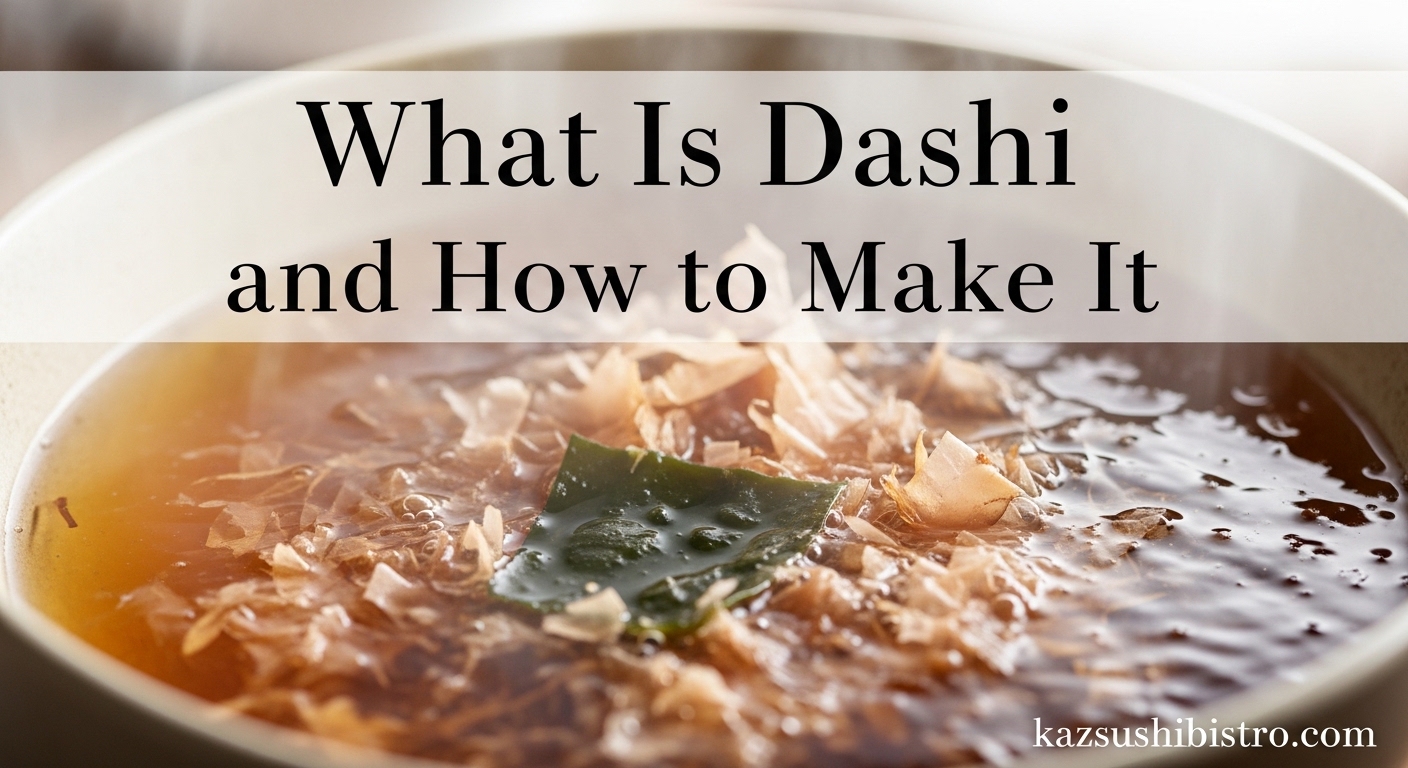
What is dashi? If you have ever wondered what makes miso soup taste so deeply savory or why restaurant ramen has that impossible-to-replicate richness, the answer lies in this simple Japanese stock. Dashi is the invisible backbone of Japanese cuisine. It transforms ordinary ingredients into extraordinary dishes without ever stealing the spotlight.
In this guide, I will walk you through everything I have learned about dashi over years of cooking and testing. You will discover exactly what dashi is made of, why it creates such incredible flavor, and how to make it from scratch in under 30 minutes. Whether you are a complete beginner or looking to refine your technique, this guide covers every method from traditional brewing to quick modern shortcuts.
Table of Contents
What Is Dashi?
Dashi is a Japanese soup stock made from kombu (dried kelp) and katsuobushi (dried bonito flakes). It provides the umami foundation for countless Japanese dishes including miso soup, ramen broth, udon noodle soup, and simmered vegetables.
Unlike Western stocks that simmer for hours with bones and aromatics, dashi is remarkably quick to prepare. Most versions take just 20 to 30 minutes from start to finish. The magic lies not in time but in the quality of ingredients and understanding how to extract their essence without overcooking.
Think of dashi as the Japanese equivalent of chicken stock in Western cooking. Just as French cuisine would collapse without its fonds de cuisine, Japanese cooking depends entirely on dashi. Every family has their preferred ratio. Every chef guards their technique. Yet at its core, dashi remains beautifully simple: water plus two ingredients equals depth.
Why Dashi Matters: The Science of Umami 2026
Dashi matters because it delivers umami in its purest form. Umami, often called the fifth taste alongside sweet, sour, salty, and bitter, is the savory richness that makes food deeply satisfying. Dashi creates this sensation through a fascinating chemical interaction.
Kombu contains glutamates, the compounds responsible for umami. Katsuobushi contains inosinates, another umami-boosting compound. When combined in water, these two ingredients do not just add together. They multiply. Scientific research shows that the combination of glutamates and inosinates creates an umami effect up to eight times stronger than either ingredient alone.
This synergy explains why dashi tastes so much more complex than you would expect from just two ingredients. It also explains why dashi enhances dishes without overpowering them. The flavor is clean, subtle, and supportive rather than aggressive. Other ingredients can shine while dashi provides the savory foundation holding everything together.
Understanding this science changed how I cook. Once you taste properly made dashi, you recognize its presence in every great Japanese dish. You also understand why shortcuts often fall short. Without the specific combination of glutamates and inosinates, you simply cannot replicate the true depth of flavor.
Key Ingredients: Kombu and Katsuobushi
Great dashi starts with understanding your ingredients. While dashi requires only two main components, the quality and type you choose dramatically affect the final result.
Kombu: The Kelp Foundation
Kombu is dried kelp seaweed harvested from cold, mineral-rich waters. It provides glutamates and a subtle oceanic sweetness to dashi. When shopping for kombu, look for thick, dark sheets with a white powdery coating. That powder is mannit, a natural sugar that indicates quality and freshness.
Several types of kombu exist, each with distinct characteristics:
Rishiri Kombu: Harvested near Hokkaido, this premium variety produces clear, elegant dashi with refined flavor. It is the choice of high-end restaurants.
Rausu Kombu: Known for its rich, almost meaty broth, Rausu kombu contains higher glutamate levels than other varieties. It creates a more robust dashi perfect for hearty soups.
Hidaka Kombu: The most common variety found in grocery stores, Hidaka kombu offers good flavor at reasonable prices. It is forgiving for beginners and works well in most applications.
Makombu: The thickest and most glutamate-rich variety, Makombu produces intensely savory dashi. It is excellent for dishes where the broth is the star.
Store kombu in an airtight container away from light and moisture. Properly stored, it lasts for years and actually improves with age. When ready to use, quickly wipe the surface with a damp cloth but do not wash it. You want to preserve that valuable white powder.
Katsuobushi: Dried Bonito Flakes
Katsuobushi is skipjack tuna that has been boiled, smoked, fermented, and dried until it becomes as hard as wood. This process concentrates umami compounds and creates the smoky, savory character that defines classic dashi. The traditional production takes months and involves multiple cycles of smoking and mold fermentation.
Most home cooks buy pre-shaved katsuobushi rather than whole blocks. Pre-shaved bonito flakes come in different grades:
Kezurikatsuo: Freshly shaved from a whole block using a specialized plane called a kezuriki. This premium option offers the most intense flavor and aroma but requires special equipment.
Pre-shaved packets: Found in Japanese grocery stores, these range from high-quality hanakatsuo (pinkish, thin shavings) to standard thick shavings. Hanakatsuo is preferred for dashi because its larger surface area releases flavor quickly.
Dashi packets: These tea-bag style sachets contain pre-measured katsuobushi and sometimes kombu. They are the convenient middle ground between scratch and powder.
Quality katsuobushi should look pinkish-tan and have a pleasant smoky aroma. Avoid gray or dull-colored flakes, which indicate age or poor storage. Once opened, keep katsuobushi sealed and use within a few months for best flavor.
Where to Find Ingredients
Finding quality dashi ingredients has become easier in recent years. Most well-stocked Asian grocery stores carry kombu and katsuobushi. Look in the dried seaweed section for kombu and near the Japanese sauces for bonito flakes.
Online retailers offer excellent options if you lack local sources. Japanese specialty stores often sell premium varieties not found in general Asian markets. For beginners, starter kits that include both kombu and katsuobushi take the guesswork out of shopping.
Types of Dashi: A Complete Comparison
While the combination of kombu and katsuobushi (called awase dashi) is most common, Japanese cooking employs several distinct dashi varieties. Each suits different dishes and dietary needs.
Awase Dashi (Kombu + Katsuobushi)
Awase dashi is the classic Japanese stock combining both primary ingredients. It offers the most balanced, full umami profile thanks to the glutamate-inosinate synergy. This is the dashi you want for miso soup, udon broth, and most general cooking.
Kombu Dashi (Vegetarian/Vegan)
Made solely from kelp, kombu dashi is completely plant-based. It provides clean, slightly sweet umami without any animal products. This is essential for vegetarian and vegan Japanese cooking. The flavor is milder than awase dashi but works beautifully in vegetable-focused dishes and as a base for vegan ramen.
Katsuo Dashi (Bonito Only)
Katsuo dashi skips the kombu and uses only katsuobushi. It produces a sharper, more intense fish flavor that stands up to hearty ingredients. This style works well in strongly flavored broths and is preferred by some chefs for specific applications.
Shiitake Dashi (Mushroom-Based)
Dried shiitake mushrooms create a rich, earthy dashi with guanylates (another umami compound). The flavor is deeper and darker than kombu dashi. Many vegan cooks combine shiitake and kombu dashi for a more complex plant-based stock that rivals awase dashi.
Iriko or Niboshi Dashi (Dried Sardines)
Small dried sardines or anchovies create a bold, fish-forward dashi popular in western Japan. The flavor is more assertive than katsuobushi-based dashi and pairs exceptionally well with miso. Some home cooks combine iriko with kombu and katsuobushi following the golden ratio below.
Comparison of Dashi Types
Awase Dashi: Ingredients: Kombu + Katsuobushi. Flavor: Balanced, full umami. Best for: Miso soup, udon, general cooking.
Kombu Dashi: Ingredients: Kombu only. Flavor: Clean, slightly sweet. Best for: Vegetarian dishes, delicate soups.
Katsuo Dashi: Ingredients: Katsuobushi only. Flavor: Sharp, smoky. Best for: Hearty broths, strong flavors.
Shiitake Dashi: Ingredients: Dried shiitake. Flavor: Earthy, rich. Best for: Vegan cooking, mushroom dishes.
Iriko Dashi: Ingredients: Dried sardines. Flavor: Bold, fish-forward. Best for: Miso soup, western Japanese cuisine.
How to Make Dashi: Step-by-Step Guide
Making dashi from scratch is straightforward once you understand the technique. The key is controlling temperature and timing. Here is the method I use for ichiban dashi, the first extraction that yields the most refined flavor.
Ichiban Dashi (First Extraction)
Step 1: Measure 4 cups of cold water into a pot. Add one 6-inch piece of kombu. Let it soak for at least 30 minutes, or up to overnight in the refrigerator. Cold soaking extracts glutamates without drawing out bitterness.
Step 2: Place the pot over medium heat. Warm the water slowly until small bubbles form and it reaches about 176°F (80°C). This takes roughly 10 minutes. Do not let it boil. Boiling kombu creates bitterness and a slimy texture.
Step 3: Remove the kombu just before the water boils. Set it aside for niban dashi. Immediately add 2 cups of packed katsuobushi (about 2 handfuls of bonito flakes).
Step 4: Bring the water to a gentle boil, then immediately turn off the heat. Let the katsuobushi steep for 5 to 10 minutes. The flakes will sink to the bottom when done.
Step 5: Strain through a fine-mesh sieve lined with cheesecloth or a paper towel. Do not squeeze the flakes, as this releases bitterness. Gently lift out the solids and set them aside for niban dashi.
You now have golden, crystal-clear ichiban dashi ready to use. The entire process takes about 30 minutes including soaking time.
Niban Dashi (Second Extraction)
Do not throw away your spent ingredients. The kombu and katsuobushi still hold plenty of flavor. Niban dashi is the second extraction, slightly lighter but still excellent for cooking.
Return the spent kombu and katsuobushi to a pot with 4 cups of fresh water. Bring to a gentle boil and simmer for 10 minutes. Strain and use this stock for simmering vegetables, cooking rice, or any application where the dashi is not the primary focus.
Cold Brew Method
For the cleanest, most refined dashi, try cold brewing. Soak kombu in cold water for 14 hours or overnight in the refrigerator. Remove the kombu and add katsuobushi. Steep for another 2 to 4 hours. Strain and use.
This method extracts maximum glutamates without any risk of bitterness. The resulting dashi has remarkable clarity and subtle sweetness. Many Japanese home cooks swear by this technique, especially during summer months.
The Golden Ratio
Advanced dashi makers often blend multiple umami sources for exponential flavor. The golden ratio discovered through home cook experimentation is 50 percent katsuobushi, 30 percent niboshi (dried sardines), 10 percent kombu, and 10 percent dried shiitake.
This combination delivers glutamates, inosinates, and guanylates together. The resulting dashi has incredible depth that single-source stocks cannot match. Start with awase dashi and experiment with this blend once you are comfortable with the basics.
Quick Methods: Dashi Packets and Powder
Not every meal requires scratch-made dashi. Modern convenience products offer acceptable shortcuts when time is short.
Dashi Packets
These tea-bag style sachets contain pre-measured kombu and katsuobushi. Simply steep one packet in 2 to 3 cups of hot water for 3 to 5 minutes. The quality varies by brand, but premium Japanese packets approach homemade flavor. Look for brands without MSG or artificial additives.
Dashi Powder and Granules
Instant dashi powder dissolves instantly in hot water. While convenient, it often contains MSG, salt, and other additives. The flavor tends to be one-dimensional compared to homemade. If using powder, look for additive-free versions and use less than directed to avoid oversalting.
Making Instant Dashi Better
To improve instant dashi, add a small piece of fresh kombu while heating the water. Remove it before adding the powder. This adds back some of the natural glutamates lost in processing. You can also steep the powder with a few actual bonito flakes for 5 minutes before straining.
Troubleshooting: Common Mistakes to Avoid
Over years of teaching friends to make dashi, I have seen the same errors repeatedly. Here is how to avoid them.
Do Not Boil the Kombu
This is the most common mistake. Boiling kombu extracts alginic acid, creating a bitter, slimy broth. Remove kombu when the water reaches 176°F (80°C) or when small bubbles form on the bottom of the pot. If you accidentally boil it, discard that batch and start over.
Over-Steeping Katsuobushi
Leaving bonito flakes in the water too long releases bitter compounds and fishy off-flavors. Stick to 5 to 10 minutes maximum. The flakes should sink to the bottom when properly steeped.
Wrong Ingredient Ratios
Too much kombu creates overwhelming ocean flavor. Too much katsuobushi makes the dashi taste fishy. Start with the standard ratio of one 6-inch kombu piece to 2 cups bonito flakes per 4 cups water. Adjust to taste after you master the basics.
Weak Flavor Solutions
If your dashi tastes weak, check your ingredient quality first. Old kombu and stale bonito flakes produce flat dashi. Next, verify your temperatures and timing. Cold water extracts less flavor than room temperature soaking. Finally, you may simply need more ingredients. Some brands of kombu are less potent than others.
Cloudy Dashi
Perfect dashi should be crystal clear. Cloudiness comes from squeezing the solids during straining or boiling the kombu. Always strain gently without pressing. If your dashi clouds, it is still usable but lacks the visual refinement of properly made stock.
Storage, Usage, and What to Do with Spent Ingredients
Storing Fresh Dashi
Homemade dashi keeps for 3 to 4 days in the refrigerator. Store it in a sealed glass container. The flavor degrades over time, so make only what you need for the week.
Freezing Dashi
For longer storage, freeze dashi in ice cube trays. Each cube equals about 2 tablespoons of stock. Once frozen, transfer cubes to a freezer bag. Frozen dashi lasts for 3 months and thaws instantly when added to hot dishes. This is my preferred method for always having homemade dashi ready.
Common Uses for Dashi
Dashi appears in countless Japanese dishes. Miso soup is the most familiar, requiring dashi as the base before adding miso paste. Ramen and udon broths build complex flavor profiles starting with dashi. Chawanmushi (savory egg custard) depends on dashi for its delicate savoriness.
Beyond soup, dashi flavors simmered vegetables (nimono), rice dishes, and dipping sauces (tsuyu). Tamagoyaki (Japanese rolled omelet) often includes dashi for extra depth. Oyakodon (chicken and egg rice bowl) uses dashi in its sauce. Hot pots (nabe) and shabu shabu rely on kombu dashi as the cooking liquid.
Creative Uses for Spent Ingredients
The kombu and katsuobushi from making dashi still have culinary value. Finely chop the used kombu and mix it with rice, sesame seeds, and soy sauce for a simple side dish. The spent katsuobushi can be mixed with soy sauce and mirin, then sprinkled over rice or tofu. Some cooks dehydrate the spent ingredients completely and grind them into furikake (rice seasoning).
FAQs
What exactly is dashi made of?
Traditional dashi is made from two primary ingredients: kombu (dried kelp seaweed) and katsuobushi (dried fermented skipjack tuna, also called bonito flakes). The kombu provides glutamates while the katsuobushi provides inosinates. When combined in water, these compounds create a synergistic umami effect. Other variations use only kombu (vegan dashi), dried shiitake mushrooms, or dried sardines called niboshi.
How do you make dashi?
To make basic awase dashi, soak a 6-inch piece of kombu in 4 cups cold water for 30 minutes. Heat until almost boiling, then remove the kombu. Add 2 cups bonito flakes, bring to a gentle boil, then turn off heat and steep 5 to 10 minutes. Strain without squeezing. For ichiban dashi (first extraction), follow these exact steps. For niban dashi (second extraction), simmer the spent ingredients in fresh water for 10 minutes.
What can I use if I do not have dashi?
If you need a dashi substitute, the best options are: 1) A light vegetable or chicken broth with a pinch of MSG for umami, 2) Kombu dashi made from just kelp if avoiding fish, 3) Dried shiitake mushrooms soaked in hot water for vegan cooking, or 4) Instant dashi powder in emergencies. None perfectly replicate authentic dashi, but these provide acceptable alternatives for most recipes.
Is dashi vegetarian or vegan?
Traditional awase dashi containing katsuobushi (bonito flakes) is not vegetarian. However, kombu dashi made solely from kelp is completely vegan and plant-based. Shiitake dashi from dried mushrooms is another excellent vegan option. Many Japanese Buddhist temples have developed refined vegan dashi techniques over centuries. Always check restaurant dashi if you follow a vegetarian or vegan diet, as most establishments use awase dashi by default.
Is dashi stock low FODMAP?
Traditional dashi made from kombu and katsuobushi is generally considered low FODMAP. Kombu contains mannitol, which some FODMAP-sensitive individuals may react to in large quantities. However, the amount used in typical dashi preparation is small enough that most people tolerate it well. Shiitake dashi is higher FODMAP due to the polyols in mushrooms. If you are sensitive to mannitol, stick to small portions of dashi or consult a dietitian.
How long should I simmer dashi stock?
You should never boil kombu, as this creates bitterness and slime. Heat kombu in water to about 176°F (80°C) until small bubbles form, then remove it. For katsuobushi, bring to a gentle boil then immediately turn off the heat and steep for 5 to 10 minutes. Total active cooking time is about 10 minutes after soaking. For niban dashi (second extraction), simmer the spent ingredients for 10 minutes.
How long does dashi last?
Fresh homemade dashi lasts 3 to 4 days in the refrigerator when stored in a sealed container. For longer storage, freeze dashi in ice cube trays for up to 3 months. Frozen dashi cubes can be added directly to hot dishes without thawing. If your dashi develops an off smell, cloudiness, or mold, discard it immediately. Niban dashi (second extraction) follows the same storage guidelines.
Does dashi contain MSG?
Homemade dashi made from kombu and katsuobushi contains naturally occurring glutamates and inosinates, not added MSG. These natural compounds create umami without artificial additives. However, many instant dashi powders and some restaurant dashi do contain added MSG. If avoiding MSG, make dashi from scratch or choose specifically labeled additive-free instant products. The natural glutamates in homemade dashi are generally well-tolerated even by those sensitive to added MSG.
Conclusion
What is dashi? It is far more than just Japanese soup stock. Dashi is the invisible hand that elevates simple ingredients into memorable dishes. Understanding how to make dashi from scratch opens the door to authentic Japanese cooking and transforms how you think about flavor.
Starting with just two ingredients and thirty minutes, you can create a stock that rivals anything from a restaurant. The key is respecting the process: never boil the kombu, time your steeping carefully, and start with quality ingredients. Once you taste proper homemade dashi, instant powder will never satisfy you again.
I encourage you to make your first batch this week. Start with basic awase dashi using the recipe above. Use it in a simple miso soup and taste the difference. Experiment with the cold brew method for even cleaner flavor. Save your spent ingredients for niban dashi to maximize value. Before long, you will wonder how you ever cooked without it.
The journey into Japanese cuisine begins with a single pot of dashi. Every great bowl of ramen, every perfect chawanmushi, every comforting udon soup traces back to this humble stock. Now you have the knowledge to make it yourself. The only question remaining is what you will create first.