
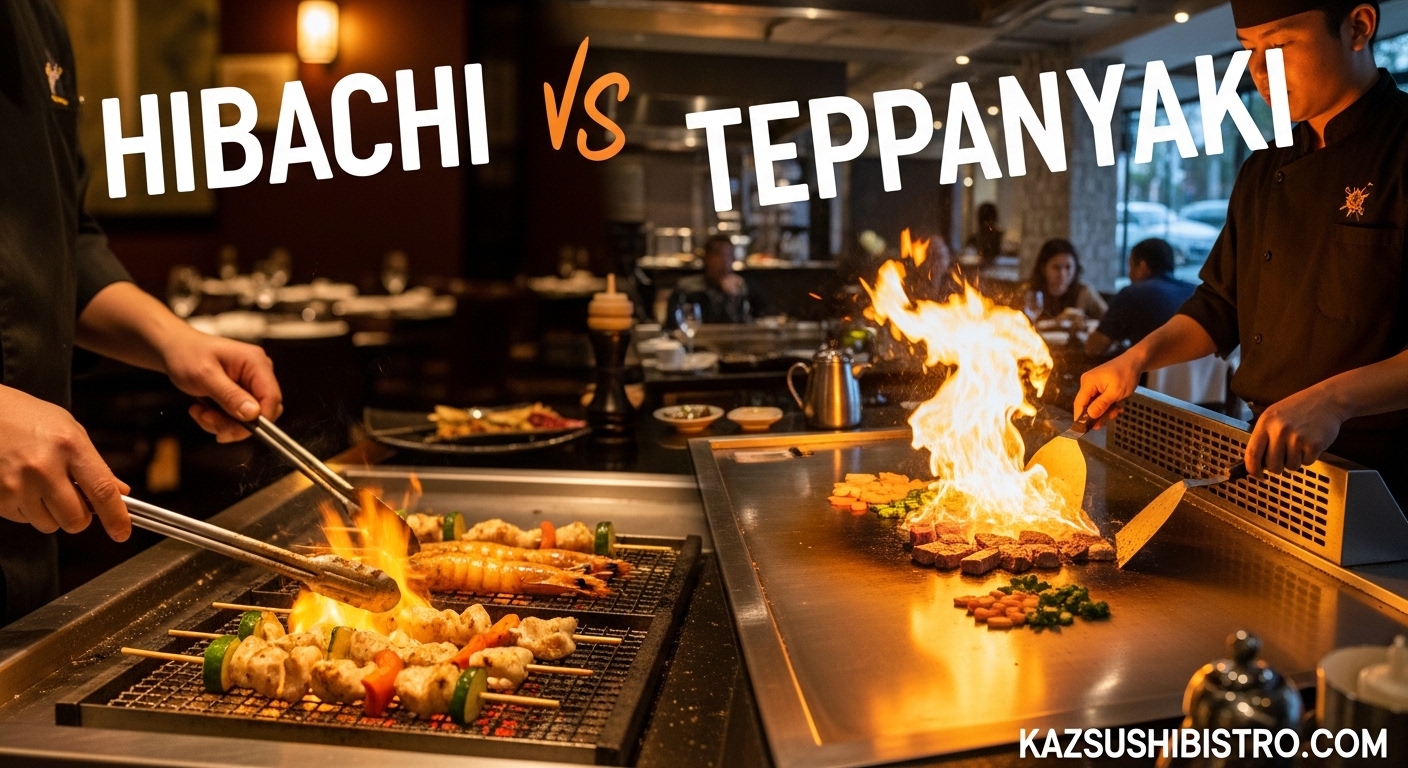
You’ve probably seen the words “hibachi” and “teppanyaki” used interchangeably at Japanese restaurants across America. But hibachi vs teppanyaki difference is actually quite significant once you understand what each term truly means. Hibachi literally translates to “fire bowl” and refers to traditional Japanese grills with open grates over charcoal, while teppanyaki combines “teppan” (iron plate) and “yaki” (grilled) to describe cooking on a flat metal griddle.
Our team at KAZ Sushi Bistro has spent years studying authentic Japanese cooking methods. We know the confusion between these two styles frustrates diners who want the exact experience they’re expecting. This guide will clear up the terminology, explain the history, and help you choose the right dining style for your next meal.
Table of Contents
What Is Hibachi?
Hibachi is a traditional Japanese term meaning “fire bowl,” derived from “hi” (fire) and “bachi” (bowl or pot). In its authentic form, hibachi refers to small, portable grills with open grates placed over a heat source. These grills traditionally use charcoal or wood as fuel.
The original hibachi wasn’t even designed for cooking food. During the Heian period (794-1185), hibachi served as heating devices in Japanese homes. They were beautiful containers, often made from ceramics or wood with ornate designs, that held burning charcoal to warm rooms during cold winters.
How Traditional Hibachi Cooking Works
Authentic hibachi cooking uses a device called a shichirin, which is the actual portable grill most Japanese people associate with outdoor cooking. The shichirin features an open grate design that allows direct flame contact with food. This creates the characteristic smoky, charred flavors that hibachi enthusiasts love.
The heat source sits below an open metal grate. Food rests directly on the grates, allowing flames to lick the ingredients and fat to drip down into the fire. This setup creates intense heat and that distinctive grilled taste you cannot replicate on a flat surface.
Foods Traditionally Cooked on Hibachi
Hibachi excels at cooking smaller cuts of meat, seafood, and vegetables that benefit from direct flame exposure. Skewered items like yakitori chicken work perfectly on hibachi grills. The open grate allows even heat distribution while creating beautiful char marks.
Thin cuts of beef, shrimp, and bite-sized vegetables all perform well on hibachi. The cooking happens quickly due to the intense direct heat. Marinades and sauces caramelize beautifully against the open flames.
What Americans call “hibachi” at restaurants is almost always teppanyaki. This terminology mix-up started decades ago and persists today. Understanding this distinction helps you communicate better with restaurant staff and set accurate expectations.
What Is Teppanyaki?
Teppanyaki literally means “grilled on an iron plate,” combining the Japanese words “teppan” (iron plate) and “yaki” (grilled or pan-fried). This cooking style features a large, flat solid metal griddle where chefs prepare food directly in front of guests. The surface typically measures about 3 feet wide by 1.5 feet deep.
Unlike hibachi’s open grate design, teppanyaki uses a completely flat cooking surface heated by propane burners or electric elements underneath. This creates consistent, even heat across the entire plate. The solid surface allows chefs to cook delicate items that would fall through hibachi grates.
The Teppanyaki Dining Experience
Teppanyaki restaurants arrange seating around the cooking surface, with 8-10 guests per table. Diners watch the chef perform while their food cooks just feet away. This theatrical element distinguishes teppanyaki from nearly every other dining style.
Chefs train for months to master the performance aspects of teppanyaki cooking. They flip shrimp tails into their hats, create onion volcanoes that shoot flames skyward, and perform intricate knife tricks that entertain while they cook. The show lasts throughout your entire meal.
Why Americans Call Teppanyaki “Hibachi”
The terminology confusion started when teppanyaki first came to America. Rocky Aoki opened the first Benihana restaurant in New York City in 1964, introducing Americans to table-side cooking on flat iron griddles. Somehow, the term “hibachi” became associated with this theatrical dining experience.
Language evolves through usage, and American diners embraced “hibachi” as the catch-all term for Japanese grilling. Japanese restaurants adopted the terminology to avoid confusing customers. Today, most Americans use “hibachi” when they actually mean teppanyaki.
True hibachi restaurants in Japan look completely different from what Americans expect. They feature small charcoal grills at each table, not the theatrical flat-top shows we associate with the word. This cultural difference explains much of the ongoing confusion.
Hibachi vs Teppanyaki Difference: Key Distinctions 2026
The fundamental difference between hibachi and teppanyaki lies in the cooking surface. Hibachi uses open grates with direct flame contact, while teppanyaki uses a solid flat iron plate. This distinction affects everything from flavor profiles to the types of food you can cook.
Here’s a side-by-side comparison of the major differences:
Cooking Surface Comparison
Hibachi’s open grate design allows fat and marinades to drip directly into the flames below. This creates flare-ups that char the food and produce smoke that flavors everything on the grill. The grates leave distinctive sear marks on meat and vegetables.
Teppanyaki’s flat surface contains all juices and oils on the cooking plate. Foods sear in their own moisture and any added oils. The even heat distribution allows precise temperature control impossible with open flames. This surface works better for eggs, rice, and delicate fish that would fall through hibachi grates.
Food Types Best Suited for Each Style
Hibachi shines with foods that benefit from smoky charring. Skewered meats, small vegetables, and thin cuts of beef or chicken work perfectly. The intense direct heat cooks these items quickly while creating complex flavors through the Maillard reaction and smoke exposure.
Teppanyaki handles a wider variety of foods due to its solid surface. Steak, shrimp, scallops, lobster, and even fried rice all cook beautifully on the flat griddle. The chef can push food to cooler edges while finishing other items in the center hot zone.
Dining Experience Differences
Authentic hibachi dining feels casual and intimate. Small groups gather around portable grills, often cooking their own food or working with minimal chef assistance. The focus stays on conversation and the food itself rather than entertainment.
Teppanyaki dining is inherently theatrical and communal. Large groups share a table and experience together. The chef’s performance creates natural conversation starters and breaks awkward silences. This format suits celebrations, family dinners, and business entertaining.
History and Origins of Both Styles
Understanding the history behind these cooking styles explains why the terminology confusion persists. Both methods evolved separately over centuries of Japanese culinary tradition before becoming popular in America.
The Ancient Roots of Hibachi
Hibachi dates back to the Heian period (794-1185) in Japan. Originally, these devices served as room heaters rather than cooking equipment. Beautiful ceramic or wooden containers held burning charcoal to warm Japanese homes during winter months.
Over time, people began placing small grills over hibachi for casual cooking. The shichirin emerged as the dedicated cooking version, but the hibachi name stuck in popular usage. Street vendors and outdoor cooks favored these portable grills for their convenience and the unique flavors they produced.
Teppanyaki’s Modern Birth
Teppanyaki emerged much later than hibachi, developing in Japan during the post-World War II era. The style combined Western steakhouse concepts with Japanese cooking techniques. Chefs recognized that flat iron plates could cook high-quality meats while entertaining guests.
Rocky Aoki brought teppanyaki to America when he opened Benihana in 1964. He noticed Americans loved both the food quality and the theatrical presentation. The format solved a major challenge: introducing Japanese cuisine to Americans wary of raw fish by offering familiar grilled meats with spectacular entertainment.
Why American Terminology Diverged
When teppanyaki arrived in America, restaurateurs needed simple terminology customers could remember. “Hibachi” sounded Japanese and already existed in the American vocabulary. The term stuck, even though it technically referred to a completely different cooking method.
This misnomer persists because it works. Customers know what to expect when they hear “hibachi restaurant” – the theatrical flat-top cooking with onion volcanoes and flying shrimp. Attempting to correct this usage would create confusion rather than clarity.
Which Should You Choose?
Selecting between hibachi and teppanyaki depends entirely on what kind of experience you want. Both deliver delicious food, but the atmosphere, entertainment level, and flavor profiles differ significantly.
Choose Hibachi For Smoky, Authentic Flavors
Select authentic hibachi when you want that distinctive smoky char flavor impossible to replicate on flat surfaces. The open flames and dripping fats create taste profiles unique to this cooking method. Small groups who enjoy casual, intimate dining will appreciate hibachi’s relaxed atmosphere.
Hibachi also works well for outdoor gatherings and backyard cooking. Portable shichirin grills make excellent additions to camping trips or patio dinners. The cooking process itself becomes part of the social experience.
Choose Teppanyaki For Entertainment and Celebrations
Teppanyaki excels for special occasions, family celebrations, and group gatherings. The chef’s performance keeps everyone engaged, making it ideal when you have guests who don’t know each other well. Children especially love the theatrical elements.
The communal seating encourages conversation across the table. Watching food prepared fresh eliminates any concerns about kitchen conditions. You see exactly what goes into your meal and can request modifications as the chef cooks.
Health Considerations Comparison
Both cooking styles can be healthy depending on preparation methods and ingredient choices. Hibachi’s open grate allows excess fat to drip away from food, potentially reducing overall calorie content. However, the high heat can create charring that some health experts associate with certain compounds.
Teppanyaki cooks food in its own juices plus added oils, potentially increasing fat content. But the chef controls the oil amount, and you can request minimal added fats. The precise temperature control prevents burning that could affect food safety.
Both methods work well for lean proteins and vegetables. Request sauces on the side to control sodium and sugar intake. The cooking methods themselves matter less than the ingredients and preparation choices.
Frequently Asked Questions
Is hibachi or teppanyaki better?
Neither is objectively better – it depends on your preferences. Choose hibachi for authentic smoky flavors and casual dining. Choose teppanyaki for theatrical entertainment, celebrations, and communal dining experiences. Both deliver delicious Japanese-style grilled food.
What is teppanyaki called in America?
In America, teppanyaki is commonly called ‘hibachi.’ This terminology confusion started when teppanyaki restaurants opened in the US during the 1960s. Americans began using ‘hibachi’ to describe the theatrical flat-iron cooking style, even though true hibachi uses different equipment.
Is Benihana hibachi or teppanyaki?
Benihana serves teppanyaki, not true hibachi. Despite the common American usage, Benihana’s flat iron griddles, propane heating, and theatrical chef performances are hallmarks of teppanyaki cooking. The restaurant uses the term ‘hibachi’ because that’s what American customers expect.
Why is teppanyaki called hibachi in the US?
Americans started calling teppanyaki ‘hibachi’ when the dining style arrived in the 1960s. Restaurant owners used familiar terminology rather than introducing a new Japanese word. The usage stuck and now dominates American restaurant culture, even though it technically misidentifies the cooking method.
Which cooking style is healthier, hibachi or teppanyaki?
Both styles can be healthy with proper ingredient choices. Hibachi allows fat to drip away from food during cooking. Teppanyaki uses controlled oil amounts on a flat surface. Request lean proteins, plenty of vegetables, and sauces on the side for the healthiest meal at either style of restaurant.
Why do I feel sick after hibachi?
Some diners experience stomach discomfort after teppanyaki (commonly called hibachi) meals due to high sodium content in sauces, large portion sizes, or the rich combination of proteins and oils. Eating slowly, requesting light sauce, and avoiding overeating can help prevent this issue.
Conclusion
The hibachi vs teppanyaki difference comes down to cooking surface and experience style. Hibachi means “fire bowl” with open grates over charcoal. Teppanyaki means “iron plate grilled” on a flat griddle with theatrical presentation.
Americans use “hibachi” for both, but understanding the distinction helps you choose the right dining experience. Want smoky, casual grilling? Seek authentic hibachi. Want theatrical entertainment for a celebration? Teppanyaki delivers unforgettable performances.
Both styles celebrate Japanese culinary traditions in different ways. Try each to discover which experience matches your preferences. Either way, you’re in for delicious grilled food prepared with skill and care.