
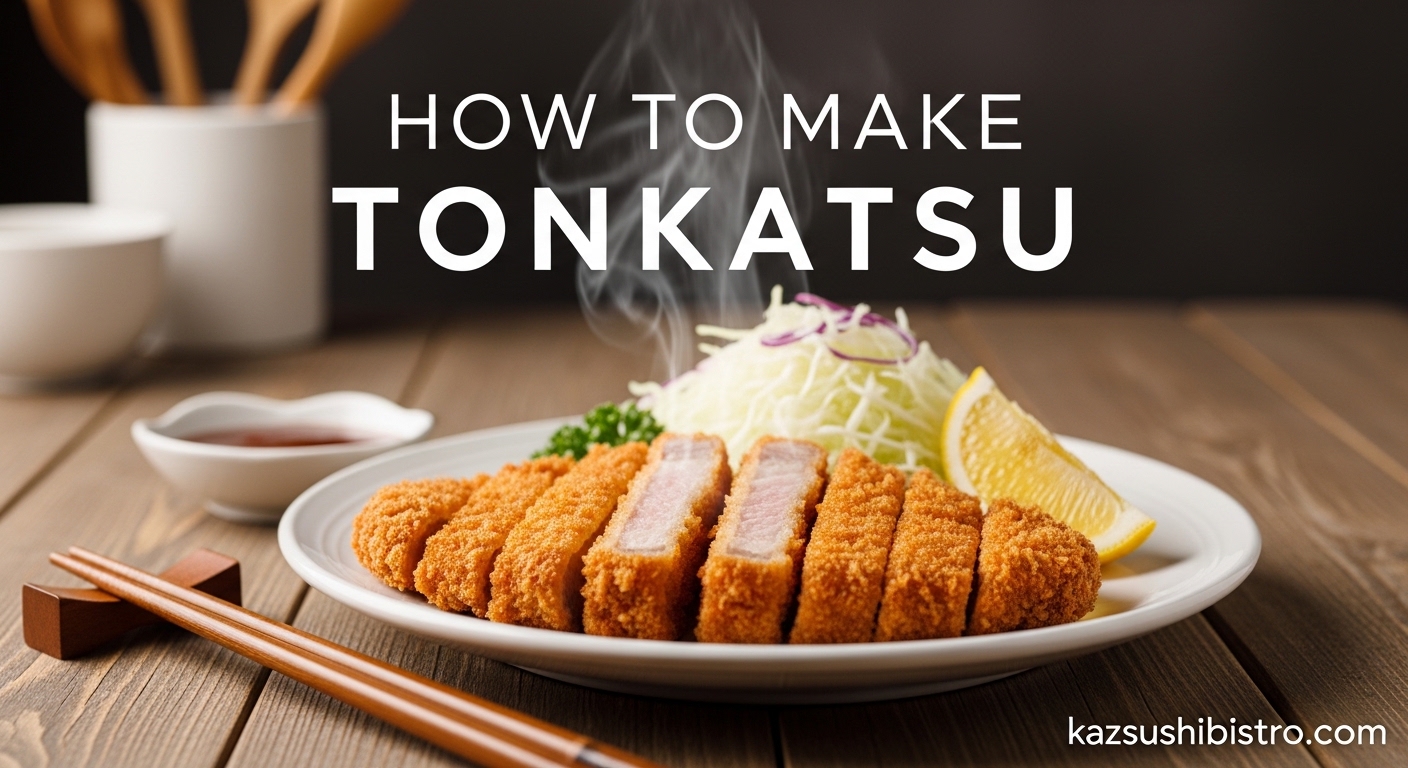
Learning how to make tonkatsu at home is easier than you might think. This beloved Japanese comfort food features a golden, crispy panko crust wrapped around juicy, tender pork. Our team spent weeks perfecting this technique, testing different cuts of meat, oil temperatures, and breading methods to bring you a foolproof recipe.
In this guide, you will learn exactly how to achieve that restaurant-quality crunch without any special equipment. We cover everything from selecting the right pork cut to the double-fry technique that ensures perfectly cooked meat inside a shatteringly crisp coating.
Whether you are new to Japanese cooking or looking to refine your skills, this step-by-step tutorial will help you create authentic tonkatsu that rivals your favorite Japanese restaurant.
Table of Contents
What is Tonkatsu?
Tonkatsu is a Japanese dish consisting of breaded and deep-fried pork cutlet. The name comes from “ton” meaning pork and “katsu” a shortened form of “katsuretsu” the Japanese rendering of the French word “cotelette” meaning cutlet.
This dish belongs to a category of Japanese cuisine called yoshoku, which refers to Western-influenced cooking adapted to Japanese tastes. Introduced to Japan in the late 19th century during the Meiji era, tonkatsu has become a staple of Japanese home cooking and restaurant menus alike.
What sets tonkatsu apart from other breaded cutlets is the use of panko, Japanese-style breadcrumbs that create an exceptionally light and crispy coating. The traditional preparation uses a double-fry method that cooks the pork through while creating that signature golden, flaky exterior.
Regional variations exist throughout Japan. Nagoya is famous for miso katsu, where the cutlet is served with a rich red miso-based sauce. In Kansai, the breading tends to be lighter, while Tokyo-style tonkatsu often features a thicker, crunchier crust. Regardless of style, the fundamental technique remains consistent.
Essential Ingredients 2026
Gathering quality ingredients is the foundation of great tonkatsu. Here is everything you need to serve four people:
For the pork:
- 4 boneless pork chops (loin or sirloin), about 4-5 ounces each and 3/4 to 1 inch thick
- Kosher salt and freshly ground black pepper for seasoning
For the breading:
- 1/2 cup all-purpose flour
- 2 large eggs, beaten
- 2 cups panko breadcrumbs
For frying:
- 3-4 cups neutral oil (vegetable, canola, or peanut oil)
For the tonkatsu sauce:
- 3 tablespoons ketchup
- 1 tablespoon Worcestershire sauce
- 1 teaspoon soy sauce
- 1/2 teaspoon sugar
- 2 tablespoons sesame seeds (for grinding)
For serving:
- 1/2 head green cabbage, finely shredded
- Sesame dressing or lemon wedges
- Steamed rice
- Japanese pickles (optional)
Pork selection matters. Pork loin offers the most tender, juicy results with good fat marbling. Pork sirloin is leaner and slightly firmer but works well if you prefer less fat. Avoid pre-thin cutlets, you want thickness for that perfect contrast between crispy exterior and succulent interior.
Understanding panko is crucial. Panko breadcrumbs are larger, flakier, and lighter than Western breadcrumbs, creating the characteristic airy crunch. For the ultimate texture, seek out nama panko, which is fresh, unbaked panko found in the refrigerated section of Asian markets. If using standard dried panko, you can achieve similar results by lightly crushing the flakes and misting with water to add moisture.
Equipment You Will Need
You do not need a commercial deep fryer to make excellent tonkatsu at home. Here is what you actually need:
- Heavy-bottomed pot or Dutch oven: A cast iron skillet or enamel-coated Dutch oven retains heat well and prevents temperature drops when you add the pork. Choose one that holds at least 3 inches of oil with room at the top to prevent bubbling over.
- Instant-read thermometer: Temperature control is everything in frying. A digital thermometer with a probe gives you accurate readings for both frying stages.
- Wire cooling rack: Essential for draining excess oil without steaming the bottom of your cutlets. Place it over a baking sheet to catch drips.
- Spider strainer or slotted spoon: For safely turning and removing the pork from hot oil.
- Shallow dishes or pie plates: Three separate containers for your flour, egg wash, and panko.
- Mortar and pestle: For grinding sesame seeds into powder for the traditional dipping sauce.
- Paper towels and wire rack: For resting and draining.
A note on thermometers: if you do not have one, drop a small piece of panko into the oil. At 340°F, it should bubble gently and rise to the surface within 3-4 seconds. At 355°F, it should bubble vigorously immediately.
How to Make Tonkatsu?
This recipe yields four servings and takes approximately 45 minutes from start to finish. The double-fry method described below is the secret to that restaurant-quality texture.
Step 1: Prepare the Pork
Start by examining your pork chops for any silver skin or tough connective tissue. Use a sharp knife to make several shallow slits, about 1/2 inch apart, through the fat cap and connective tissue around the edges of each chop. This prevents the meat from curling up during frying.
Place the pork between two sheets of plastic wrap or inside a large resealable bag. Using a meat mallet or rolling pin, gently pound the pork to an even 3/4-inch thickness. You want uniform thickness so the pork cooks evenly. Be gentle, you are not trying to tenderize aggressively, just creating evenness.
Remove the plastic and season both sides of each chop generously with salt and freshly ground black pepper. Set aside while you prepare your breading station and heat the oil.
Step 2: Set Up the Breading Station
Arrange three shallow dishes in a row on your counter. In the first, place the all-purpose flour. In the second, beat the eggs until smooth. In the third, spread out the panko breadcrumbs.
Position a wire rack over a baking sheet next to your breading station. This is where your breaded cutlets will rest before frying and where they will drain after.
Set up your frying station nearby. Pour 2-3 inches of neutral oil into your heavy pot. You want enough oil that the cutlets will float freely without touching the bottom. Begin heating the oil to 340°F (170°C) over medium heat. This will take 8-10 minutes depending on your stove.
Step 3: Dredge the Pork
Working with one chop at a time, dredge it thoroughly in the flour, shaking off any excess. The flour creates a dry surface that helps the egg wash adhere properly.
Next, dip the floured chop into the beaten egg, turning to coat completely. Let excess egg drip back into the dish. For an extra thick coating, some cooks like to add 1 tablespoon of flour to the beaten egg, which creates a thicker batter consistency.
Finally, transfer the chop to the panko dish. Press the breadcrumbs firmly onto all sides of the pork. You want complete coverage with no bare spots. Gently shake off any loose panko that does not adhere. Place the breaded cutlet on your prepared wire rack.
Use the dry hand, wet hand technique to keep your fingers from becoming coated in breading. Keep one hand for touching dry ingredients (flour and panko) and the other for wet (egg wash).
Repeat with remaining pork chops. Let the breaded cutlets rest for 5-10 minutes before frying. This resting period helps the breading adhere better and prevents it from falling off during frying.
Step 4: First Fry (Low Temperature)
When your oil reaches 340°F (170°C), you are ready for the first fry. This lower temperature cooks the pork through gently without burning the coating.
Carefully lower one or two cutlets into the oil, depending on the size of your pot. Do not crowd the pot, as this drops the oil temperature dramatically and leads to greasy, soggy results.
Fry for 2-3 minutes until the coating is pale golden and set. The pork inside should be mostly cooked but not fully done. Use your spider strainer to turn the cutlets halfway through if needed for even coloring.
Remove the partially cooked cutlets to your wire rack. The coating will look light blonde, not the deep golden color you are ultimately seeking. Let them rest for at least 3 minutes while you fry any remaining batches.
This resting period is crucial. It allows the interior heat to continue cooking the pork gently while you prepare for the second fry.
Step 5: Second Fry (High Temperature)
Increase your oil temperature to 355°F (180°C). This higher heat is what creates that signature shatteringly crisp, deep golden-brown exterior.
Return the rested cutlets to the hot oil, one or two at a time. Fry for 1-2 minutes until the coating turns a rich, deep golden brown and looks audibly crispy.
The second fry happens quickly, so watch carefully. You are looking for a color slightly darker than peanut butter. The panko will look noticeably crunchier and more textured.
Remove the finished tonkatsu to your wire rack immediately. The elevated rack allows air to circulate underneath, keeping the bottom crispy rather than soggy from trapped steam.
Repeat with all cutlets. If you are working in batches, you can hold finished pieces in a 200°F oven while completing the rest.
Step 6: Rest and Slice
Let the tonkatsu rest on the wire rack for 2 minutes before cutting. This resting period allows the juices to redistribute throughout the meat rather than running out onto your cutting board.
Transfer one cutlet to a cutting board. Using a sharp knife, slice across the grain into strips about 3/4-inch wide. Traditional presentation arranges these slices slightly fanned out on the plate, showing off the juicy interior and crispy crust.
Serve immediately while hot and crisp. Tonkatsu waits for no one, the texture is at its peak within minutes of frying.
Tips for Perfect Tonkatsu
After testing dozens of batches, our team has identified the techniques that make the difference between good tonkatsu and exceptional tonkatsu.
Fresh panko makes a difference. If you can find nama panko, fresh panko that has never been dried, use it. The moisture content creates an even lighter, crunchier coating. If using dried panko, try lightly misting it with water or crushing it slightly to better mimic fresh texture.
Temperature consistency is key. Oil temperature drops when you add cold pork. Fry in small batches and allow the oil to return to target temperature between batches. A 20-degree drop can mean the difference between crispy and greasy.
Never skip the wire rack. Paper towels trap steam against the bottom of your cutlet, creating a soggy spot. A wire rack allows air circulation on all sides, preserving that hard-won crunch.
Resting time matters. Let breaded cutlets rest 5-10 minutes before frying. This allows the flour-egg-panko layers to bond together, preventing the dreaded breading separation.
Choose the right oil. Neutral oils with high smoke points work best. Vegetable, canola, and peanut oil are all excellent choices. Avoid olive oil, which imparts flavor and has a lower smoke point.
Slice with a sharp knife. A dull knife crushes the crispy coating rather than cutting cleanly. Sharpen your knife before slicing to preserve that beautiful crust.
Troubleshooting Common Problems
Based on forum discussions and our own testing, here are solutions to the most common tonkatsu failures.
Breading falls off during frying: This usually happens from insufficient resting time after breading. Let your coated cutlets sit for at least 5 minutes before frying. Also ensure you are not handling the cutlets too roughly when flipping.
Tonkatsu turns out greasy: Greasy results come from oil temperature too low or overcrowding the pot. Maintain 340°F for first fry and 355°F for second fry. Fry only 1-2 cutlets at a time depending on your pot size.
Inside is overcooked while coating burns: Your first fry temperature is too high, or you are skipping the first fry entirely. The double-fry method is essential for cooking the pork through before the final crisping.
Difficulty maintaining oil temperature: Use a heavy pot that retains heat well. Cast iron or enameled Dutch ovens work better than thin stainless steel. Allow full recovery time between batches.
Fear of deep frying at home: Use a deep pot to prevent splatter. Lower food gently into oil rather than dropping. Keep a lid nearby for emergencies, though you should never cover a pot of burning oil. Work slowly and confidently.
Not sure when pork is fully cooked: An instant-read thermometer is your best friend. Pork is safe at 145°F with a 3-minute rest. In practice, the double-fry method brings pork to about 150-155°F, which is perfect for juicy results.
Making Homemade Tonkatsu Sauce
While store-bought tonkatsu sauce (often called bulldog sauce) is widely available, making your own takes minutes and tastes fresher.
In a small bowl, combine 3 tablespoons ketchup, 1 tablespoon Worcestershire sauce, 1 teaspoon soy sauce, and 1/2 teaspoon sugar. Whisk until smooth. Taste and adjust, some prefer more sweetness, others more tang.
For the traditional presentation, place sesame seeds in a mortar and grind them into a coarse powder using a pestle. Divide this ground sesame among small sauce dishes or ramekins.
Pour the homemade sauce over the ground sesame, or serve alongside for dipping. Diners traditionally mix the sesame and sauce together before dipping their tonkatsu pieces.
For a spicier version, add a pinch of Japanese karashi mustard or a dash of chili oil. Some restaurants also add a touch of honey or mirin for extra complexity.
Serving Suggestions
Tonkatsu is traditionally served as a set meal called tonkatsu teishoku. Here is how to build a complete meal.
Shredded cabbage is essential. The cabbage is not just a garnish, it provides a refreshing, crisp counterpoint to the rich fried pork. Shred green cabbage as finely as possible, almost into threads. Soak in ice water for 10 minutes for extra crunch, then drain thoroughly.
Serve the cabbage with a drizzle of sesame dressing, ponzu, or simply lemon wedges. Many diners squeeze lemon over both the cabbage and the tonkatsu itself.
Complete the teishoku: A proper tonkatsu set includes steamed Japanese rice, miso soup, and tsukemono (Japanese pickles). The pickles provide a palate-cleansing tang between bites of rich pork.
Alternative presentations:
- Place sliced tonkatsu over a bowl of rice and drizzle with sauce for a simple donburi-style serving
- Serve in a sandwich with milk bread (shokupan), sauce, and cabbage as a katsu sando
- Ladle curry over tonkatsu and rice for katsu curry, a beloved comfort food
Delicious Variations
Once you master the basic technique, try these popular variations.
Chicken katsu: Substitute boneless, skinless chicken thighs pounded to even thickness. Chicken requires slightly less cooking time. The result is lighter but equally crispy.
Cheese katsu: A Nagoya specialty where cheese is stuffed inside the pork before breading. Use a thin slice of mozzarella, place between two thin cutlets, seal the edges, then bread and fry.
Katsu sando: Layer sliced tonkatsu between slices of shokupan (Japanese milk bread) with sauce and shredded cabbage. Cut into rectangles for the classic presentation.
Katsudon: Simmer sliced tonkatsu with beaten eggs, onions, and dashi over rice. The egg creates a silky coating over the crispy cutlet.
Katsu curry: Pour Japanese curry sauce over sliced tonkatsu on rice. The combination of spicy curry and crispy pork is irresistible.
Miso katsu: Serve with a sauce made from red miso, mirin, and sugar. This is the signature preparation in Nagoya.
Air Fryer Method
For those who prefer to avoid deep frying, the air fryer produces acceptable results, though the texture will not match the deep-fried version.
Prepare and bread the pork exactly as described in the main recipe. Preheat your air fryer to 400°F (200°C) for 5 minutes.
Spray the breaded cutlets generously with cooking oil spray on both sides. This is essential for browning, without oil, the panko remains pale and dry.
Place cutlets in the air fryer basket in a single layer with space between them. Cook for 10-12 minutes, flipping halfway through and spraying with additional oil. The internal temperature should reach 145°F.
The results will be crispy but lighter in color and slightly drier than deep-fried tonkatsu. For best results, spritz generously with oil and do not overcrowd the basket.
Storage and Reheating
Tonkatsu is best enjoyed immediately after cooking, but leftovers happen. Here is how to handle them.
Refrigeration: Store cooled tonkatsu in an airtight container in the refrigerator for up to 3 days. Place paper towels between layers to absorb moisture.
Freezing: Wrap individual cutlets tightly in plastic wrap, then foil, and freeze for up to 1 month. Thaw overnight in the refrigerator before reheating.
Reheating: The oven or toaster oven preserves crispiness best. Bake at 375°F (190°C) for 8-10 minutes until heated through and crispy. An air fryer also works well at 350°F for 5-6 minutes.
Avoid the microwave. Microwaving makes the coating soggy and chewy. If you must use a microwave, expect soft results and consider removing the breading first.
Make-ahead tip: You can bread the cutlets up to 2 hours ahead and keep them refrigerated on a wire rack, uncovered. Fry just before serving for optimal texture.
Oil Disposal and Sustainability
Proper oil disposal is an important part of responsible home frying. Never pour used oil down the drain.
Reusing oil: If the oil is not burned or heavily degraded, you can strain it through a fine-mesh sieve lined with cheesecloth and store for reuse. Oil used for tonkatsu can be reused 2-3 times for similar frying applications.
Cooling and disposal: Allow oil to cool completely. Pour into a sealed container like a jar with a lid, or mix with an absorbent material like cat litter or coffee grounds, then dispose of in the trash.
Reducing waste: Use the minimum amount of oil necessary. A smaller pot with just enough oil for the cutlets to float uses less oil overall and heats more efficiently.
Frequently Asked Questions
What are the ingredients for tonkatsu?
The essential ingredients for tonkatsu are boneless pork chops (loin or sirloin), all-purpose flour, beaten eggs, panko breadcrumbs, neutral oil for frying, salt, and pepper. For serving, you will need shredded cabbage, steamed rice, and ingredients for tonkatsu sauce including ketchup, Worcestershire sauce, soy sauce, and sesame seeds.
What is tonkatsu batter made of?
Tonkatsu batter is actually a three-step breading process rather than a traditional batter. First, the pork is dredged in all-purpose flour to create a dry surface. Then it is dipped in beaten egg to act as a binding agent. Finally, it is coated in panko breadcrumbs, which create the crispy, flaky exterior when fried.
How to marinate pork for tonkatsu?
Traditional tonkatsu does not require marinating. Simply season the pork with salt and freshly ground black pepper just before breading. The simplicity allows the natural flavor of the pork and the crispy panko coating to shine. Some variations may include a light dusting of garlic powder or onion powder for extra flavor.
What kind of breading is used for tonkatsu?
Tonkatsu uses panko breadcrumbs, which are Japanese-style breadcrumbs made from crustless bread. Panko flakes are larger, lighter, and flakier than Western breadcrumbs, creating an exceptionally crispy, airy coating. Fresh panko (nama panko) creates the best texture, but standard dried panko works well too.
What are common mistakes when making tonkatsu?
Common mistakes include not resting breaded cutlets before frying (causes breading to fall off), frying at incorrect oil temperature (creates greasy or burned results), overcrowding the pot (drops temperature), skipping the double-fry method (results in overcooked pork or underdone coating), and draining on paper towels instead of a wire rack (causes soggy bottom).
How long should I pan fry tonkatsu?
Pan frying is not recommended for authentic tonkatsu as the cutlets are too thick to cook through before the coating burns. Deep frying is the traditional method. For deep-fried tonkatsu, use a double-fry method: first fry at 340°F for 2-3 minutes, then rest and fry again at 355°F for 1-2 minutes until golden brown.
Is tonkatsu better with flour or cornstarch?
All-purpose flour is the traditional choice for the first dredging step in tonkatsu. Cornstarch can be used but creates a slightly different texture that some find too smooth or gummy. For best results, stick with all-purpose flour. Some cooks add a tablespoon of flour to the egg wash for a thicker coating, but the primary dredging should use flour.
How long should you cook pork tonkatsu?
Using the double-fry method, cook pork tonkatsu for 2-3 minutes at 340°F for the first fry, followed by a 1-2 minute second fry at 355°F. Total cooking time is approximately 4-5 minutes. The internal temperature should reach 145°F with a 3-minute rest period. This method ensures juicy, fully cooked pork with a crispy golden exterior.
Conclusion
You now have everything you need to make authentic, restaurant-quality tonkatsu at home. The double-fry technique, proper oil temperature management, and attention to resting times are the keys to that perfect balance of crispy coating and juicy pork.
Remember that practice makes perfect. Your first batch might not win beauty contests, but it will still taste delicious. Focus on the fundamentals: even meat thickness, proper breading technique, and temperature control.
Serve your tonkatsu with finely shredded cabbage, steamed rice, and homemade sauce for a complete Japanese meal that will impress family and friends. Once you master this technique, try the variations like chicken katsu or katsu curry to expand your Japanese cooking repertoire.
We would love to hear how your tonkatsu turns out. Share your results and any questions in the comments below.