
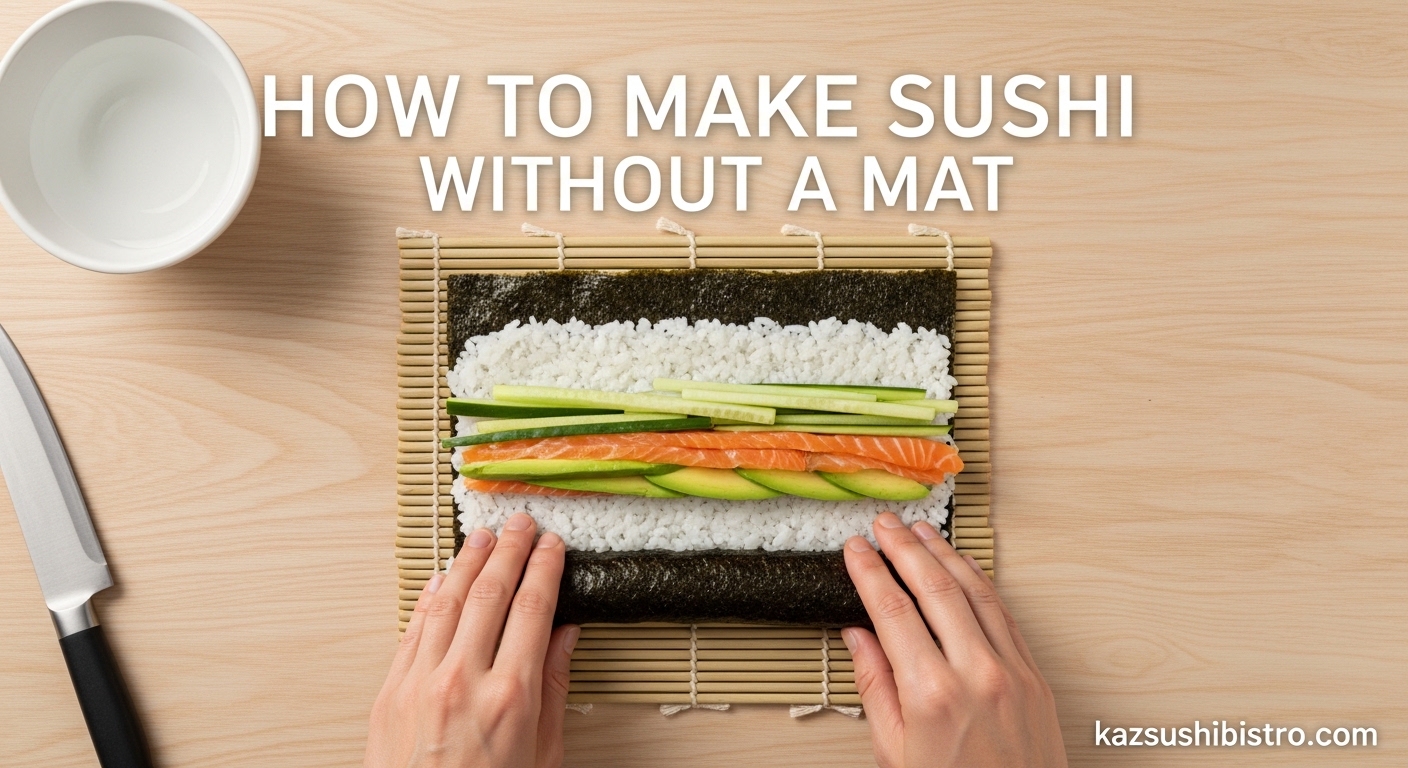
Making sushi at home does not require a bamboo mat. I have rolled hundreds of sushi rolls using nothing more than a kitchen towel and plastic wrap. This guide will show you exactly how to make sushi without a mat using items you already have in your home.
Whether you are a beginner who does not want to buy special equipment, or you just want to make sushi tonight without a trip to the store, these techniques work. Our team tested four different methods over three months to find the most reliable approaches for home cooks.
Table of Contents
How to Make Sushi Without a Mat?
Learning how to make sushi without a mat starts with understanding that the mat is just a tool for shaping and compressing. A clean kitchen towel wrapped in plastic wrap works just as well. The towel provides the flexibility and grip needed to roll tight sushi, while the plastic wrap prevents rice from sticking.
What You’ll Need?
Gather these ingredients and tools before you start. Having everything ready makes the rolling process smooth and enjoyable.
Ingredients
Sushi rice: Use short-grain Japanese rice or Calrose rice. These varieties become sticky when cooked, which helps the roll hold together.
Rice vinegar mixture: Combine 3 tablespoons rice vinegar, 2 tablespoons sugar, and 1 teaspoon salt. Heat gently until dissolved.
Nori sheets: Look for toasted seaweed sheets at any grocery store. They come in packs of 10 to 50 sheets.
Fillings: Choose fresh vegetables like cucumber, avocado, and carrots. For protein, consider cooked shrimp, imitation crab, or cooked salmon. Only use raw fish if it is labeled sushi-grade from a trusted fishmonger.
Condiments: Soy sauce, wasabi paste, and pickled ginger for serving.
Equipment Alternatives
You do not need a bamboo mat. Here are four alternatives that work perfectly:
- Kitchen towel + plastic wrap: The best all-around method. Provides grip and flexibility.
- Parchment paper: Non-stick and easy to find. Good for beginners.
- Plastic wrap alone: Works in a pinch. Use a thicker layer for better grip.
- Hand rolling (temaki): The authentic Japanese home method. No rolling surface needed at all.
You will also need a sharp knife, a bowl of water for wetting your hands, and a clean cutting board.
The Towel Method: Step-by-Step 2026
The towel method is the most reliable way to roll sushi without a mat. I use this technique weekly and it produces tight, professional-looking rolls every time.
Step 1: Prepare Your Towel
Lay a clean kitchen towel flat on your counter. Smooth out any wrinkles. Cover the towel completely with a sheet of plastic wrap, letting it extend a few inches beyond the towel edges. This creates your rolling surface.
Step 2: Cook and Season the Rice
Rinse 2 cups of short-grain rice until water runs clear. Cook with 2.25 cups water in a rice cooker or pot. While hot, fold in the vinegar mixture gently. Fan the rice while mixing to create shine. Let cool to room temperature.
The rice should be sticky but not mushy. Properly seasoned rice is essential for sushi that holds together.
Step 3: Lay Out the Nori
Place one nori sheet shiny-side down on your plastic-covered towel. The rough side should face up to grip the rice better.
Keep a bowl of water nearby. Wet your hands before touching the rice. This prevents sticking and makes spreading easier.
Step 4: Spread the Rice
Take a handful of cooled sushi rice. Spread it evenly across the nori, leaving a 1-inch strip bare at the top edge. The rice layer should be about 1/4 inch thick.
Work quickly but gently. Press rice to the edges for full coverage.
Step 5: Add Your Fillings
Arrange your chosen fillings in a line across the center of the rice. Do not overfill. Use about 2 to 3 tablespoons of filling total.
Cut vegetables into thin strips for easy rolling. Place fillings horizontally so they roll neatly.
Step 6: Roll It Up
Lift the bottom edge of the towel and plastic wrap. Use them to fold the nori over the fillings, tucking tightly. Continue rolling forward, using the towel to squeeze and shape as you go.
Roll completely, then squeeze gently with the towel to compress the roll. Let it rest seam-side down for 2 minutes before cutting.
Alternative Rolling Methods
Sometimes you want options. Here are three other ways to roll sushi without a bamboo mat.
The Parchment Paper Method
Parchment paper works beautifully for rolling sushi. It is non-stick and you can see through it slightly to check your progress.
Place nori on a sheet of parchment paper. Add rice and fillings as usual. Use the paper to roll, tucking and squeezing as you go. The paper provides less grip than a towel but works well for beginners.
Some cooks lightly dampen the parchment paper first. This helps it cling to itself during rolling.
The Plastic Wrap Method
If you have no towel or paper, plastic wrap alone can work. Use several layers for strength and grip.
Lay out a 20-inch sheet of plastic wrap. Place nori on top. Add rice and fillings. Roll using the plastic wrap to guide and compress. This method works best for inside-out rolls where rice is on the outside.
The Hand Roll Method (Temaki)
This is how many Japanese families make sushi at home. Temaki requires no rolling surface at all.
Cut a nori sheet in half. Hold it in one hand. Spread a thin layer of rice on one half. Add fillings. Roll into a cone shape by hand.
Temaki is eaten immediately while crisp. It is casual, fun, and eliminates all rolling stress.
Cutting and Serving Your Sushi
Proper cutting transforms your roll into beautiful sushi pieces. The right technique makes clean cuts without crushing the roll.
The Damp Knife Technique
Fill a small bowl with water. Dip your knife blade before each cut. This prevents rice from sticking to the blade.
Use a sharp, non-serrated knife. A chef’s knife or santoku works perfectly. Dull knives crush instead of slice.
Making Clean Cuts
Cut the roll in half first. Then cut each half into quarters. This gives you 8 pieces of equal size.
Use a gentle sawing motion. Let the knife do the work. Do not press down hard or you will flatten the roll.
Wipe the knife clean between cuts for the neatest results.
Serving Suggestions
Arrange sushi pieces on a plate with the cut side facing up. Add small dishes of soy sauce, wasabi, and pickled ginger.
Some people enjoy sesame seeds or thinly sliced green onions as garnish.
Troubleshooting Common Problems
Even experienced sushi makers hit snags. Here is how to fix the most common issues beginners face.
My Rice Is Too Sticky
Wet your hands before touching the rice. Keep a water bowl nearby and re-wet as needed.
If rice is still too sticky to spread, it may be overcooked. Next time, use slightly less water when cooking.
My Rolls Fall Apart
This usually means the roll is not tight enough. Squeeze firmly with the towel as you roll. Apply gentle pressure along the entire length.
Let the finished roll rest seam-side down for a few minutes before cutting. This helps the nori seal.
Also check your rice coverage. Bare spots in the rice layer cause weak points in the roll.
My Nori Tears When Rolling
Fresh nori is flexible. Old nori becomes brittle and tears easily. Check the package date when buying.
If your nori keeps tearing, you may be rolling too tightly. Apply firm but gentle pressure. The towel should guide, not force.
My Rolls Flatten on the Bottom
This happens when the roll sits in one position too long before cutting. Rest it seam-side down, not on its side.
Also ensure your rice layer is even. Thick rice on one side creates an uneven roll.
My Slices Are Uneven
Use the half-then-quarter method. Cut the roll in half first. Line up the halves and cut them together into quarters.
A sharp knife is essential. If your knife drags through the roll, it needs sharpening.
Delicious Variations to Try
Once you master the basic roll, experiment with these popular styles.
California Roll
Fill with imitation crab, avocado, and cucumber. For an inside-out version, spread rice on the nori, flip it over, then add fillings. Roll with sesame seeds on the outside rice layer.
Inside-Out Roll (Uramaki)
Spread rice over the entire nori sheet. Flip it so rice touches the towel or paper. Place fillings on the bare nori side. Roll so rice ends up on the outside.
Dip the outside in sesame seeds or tobiko before cutting.
Vegetable Rolls
Load up with avocado, cucumber, carrot, bell pepper, and asparagus. Add cream cheese for a vegetarian California roll style.
Spicy Tuna Roll
Mix diced sushi-grade tuna with mayonnaise and sriracha. Add cucumber for crunch. Roll with rice on the outside for the classic presentation.
Frequently Asked Questions
What can I use if I don’t have a sushi mat?
A clean kitchen towel covered with plastic wrap works best. You can also use parchment paper, plastic wrap alone, or make hand rolls (temaki) which require no rolling surface at all.
How to roll sushi without a board?
Use the towel method. Place nori on a towel covered with plastic wrap, add rice and fillings, then lift the towel to roll and shape the sushi. The towel provides the flexibility and compression needed.
Can you roll sushi by hand?
Yes. Hand rolls (temaki) are made by holding a half-sheet of nori in your hand, adding rice and fillings, and rolling into a cone shape. This is a traditional Japanese home method that requires no equipment.
Conclusion
Learning how to make sushi without a mat opens up a world of homemade Japanese cuisine. You now have four proven methods to create delicious sushi using items from your own kitchen.
Start with the towel method for the most reliable results. Practice your rolling technique and do not worry if your first few rolls are imperfect. Within three to four attempts, you will be making restaurant-quality sushi at home.
Share your creations with family and friends. Homemade sushi night is always a memorable experience.