
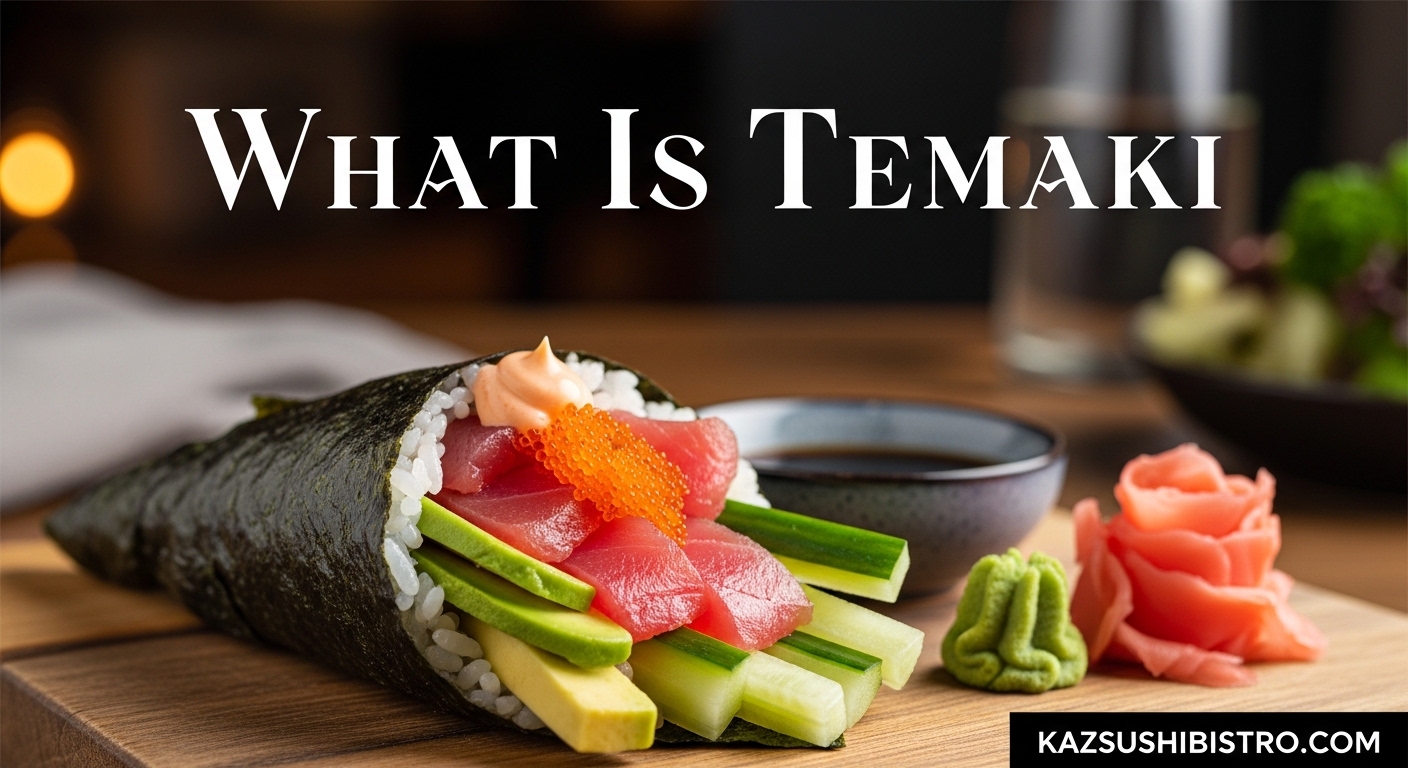
Temaki (手巻き寿司), also called temakizushi or hand roll sushi, is a type of Japanese sushi consisting of vinegared rice and various fillings wrapped in a cone-shaped piece of nori (seaweed). Unlike other sushi types that require special equipment and years of training, temaki makes sushi accessible to anyone with a few basic ingredients and five minutes to spare.
I still remember the first time I encountered temaki at a small izakaya in Tokyo. The chef placed a crisp sheet of nori in my palm, added a scoop of warm rice and fresh tuna, then showed me how to fold it into a perfect cone. That moment changed how I think about sushi forever.
In this guide, you will learn exactly what temaki is, where it came from, how it differs from other sushi types, and most importantly, how to make and eat it properly. Whether you are a complete beginner or looking to perfect your technique, this article covers everything you need to know about hand roll sushi.
Table of Contents
What Is Temaki Sushi?
Temaki literally translates to “hand roll” in Japanese. The word breaks down into two parts: te (手) meaning hand, and maki (巻き) meaning roll. This name perfectly describes what temaki is – sushi that you roll by hand without any special tools.
The defining characteristic of temaki is its cone shape. A square or rectangular sheet of nori (toasted seaweed) forms the outer wrapper, with sushi rice and fillings arranged inside. The nori is rolled from one corner to create a cone that tapers to a point at the bottom while remaining open at the top where the fillings are visible.
This cone shape serves a practical purpose. It creates a natural pocket that holds the fillings securely while allowing you to eat the temaki without any utensils. The crispy nori provides textural contrast to the soft rice and tender fish or vegetables inside.
The Key Characteristics That Define Temaki
Several features distinguish temaki from every other type of sushi. Understanding these characteristics helps you appreciate what makes hand rolls unique.
First, temaki requires no bamboo rolling mat. Unlike maki sushi that needs a makisu (bamboo mat) to create tight, even rolls, temaki is shaped entirely by hand. This makes it the most accessible sushi type for home cooks.
Second, temaki is always made fresh and eaten immediately. The nori wrapper loses its crispness within minutes of touching the moist rice, so temaki is never pre-made or stored. You roll it, then eat it right away.
Third, each temaki is an individual portion. While maki is sliced into six or eight pieces to share, temaki is designed as a single serving. This makes temaki perfect for casual dining where everyone creates their own custom rolls.
History and Origin of Temaki
The origin story of temaki dates back to 1971 at a restaurant called Tsukiji Tama Sushi in Tokyo’s upscale Ginza district. The owner wanted to create a more casual, accessible form of sushi that customers could enjoy without the formality of traditional sushi dining.
According to food historians, the inspiration came from watching how sushi chefs would occasionally make quick, informal rolls for themselves during breaks. These impromptu hand rolls were shaped like cones and eaten immediately without any cutting or plating ceremony.
The owner of Tsukiji Tama Sushi refined this concept and introduced it to customers as a new way to experience sushi. The idea caught on quickly. By the 1980s, temaki had spread throughout Japan and eventually made its way to sushi restaurants worldwide.
The Gambling Den Theory
Some food historians propose an alternative origin theory connecting temaki to Japan’s gambling culture. During the Edo period (1603-1868), illegal gambling dens called tekkaba operated in the shadows of Japanese cities.
Gamblers needed quick, portable food they could eat with one hand while keeping the other free for cards or dice. Vendors allegedly sold simple hand rolls that could be consumed quickly without interrupting the game. This theory suggests temaki evolved from practical necessity rather than culinary innovation.
While the gambling den theory remains unproven, it adds an interesting cultural layer to temaki’s history. Whether born in a high-end Ginza restaurant or underground gambling halls, temaki represents the democratization of sushi – quality ingredients in an informal, accessible format.
The Modern Temaki Revival
In recent years, temaki has experienced a renaissance with the rise of temaki bars – fast-casual restaurants specializing in hand rolls. These establishments, popular in cities like Los Angeles, New York, and London, serve freshly made temaki to-go, often with fusion-inspired fillings beyond traditional Japanese ingredients.
The temaki party concept has also gained traction among home cooks. Groups gather with prepared ingredients and roll their own custom temaki together. This interactive dining experience combines the social aspect of taco night with the flavors of Japanese cuisine.
Temaki vs Other Sushi Types 2026
Understanding how temaki differs from other sushi styles helps clarify exactly what you are eating and why hand rolls suit certain situations better than other options. Here is a detailed comparison of the main sushi types.
| Feature | Temaki (Hand Roll) | Maki (Roll) | Nigiri | Sashimi |
|---|---|---|---|---|
| Shape | Cone | Cylinder (cut into rounds) | Oval rice mound with fish on top | Sliced fish only (no rice) |
| Nori position | Outside wrapper | Outside (or inside for uramaki) | None | None |
| Rolling method | By hand (no tools) | Bamboo mat required | Hand-pressed | Sliced only |
| Serving size | Individual portion | 6-8 pieces per roll | 1-2 pieces | Multiple slices |
| Best eaten | Immediately | Within minutes | Within minutes | Immediately |
| Difficulty | Beginner-friendly | Requires practice | Requires skill | Simple slicing |
| Equipment needed | None | Bamboo mat, sharp knife | Optional mold | Sharp knife |
Temaki vs Maki: The Key Differences 2026
Maki and temaki are both rolled sushi types, but they differ fundamentally in technique and presentation. Maki uses a bamboo mat to create a tight cylinder that is then sliced into bite-sized rounds. This requires skill to roll evenly and cut cleanly without squashing the fillings.
Temaki skips the mat and slicing entirely. You roll it by hand into a cone that is eaten whole. There is no pressure to create perfect cylinders or worry about the roll falling apart when cut. This forgiving nature makes temaki ideal for beginners.
Another difference is the nori texture. In maki, the nori softens as it contacts the rice, creating a chewy wrapper. In temaki, the nori remains crispy because you eat it immediately after rolling. This textural contrast is part of temaki’s appeal.
When to Choose Temaki Over Other Types
Temaki excels in situations where you want casual, interactive dining. Hosting a sushi party where guests roll their own creations works perfectly with temaki because everyone can customize their fillings without waiting for a chef.
For quick meals at home, temaki is faster than making maki. You skip the mat setup, rolling technique, and cutting process. Just place ingredients on nori, roll, and eat.
Traditional sushi restaurants rarely serve temaki because it must be made fresh for each order. The nori becomes soggy within 5-10 minutes of contact with rice, making temaki unsuitable for pre-preparation. This is why temaki shines in home settings or specialized temaki bars.
Essential Ingredients and Fillings
Every temaki consists of three core components: nori (seaweed), sushi rice, and fillings. The quality of these ingredients directly impacts the final result, so understanding how to select and prepare each component matters.
Nori: The Crispy Wrapper
Nori is the dried seaweed sheet that forms temaki’s outer cone. Quality matters enormously here – cheap nori tears easily, tastes fishy, and lacks the crisp texture that defines great temaki.
Look for nori labeled as “yaki nori” (toasted seaweed) from Japan’s Ariake Sea region. This area produces some of the world’s finest nori thanks to ideal water conditions. Premium nori costs more but delivers noticeably better flavor and texture.
Nori comes in different grades, with gold or silver labels indicating higher quality. For temaki, you want full sheets (approximately 8×7 inches) cut into halves or quarters depending on your preferred roll size. Store nori in an airtight container away from moisture and heat to maintain crispness.
Sushi Rice: The Foundation
Sushi rice, called sumeshi or shari, is short-grain Japanese rice seasoned with rice vinegar, sugar, and salt. The stickiness of short-grain rice is essential – it holds together when rolled and provides the proper texture against the crispy nori.
For best results, use Japanese short-grain rice varieties like Koshihikari or Calrose. Rinse the rice thoroughly until water runs clear, then cook according to package directions. While the rice is still warm, fold in seasoned rice vinegar using a cutting motion rather than stirring to avoid mashing the grains.
The rice should be at room temperature or slightly warm when making temaki. Cold rice hardens and does not adhere well. Hot rice steams the nori, making it soggy before you even start rolling.
Traditional Fillings Categories
Temaki fillings fall into several categories, and mixing items from different groups creates balanced flavor combinations. Here are the main categories with specific examples.
Raw Fish (Sashimi-grade): Salmon (shake), tuna (maguro), yellowtail (hamachi), amberjack (kanpachi), scallop (hotate), sweet shrimp (amaebi), and fatty tuna belly (toro or chutoro).
Roe and Sea Urchin: Salmon roe (ikura), flying fish roe (tobiko), and sea urchin (uni) add briny pops of flavor and striking color contrast.
Cooked Fish and Seafood: Grilled eel (unagi), cooked shrimp (ebi), crab stick (kanikama), and seasoned ground fish (negitoro).
Egg and Vegetables: Japanese rolled omelet (tamagoyaki or dashimaki tamago), avocado, cucumber, pickled daikon (takuan), shiso leaves (ooba), and kaiware daikon sprouts.
Preserved and Fermented: Pickled plum (umeboshi), pickled ginger (gari), and fermented soybeans (natto) for adventurous eaters.
10 Popular Temaki Combinations
Here are classic combinations that work beautifully in temaki. Mix and match to find your favorites.
- Spicy Tuna: Fresh tuna mixed with sriracha and Japanese mayonnaise, topped with cucumber for crunch.
- Salmon Avocado: Sliced salmon with ripe avocado, a squeeze of lemon, and sesame seeds.
- Negitoro: Minced fatty tuna mixed with finely chopped scallions – a classic bar food combination.
- California Style: Crab stick, avocado, and cucumber – familiar flavors for beginners.
- Ikura Burst: Generous spoonful of salmon roe with a shiso leaf base for aromatic contrast.
- Yellowtail Scallion: Thinly sliced hamachi with scallions and a touch of ponzu sauce.
- Egg and Pickles: Tamagoyaki with takuan and umeboshi – a vegetarian favorite with varied textures.
- Uni Special: Fresh sea urchin with cucumber and a dab of wasabi – luxurious and oceanic.
- Tempra Shrimp: Crispy shrimp tempura with avocado and eel sauce – hot and cold contrast.
- Natto Power: Fermented soybeans with scallions and takuan – an acquired taste with intense umami.
How to Make Temaki: Step-by-Step Guide
Making temaki at home requires minimal equipment and basic technique. Once you understand the fundamentals, you can create restaurant-quality hand rolls in your own kitchen.
Equipment You Need
The beauty of temaki lies in its simplicity. You need just three things: nori sheets, prepared sushi rice, and your chosen fillings. A small bowl of water for wetting your hands helps prevent rice from sticking.
No bamboo mat required. No special knives needed. This accessibility makes temaki the perfect entry point for home sushi makers.
Step-by-Step Rolling Technique
Follow these steps to roll perfect temaki every time. Work quickly to maintain nori crispness.
Step 1: Prepare the Nori
Start with a half-sheet of nori (approximately 4×7 inches) placed shiny side down on your palm or a clean surface. The rough side faces up to grip the rice better. If you prefer smaller rolls, use quarter sheets.
Step 2: Add the Rice
Wet your hands slightly to prevent sticking. Take a small handful of sushi rice – about 2-3 tablespoons – and spread it across the left half of the nori sheet, leaving the right half empty for rolling. The layer should be thin enough that you can see the nori through the rice.
Step 3: Position the Fillings
Place your chosen fillings diagonally across the rice, starting from the bottom left corner and angling toward the center. Do not overfill – 2-3 ingredients maximum. Overstuffed temaki will not seal properly and falls apart when you eat it.
Step 4: Roll the Cone
Pick up the bottom left corner where the rice and fillings meet. Fold it up and over the fillings, then continue rolling toward the right side to form a cone shape. The motion is similar to folding a wrap or burrito, but you are aiming for a cone rather than a cylinder.
Step 5: Seal and Serve
When you reach the end of the nori sheet, press gently to seal the edge. The rice acts as a natural adhesive. Place the temaki seam-side down on a plate if not eating immediately, though ideally you consume it right away while the nori remains crispy.
The Triangle Method for Even Distribution
Professional temaki chefs use a triangle rice placement technique for optimal filling distribution. Instead of spreading rice evenly, they place it in a rough triangle shape with the point at the bottom left corner and the base extending toward the center.
This creates a pocket in the center of the cone where fillings sit perfectly. When rolled, each bite contains balanced proportions of rice and filling rather than mouthfuls of plain rice at the bottom.
Troubleshooting Common Problems
Even with simple technique, issues arise when making temaki. Here is how to fix the most common problems.
Soggy Nori: This is the number one complaint. Nori absorbs moisture from rice within minutes. Solutions include using less rice, eating immediately, or buying higher quality nori that resists moisture longer. Some home cooks place a layer of lettuce between rice and nori as a moisture barrier.
Rice Not Sticking: If your rice falls off the nori, it is likely too cold or not sticky enough. Short-grain rice varieties work best. Adding slightly more vinegar seasoning increases stickiness.
Fillings Falling Out: You are overstuffing. Use less filling and place it closer to the bottom corner rather than spreading across the entire rice area. A small amount of wasabi between rice and fish helps act as glue.
Cone Won’t Seal: The nori edge needs rice contact to stick. Leave a small border of rice at the edge of the nori sheet, or add a grain of rice at the seam as adhesive.
How to Eat Temaki Properly
Eating temaki involves specific etiquette that enhances your experience and shows respect for the food. The rules differ significantly from other sushi types.
Use Your Hands, Not Chopsticks
Temaki is designed to be eaten with your hands. The cone shape and crispy nori wrapper would be destroyed by chopstick attempts. Pick up the temaki with your fingers, holding it upright like an ice cream cone.
This hand-eating tradition dates back to temaki’s origins as casual, portable food. Using chopsticks on temaki is considered inappropriate by traditional standards, though modern casual settings are more forgiving.
Step-by-Step Eating Guide
- Pick up the temaki immediately after it is made – do not let it sit.
- Hold it upright with the pointed end down and open top facing up.
- Take your first bite from the top, where the fillings are visible.
- Continue eating toward the point, rotating the temaki as needed.
- Dip the top corner briefly in soy sauce between bites if desired.
- Finish within 2-3 minutes to enjoy crispy nori texture throughout.
Timing Is Everything
The single most important rule of eating temaki is speed. Nori begins softening the moment it contacts rice moisture. Within 5-10 minutes, crispy seaweed becomes chewy and unpleasant.
This is why traditional sushi restaurants rarely serve temaki – they cannot pre-make them. At home or temaki parties, roll one, eat one, then roll another. Do not prepare multiple temaki in advance.
The texture transformation from crisp to soggy happens faster in humid environments. During summer months or in humid climates, eat even faster for optimal experience.
Soy Sauce and Wasabi Etiquette
Dipping temaki requires technique. Since the cone shape makes full submersion impossible, dip only the top corner where the fillings are exposed. Brief contact is sufficient – prolonged soaking makes nori soggy instantly.
Wasabi placement depends on the filling. For raw fish temaki, a small amount between rice and fish is traditional. For cooked or vegetarian fillings, wasabi in your soy sauce dip works well. Never mix wasabi directly into soy sauce in Japanese tradition, though Western sushi culture accepts this practice.
Cone-Style vs Taco-Style Eating
Traditional temaki maintains its cone shape throughout eating. However, a modern variation called “taco-style” or “open-faced” has emerged. In this approach, you fold the nori into a U-shape rather than a full cone, creating a taco-like presentation.
Taco-style temaki is easier to eat and allows more filling visibility. Some diners find it less messy than the traditional cone. However, purists insist the cone shape provides better structural integrity and the intended textural experience.
Both styles are acceptable in casual settings. At traditional Japanese establishments, stick to the classic cone shape.
Temaki Variations and Modern Adaptations
While traditional temaki follows specific conventions, modern interpretations have expanded the concept in creative directions. Understanding these variations helps you explore the full range of hand roll possibilities.
Traditional Cone vs Modern Taco Style
The classic temaki forms a complete cone sealed at the bottom point. This creates a pocket that holds fillings securely. The closed cone design works best with traditional sushi ingredients that are sliced and relatively flat.
Taco-style temaki leaves one side open like a Mexican taco. This accommodates chunkier, irregular fillings like diced poke, salad-style preparations, or fusion ingredients. Los Angeles and New York temaki bars popularized this style for Instagram-worthy presentations with visible colorful toppings.
Regional Japanese Variations
Different regions of Japan have developed local temaki traditions. Understanding these regional styles expands your appreciation of hand roll diversity.
In Hokkaido, temaki often features local seafood like sea urchin (uni) and salmon roe (ikura). The cold waters around Hokkaido produce exceptionally rich, flavorful versions of these ingredients.
Osaka-style temaki sometimes incorporates more cooked ingredients and stronger flavors like pickled plum (umeboshi) and fermented soybeans (natto). The bold flavors reflect Kansai cuisine’s generally more assertive taste profile compared to Tokyo.
Kyushu region temaki occasionally uses local citrus like kabosu or yuzu in the fillings, adding bright acidic notes that complement rich fish.
Vegetarian and Vegan Options
Temaki adapts beautifully to plant-based diets. The core concept – rice and fillings in a nori cone – works with any filling combination. High-quality nori and well-seasoned rice are actually more critical without fish to distract.
Excellent vegetarian fillings include seasoned tofu, grilled eggplant, pickled vegetables, avocado, cucumber, shiso leaves, sesame seeds, and marinated mushrooms. Vegan diners should check that their nori is produced without fish-based seasonings, as some brands use dashi.
Vegetable-forward temaki is common in Buddhist temple cuisine (shojin ryori) where vegetarianism is traditional. These preparations emphasize seasonal vegetables and sophisticated seasoning techniques.
The Temaki Party Concept
Temaki parties have become popular worldwide as an interactive dining experience. The host prepares ingredients in advance, then guests roll their own custom temaki throughout the meal.
This format works well for groups because everyone controls their own preferences and dietary restrictions. It eliminates the pressure of pre-rolling enough maki for everyone. The casual, hands-on nature creates a fun, social atmosphere.
To host a successful temaki party, prepare rice and slice fillings in advance. Arrange ingredients on platters for easy access. Provide small bowls of water for hand-wetting. Most importantly, remind guests to roll and eat immediately rather than preparing multiple temaki at once.
Frequently Asked Questions About Temaki
What exactly is temaki?
Temaki (手巻き寿司), also called temakizushi or hand roll sushi, is a type of Japanese sushi where vinegared rice and fillings are wrapped in a cone-shaped piece of nori (seaweed) and rolled by hand without using a bamboo mat. The name literally means hand roll in Japanese.
What is the difference between temaki and maki?
Temaki is hand-rolled into a cone shape and eaten whole immediately after making, while maki is rolled with a bamboo mat into a cylinder, sliced into 6-8 pieces, and can be made in advance. Temaki requires no special equipment and is more casual, while maki requires skill with the rolling mat.
How are you supposed to eat temaki?
Eat temaki with your hands, not chopsticks. Hold it like an ice cream cone with the pointed end down. Take bites from the top where the fillings are visible, rotating as you eat. Dip only the top corner briefly in soy sauce. Most importantly, eat within 2-3 minutes of rolling while the nori is still crispy.
Is temaki considered authentic sushi?
Yes, temaki is absolutely authentic Japanese sushi. It originated in 1971 at Tsukiji Tama Sushi in Tokyo’s Ginza district. While it is a more modern invention compared to nigiri (which dates to the Edo period), temaki follows all traditional sushi principles: vinegared rice, quality seafood, and nori.
Where did temaki come from?
Temaki was created in 1971 at Tsukiji Tama Sushi, a restaurant in Tokyo’s upscale Ginza district. The owner wanted a casual, accessible form of sushi that customers could roll themselves. Some theories trace the concept to gambling dens where quick, one-handed food was needed, but the modern temaki originated at this Tokyo restaurant.
Why does my nori get soggy when making temaki?
Nori becomes soggy within minutes of contacting moist rice. To prevent this: use the minimum rice necessary, eat immediately after rolling, buy higher quality nori from Japan’s Ariake Sea region, and work in a dry environment. Some people place lettuce between rice and nori as a moisture barrier.
Can I make temaki without a bamboo mat?
Yes, absolutely. Unlike maki sushi that requires a bamboo mat, temaki is specifically designed to be rolled by hand with no tools needed. This is why it is called hand roll sushi. You only need nori sheets, prepared sushi rice, and fillings.
What are the best fillings for beginner temaki?
Beginners should start with cooked fillings and familiar flavors: California-style (crab stick, avocado, cucumber), spicy tuna made with cooked tuna, shrimp tempura with avocado, or tamagoyaki (Japanese omelet) with pickled daikon. Raw fish can be added once you master the rolling technique.
Conclusion: What Is Temaki and Why You Should Try It
Temaki is Japanese sushi in its most accessible form. The combination of crispy nori, seasoned rice, and quality fillings in a hand-rolled cone eliminates the barriers that intimidate many home cooks from trying sushi. No special equipment needed. No years of training required.
What started in 1971 as a casual dining innovation at a Tokyo restaurant has become a global phenomenon. Temaki parties bring friends together. Temaki bars offer fast-casual sushi on-the-go. Home cooks discover that restaurant-quality hand rolls are within reach.
The key to great temaki lies in understanding the fundamentals: quality nori that stays crispy, properly seasoned short-grain rice, fresh fillings, and most importantly, the willingness to roll and eat immediately. Speed matters. Freshness matters. Everything else is forgiving.
Now that you understand what temaki is, where it came from, and how to make it, the next step is simple. Gather your ingredients, wet your hands, and roll your first cone. Within minutes you will experience why this hand roll sushi has captured the hearts of food lovers worldwide.
What filling will you choose for your first temaki?