
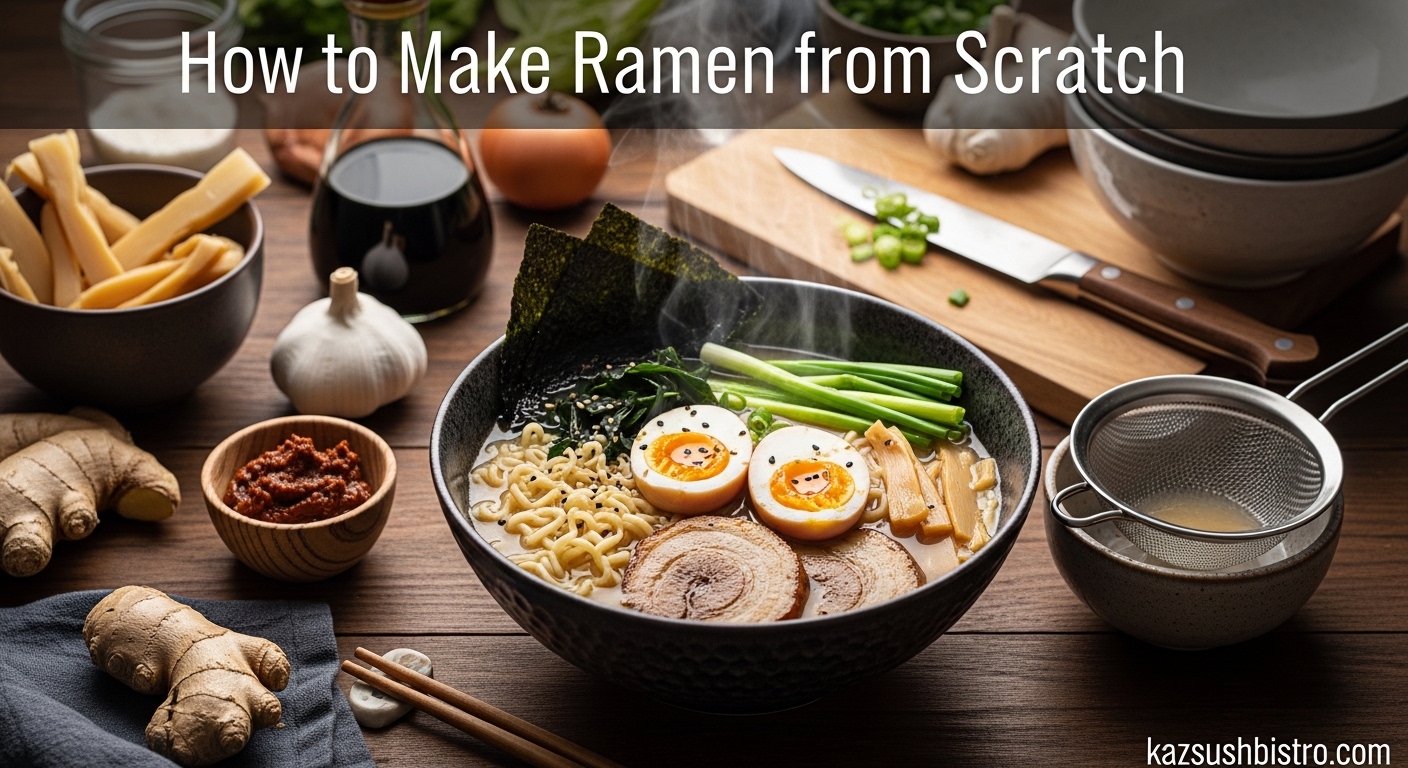
Making ramen from scratch is one of the most rewarding cooking projects you can tackle in your home kitchen. If you have ever slurped a bowl of authentic Japanese ramen and wondered if you could recreate that depth of flavor yourself, the answer is yes. I spent three months perfecting my technique, testing different broths, and learning why some noodles have that perfect chewy bite while others turn gummy.
This guide will teach you how to make ramen from scratch without overwhelm. We will break down each component into manageable steps. You will learn to build a rich dashi broth, craft a balanced tare seasoning base, understand the science behind alkaline noodles, and create restaurant-quality toppings like chashu pork and jammy eggs.
Is it hard to make ramen from scratch? Not if you approach it systematically. Most home cooks fail because they try to make everything in one day. The secret is preparation. Many components can be made days ahead, and the actual assembly takes less than 30 minutes.
Table of Contents
What is Ramen? The 4 Components You Need to Master 2026
Authentic ramen consists of four distinct elements that work together in harmony. Understanding these components is the foundation of making great ramen from scratch.
Broth (Dashi) forms the soul of your ramen. This is the liquid foundation built from kombu (dried kelp), katsuobushi (dried bonito flakes), and often chicken bones or pork bones. A proper dashi extraction takes about 30 minutes and delivers the umami depth that defines great ramen.
Tare is the concentrated seasoning base that flavors your broth. Think of it as the “salt packet” of homemade ramen, except infinitely more complex. Tare can be soy-based (shoyu), salt-based (shio), or miso-based. You add 1-2 tablespoons of tare to each bowl before pouring in the hot broth.
Noodles provide the texture contrast. True ramen noodles contain kansui, an alkaline mineral water that gives them their characteristic yellow color and chewy, springy texture. You can make noodles from scratch or buy fresh ones from Asian markets.
Toppings complete the experience. Chashu (braised pork belly), nitamago (soft-boiled marinated egg), green onions, nori, and aromatic oils transform a simple noodle soup into a complete meal.
Ramen Types Explained: Shoyu vs Miso vs Tonkotsu
Before you start cooking, decide which style of ramen you want to make. Each type has distinct characteristics, and I recommend beginners start with shoyu ramen because it is the most forgiving.
Shoyu Ramen features a clear, amber-colored broth seasoned with soy sauce tare. The flavor is savory and slightly sweet, with a clean finish. This is the classic Tokyo-style ramen and the best starting point for home cooks.
Miso Ramen comes from Hokkaido and features a heartier, more robust flavor profile. The broth incorporates fermented soybean paste, creating a cloudy, rich soup that stands up to butter and corn toppings.
Tonkotsu Ramen is the most time-intensive. This style uses pork bones boiled for 12+ hours to create a creamy, white broth with intense collagen content. The result is a heavy, filling bowl that sticks to your ribs.
For your first attempt at how to make ramen from scratch, choose shoyu. The techniques you learn will transfer to other styles, and the shorter cooking time means less risk if something goes wrong.
How to Make Dashi: Your Ramen Broth Foundation
Great dashi is the difference between soup that tastes like salted water and broth that makes you close your eyes with satisfaction. The process is simple but requires attention to timing and temperature.
Ingredients for Basic Dashi: 20g dried kombu (about two 4-inch pieces), 20g katsuobushi (bonito flakes), 1 liter cold water.
Step 1: Place the kombu in cold water and let it soak for 30 minutes at room temperature. Do not skip this step. Cold extraction pulls out the glutamates (umami compounds) without releasing the bitter flavors that come from hot water.
Step 2: Heat the pot over medium heat. Watch carefully as the water approaches a simmer. Just before boiling, when small bubbles form on the kombu, remove the kombu immediately. If kombu boils, the broth turns slimy and bitter.
Step 3: Bring the liquid to a full boil, then turn off the heat. Add the katsuobushi and let it sink naturally. Do not stir. Wait 5 minutes, then strain through a fine mesh sieve lined with cheesecloth.
Step 4: Taste your dashi. It should be clear, light amber, and have a clean savory flavor. This is your base. For ramen, you will combine this dashi with additional chicken or pork broth for body.
Chicken-Based Rich Broth Variation
For a richer shoyu ramen broth, combine your dashi with chicken stock. Use 1 pound chicken wings or carcasses, cover with the dashi you just made, and simmer gently for 2-3 hours. Skim foam that rises every 20 minutes. The result is a golden, collagen-rich broth that clings to noodles.
Tonkotsu Pork Bone Broth Option
If you want creamy tonkotsu broth, you need pork bones and patience. Blanch 3 pounds pork neck bones in boiling water for 10 minutes to remove blood. Drain, rinse, then cover with fresh water. Bring to a rolling boil and keep it there for 12-14 hours, topping up water as needed. The aggressive boiling emulsifies fat into the broth, creating that signature white color.
Ramen Tare: The Secret Seasoning Base
Tare is where your personal flavor signature lives. Every ramen shop guards their tare recipe. The good news is you can make excellent tare at home with common ingredients.
Shoyu Tare Recipe
This soy-based tare works for any clear broth ramen. Combine 1 cup soy sauce, half cup mirin, quarter cup sake, 2 tablespoons sugar, 3 cloves smashed garlic, and a 1-inch piece of ginger (sliced) in a saucepan. Bring to a boil, then reduce heat and simmer 10 minutes. Let cool completely, then strain. Store in a jar in the refrigerator for up to one month.
The ratio is forgiving. Want it sweeter? Add more sugar. Prefer a stronger soy punch? Reduce the mirin. Taste as you go and adjust.
Shio Tare Recipe
Shio (salt) tare creates a lighter, more delicate ramen. It lets the dashi flavor shine through. Combine half cup sea salt, 1 cup water, half cup mirin, quarter cup sake, and a piece of kombu in a pot. Simmer 5 minutes, cool, then strain. This tare keeps indefinitely refrigerated.
When assembling your bowl, start with 1 tablespoon of tare. Taste the broth after adding hot dashi. Adjust with more tare if needed. It is easier to add than subtract.
Homemade Ramen Noodles: The Kansui Method
Is it hard to make ramen noodles from scratch? It requires practice, but the results justify the effort. The key is understanding kansui.
The Science of Kansui (Why Alkaline Matters)
Kansui is alkaline mineral water containing potassium carbonate and sodium carbonate. When added to wheat flour, it increases the pH, which strengthens gluten networks and creates that distinctive yellow color through the Maillard reaction during cooking.
You can buy kansui powder online, or make your own. Spread baking soda on a foil-lined baking sheet and bake at 250°F (120°C) for one hour. This transforms sodium bicarbonate into sodium carbonate, which is more alkaline. Store in an airtight container.
For your noodles, use 4 grams baked baking soda per 500 grams flour. Dissolve the baked soda in 200ml warm water first, then mix into 500g bread flour (or 400g bread flour plus 100g all-purpose for slightly softer noodles).
Step-by-Step Noodle Recipe
Step 1: Mix your flour and kansui water in a bowl until shaggy clumps form. Do not worry if it looks dry. Ramen dough is intentionally stiff.
Step 2: Knead aggressively for 10 minutes by hand or 5 minutes in a stand mixer with dough hook. The dough will resist at first. Keep going until it becomes smooth and slightly elastic.
Step 3: Rest the dough wrapped in plastic for 30 minutes. This relaxes gluten and makes rolling easier.
Step 4: Roll to setting 4 on a pasta machine (about 2mm thick). Fold and reroll twice for proper gluten alignment. Cut into thin noodles using the spaghetti cutter attachment.
Step 5: Dust with cornstarch (not flour) to prevent sticking. Fresh noodles cook in 1-2 minutes in boiling water.
Store-Bought Noodle Alternatives
If making noodles feels intimidating, buy fresh alkaline noodles from Asian markets. Look for packages labeled “ramen” or “Chinese egg noodles” with kansui in the ingredients. Sun Noodle is a widely available brand that supplies many ramen shops.
Chashu Pork Belly: Braising Technique
Chashu is braised pork belly rolled into a log and sliced into tender rounds. It melts in your mouth and provides rich fat that emulsifies into your broth with each bite.
Classic Rolled Chashu Recipe
Start with 1.5 pounds skinless pork belly. Look for even layers of fat and meat. Roll it tightly into a log and tie with kitchen twine every inch to hold the shape.
Sear the rolled belly in a hot pan to brown all sides. This creates fond that flavors your braising liquid. Transfer to a pot and add: half cup soy sauce, half cup mirin, quarter cup sake, 2 tablespoons sugar, 4 cloves garlic, 1-inch ginger sliced, and enough water to cover halfway.
Bring to a gentle simmer, cover, and cook on low heat for 2.5 to 3 hours. Turn the roll every 30 minutes for even cooking. The pork is done when a chopstick slides through with no resistance. Let cool in the liquid, then refrigerate overnight for easiest slicing.
Slice into quarter-inch rounds and warm in the braising liquid before serving. The remaining braising liquid becomes an excellent base for more tare.
Alternative: Chicken Thigh Chashu
For a lighter option, use chicken thighs. Roll boneless, skin-on thighs with the skin facing out. Braise for only 1.5 hours. The result is tender, flavorful meat that works well in lighter shoyu or shio ramen.
Soft-Boiled Eggs (Nitamago): The Jammy Center Technique
The perfect ramen egg has a custardy, jammy yolk that spreads into your broth like sauce. Timing is everything.
Bring a pot of water to a rolling boil. Lower room-temperature eggs gently into the water. Set a timer immediately for 6 minutes and 30 seconds exactly.
While eggs cook, prepare an ice bath. When the timer rings, transfer eggs immediately to ice water. Let them cool for at least 5 minutes. This stops cooking and firms the whites for easier peeling.
Peel carefully. The whites will be set but delicate. Marinate peeled eggs in your tare (diluted 1:1 with water) for minimum 4 hours, ideally overnight. The eggs take on a beautiful brown color and absorb savory flavor.
Slice in half just before serving to reveal that perfect orange, jammy center.
Toppings and Assembly
With your components ready, assembly becomes the final creative act. A complete ramen bowl balances textures and flavors across every bite.
Essential Toppings Checklist
These are the classics: Chashu (2-3 slices), nitamago (half egg per bowl), menma (fermented bamboo shoots), nori (toasted seaweed sheets), green onions (thinly sliced), and corn (especially for miso ramen). Consider also: narutomaki (fish cake with pink swirl), bean sprouts, wood ear mushrooms, and a pat of butter for miso style.
Assembly Step-by-Step
Start with a warm bowl. Add 1-2 tablespoons of tare to the bottom. This is your salt layer.
Cook your noodles in a separate pot of vigorously boiling water. Fresh noodles need 60-90 seconds. Dried noodles need 3-4 minutes. Stir immediately upon adding to prevent sticking.
Drain noodles well and place them in the bowl over your tare. Arrange toppings artfully on top of the noodles.
Ladle hot broth over everything. The hot liquid releases aromatics from your toppings and carries the tare throughout the bowl. Serve immediately while piping hot.
Meal Prep and Storage: Making Ramen Work for Your Schedule
One of the biggest mistakes home cooks make is trying to prepare everything on serving day. Ramen rewards preparation. Here is how to break this into manageable pieces.
Make Ahead (Up to 1 Month): Tare keeps in the refrigerator for weeks. Make a big batch and portion into jars. The flavors actually improve as they meld.
Make Ahead (Up to 1 Week): Chashu pork stores beautifully in its braising liquid. Slice and reheat gently before serving. Nitamago eggs keep for 3 days marinated in the refrigerator.
Make Ahead (Up to 3 Days): Dashi broth stores well refrigerated. Your enriched chicken or pork broth also keeps for several days. Reheat gently without boiling.
Make Fresh: Noodles should be cooked just before eating. If you made fresh noodles, they can be frozen in portions for up to one month. Cook directly from frozen, adding 30 seconds to cooking time.
Assembly Strategy: On serving day, you only need to reheat broth, cook noodles, and warm your pre-made toppings. A complex bowl comes together in 15 minutes if you prepared ahead.
Troubleshooting Common Ramen Mistakes
After helping dozens of home cooks troubleshoot their first ramen attempts, I have identified the most common failures and their solutions.
Problem: Cloudy Broth
Cloudy broth usually means you boiled too hard or did not blanch bones properly. For clear dashi, never let kombu boil. For bone broth, blanch bones first, then maintain a gentle simmer rather than a rolling boil. Skim foam diligently during the first hour of cooking.
Problem: Gummy or Mushy Noodles
Overcooking is the culprit. Fresh ramen noodles cook in 60-90 seconds. Set a timer. Also ensure you are using the right flour. Bread flour with its higher protein content creates better structure than all-purpose alone. And never skip the kansui. Without alkaline water, your noodles will be soft and lack that signature chew.
Problem: Bland or Boring Broth
Bland broth usually means insufficient tare or stale dashi ingredients. Kombu and katsuobushi lose potency over time. Buy from stores with high turnover. Taste your dashi before adding to tare. It should be savory and clean. If your final bowl tastes flat, add more tare one teaspoon at a time until the salt level feels right.
Problem: Overcooked Eggs
Rubbery yolks happen when eggs cook too long or cool too slowly. Use a timer. Do not guess. And plunge eggs immediately into ice water. The rapid temperature drop stops cooking instantly. Room temperature eggs work better than cold-from-fridge eggs because they cook more evenly.
Problem: Tough Chashu
Chashu needs low, slow heat. If your pork is tough, it did not cook long enough. Return to liquid and simmer another hour. Also check your pork belly cut. Even fat layers work best. If one end is all fat and the other all meat, the roll will cook unevenly.
Frequently Asked Questions
What are the 5 ingredients in ramen?
The five essential ingredients in traditional ramen are: wheat noodles (typically alkaline noodles with kansui), broth (dashi or bone-based), tare seasoning base, protein (usually chashu pork), and aromatics (green onions, garlic, or ginger). The exact combination varies by ramen style, but these five components create the foundation of every bowl.
Is it possible to make ramen from scratch?
Yes, it is absolutely possible to make authentic ramen from scratch at home. While it requires time and attention to detail, home cooks can create restaurant-quality ramen by mastering four core components: broth, tare seasoning, noodles, and toppings. Many elements can be prepared days ahead, making the final assembly manageable even for beginners.
Can a diabetic eat ramen?
Diabetics can enjoy ramen with modifications. The main concerns are the high carbohydrate content of noodles and sodium levels in broth. Consider using half the noodles and adding extra vegetables, choosing shio (salt-based) tare over sweet shoyu, and making homemade broth to control sodium. Shirataki noodles made from konjac yam offer a low-carb alternative to wheat noodles.
How to make ramen at home step by step?
To make ramen at home: Step 1 – Prepare dashi broth by steeping kombu and bonito flakes. Step 2 – Make tare seasoning with soy sauce, mirin, and aromatics. Step 3 – Cook or buy alkaline noodles. Step 4 – Prepare toppings like chashu pork and soft-boiled eggs. Step 5 – Assemble by placing tare in the bowl, adding noodles, arranging toppings, and ladling hot broth over everything.
Is it hard to make ramen noodles from scratch?
Making ramen noodles from scratch requires practice but is achievable for home cooks. The challenge lies in achieving the right texture, which depends on using kansui (alkaline water) and proper kneading technique. A pasta machine helps achieve consistent thickness. Beginners can start with store-bought fresh noodles while mastering other components, then attempt homemade noodles once comfortable with the process.
What are the common mistakes when making ramen?
Common ramen mistakes include: boiling kombu for dashi (removes it before boiling instead), overcooking noodles (they take only 60-90 seconds), insufficient seasoning (tare should taste strong when sampled alone), not blanching bones for tonkotsu (creates cloudy broth), and skipping the ice bath for eggs (results in overcooked yolks). Most failures come from rushing or not following temperature and timing instructions precisely.
Conclusion: Your Ramen Journey Starts Now
Learning how to make ramen from scratch transforms you from someone who eats ramen into someone who understands it. The process demands patience, but every component you master builds your skill and appreciation for this beloved Japanese dish.
Start small. Make one batch of shoyu tare this weekend. Next week, try the dashi. Build your confidence component by component. Within a month, you will assemble bowls that rival your favorite ramen shop.
The first bowl might not be perfect. The second will be better. By your fifth attempt, you will have developed instincts for seasoning, timing, and balance that no recipe can teach. That is the real reward of making ramen from scratch.