
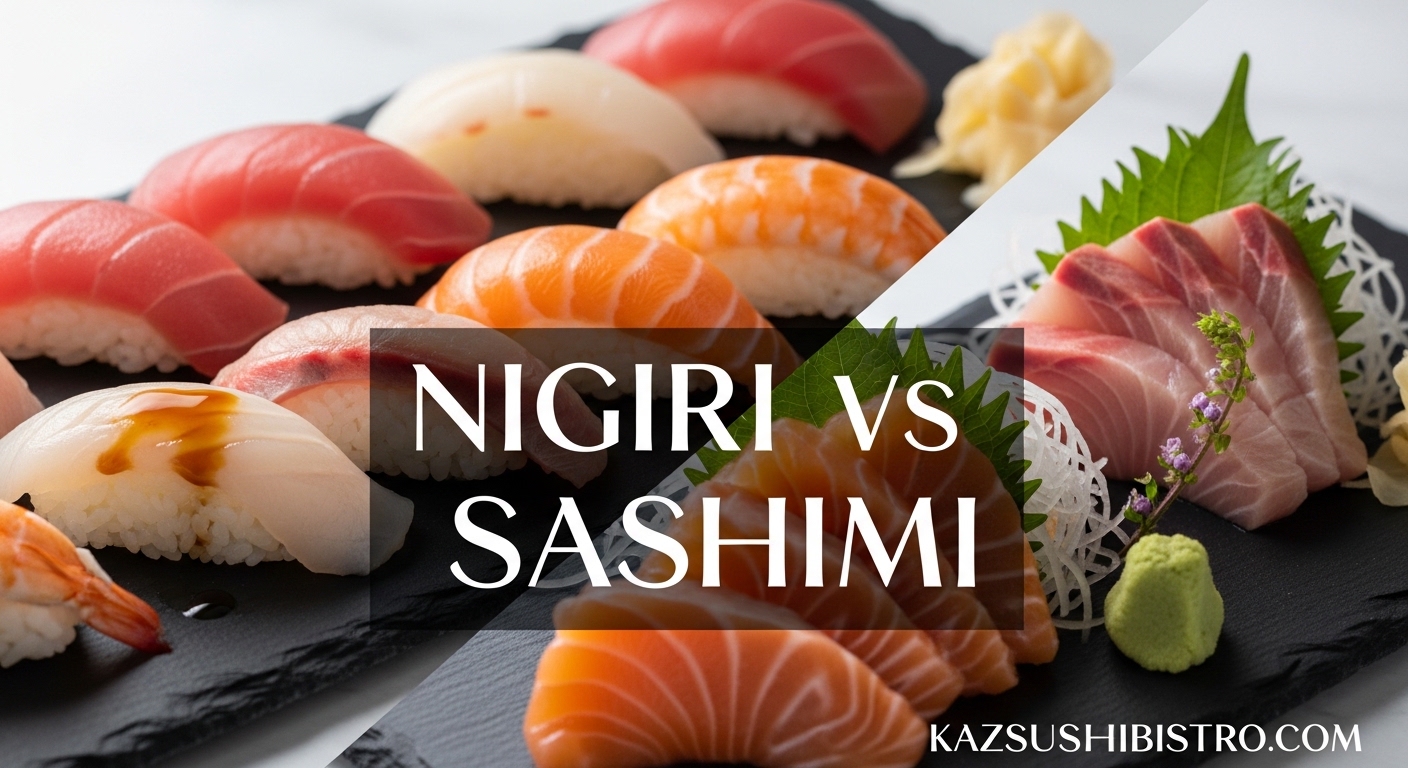
Nigiri is a bite-sized portion of vinegared sushi rice topped with a thin slice of fresh fish or seafood, often with a small amount of wasabi between them. Sashimi is thinly sliced fresh raw fish or seafood served without rice, typically accompanied by garnishes like daikon radish and shiso leaves. Both feature raw fish as their star ingredient, but nigiri includes vinegared rice as its foundation while sashimi focuses purely on the fish itself.
Walking into a sushi bar for the first time can feel overwhelming. I remember staring at the menu, confused by terms like nigiri, sashimi, maki, and omakase. The difference between nigiri and sashimi is actually simple once you understand the fundamentals, and knowing which to order will transform your dining experience from intimidating to enjoyable.
In this guide, you will learn exactly what sets these two Japanese staples apart. We will cover their histories, proper eating techniques, nutritional differences, and which option works best for beginners. By the end, you will walk into any sushi restaurant with confidence.
Table of Contents
What is Nigiri?
Nigiri, short for nigirizushi, represents one of the most recognizable forms of sushi worldwide. It consists of a small mound of vinegared rice, called shari, pressed by hand into an oval shape approximately the size of two fingers. On top sits a slice of fresh fish or seafood known as neta, often secured with a thin band of nori seaweed and a dab of wasabi between the layers.
The word nigiri literally translates to “two fingers” in Japanese, describing both the size of the rice portion and the traditional hand-pressing technique. Skilled sushi chefs shape each piece with practiced movements, applying just enough pressure to hold the rice together without compressing it too firmly. The result should be loose enough that the rice grains separate slightly when eaten, yet firm enough to lift with chopsticks or fingers.
The Origins of Nigiri 2026
Nigiri emerged during the Edo period, specifically around 1820 in the Ryogoku district of Tokyo. A street vendor named Hanaya Yohei pioneered this fast-food approach to sushi, creating what was then called haya-sushi or “fast sushi.” Unlike earlier forms of narezushi that required months of fermentation, nigiri could be prepared and eaten immediately.
Hanaya Yohei’s innovation revolutionized how Japanese people consumed raw fish. By combining fresh-caught seafood from Tokyo Bay with vinegared rice, he created a portable meal that workers could eat quickly during their lunch breaks. This Edo-style sushi eventually spread across Japan and became the foundation of modern sushi culture as we know it today.
Traditional vs Modern Nigiri
Traditional nigiri follows strict preparation rules that have remained largely unchanged for centuries. The rice must be seasoned with rice vinegar, sugar, and salt while still warm from cooking. The neta should be sliced against the grain using a specialized yanagiba knife, creating clean cuts that preserve the fish’s texture.
Modern variations have expanded nigiri’s possibilities while respecting tradition. Some chefs now torch the fish lightly for aburi nigiri, adding a smoky flavor and slightly cooked texture. Others incorporate non-traditional ingredients like avocado or spicy mayonnaise, though purists prefer the simplicity of fish, rice, and a touch of wasabi.
What is Sashimi?
Sashimi consists of thinly sliced fresh raw fish or seafood served without any rice. The slices are typically arranged artfully on a plate, often atop shredded daikon radish or garnished with shiso leaves, cucumber, or edible flowers. Unlike nigiri, which is fundamentally a rice dish topped with fish, sashimi celebrates the pure flavor and texture of the seafood itself.
Many people mistakenly believe sashimi is a type of sushi, but this is incorrect. Sushi by definition includes vinegared rice as a core component. Sashimi contains no rice whatsoever, making it a distinct category of Japanese cuisine focused entirely on the quality and preparation of raw fish.
The Etymology of Sashimi
The word sashimi translates literally to “pierced body,” referring to the practice of serving the fish with the tail or fin still attached to identify the species. This tradition dates back to a time when diners needed visual confirmation of what they were eating. The term also relates to the cutting technique, where the knife pierces through the flesh in one smooth motion.
Historical Origins
Sashimi predates nigiri by several centuries, with roots tracing back to before the Edo period. Originally, fish was preserved through fermentation with salt and rice in a process called narezushi. Over time, people began eating the fish before full fermentation completed, developing a taste for the fresh flavor that we now associate with sashimi.
By the Muromachi period (1336-1573), sashimi had evolved into a refined culinary art. The development of soy sauce during this era provided the perfect accompaniment, enhancing the natural flavors of raw seafood without overpowering them. This combination of pristine fish and savory dipping sauce established the foundation of sashimi culture.
Common Garnishes and Accompaniments
Sashimi presentations typically include several traditional garnishes that serve both aesthetic and functional purposes. Daikon radish, shredded into fine threads, provides a refreshing crunch and aids digestion. Shiso leaves add a bright, minty contrast to the rich fish flavors. Wasabi, often placed on the side rather than between layers, offers antibacterial properties and a sharp flavor accent.
Dipping sauces vary by restaurant and region. Soy sauce mixed with dashi creates dashi soyu, a lighter alternative to straight soy. Ponzu, a citrus-based sauce, adds brightness that complements oily fish like salmon or mackerel. Some high-end establishments serve sashimi with nothing more than a sprinkle of sea salt or a dab of yuzu kosho to showcase the fish’s natural taste.
Nigiri vs Sashimi: Key Differences
Understanding the distinction between nigiri and sashimi comes down to a few fundamental differences that affect everything from taste to price. The presence or absence of rice changes the entire eating experience, portion sizes, and even how you should approach ordering at a sushi bar.
The Rice Factor
The most obvious difference is the rice. Nigiri is built on a foundation of vinegared sushi rice, which adds carbohydrates, volume, and a tangy counterpoint to the fish. Sashimi contains no rice whatsoever, presenting only the pure fish flavor. This single distinction affects texture, satiety, and nutritional content dramatically.
Quality matters differently for each. With nigiri, the rice quality is equally important as the fish. Perfectly seasoned shari with the right temperature and texture elevates the entire piece. Sashimi places all emphasis on the fish itself, with no rice to mask imperfections or complement the flavor.
Cut and Presentation Differences
Chefs cut fish differently for nigiri versus sashimi based on feedback from Reddit discussions and forum insights. Nigiri fish is sliced thinner and longer to drape over the rice mound properly. The slice must be wide enough to cover the rice completely while remaining thin enough to bite through easily in one piece.
Sashimi cuts are typically thicker and shorter, focusing on texture and mouthfeel rather than coverage. These slices range from paper-thin for delicate white fish to substantial chunks for tuna or salmon. The presentation emphasizes visual appeal, with slices fanned out or stacked to showcase the fish’s color and marbling.
Portion and Satiety
Nigiri delivers a complete bite that balances protein and carbohydrates. The rice fills you up faster, making nigiri feel more like a substantial meal. Most diners find that six to eight pieces of nigiri provide satisfying sustenance for lunch or a light dinner.
Sashimi feels lighter and is often served as an appetizer or alongside other dishes. A typical sashimi order includes five to seven slices, which provides plenty of protein but less overall volume due to the absence of rice. Many people consider sashimi perfect for low-carb diets or when you want to sample multiple fish types without filling up too quickly.
Taste and Texture Comparison
Nigiri offers a harmonious blend where vinegared rice and fish complement each other. The rice’s slight sweetness and acidity balance the fish’s richness, while the combination of textures creates a more complex mouthfeel. Each bite delivers consistent flavor from start to finish.
Sashimi provides an unfiltered experience of the fish’s pure character. Without rice interference, you taste the subtle differences between species, freshness levels, and even cutting techniques. The texture becomes paramount, whether it is the buttery melt of fatty tuna or the firm snap of scallop.
Quick Comparison Overview
- Nigiri: Fish on vinegared rice, one-bite portions, hand or chopstick eating
- Sashimi: Fish only, no rice, multiple slices per order, chopsticks required
- Key Difference: Rice presence defines nigiri; its absence defines sashimi
- Price: Sashimi typically costs more due to higher fish quantity per serving
- Best For: Nigiri suits full meals; sashimi works as appetizer or low-carb option
Popular Fish Types for Each
Both nigiri and sashimi feature similar fish varieties, though certain types shine brighter in one format versus the other. Understanding these popular options helps you order confidently and discover new favorites.
Top Nigiri Choices
Tuna (maguro) reigns supreme in nigiri culture, with akami (lean red tuna) being the most accessible entry point. The firm texture and mild flavor pair perfectly with rice. Salmon (sake) has surged in popularity, especially outside Japan, thanks to its buttery richness and approachable taste.
Yellowtail (hamachi) offers a balanced option with clean flavor and pleasing texture. For cooked options, tamago (sweet egg omelet) provides a gentle introduction for beginners, while unagi (freshwater eel) delivers savory satisfaction with its glazed preparation. Ebi (cooked shrimp) and ika (squid) round out the standard offerings at most sushi bars.
Sashimi Favorites
Sashimi showcases the same tuna and salmon but often highlights premium cuts not typically used for nigiri. Otoro, the fattiest portion of bluefin tuna belly, commands high prices and appears almost exclusively as sashimi. Chu-toro, the medium-fatty section, offers a more affordable luxury experience.
Shellfish shine particularly bright in sashimi form. Hotate (scallop) delivers incredible sweetness and texture that rice would diminish. Uni (sea urchin) offers an acquired but beloved flavor best appreciated without interference. Tako (octopus) and ika (squid) demonstrate the knife skills of the chef through precise scoring that creates an attractive pattern while tenderizing the flesh.
Cooked and Vegetarian Options
Nigiri accommodates those hesitant about raw fish through various cooked options. Tamago’s sweet egg layer sits naturally atop rice. Unagi’s glazed preparation with tare sauce creates a satisfying savory bite. Ebi, typically boiled and butterflied, offers familiar shrimp flavor with sushi presentation.
Sashimi offers fewer cooked alternatives by definition, though some restaurants serve lightly seared tuna (tataki) or aburi-style preparations. Vegetarian diners find limited options with both styles, though inari (sweet tofu pockets) and certain vegetable rolls provide alternatives on most sushi menus.
How to Eat Nigiri Properly
Proper nigiri etiquette enhances your dining experience and shows respect for the chef’s craftsmanship. While these rules are not strictly enforced at casual restaurants, understanding them helps you appreciate the tradition behind each piece.
Fingers vs Chopsticks
You may eat nigiri with your fingers or chopsticks, and both methods are considered acceptable. Traditionalists often prefer fingers because it allows you to feel the rice temperature and handle the delicate piece more gently. Chopsticks work perfectly well too, especially if you prefer not to touch raw fish directly.
If using chopsticks, hold the nigiri on its side to avoid squeezing the rice too hard. Grip gently between the fish and rice, then lift smoothly. The goal is to keep the components together until they reach your mouth.
The One-Bite Rule
Nigiri is designed to be eaten in one bite. The chef crafted the proportions specifically for this purpose, balancing rice and fish in perfect ratio. Taking two bites disrupts this balance and can cause the piece to fall apart.
If a piece seems too large, do not worry. Most sushi chefs adjust sizing based on customer demographics. In Japan, nigiri tends to be smaller. In America, pieces are often larger to suit local preferences. Either way, the one-bite approach remains the ideal.
Proper Dipping Technique
When dipping nigiri in soy sauce, always dip the fish side, not the rice. Submerging rice causes it to absorb too much sauce and fall apart. It also overwhelms the delicate seasoning the chef applied.
Turn the nigiri fish-side down and touch just the edge of the fish to the sauce. The wasabi already inside provides sufficient seasoning for most pieces. Trust that the chef applied the right amount, and resist adding extra wasabi directly to the soy sauce dish.
Wasabi and Ginger Etiquette
The wasabi between the fish and rice is considered the correct amount for that specific piece. Adding more suggests you do not trust the chef’s judgment. If you love wasabi’s heat, order extra on the side rather than mixing it into your soy sauce.
Ginger (gari) serves as a palate cleanser between different types of fish, not as a topping. Eat a thin slice after finishing one variety before moving to the next. Never place ginger on top of your nigiri, as this masks the fish flavor the chef wants you to experience.
How to Eat Sashimi Properly?
Sashimi etiquette differs slightly from nigiri due to the absence of rice. The focus remains on appreciating the fish’s pure flavor, with specific techniques for cutting, dipping, and consuming each slice.
Chopsticks Are Essential
Unlike nigiri, sashimi should always be eaten with chopsticks. The slices are too large and delicate for finger handling. Proper chopstick technique allows you to pick up each slice cleanly without damaging the presentation.
Dipping Techniques and Sauces
Sashimi offers more dipping flexibility than nigiri. Because there is no rice to absorb excess sauce, you can be slightly more generous with soy sauce. However, restraint still matters. Dip one corner of the fish rather than submerging the entire slice.
Ponzu sauce works beautifully with oily fish like salmon or yellowtail, cutting through the richness with citrus brightness. Dashi soyu, a lighter soy sauce mixed with fish stock, provides seasoning without overwhelming delicate white fish. Some chefs recommend a small amount of sea salt or yuzu kosho for specific varieties.
Multiple Bites Are Acceptable
Sashimi slices are often larger than nigiri toppings, making multiple bites acceptable. For substantial pieces of tuna or salmon, two or three bites are perfectly fine. Just ensure you dip each portion separately rather than trying to sauce the entire slice at once.
Chew slowly to appreciate the texture differences between fish types. The mouthfeel varies dramatically from species to species, from the almost jelly-like consistency of fresh scallop to the firm resistance of squid properly prepared.
Understanding Garnish Functions
The garnishes on a sashimi plate serve purposes beyond decoration. Shredded daikon radish acts as a bed to absorb excess moisture and can be eaten between slices to refresh your palate. Shiso leaves add a bright, herbaceous note that complements rich fish. These are meant to be consumed, not pushed aside.
The tsuma, or decorative garnish, might include cucumber slices, edible flowers, or seaweed. While primarily aesthetic, these elements can be eaten and often provide textural contrast to the soft fish.
Sushi Bar Etiquette Tips
Understanding sushi bar customs enhances your experience and shows respect for the chef’s expertise. These guidelines apply whether you are dining at a high-end omakase counter or a neighborhood roll shop.
Trust the Chef with Omakase
Omakase means “I leave it to you” in Japanese, and ordering this way represents the ultimate expression of trust. The chef selects each piece based on what is freshest that day, creating a personalized progression designed to build flavors naturally. This approach often yields the best experience, especially for newcomers unsure what to order.
When you choose omakase, commit fully. Avoid requesting specific items or modifications unless you have dietary restrictions. The chef has planned a sequence where each piece prepares your palate for the next. Interrupting this flow undermines the experience.
The Light-to-Dark Ordering Sequence
Traditional sushi progression moves from lighter, milder fish to darker, stronger flavors. Start with white fish like flounder or snapper, progress through silver-skinned fish like mackerel, then move to richer options like salmon and yellowtail. Finish with the boldest flavors like sea urchin or fatty tuna.
This sequence prevents your palate from becoming overwhelmed early. Starting with salmon or tuna would make subsequent lighter fish taste bland by comparison. Following this pattern ensures you appreciate each variety fully.
Soy Sauce Awareness
Based on forum discussions, over-saucing is the most common etiquette mistake among first-timers. High-quality fish needs minimal enhancement. Drowning it in soy sauce masks the subtle flavors the chef selected and prepared carefully.
Many sushi chefs pre-season pieces with their preferred amount of sauce or salt. Look for glossy finishes or slight glazing, which indicates the chef has already applied seasoning. In these cases, skip the soy sauce entirely and enjoy the fish as intended.
Conversation and Timing
At traditional sushi counters, eat each piece immediately when served. Sushi is temperature-sensitive, and rice firms up as it cools. Waiting even a few minutes changes the texture and flavor balance the chef crafted.
Engage with the chef if they seem receptive, but read the room. Some chefs prefer minimal conversation to focus on their craft. Others welcome questions about the fish or preparation. Follow their lead and respect their style.
Nutrition and Health Comparison
Both nigiri and sashimi offer excellent nutritional profiles, though their health benefits differ slightly due to the rice component. Understanding these differences helps you choose based on your dietary goals.
Calorie and Macronutrient Breakdown
A typical piece of salmon nigiri contains approximately 50-60 calories, with about 7 grams of protein, 2 grams of fat, and 8 grams of carbohydrates from the rice. Tuna nigiri runs slightly lower at 40-50 calories per piece due to tuna’s leaner profile.
Sashimi contains significantly fewer calories per serving because it lacks rice. A typical slice of salmon sashimi provides 30-40 calories with 6-7 grams of protein and 1-2 grams of fat but zero carbohydrates. This makes sashimi particularly appealing for low-carb or ketogenic diets.
Omega-3 Fatty Acids
Both options deliver substantial omega-3 fatty acids, particularly EPA and DHA, which support heart health, brain function, and reduced inflammation. Fatty fish like salmon, mackerel, and tuna provide the highest concentrations.
Since sashimi portions typically contain more fish per serving than nigiri, you get slightly more omega-3s per ounce with sashimi. However, both deliver excellent nutritional value compared to most other protein sources.
Which is Better for Weight Loss?
Sashimi wins for pure weight loss due to its lower calorie density and absence of carbohydrates. You can eat a satisfying portion of sashimi while consuming fewer total calories than an equivalent protein amount of nigiri.
However, nigiri offers better satiety due to the rice component. The carbohydrates help you feel full faster and longer. For sustainable weight management, nigiri might prevent later snacking that undoes your calorie savings from choosing sashimi.
Why Sashimi Costs More Than Nigiri?
The price difference between nigiri and sashimi surprises many first-time diners. Sashimi consistently costs more despite seeming like “just fish,” while nigiri includes both fish and rice. Several factors explain this apparent contradiction.
Portion size drives the primary cost difference. A sashimi order contains significantly more fish than the equivalent nigiri order. Where nigiri uses a thin slice to top rice, sashimi provides multiple substantial slices of the same fish. You are essentially paying for more seafood per order.
Quality requirements also factor into pricing. Sashimi demands the highest grade fish since there is no rice to mask imperfections. Any flaw in texture, color, or freshness becomes immediately apparent. Restaurants must use their premium inventory for sashimi, while slightly less perfect cuts can still work for nigiri where rice helps balance the experience.
Skill and presentation contribute as well. Sashimi showcases the chef’s knife work through precise, deliberate cuts that require years of training. The artistic arrangement on the plate demands additional attention compared to forming nigiri pieces. These labor costs reflect in the final price.
First-Timer Ordering Guide
Walking into a sushi restaurant for the first time can feel intimidating. Based on common questions from Reddit and forum discussions, this guide addresses the concerns that trip up newcomers and helps you order with confidence.
Start with Nigiri
Nigiri offers a gentler introduction for sushi newcomers. The rice provides a familiar base that makes raw fish less intimidating. The balanced proportions feel more like a complete bite rather than confronting pure raw seafood immediately.
Begin with cooked options if you are hesitant about raw fish. Tamago (sweet egg), ebi (cooked shrimp), and unagi (grilled eel) deliver the sushi experience without raw seafood. These options help you understand the rice preparation and presentation style before venturing into raw territory.
Portion Recommendations
For a light meal, order six to eight pieces of nigiri or one sashimi appetizer plate. This provides sufficient protein without overwhelming your palate or your stomach. Most people find this quantity satisfying for lunch.
For a full dinner, plan on ten to twelve pieces of nigiri or a combination of sashimi and nigiri. A typical balanced order might include six nigiri pieces, a four-piece sashimi selection, and a simple maki roll. This variety lets you sample different preparations and fish types.
Budget-Friendly Ordering
Sushi does not have to break the bank. Lunch specials often offer the best value, with preset combinations at lower prices than dinner service. Weekday lunches typically feature identical fish quality to dinner at significant savings.
Stick to standard fish varieties rather than premium options. Tuna, salmon, and yellowtail deliver excellent flavor at moderate prices. Save otoro, uni, and other luxury items for special occasions once you have developed your preferences.
Questions to Ask Your Chef
Good chefs welcome curious customers. Ask what came in fresh that day, which fish they recommend for beginners, or what the difference is between two similar options. These questions show engagement without demanding expertise you do not yet have.
Avoid asking if the fish is fresh. This question can seem insulting, implying you suspect it might not be. Instead, inquire about recommendations or specialties to get the same information more diplomatically.
Frequently Asked Questions
What is the difference between nigiri and sashimi?
Nigiri consists of vinegared sushi rice topped with a slice of fresh fish or seafood. Sashimi is thinly sliced raw fish served without rice. The primary difference is the presence of rice: nigiri includes it, while sashimi focuses purely on the fish.
Does nigiri have rice?
Yes, nigiri always includes a small mound of vinegared sushi rice as its base. The rice, called shari, is hand-pressed into an oval shape and topped with fish. This rice component distinguishes nigiri from sashimi.
Which is healthier, nigiri or sashimi?
Sashimi is lower in calories and carbohydrates since it contains no rice, making it better for low-carb diets. Nigiri offers more balanced nutrition with protein and carbohydrates together. Both provide excellent omega-3 fatty acids and high-quality protein.
Is nigiri supposed to be eaten in one bite?
Yes, nigiri is designed to be eaten in one bite. The chef carefully proportions the rice and fish to create a perfect single-bite experience. Taking two bites disrupts the balance and can cause the piece to fall apart.
Why is sashimi more expensive than nigiri?
Sashimi costs more because it contains more fish per serving than nigiri. While nigiri uses a thin slice atop rice, sashimi provides multiple substantial slices. Additionally, sashimi requires the highest quality fish since there is no rice to mask imperfections.
Is sashimi considered sushi?
No, sashimi is not technically sushi. Sushi by definition includes vinegared rice as an essential component. Sashimi is thinly sliced raw fish served without rice, making it a separate category of Japanese cuisine.
Can nigiri be cooked?
Yes, many nigiri options feature cooked fish or seafood. Popular cooked varieties include tamago (sweet egg omelet), unagi (freshwater eel with sweet sauce), and ebi (boiled shrimp). These options provide excellent entry points for those hesitant about raw fish.
Is 10 pieces of nigiri a lot?
Ten pieces of nigiri is a moderate to substantial meal for most adults. Many diners find six to eight pieces sufficient for a light meal, while ten to twelve works well for dinner. The rice makes nigiri more filling than sashimi of equivalent piece count.
Conclusion
Understanding the difference between nigiri and sashimi transforms your sushi experience from confusing to confident. Nigiri offers the harmony of vinegared rice and fresh fish in a balanced, satisfying bite. Sashimi celebrates the pure essence of seafood without any interference, delivering premium protein with minimal calories.
Both deserve a place in your culinary exploration. Start with nigiri if you are new to raw fish, then branch into sashimi as your comfort grows. Trust the chefs, follow the etiquette guidelines, and most importantly, enjoy the incredible flavors these Japanese traditions offer. The world of nigiri vs sashimi awaits your discovery.