
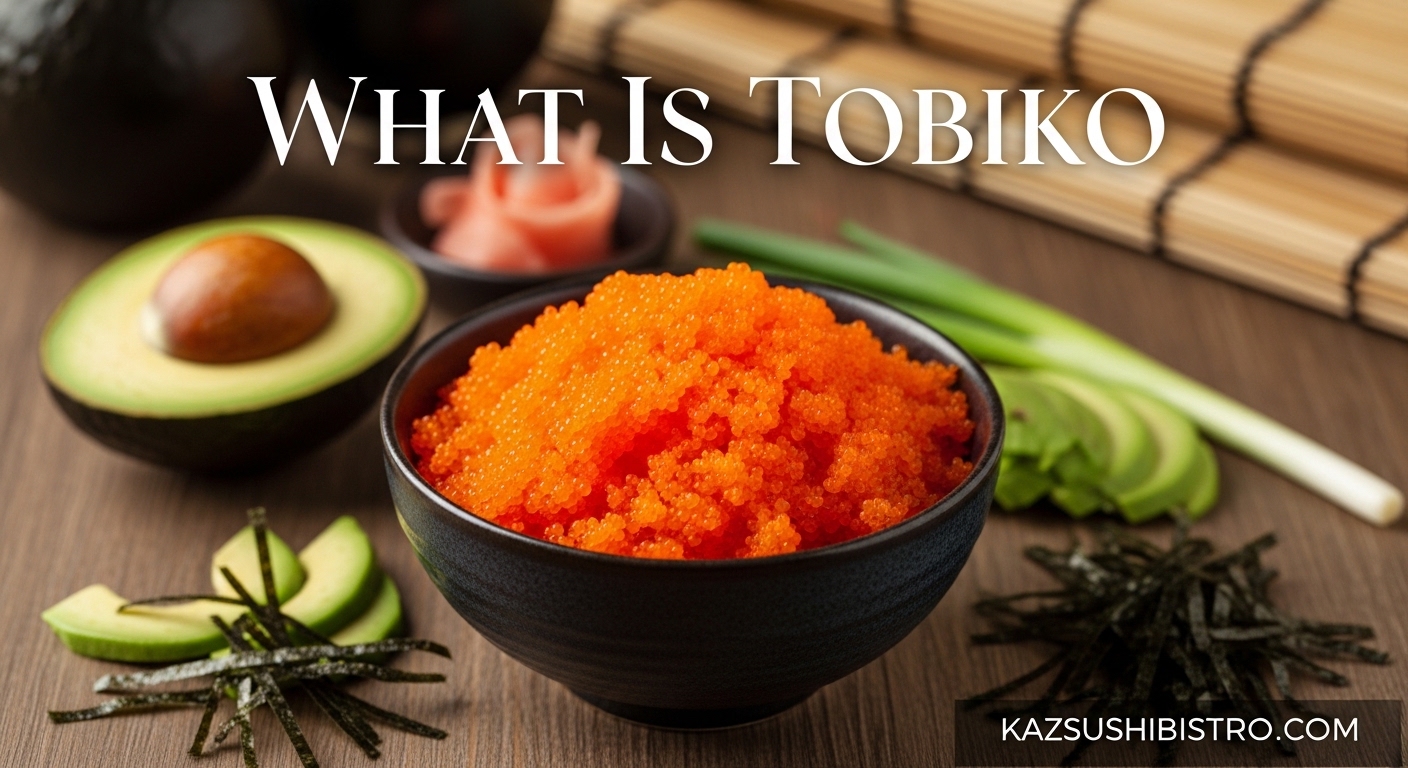
Have you ever stared at your sushi roll and wondered about those tiny, bright orange pearls scattered across the top? You’re looking at tobiko, one of Japanese cuisine’s most visually striking and delicious ingredients. I remember the first time I encountered these vibrant little eggs at a sushi bar in San Francisco. The chef placed a California roll in front of me, and I immediately asked, “What are those orange things?”
Tobiko (pronounced toh-bee-koh) transforms ordinary sushi into something special. In this guide, I’ll explain exactly what tobiko is, what it tastes like, the different color varieties you might encounter, and how it compares to similar ingredients like masago and caviar. Whether you’re a curious first-timer or looking to level up your home sushi game, this guide covers everything you need to know about flying fish roe in 2026.
Table of Contents
What Is Tobiko?
Tobiko (とびこ) is the Japanese word for flying fish roe – specifically, the eggs harvested from flying fish of the Exocoetidae family. The most commonly used species is Cheilopogon agoo, a flying fish found in temperate and tropical oceans around the world. These tiny eggs measure just 0.5 to 0.8 millimeters in diameter, making them slightly larger than masago but significantly smaller than salmon roe.
Unlike caviar, which comes from sturgeon, tobiko comes from flying fish that glide above the ocean surface. Harvesters collect these unfertilized eggs after the female fish releases them. The roe then undergoes a salt-curing process that preserves the eggs while developing their characteristic flavor profile. This curing method has been used in Japanese cuisine for generations.
You’ll often hear tobiko referred to as “Japanese caviar” in Western restaurants. While this comparison helps people understand the concept of fish eggs as a delicacy, tobiko and true caviar are quite different in origin, taste, and price point. I prefer to think of tobiko as its own unique ingredient with distinct characteristics that make it perfect for sushi applications.
What Does Tobiko Taste Like?
The taste of tobiko delivers a complex flavor experience that enhances rather than overwhelms. When you bite into tobiko, you first notice a salty, briny taste similar to the ocean. This gives way to subtle smoky and slightly sweet undertones that develop during the salt-curing process. The overall flavor is umami-rich without being fishy or overpowering.
But the real magic happens with the texture. Each tiny egg provides a satisfying “pop” sensation when you bite down. This crunchy, bursting texture creates an almost addictive mouthfeel that keeps you reaching for more. The eggs maintain their structure well, even when mixed with sauces or placed on warm rice. This textural contrast is what separates great sushi from truly memorable sushi.
Natural tobiko has a golden-orange to red-orange color that catches the eye immediately. When fresh, the eggs should appear glossy and firm, not dull or mushy. The aroma should be clean and briny, never fishy or ammonia-like. These visual and olfactory cues help you identify quality tobiko when ordering at restaurants or purchasing for home use.
Types and Colors of Tobiko 2026
While natural tobiko displays a beautiful golden-orange hue, the ingredient comes in several color variations. Each color results from infusing the roe with different natural ingredients that also affect the flavor profile.
Golden/Red-Orange (Natural)
The classic tobiko color comes straight from the flying fish with no additional coloring. This natural golden to red-orange shade offers the purest expression of tobiko’s salty, smoky flavor. Most high-end sushi restaurants prefer natural tobiko for its authentic taste and appearance.
Red Tobiko
Red tobiko gets its color from beets, chilis, or other red natural ingredients. The added ingredients create a slightly spicier or earthier flavor profile depending on what was used. Red tobiko makes a dramatic visual statement on sushi plates and works particularly well with spicy tuna rolls.
Green Wasabi Tobiko
Green tobiko is infused with wasabi, creating a spicy kick that complements the natural briny flavor. This variety pairs exceptionally well with milder fish and adds both heat and visual interest. If you enjoy wasabi with your sushi, green tobiko offers that same peppery punch in every bite.
Black Squid Ink Tobiko
Black tobiko owes its dramatic appearance to squid ink infusion. Beyond the striking visual contrast it creates, squid ink adds a subtle oceanic depth to the flavor. This variety works beautifully as a garnish for lighter-colored dishes where you want visual drama.
Yellow Yuzu Tobiko
Yellow tobiko gets its citrusy notes from yuzu, a Japanese citrus fruit. The bright yellow color signals the refreshing, tangy flavor inside. Forum discussions consistently mention yuzu tobiko as “refreshing” and perfect for cutting through richer fish flavors.
Tobiko vs Masago vs Ikura vs Caviar
Understanding the differences between these roe varieties helps you appreciate what makes tobiko special. Here’s how they compare:
| Feature | Tobiko | Masago | Ikura | Caviar |
|---|---|---|---|---|
| Source | Flying fish | Capelin (smelt) | Salmon | Sturgeon |
| Size | 0.5-0.8mm | Smaller than tobiko | Much larger | Varies by species |
| Color | Golden-orange | Pale orange | Bright red-orange | Black, gray, gold |
| Texture | Crunchy pop | Sandy, less distinct | Juicy burst | Soft, delicate |
| Flavor | Salty, smoky, sweet | Milder, less complex | Rich, briny, umami | Briny, nutty, buttery |
| Price | Moderate | Cheaper | Moderate-High | Luxury/Premium |
Masago serves as the most common tobiko substitute because it looks similar and costs less. However, masago comes from capelin (smelt) and has a noticeably sandier texture without the distinct pop. The flavor is milder and less complex. Many budget sushi restaurants substitute masago for tobiko without telling customers.
Ikura (salmon roe) delivers a completely different experience with much larger, juicier eggs that burst intensely. The flavor is deeper and more umami-forward. Forum users often express preference for ikura’s bigger “pop” and richer taste, though it serves different culinary purposes than tobiko.
Caviar stands apart as a luxury product from sturgeon. True caviar commands premium prices and offers a softer, more delicate texture with complex briny and nutty notes. While tobiko earns the nickname “Japanese caviar,” the two ingredients occupy different positions in the culinary hierarchy.
How Is Tobiko Used?
Tobiko serves both decorative and functional purposes in Japanese cuisine. Its applications extend far beyond simple garnishing.
Sushi Applications
The most common use for tobiko tops sushi rolls, particularly California rolls where the bright orange contrasts beautifully with the white rice and green avocado. You’ll also find tobiko on gunkan maki (battleship sushi), where a strip of nori wrapped around rice creates a vessel holding the roe. Some nigiri preparations feature tobiko as a topping for various fish.
Tobiko mixed with spicy mayonnaise creates a popular sauce for spicy tuna and salmon rolls. The roe adds texture and visual appeal while the mayo carries the heat. This combination has become a standard at sushi restaurants across America.
Beyond Sushi
Creative chefs use tobiko in numerous non-sushi applications. The roe works beautifully as a garnish for sashimi plates, adding color and crunch. You can sprinkle tobiko over crackers with cream cheese for an instant appetizer, or use it to top blinis as you would caviar.
Some adventurous cooks incorporate tobiko into salads, rice dishes, and even omelets. The eggs hold their shape surprisingly well when warmed gently, making them suitable for garnishing soups or warm appetizers. One popular preparation pairs tobiko with quail egg yolk in gunkan style, combining two rich textures.
Tobiko Nutrition and Health Benefits
Tobiko offers several nutritional benefits alongside its culinary appeal. Like most fish roe, it contains significant omega-3 fatty acids that support heart and brain health. A typical serving provides a concentrated dose of these essential fats.
The roe delivers a good amount of protein relative to its small serving size. You’ll also find selenium, an important mineral for thyroid function and antioxidant protection. These nutrients make tobiko more than just a pretty garnish.
However, tobiko comes with some nutritional considerations. It’s naturally high in sodium due to the salt-curing process. Those monitoring sodium intake should enjoy tobiko in moderation. The roe also contains cholesterol, though dietary cholesterol affects people differently.
The key with tobiko is moderation. Enjoy it as an occasional treat within a balanced diet rather than a daily staple. The small serving sizes typical in sushi make this easy to achieve.
Where to Buy and How to Store Tobiko
Finding quality tobiko requires knowing where to look. Asian markets and Japanese grocery stores represent your best bet for fresh product. Stores like Mitsuwa, Marukai, or H Mart typically stock multiple color varieties. Some Whole Foods locations also carry tobiko in their seafood sections.
Online sources provide options if local availability is limited. Japanese food importers and specialty seafood retailers ship tobiko with cold packaging. Expect to pay between $15-30 for a small container depending on quality and color variety.
Storage requires refrigeration at all times. Keep tobiko in the coldest part of your refrigerator, ideally between 28-32 degrees Fahrenheit. Properly stored, it lasts 7-10 days unopened. Once opened, use within 2-3 days for best quality.
You can freeze tobiko for longer storage, though the texture changes slightly upon thawing. Frozen tobiko lasts several months but may lose some of its signature crunch. Thaw slowly in the refrigerator, never at room temperature.
Signs of spoiled tobiko include a strong fishy or ammonia smell, dull color, and mushy texture. Fresh tobiko should smell clean and briny with firm, glossy eggs. When in doubt, discard questionable product rather than risk foodborne illness.
FAQs
Is tobiko actually fish eggs?
Yes, tobiko is real fish eggs. Specifically, tobiko is the roe (unfertilized eggs) harvested from flying fish of the Exocoetidae family. The most common species used is Cheilopogon agoo. These are genuine fish eggs that have been salt-cured for preservation and flavor development, not artificial imitations.
Is tobiko the same as caviar?
No, tobiko and caviar are different. Caviar specifically refers to salt-cured roe from sturgeon fish, while tobiko comes from flying fish. Caviar commands much higher prices and offers a softer, more delicate texture. Tobiko has a crunchier pop and saltier, smokier flavor. While tobiko is sometimes called Japanese caviar colloquially, they are distinct ingredients with different origins, textures, and price points.
What does tobiko taste like?
Tobiko tastes salty and briny with subtle smoky and slightly sweet undertones. The flavor is umami-rich but not fishy or overpowering. The standout characteristic is the texture: each tiny egg delivers a satisfying crunchy pop when bitten. Natural tobiko has the purest expression of this flavor, while colored varieties add notes of wasabi, yuzu, or squid ink depending on the infusion.
Is tobiko healthy?
Tobiko offers health benefits including omega-3 fatty acids, protein, and selenium. However, it is high in sodium due to the salt-curing process and contains cholesterol. Enjoy tobiko in moderation as part of a balanced diet. The small portions typically used in sushi make it easy to consume responsibly. Those monitoring sodium or cholesterol should be mindful of frequency and portion size.
Why is tobiko expensive?
Tobiko costs more than alternatives like masago because of the harvesting process and limited supply. Flying fish must be caught and processed carefully to collect the roe. The salt-curing process adds labor and time. Additionally, demand for authentic tobiko exceeds supply in many markets. While not as expensive as true caviar, quality tobiko commands a premium price over cheaper roe substitutes.
What’s better, masago or tobiko?
Tobiko is generally considered superior to masago for its crunchier texture and more complex flavor. Masago comes from capelin fish and has a sandier texture without the distinctive pop. However, masago costs significantly less, making it a budget-friendly alternative. For the best sushi experience, tobiko is preferred, but masago works fine as a substitute when cost is a concern.
Is tobiko good?
Most people find tobiko delicious and enjoyable. The combination of salty-smoky flavor and crunchy popping texture creates a satisfying experience that enhances sushi and other dishes. First-time tasters are often surprised by the texture. However, taste is subjective. Those who dislike briny, ocean-forward flavors or textured foods might prefer milder alternatives like masago or skip roe entirely.
Is tobiko raw or cooked?
Tobiko is technically processed rather than raw or cooked. The eggs are harvested from flying fish, then salt-cured for preservation. This curing process uses salt rather than heat, so the eggs remain essentially raw but preserved. The salt inhibits bacterial growth while developing flavor. You should still treat tobiko as a raw seafood product and consume it fresh from reputable sources.
Is tobiko halal?
Tobiko is generally considered halal since it comes from fish, which is permissible in Islamic dietary law. Flying fish have scales and fins, meeting the requirements for halal seafood. However, some processed varieties may contain additives or flavorings that could affect halal status. Muslims seeking halal tobiko should verify with the supplier or look for products with halal certification to ensure no non-halal ingredients were used in processing or coloring.
Conclusion
Now you know exactly what tobiko is and why those tiny orange pearls matter. Flying fish roe brings visual excitement, textural contrast, and complex flavor to sushi and beyond. From the classic golden-orange variety to the adventurous green wasabi and black squid ink versions, tobiko offers something for every palate.
Understanding tobiko helps you make better choices at sushi restaurants and appreciate the craftsmanship behind your favorite rolls. Whether you’re asking the right questions about authenticity or experimenting with tobiko at home, this ingredient opens doors to deeper enjoyment of Japanese cuisine. Try tobiko on your next sushi order and experience that satisfying pop for yourself.