
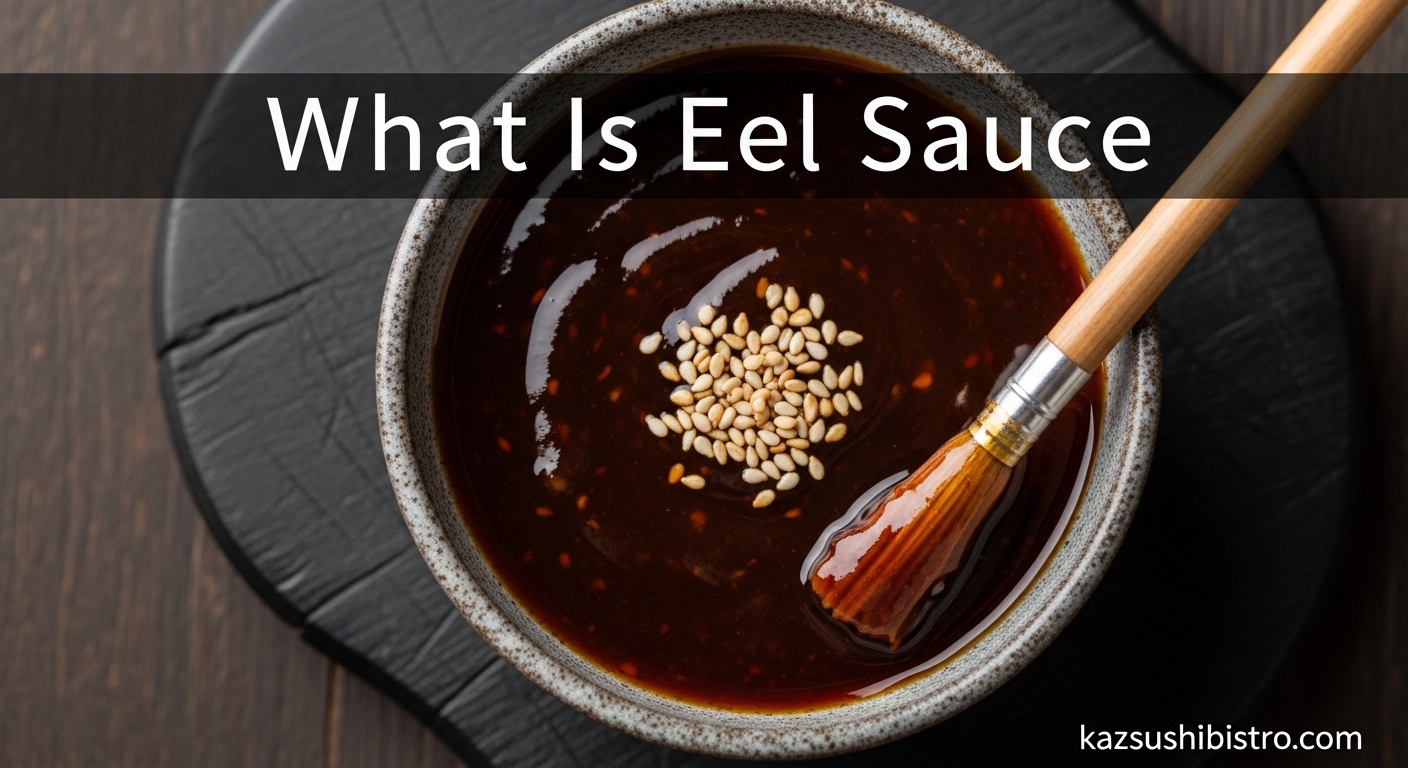
Eel sauce (also called unagi sauce, kabayaki sauce, or nitsume) is a thick, sweet, and savory Japanese glaze made from soy sauce, mirin, sugar, and sometimes sake. Despite its name, it contains absolutely no eel. The sauce earned its name from its traditional use as a topping for grilled eel dishes, not from its ingredients.
In this guide, I will explain everything you need to know about this versatile condiment. You will learn what eel sauce is made of, how to make it at home in 15 minutes, what it tastes like, and the best ways to use it in your cooking. By the end, you will understand why this sauce has become a staple not just in Japanese restaurants but in home kitchens around the world.

Table of Contents
What Is Eel Sauce?
Eel sauce is a reduced glaze known as tare in Japanese cuisine. It belongs to a family of sauces used to brush onto grilled foods, adding sweetness, shine, and a deep umami flavor. The sauce is particularly iconic when paired with unagi (freshwater eel), which is where it gets its Western name.
In Japan, this sauce goes by several names depending on the region and context. Understanding these terms helps when reading Japanese recipes or shopping at Asian grocery stores.
The Many Names of Eel Sauce
Unagi no tare literally translates to “eel sauce” in Japanese. This is the most common name you will see in authentic Japanese cookbooks and restaurants.
Kabayaki sauce refers to the sauce used for kabayaki-style preparation, where fish is butterflied, skewered, and grilled over charcoal. While traditionally used for eel, the same sauce works beautifully on other fish like sanma (Pacific saury) or even chicken.
Nitsume is a more general term for a reduced, thick sauce in Japanese cooking. Some chefs use this term interchangeably with eel sauce, while others reserve it for specific variations that include dashi (fish stock).
A Brief History
Eel sauce originated during Japan’s Edo period (1603-1868), when grilled eel became a popular fast food among the working class in Tokyo. Street vendors needed a quick, flavorful glaze that would caramelize beautifully over charcoal-grilled eel while cutting through the fish’s natural oiliness.
The basic formula of soy sauce, mirin, and sugar has remained largely unchanged for centuries. What has evolved is how the sauce is used. While it began as a topping for unagi, modern chefs now drizzle it over everything from sushi rolls to roasted vegetables.
Why Is It Called Eel Sauce?
Eel sauce is called that because of its association with grilled eel dishes, not because it contains eel. The sauce was developed specifically to complement the rich, fatty flavor of grilled unagi. When Japanese cuisine spread to the West, English speakers needed a simple way to describe this mysterious dark glaze that always appeared on eel dishes. “Eel sauce” stuck.
This naming convention confuses many first-time diners. I have heard countless customers at our restaurant ask if the sauce contains ground eel or fish stock. The answer is always no. The sauce is entirely plant-based, making it suitable for vegetarians (though not for those avoiding soy or sugar).
Traditional Japanese restaurants may add dashi (a broth made from bonito flakes and kelp) to their eel sauce for extra depth. This version is closer to what you would find in high-end establishments in Japan, but even then, no actual eel goes into the sauce itself.
What Is Eel Sauce Made Of?
Authentic eel sauce requires just four basic ingredients. The magic comes from how these simple components transform during the reduction process, developing complex flavors through the Maillard reaction.
The Four Essential Ingredients
Soy sauce forms the savory backbone of the sauce. Use a high-quality Japanese soy sauce like Kikkoman or Yamasa for the best results. Dark soy sauce works particularly well because it has a richer, less salty flavor and contributes a deeper color.
Mirin is a sweet rice wine that adds sweetness and a subtle tang. It also helps create that characteristic glossy sheen. Look for hon-mirin (true mirin) rather than aji-mirin (mirin-style seasoning), which contains less alcohol and more corn syrup. Hon-mirin has a more complex, natural sweetness.
Sake adds depth and helps cut through the sweetness. While some home recipes omit sake, traditional restaurant versions always include it. Any drinkable Japanese sake works; you do not need expensive daiginjo. Cooking sake is acceptable if that is what you have on hand.
Sugar provides sweetness and helps the sauce thicken and caramelize. White granulated sugar is standard, though some recipes use brown sugar for a deeper, more molasses-like flavor. The amount of sugar varies by region; Kansai-style sauce tends to be sweeter than Kanto-style.
Optional Additions for Depth
Some recipes include dashi, a Japanese stock made from kombu (kelp) and katsuobushi (dried bonito flakes). This adds an extra layer of umami that makes the sauce taste more like what you get at high-end sushi restaurants.
A small piece of kombu (dried kelp) simmered with the other ingredients can add subtle depth without the extra step of making dashi. Just remember to remove it before the sauce gets too thick.
For a more complex flavor, some chefs add a splash of rice vinegar at the end of cooking. This brightens the sauce and balances the sweetness.
How to Make Eel Sauce
Making eel sauce at home is surprisingly simple. The process takes about 15 minutes and requires only basic equipment. Homemade sauce tastes fresher and more vibrant than store-bought versions, and you control the sweetness level.

Ingredients You’ll Need
- 1/2 cup soy sauce (preferably Japanese dark soy sauce)
- 1/2 cup mirin (hon-mirin preferred)
- 2 tablespoons sake
- 3 tablespoons sugar (white or brown)
- Optional: 1 small piece kombu (2-inch square)
Step-by-Step Instructions
Step 1: Combine all ingredients in a small saucepan. If using kombu, add it now.
Step 2: Bring the mixture to a gentle boil over medium heat, stirring occasionally to dissolve the sugar.
Step 3: Reduce heat to low and simmer uncovered. Let the sauce bubble gently for 10-15 minutes.
Step 4: Watch for visual cues. The sauce is ready when it coats the back of a spoon and has reduced by about one-third. It will thicken more as it cools.
Step 5: Remove from heat and discard the kombu if used. Let cool for 5 minutes before transferring to a jar.
This recipe yields approximately 2/3 cup of sauce. Store in an airtight container in the refrigerator.
Pro Tips for Perfect Consistency
Do not over-reduce the sauce. Remember that it will thicken significantly as it cools. If you cook it until it looks thick in the pan, you will end up with something closer to molasses than a pourable glaze.
Use low heat for the final few minutes. High heat can cause the sugars to scorch, giving the sauce a bitter flavor.
For a glossier finish, add an extra tablespoon of mirin in the last minute of cooking. This brightens the flavor and enhances that restaurant-quality sheen.
What Does Eel Sauce Taste Like?
Eel sauce tastes sweet, savory, and deeply satisfying. The dominant flavors come from the combination of salty soy sauce and sweet mirin, creating that classic Japanese amami (sweet-salty) profile that keeps you coming back for more.
The texture is thick and syrupy, coating your tongue with a glossy layer of flavor. Good eel sauce has a slight stickiness that helps it cling to food rather than running off onto the plate.
There is a subtle caramel undertone from the reduced sugars, almost like a very light teriyaki but more complex. The sake adds a faint alcoholic brightness that prevents the sauce from being cloying. When dashi is added, you get an extra dimension of umami that tastes almost meaty despite the sauce being vegetarian.
The finish is long and lingering. Unlike some condiments that disappear after a few seconds, eel sauce leaves a pleasant sweet-savory aftertaste that makes you want another bite.
How to Use Eel Sauce
Eel sauce started as a topping for grilled eel, but its uses have expanded dramatically. At our restaurant, we use it in both traditional and creative ways.
Traditional Japanese Applications
Unagi nigiri and unadon (grilled eel over rice) are the classic pairings. The sauce is brushed onto the eel during the final minutes of grilling, creating a glossy, caramelized coating.
Dragon rolls and caterpillar rolls are Western sushi creations that rely heavily on eel sauce. The sauce is drizzled on top of avocado-covered rolls, adding sweetness that balances the richness of the avocado and crab filling.
Tempura dipping is another traditional use. While tempura is often served with tentsuyu (a lighter dashi-based sauce), some prefer the sweeter, thicker eel sauce as a dip for shrimp or vegetable tempura.
Creative Modern Uses
Eel sauce works beautifully as a glaze for grilled chicken or salmon. Brush it on during the last few minutes of cooking, just as you would with barbecue sauce.
Drizzle it over dumplings or potstickers as an alternative to soy-vinegar dipping sauce. The sweetness pairs well with savory pork or vegetable fillings.
Use it as a stir-fry finishing sauce. Add a tablespoon at the end of cooking vegetables or noodles for instant flavor.
Some of our customers even use it on breakfast eggs or roasted vegetables. The sweet-savory profile is surprisingly versatile.

Eel Sauce vs Teriyaki vs Hoisin
These three sauces often get confused because they share a dark color and sweet-savory profile. Understanding the differences helps you choose the right one for your dish.
| Sauce | Base Ingredients | Flavor Profile | Best Used For |
|---|---|---|---|
| Eel Sauce | Soy sauce, mirin, sake, sugar | Sweet-savory, caramel notes, thick and glossy | Sushi, grilled eel, finishing glaze |
| Teriyaki | Soy sauce, mirin, sugar, ginger, garlic | Sweet-savory with aromatics, slightly thinner | Grilled meats, marinades, stir-fries |
| Hoisin | Fermented soybeans, garlic, vinegar, sugar | Sweet, tangy, earthy, distinct umami | Duck pancakes, mu shu, Vietnamese pho |
Teriyaki is the closest substitute for eel sauce in most recipes. It shares the same basic formula of soy, mirin, and sugar but typically includes ginger and garlic. If substituting teriyaki for eel sauce, look for a thicker variety or reduce it slightly.
Hoisin is distinctly different. Made from fermented soybeans, it has an earthy, almost chocolatey quality that sets it apart. While both are dark and sweet, hoisin contains no mirin and has a sharper, more complex fermented flavor. They are not interchangeable in most recipes.
Eel Sauce Substitutes and Variations 2026
If you do not have eel sauce or the ingredients to make it, several alternatives can work in a pinch.
Store-Bought Alternatives
Thick teriyaki sauce is your best bet. Look for varieties labeled “glaze” or “basting sauce” rather than thin marinades. Kikkoman makes a specific teriyaki basting glaze that works well.
Ponzu sauce mixed with a little honey can approximate the sweet-tangy balance, though it lacks the depth of properly reduced eel sauce.
Some grocery stores carry bottled “sushi sauce” or “eel sauce” in the Asian foods aisle. Quality varies significantly between brands. Otafuku and Kikkoman both make decent commercial versions.
Gluten-Free Modifications
Traditional eel sauce contains soy sauce, which has wheat. To make it gluten-free, substitute tamari (wheat-free soy sauce) in equal amounts. The flavor will be slightly different but still delicious.
Coconut aminos can work as a soy-free alternative, though you will need to adjust the other ingredients. Coconut aminos are already quite sweet, so reduce or eliminate the sugar.
Always check your mirin and sake labels if you have strict dietary requirements. Some cheaper brands add wheat-based ingredients.
Storage and Shelf Life
Homemade eel sauce keeps well, making it perfect for batch preparation.
Store homemade eel sauce in an airtight container in the refrigerator. It will last for up to 3 months. The high sugar and salt content act as natural preservatives.
Store-bought eel sauce typically lasts 6-12 months unopened. Once opened, refrigerate and use within 3-6 months depending on the brand. Always check the label for specific guidance.
The sauce thickens considerably when cold. Let it sit at room temperature for 10 minutes before using, or warm it gently in the microwave for 10-15 seconds to restore pourable consistency.
Signs that eel sauce has spoiled include mold growth, an off smell, or significant darkening. Properly stored sauce rarely goes bad, but trust your senses if something seems off.
Frequently Asked Questions
Is eel sauce really made of eel?
No, eel sauce contains no eel. The sauce is made from soy sauce, mirin, sake, and sugar. It gets its name from being traditionally used as a glaze for grilled eel dishes.
Is eel sauce the same as hoisin?
No. Eel sauce is made with soy sauce, mirin, and sugar, while hoisin is made from fermented soybeans with garlic and vinegar. They have different flavor profiles and are not interchangeable.
Why is it called eel sauce?
It is called eel sauce because it is traditionally brushed onto grilled eel (unagi) in Japanese cuisine. The name describes its primary use, not its ingredients. In Japan, it is often called unagi no tare or kabayaki sauce.
What is the closest thing to eel sauce?
Thick teriyaki glaze is the closest substitute. Both share similar base ingredients: soy sauce, mirin, and sugar. Look for teriyaki basting glaze rather than thin marinades for the best match.
What did Ross actually mean by unagi?
In the TV show Friends, Ross incorrectly used unagi to mean a state of total awareness. Unagi actually means freshwater eel in Japanese. The sauce on eel sushi is unagi no tare, or eel sauce.
Is unagi sauce unhealthy?
Eel sauce is high in sugar and sodium, like most condiments. A typical serving (1 tablespoon) contains about 10-15 grams of sugar and 600-800mg of sodium. Enjoy it in moderation as part of a balanced diet.
What sauce is usually on unagi?
Grilled unagi is traditionally topped with unagi no tare, also known as eel sauce, kabayaki sauce, or nitsume. This sweet and savory glaze caramelizes over the grilled eel, creating a glossy, flavorful coating.
Can Muslims eat unagi?
Eel is generally considered halal in Islamic dietary law. The sauce itself contains no animal products. However, some interpretations question the use of sake and mirin (alcoholic ingredients). Most of the alcohol cooks off during preparation, but those following strict guidelines may wish to use alcohol-free substitutes.
Conclusion
Eel sauce is one of those condiments that sounds exotic but is actually simple to understand and make at home. Despite the confusing name, it contains no eel. Instead, it is a sweet-savory glaze of soy sauce, mirin, and sugar that brings restaurant-quality flavor to your kitchen.
Whether you are drizzling it over sushi rolls, glazing grilled chicken, or experimenting with new uses, homemade eel sauce will elevate your cooking. The 15 minutes you spend simmering a batch will reward you with months of flavorful meals.