
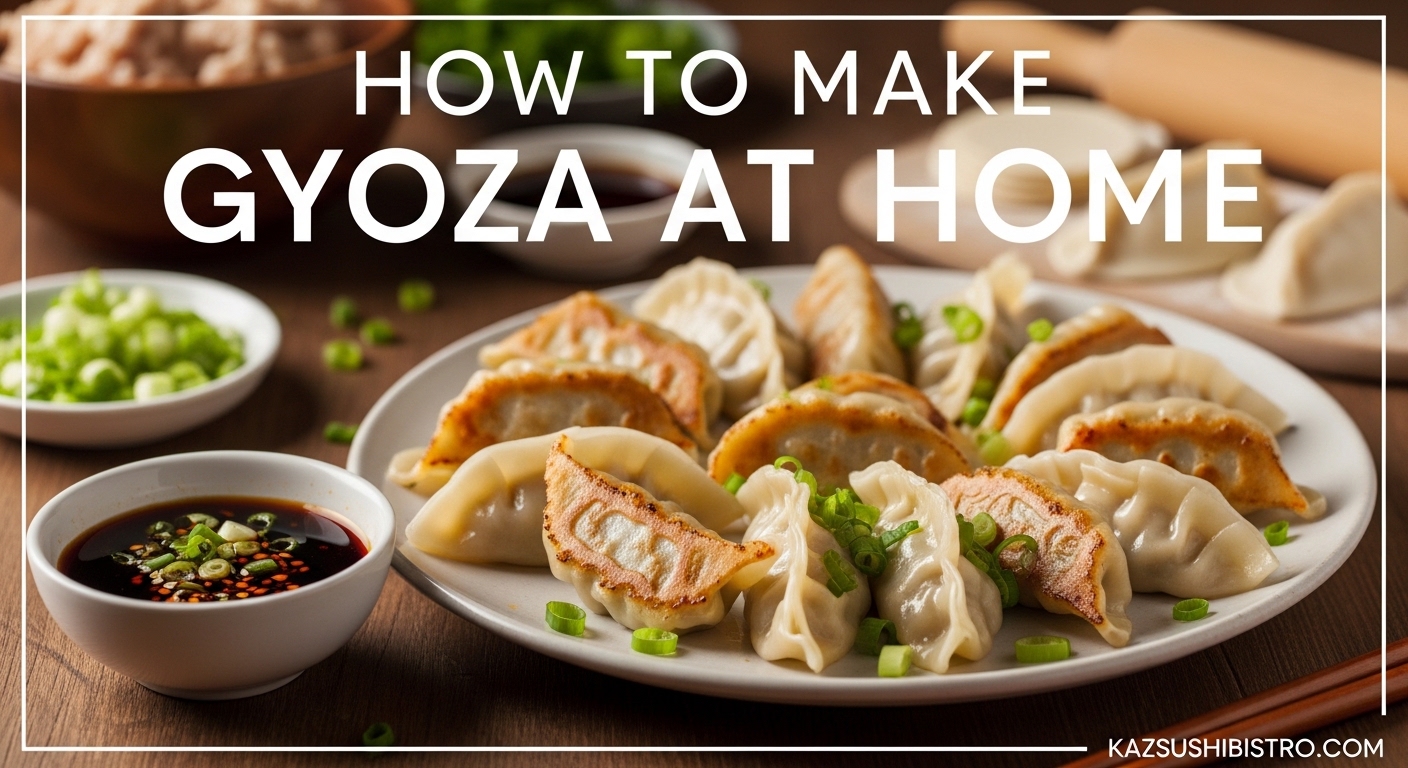
Learning how to make gyoza at home transforms an ordinary weeknight into a special occasion. These Japanese pan-fried dumplings deliver the perfect combination of crispy bottoms and juicy, savory filling that rivals any restaurant. Our team at KAZ Sushi Bistro has spent years perfecting this technique, and I am excited to share everything we have learned.
This guide walks you through every step from mixing the filling to achieving that signature golden crust. You will learn the moisture management secrets that prevent soggy wrappers, two different folding techniques for any skill level, and the three-stage cooking method that creates the perfect texture. Whether you are a complete beginner or looking to refine your technique, you will find everything needed to make restaurant-quality gyoza in your own kitchen.
Table of Contents
What Is Gyoza?
Gyoza are Japanese pan-fried dumplings with thin wheat wrappers encasing a seasoned filling, typically ground pork and vegetables. The name comes from the Chinese “jiaozi,” which Japanese soldiers and settlers brought back after living in China during the early 20th century. Over generations, the recipe evolved to suit Japanese tastes with thinner wrappers and more finely minced filling.
The defining characteristic of gyoza is their cooking method. Unlike Chinese potstickers, which are often steamed or boiled then pan-fried, Japanese gyoza use a specific steam-fry technique. The dumplings start in a hot oiled pan to crisp the bottom, then water is added and the pan is covered to steam the filling through. This creates the signature contrast: crispy bottom, tender top, juicy interior.
Many people wonder about the difference between gyoza and potstickers. While both share Chinese origins, gyoza feature thinner wrappers, a more garlic-forward flavor profile, and that specific half-moon shape with pleated edges. Potstickers tend to have thicker dough and are often steamed before frying. Gyoza also commonly use nira (garlic chives) in the filling, which gives them a distinctive aroma you will recognize from Japanese restaurants.
What You Will Need: Complete Ingredients List 2026
Gathering the right ingredients before starting makes the gyoza-making process smooth and enjoyable. This recipe yields approximately 40 to 50 pieces, enough for 4 to 6 people as an appetizer or 2 to 3 as a main course.
For the Filling
1 pound (450g) fatty ground pork (80/20 ratio preferred)
2 cups (300g) finely chopped napa cabbage or green cabbage
1/2 cup (75g) garlic chives (nira), chopped into small pieces
2 tablespoons fresh ginger, finely minced or grated
2 cloves garlic, finely minced
1 teaspoon kosher salt
1/4 teaspoon white pepper
1 tablespoon sake or Chinese rice wine
1 teaspoon toasted sesame oil
1 tablespoon cornstarch
1/2 teaspoon soy sauce
For Assembly
1 package (about 50) round gyoza or potsticker wrappers
Small bowl of water for sealing
For Cooking
2 tablespoons neutral oil (vegetable, canola, or grapeseed)
1/4 cup water per batch
For the Dipping Sauce
3 tablespoons soy sauce
1 tablespoon rice vinegar (unseasoned)
1/2 teaspoon chili oil (la-yu or rayu), optional
1/4 teaspoon toasted sesame oil, optional
Smart Substitutions
If you cannot find garlic chives (nira), substitute with an equal amount of green onions plus one extra minced garlic clove. The flavor will be slightly different but still delicious. For the cabbage, either napa or green cabbage works well, though napa has a more delicate texture that some prefer.
Wonton wrappers can substitute for gyoza wrappers in a pinch, though they are typically square rather than round. Simply use a round cutter or trace a circle with a glass to trim them to shape. The texture will be slightly thicker than traditional gyoza, but they will still taste wonderful.
How to Prepare the Perfect Gyoza Filling
The filling is where gyoza truly shine, and proper preparation makes the difference between good and exceptional dumplings. Moisture management is the most critical factor here. Too much liquid in your filling leads to soggy wrappers that tear during cooking.
Step 1: Prepare the Cabbage
Chop your cabbage as finely as possible. The pieces should be no larger than a grain of rice. This fine chop ensures even distribution throughout the filling and prevents large chunks from tearing the delicate wrappers.
Place the chopped cabbage in a large bowl and sprinkle with 1/2 teaspoon of salt. Toss thoroughly and let it sit for 15 minutes. This process, called “wringing,” draws excess moisture from the cabbage through osmotic pressure. You will be amazed how much water comes out.
After 15 minutes, grab handfuls of cabbage and squeeze firmly over the sink or a separate bowl. Wring out as much liquid as humanly possible. This step is non-negotiable. Many first-time gyoza makers skip this or do it half-heartedly, and their wrappers always turn soggy. Take your time here.
Step 2: Prep Your Aromatics
While the cabbage rests, prepare your other vegetables. Mince the ginger and garlic as finely as possible. A microplane grater works beautifully for this. The finer the mince, the more evenly the flavors distribute throughout the filling.
Chop the garlic chives into small pieces, about 1/4 inch long. These add a subtle allium flavor that distinguishes gyoza from other dumplings. If using green onions instead, slice them thinly including both white and green parts.
Step 3: Mix the Filling
In a large mixing bowl, combine the ground pork, wrung cabbage, garlic chives, ginger, and garlic. Add the salt, white pepper, sake, sesame oil, cornstarch, and soy sauce. Mix everything together using your hands or a sturdy wooden spoon.
Here is a pro technique: knead the mixture vigorously for about 3 to 5 minutes. This develops a protein network in the meat that gives the filling its characteristic bouncy, cohesive texture. The mixture should become slightly sticky and paste-like. This is exactly what you want.
Step 4: Rest the Filling
Cover the bowl with plastic wrap and refrigerate for at least 30 minutes, or up to overnight. This resting period allows the flavors to meld and the seasonings to fully penetrate the meat. Many home cooks who participated in our research forums swear that overnight resting creates noticeably better flavor.
Before using, give the filling another quick mix. If any liquid has pooled at the bottom of the bowl, drain it off immediately. Your filling should hold together when squeezed but not feel wet.
How to Fold Gyoza: Step-by-Step Guide
Folding gyoza is the most intimidating part for beginners, but with practice, your hands will develop muscle memory. I will show you two methods: the traditional pleated style and a simplified version that still looks beautiful.
Before you begin, set up your station. Keep your wrapper package sealed until needed, and cover the stack with a barely damp clean kitchen towel once opened. Dry wrappers crack and become impossible to seal. You also need a small bowl of water for moistening edges.
Traditional Pleated Method
Hold a wrapper in your non-dominant hand. Place about 1 teaspoon of filling in the center. Do not overfill. Less filling makes folding easier and prevents bursting during cooking. You can always add more once you get comfortable.
Moisten the entire edge of the wrapper with water using your finger. This creates the seal. Fold the wrapper in half over the filling to form a half-moon, but do not seal the edge yet. Just pinch the top center point to hold it together.
Now create the pleats. With your dominant hand, make a small fold on the side facing you, about 1/4 inch from the top pinch point. Press this fold onto the back side of the wrapper to seal it. Move slightly down the edge and make another fold, again pressing it to seal. Continue making these small pleats all the way to one corner.
Repeat the pleating process on the other side, working from the center toward the opposite corner. A well-made gyoza typically has 5 to 7 pleats on each side. The finished dumpling should curve slightly into a crescent shape and stand upright when placed on its flat bottom.
Simplified Folding Method
If pleating feels overwhelming, this method creates beautiful gyoza that cook perfectly. Place your teaspoon of filling in the wrapper center. Moisten the entire edge with water.
Fold the wrapper in half to form a half-moon. Starting at one end, press the edges together firmly, working your way around to the other corner. Use your fingers to push out any air bubbles as you seal. Air trapped inside expands during cooking and can burst the wrapper.
For a decorative touch, use the tines of a fork to gently press a pattern along the sealed edge. This creates texture and ensures a tight seal while looking intentional and lovely.
Folding Tips for Success
Press out all air bubbles before sealing completely. Air expands when heated and will rupture your gyoza. If you notice a bubble while folding, gently press it toward the open edge and release it before sealing.
Work in batches of 10 to 15 wrappers at a time. Keep unused wrappers covered with your damp towel. Exposed wrappers dry out in just a few minutes, especially in dry climates or air-conditioned kitchens.
Place finished gyoza on a parchment-lined baking sheet with space between them. If they touch, they will stick together. For longer storage, see the freezing section below.
How to Cook Gyoza: The Pan-Fry and Steam Method
The cooking technique separates good gyoza from extraordinary ones. The goal is a crispy, golden bottom with a tender steamed top and fully cooked juicy interior. This three-stage method achieves exactly that.
Equipment You Need
A 10 to 12-inch non-stick skillet or well-seasoned carbon steel pan works best. Carbon steel gives the crispiest bottoms due to superior heat retention, but non-stick is more forgiving for beginners. Avoid cast iron unless extremely well-seasoned, as gyoza tend to stick aggressively.
You also need a tight-fitting lid for your pan. Steam escapes through a loose lid, preventing proper cooking. A glass lid is helpful because you can monitor the cooking without lifting it and losing steam.
The Three-Stage Cooking Process
Heat your pan over medium-high heat until hot. Add 1 tablespoon of neutral oil and swirl to coat the bottom. Arrange gyoza in the pan with their flat side down, leaving about 1/2 inch space between each. Crowding prevents proper crisping.
Cook for 2 to 3 minutes until the bottoms turn golden brown. Lift one edge to check. You want a deep golden color, not pale blonde. This initial frying creates the crispy texture.
Carefully pour 1/4 cup water into the pan and immediately cover with the lid. The water will sputter dramatically, so stand back. Reduce heat to medium and steam for 4 to 5 minutes. The steam cooks the filling and softens the wrapper tops while the bottom continues crisping.
Remove the lid and continue cooking for 1 to 2 minutes more until the water fully evaporates. You will hear the sound change from bubbling to sizzling. The bottoms should now be deeply golden and crisp. Remove from heat immediately to prevent burning.
Cooking Frozen Gyoza
Frozen gyoza cook beautifully using this same method. Do not thaw them first. Add an extra 2 minutes to the steaming time, using 1/3 cup water instead of 1/4 cup. The extra steam time ensures frozen centers cook through without burning the exterior.
Our forum research revealed that many home cooks actually prefer cooking frozen gyoza straight from the freezer. The bottoms seem to get even crispier, possibly because the extra moisture from freezing creates more steam action.
Classic Gyoza Dipping Sauce
No gyoza experience is complete without the proper dipping sauce. The classic combination balances salty, tangy, and slightly spicy elements that complement the rich pork filling without overwhelming it.
Mix 3 parts soy sauce with 1 part rice vinegar as your base. For example, 3 tablespoons soy sauce with 1 tablespoon vinegar. This ratio provides the perfect balance of salt and tang. Add chili oil to taste if you enjoy heat. A few drops of toasted sesame oil add wonderful aromatic depth.
Some Japanese restaurants add a tiny amount of grated garlic or ginger to their sauce. Others include a splash of mirin for subtle sweetness. Feel free to adjust to your taste preferences. The beauty of homemade gyoza is controlling every element.
Make your sauce ahead of time and let it sit at room temperature for 30 minutes. This allows the flavors to meld and any harsh edges to soften. Store leftover sauce in the refrigerator for up to two weeks.
How to Store and Freeze Homemade Gyoza
One of gyoza’s greatest advantages is their freezability. Make a large batch once and enjoy restaurant-quality dumplings anytime. Proper freezing technique prevents them from sticking together and maintains wrapper integrity.
Flash Freezing Method
Line a baking sheet with parchment paper. Arrange your folded gyoza in a single layer without touching. Make sure none are overlapping or they will freeze together as one solid mass.
Place the uncovered baking sheet in your freezer for 2 to 3 hours until the gyoza are frozen solid. This “flash freezing” hardens each piece individually before bagging.
Once frozen solid, transfer the gyoza to a freezer bag or airtight container. They will keep for up to 3 months without quality loss. Label the bag with the date and contents.
Refrigerator Storage
Freshly made gyoza can be refrigerated for up to 24 hours before cooking. Place them on a parchment-lined plate and cover loosely with plastic wrap. Do not stack them or they will stick together.
The filling flavors actually improve after resting overnight, which is why many Japanese home cooks prepare gyoza the day before cooking. The trade-off is that the wrappers soften slightly in the refrigerator humidity.
Leftover Cooked Gyoza
Refrigerate cooked gyoza in an airtight container for up to 3 days. The crispy bottom will soften, but they remain delicious. To restore crispiness, reheat in a hot pan with a tiny amount of oil for 2 minutes per side.
Microwaving is not recommended. It makes the wrappers chewy and rubbery. A toaster oven set to 375°F works reasonably well for reheating in about 5 minutes.
Troubleshooting Common Gyoza Problems
Even experienced cooks encounter issues occasionally. Here are solutions to the most common problems our community reported, based on extensive forum research and our own kitchen testing.
Soggy Wrappers
If your gyoza turn out soggy rather than crispy, excess moisture is almost always the culprit. Review your cabbage wringing technique. You should be able to squeeze out a surprising amount of liquid. The wrung cabbage should feel almost dry to the touch.
Another cause is too much water during the steaming phase. Use exactly 1/4 cup for fresh gyoza, 1/3 cup for frozen. More water creates steam that softens the bottoms you just crisped.
Gyoza Sticking to the Pan
Sticking usually means insufficient oil or a pan that is not hot enough when you add the gyoza. Make sure your pan and oil are hot before the dumplings touch the surface. The gyoza should sizzle gently when placed in the pan.
Do not move gyoza during the initial frying phase. They will release naturally once a proper crust forms. Forcing them earlier tears the wrapper and leaves the crispy bottom stuck to the pan.
Filling Bursts Out During Cooking
Overfilling is the primary cause of burst gyoza. Use no more than 1 teaspoon of filling per wrapper when learning. Leave a 1/2 inch border around the edge for sealing.
Air bubbles trapped inside also cause bursting. Press all air out toward the open edge before completely sealing the wrapper. The filling expands during cooking, and air has nowhere to go if sealed inside.
Uneven Cooking
Crowding the pan creates uneven cooking. Leave space between each gyoza for steam circulation. Cook in multiple batches rather than cramming them all together.
Hot spots in your pan cause some gyoza to burn while others stay pale. Rotate the pan occasionally if you know your stove has uneven heating. A good heavy-bottomed pan helps distribute heat more evenly.
Delicious Gyoza Variations to Try
Once you master the basic pork gyoza, experiment with different fillings. These variations maintain the same folding and cooking techniques while offering new flavor profiles.
Vegetarian Gyoza
Replace the pork with 8 ounces firm tofu (pressed and crumbled) plus 4 ounces finely chopped mushrooms. Shiitake mushrooms provide the best umami depth. Add shredded carrots and double the cabbage amount. Season more aggressively with soy sauce and sesame oil since tofu is bland compared to pork.
Chicken Gyoza
Ground chicken breast works but tends to be dry. Chicken thigh meat, hand-chopped or ground, provides better moisture. Add an extra teaspoon of sesame oil to compensate for chicken’s leanness. Include water chestnuts for crunch.
Shrimp Gyoza
Chop raw shrimp into a coarse paste rather than using ground pork. Mix with minced bamboo shoots and a touch of grated lemon zest. Shrimp cook faster than pork, so reduce steaming time by 1 minute.
Hanetsuki Gyoza (With Wings)
This dramatic presentation creates a crispy “wing” connecting all the gyoza in the pan. Mix 1 teaspoon cornstarch with 3 tablespoons water and 1 teaspoon sesame oil. Pour this slurry around the gyoza during the final uncovered cooking phase. The starch creates a lacy, crunchy connecting structure.
Pro Tips for Gyoza Success
These tips come from years of making gyoza both professionally and at home. They represent the small details that elevate good dumplings to great ones.
Always use fatty ground pork. Lean pork (90/10 or higher) produces dry, crumbly filling. The 80/20 ratio provides enough fat for juiciness without being greasy.
Chill your filling before folding. Cold filling is easier to handle and less likely to make wrappers soggy. If the mixture becomes too soft while working, pop it back in the refrigerator for 10 minutes.
Test cook one gyoza before folding the entire batch. Fry a single test dumpling and taste the filling. Adjust seasoning as needed. It is much easier to fix under-seasoned filling now than after folding 50 pieces.
Work with a partner if possible. One person can fold while the other cooks, making the process faster and more social. Gyoza-making is traditionally a group activity in Japanese families.
Make extra filling and freeze it separately for next time. It thaws quickly and saves you prep work. Just remember to wring the cabbage again if any liquid separates during freezing.
Frequently Asked Questions
How do you make gyoza from scratch?
Making gyoza from scratch involves five main steps: preparing and wringing cabbage to remove moisture, mixing ground pork with aromatics and seasonings, filling and folding round wrappers, pan-frying until crispy, then steaming to cook through. The entire process takes about 1 hour and yields 40 to 50 dumplings.
What is gyoza filling made of?
Traditional gyoza filling contains ground pork, finely chopped napa cabbage, garlic chives (nira), fresh ginger, garlic, soy sauce, sake, sesame oil, and seasonings. The key to great texture is kneading the mixture until sticky and paste-like, and properly wringing moisture from the cabbage before mixing.
What is the difference between a dumpling and gyoza?
Gyoza are Japanese pan-fried dumplings adapted from Chinese jiaozi. They feature thinner wheat wrappers, a finer-textured filling with more garlic, and a distinctive half-moon shape with pleated edges. Chinese potstickers typically have thicker dough and different cooking methods. Gyoza also commonly include nira (garlic chives) in the filling.
Why does my gyoza get soggy?
Soggy gyoza usually result from excess moisture in the filling or too much water during steaming. Properly wring your salted cabbage until almost dry, use only 1/4 cup water for steaming fresh gyoza, and avoid overfilling the wrappers. A hot pan and proper oil amount also ensure crispy bottoms.
Can I use wonton wrappers instead of gyoza wrappers?
Yes, wonton wrappers work as a substitute, though they are typically square. Trace a circle using a glass or round cutter to shape them. The texture will be slightly thicker than traditional gyoza wrappers, but they cook and taste similar. Keep them covered with a damp towel to prevent drying.
How do I fold gyoza if I am a beginner?
Start with the simplified method: place 1 teaspoon filling in the center, moisten the wrapper edge, fold in half, and press firmly to seal. Remove all air bubbles. Once comfortable, try the traditional pleating method by making small folds along one side and pressing them to the back edge to create 5 to 7 pleats per side.
How long do homemade gyoza last in the freezer?
Properly flash-frozen and stored in airtight containers or freezer bags, homemade gyoza maintain quality for up to 3 months. Cook them straight from frozen without thawing, adding 2 extra minutes to the steaming time and using slightly more water (1/3 cup instead of 1/4 cup).
What is the best pan for cooking gyoza?
A well-seasoned carbon steel pan provides the crispiest bottoms due to excellent heat retention, but non-stick skillets work well and are more forgiving for beginners. Use a 10 to 12-inch pan with a tight-fitting lid. Avoid cast iron unless extremely well-seasoned, as gyoza tend to stick.
Can I make the filling ahead of time?
Yes, gyoza filling actually improves with overnight refrigeration. The flavors meld and deepen. Store covered in the refrigerator for up to 24 hours. If any liquid separates, drain it completely before using. You can also freeze filling separately for up to 3 months and thaw when needed.
What should I serve with gyoza?
Gyoza pair beautifully with ramen, miso soup, or as part of an izakaya-style spread with karaage (fried chicken), edamame, and yakitori. Serve with the classic dipping sauce of soy sauce, rice vinegar, and optional chili oil. A simple cabbage salad with sesame dressing complements them well.
Conclusion
Learning how to make gyoza at home opens up a world of culinary satisfaction. You now have everything needed to create restaurant-quality Japanese dumplings: the moisture management secrets for perfect filling, two folding techniques for any skill level, and the three-stage cooking method that delivers crispy bottoms every time.
Remember that gyoza-making is a skill that improves with practice. Your first few attempts might look rustic, but they will taste delicious. Focus on wringing that cabbage properly, sealing wrappers completely, and controlling your pan temperature. Everything else comes naturally with repetition.
Make a large batch this weekend and freeze half for busy weeknights. Invite friends over and turn it into a social cooking event. Serve them with a bowl of steaming ramen and your homemade dipping sauce. Once you taste that first perfectly crisp, juicy gyoza fresh from your own pan, store-bought versions will never satisfy you again.
The art of gyoza belongs in every home cook’s repertoire. It is affordable, impressive, freezer-friendly, and deeply satisfying. Now gather your ingredients and start folding. Your perfect gyoza awaits.