
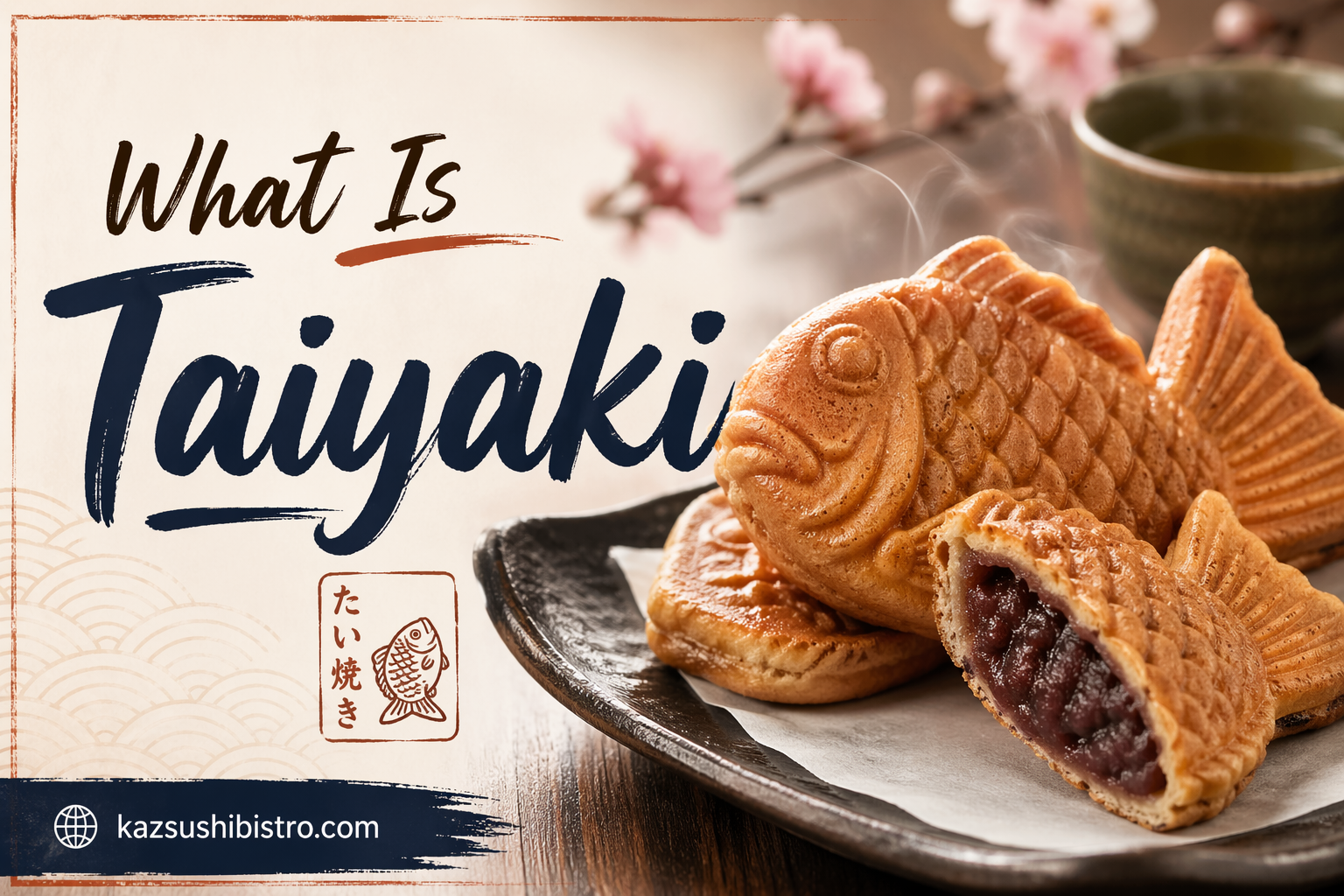
I still remember the first time I bit into a warm taiyaki at a summer festival in Tokyo. The crispy exterior gave way to a soft, sweet center filled with smooth red bean paste. Steam rose from the freshly made cake as the vendor handed it to me in a small paper wrapper. That single bite sparked my fascination with this humble Japanese street food that has delighted locals and visitors for over a century.
What Is Taiyaki? It is a traditional Japanese fish-shaped cake that sits somewhere between a waffle and a pancake in texture. This beloved wagashi (traditional Japanese sweet) is cooked in a special cast iron mold shaped like a sea bream fish. The result is a golden-brown snack with a crispy outer shell and a warm, tender interior stuffed with sweet fillings.
In this guide, I will walk you through everything you need to know about taiyaki. We will explore its fascinating history from the Meiji era to 2026, uncover why this particular fish shape holds such cultural significance, examine the variety of fillings available today, and share tips on finding the most authentic experience. Whether you are planning a trip to Japan or simply curious about Japanese cuisine, this article will give you a complete understanding of this iconic treat.
Table of Contents
What Is Taiyaki?
Taiyaki is a Japanese fish-shaped cake made from a batter similar to pancakes or waffles, cooked in a special mold and filled with sweet ingredients. The name itself gives away its defining characteristics. Tai refers to the sea bream fish, while yaki means baked or grilled. This simple name perfectly describes what you get: a grilled cake in the shape of a fish.
The texture of taiyaki is one of its most distinctive features. When freshly made, the exterior develops a satisfying crispness that contrasts beautifully with the soft, cake-like interior. The batter itself is relatively simple, typically containing flour, eggs, sugar, baking powder, and water or milk. This creates a waffle-like consistency that holds its shape while remaining tender enough to bite through easily.
What Does Taiyaki Taste Like?
The taste of taiyaki depends heavily on the filling you choose, but the cake itself has a mild, slightly sweet flavor similar to a pancake. Traditional taiyaki filled with anko (sweet red bean paste) offers a harmonious balance of earthy bean flavor and gentle sweetness. The exterior provides a subtle toasted quality that complements the filling without overpowering it.
Fresh taiyaki tastes dramatically different from store-bought frozen versions. When made to order, the contrast between the crispy shell and warm filling creates a textural experience that cannot be replicated after cooling. Many first-time tasters compare the sensation to a freshly made waffle cone combined with the comfort of a warm pastry.
Is Taiyaki an Ice Cream?
Taiyaki itself is not ice cream, though modern variations have created taiyaki ice cream cones that use the fish-shaped cake as an edible vessel. Traditional taiyaki is served warm with sweet fillings like red bean paste, custard, or chocolate. The confusion likely stems from the recent popularity of taiyaki-shaped waffle cones used for soft-serve ice cream, particularly in Asian dessert shops worldwide.
The History and Origins of Taiyaki
Taiyaki emerged during Japan’s Meiji era (1868-1912), a period of rapid modernization and cultural exchange. The first taiyaki shop, Naniwaya Sohonten, opened in 1909 in Tokyo’s Azabu Juban district. This shop created the fish-shaped mold that would define the snack and remains in operation today, serving as a living testament to the treat’s enduring appeal.
The original inspiration came from imagawayaki, a similar round cake filled with red bean paste that dates back to the Edo period (1603-1868). Imagawayaki uses the same batter and filling but is cooked in round molds that create a disc shape rather than a fish. The founder of Naniwaya Sohonten sought to differentiate his product in a crowded market. By adapting the mold into the shape of a sea bream, he created something visually striking that also carried deep cultural symbolism.
From Tokyo Street Food to Global Sensation
Taiyaki remained primarily a Tokyo specialty for several decades before spreading throughout Japan. During the mid-20th century, portable taiyaki stalls became fixtures at festivals, shrine visits, and busy shopping districts. The relatively simple equipment required, a special cast iron mold and a heat source, made it accessible for small vendors.
The 2026 global food scene has embraced taiyaki with enthusiasm. Korean variations called bungeoppang have gained popularity, while Western adaptations include savory fillings and dessert-focused interpretations. Taiyaki shops have opened in major cities worldwide, from New York to London to Sydney, introducing this Japanese classic to new audiences while maintaining its essential character.
Why Is Taiyaki Shaped Like a Fish?
The sea bream shape is not arbitrary. In Japanese culture, the tai (sea bream) holds special significance as a symbol of good luck and celebration. The word tai sounds similar to medetai, which means happy, auspicious, or worth celebrating. This linguistic connection has made the sea bream a traditional food for weddings, New Year celebrations, and other joyful occasions throughout Japanese history.
By shaping an affordable street snack like a luxury fish, the original creator made a clever cultural reference that resonated with everyday people. Sea bream was historically expensive and reserved for special occasions. Taiyaki allowed anyone to enjoy the symbolism of this prestigious fish at a fraction of the cost. This democratization of a cultural symbol helped cement taiyaki’s place in Japanese food culture.
The Cultural Significance of the Fish Shape
Beyond the wordplay, the sea bream represents prosperity and success in Japanese tradition. Ancient legends tell of the fish bringing good fortune to fishermen, and its bright red color was associated with happiness and celebration. When you eat taiyaki, you are participating in a tradition that stretches back centuries, even if the specific snack itself is a more recent invention.
At Japanese festivals, taiyaki stalls often feature prominently alongside other traditional games and food vendors. The fish shape connects the snack to larger cultural narratives about abundance and good fortune. Parents buy taiyaki for children not just as a treat, but as a small blessing for their future happiness and success.
Types of Taiyaki Fillings
While traditional taiyaki contains anko (sweet red bean paste), modern versions offer an impressive variety of fillings to suit every palate. The 2026 taiyaki landscape includes both time-honored classics and innovative new flavors that reflect changing tastes and global influences. Here are the most popular options you will encounter:
1. Anko (Sweet Red Bean Paste)
Anko remains the standard filling and the benchmark by which taiyaki quality is often judged. This paste is made from azuki beans that are boiled, sweetened with sugar, and mashed into a smooth or slightly chunky consistency. High-quality anko should have a deep, complex sweetness that comes from the beans themselves rather than overwhelming sugar. The texture ranges from silky smooth (koshian) to intentionally chunky with visible bean pieces (tsubuan).
2. Custard Cream
Vanilla custard has become nearly as popular as anko, particularly among younger generations and international visitors. The rich, creamy filling provides a familiar flavor that appeals to those trying taiyaki for the first time. Premium shops make their custard fresh daily, creating a luxurious interior that contrasts beautifully with the simple cake exterior.
3. Chocolate
Chocolate-filled taiyaki offers a Western-influenced option that has gained significant popularity. Some shops use standard chocolate spread, while more artisanal producers create their own chocolate ganache or include chocolate chips within the batter itself. The combination of warm cake and melted chocolate creates an indulgent treat that feels both familiar and exotic.
4. Matcha (Green Tea)
Matcha cream brings distinctly Japanese flavors to the taiyaki experience. The slight bitterness of high-quality green tea powder balances the sweetness of the cream filling, creating a sophisticated taste profile. This option appeals particularly to matcha enthusiasts and those seeking a uniquely Japanese dessert experience.
5. Savory Options
Modern taiyaki innovators have expanded beyond sweet fillings to include savory options. Cheese, sausage, and even pizza-inspired fillings have appeared at specialty shops. While purists might debate whether these qualify as true taiyaki, they demonstrate the format’s versatility and ongoing evolution.
6. Seasonal and Regional Variations
Throughout Japan, different regions have developed their own taiyaki specialties. Some areas feature local sweet potato fillings, chestnut cream during autumn, or sakura (cherry blossom) flavors in spring. These limited-time offerings encourage repeat visits and celebrate the changing seasons, a central concept in Japanese cuisine.
How Taiyaki Is Made?
Understanding the preparation process explains why freshness matters so much for taiyaki quality. The traditional method requires skill and the right equipment, though modern electric taiyaki makers have made home preparation more accessible.
Taiyaki Batter Ingredients
The basic batter consists of all-purpose flour, eggs, sugar, baking powder, and a liquid component such as water or milk. Some recipes add honey for extra richness or cake flour for a lighter texture. The batter should be smooth and pourable, similar to pancake batter but slightly thicker to hold its shape in the mold.
The traditional cooking tool is a cast iron taiyaki pan with two hinged halves that form the fish shape when closed. These pans are heated over gas burners and must be properly seasoned to prevent sticking and create the characteristic golden-brown exterior.
The Cooking Process
To make taiyaki, the vendor pours batter into the heated mold, adds the filling, then covers it with more batter before closing the top half. The mold is flipped several times during cooking to ensure even browning on both sides. The entire process takes about three to five minutes per batch.
Experience matters here. A skilled taiyaki maker knows exactly when the mold is hot enough, how much batter to use, and when the cake is perfectly cooked. The best taiyaki has an even golden color, no raw batter spots, and a filling that is hot throughout without being scalding.
Crispy vs. Cakey Texture
Japanese taiyaki enthusiasts often debate the ideal texture. Some prefer a crispier, almost cookie-like exterior achieved by cooking longer at higher heat. Others favor a softer, cake-like texture that comes from a thicker batter and gentler cooking. Both styles have their defenders, and many shops offer variations or let customers request their preferred doneness.
Where to Enjoy Taiyaki?
Finding authentic taiyaki requires knowing where to look. The best experiences typically come from specialized shops or festival vendors rather than convenience stores or frozen supermarket versions.
Traditional Taiyaki Shops
Established taiyaki shops like Naniwaya Sohonten in Tokyo offer the most authentic experience. These businesses have perfected their recipes over generations and use high-quality ingredients. The atmosphere of a traditional shop, often with the cast iron molds visible behind the counter, adds to the cultural experience.
Festival and Matsuri Vendors
Japanese festivals (matsuri) provide perhaps the most atmospheric setting for enjoying taiyaki. The combination of festival excitement, the smell of freshly made cakes wafting through the air, and the tradition of eating while strolling through the grounds creates an unforgettable experience. Festival taiyaki is often served in simple paper wrappers that absorb excess oil while keeping your hands clean.
Finding Quality Taiyaki Outside Japan
In the United States and other countries, authentic taiyaki can be harder to find. Japanese grocery stores sometimes carry frozen versions, though these rarely match the fresh experience. Major cities increasingly have dedicated taiyaki shops, often run by Japanese expatriates or enthusiasts who trained in Japan. These shops represent the best option for experiencing authentic taiyaki without traveling.
At KAZ Sushi Bistro, we appreciate the artistry behind traditional Japanese snacks like taiyaki. While our focus is on fresh sushi and sashimi, we share the same commitment to quality ingredients and traditional techniques that define the best taiyaki shops. Understanding these cultural connections enriches any appreciation of Japanese cuisine.
Cultural Notes and Eating Etiquette
Japan has developed fun cultural traditions around eating taiyaki that add personality to the experience. These customs reflect the Japanese love for finding meaning in small details and creating connections between food and character.
Do You Eat Taiyaki from Head or Tail?
Some Japanese people believe that how you eat taiyaki reveals personality traits. Starting from the head suggests you are optimistic and assertive, willing to tackle challenges head-on. Beginning with the tail indicates a more cautious, romantic nature. Eating straight into the middle supposedly means you are energetic and athletic, unable to wait before diving in.
While these associations are playful rather than serious, they add an element of fun to enjoying taiyaki. Children especially love discussing which method matches their personality while eating their treats at festivals.
The Importance of Freshness
Experienced taiyaki eaters know that timing is everything. The window for optimal enjoyment is narrow. Within minutes of leaving the mold, the crispy exterior begins to soften as it absorbs moisture from the filling. After twenty minutes, even the best taiyaki becomes merely good rather than exceptional.
This is why festival vendors and traditional shops make taiyaki to order rather than keeping batches warm. The best taiyaki is the one you eat while standing at the counter or walking a few steps away from the stall. Planning to reheat taiyaki later rarely produces satisfying results.
FAQs
What does taiyaki taste like?
Taiyaki has a mild, slightly sweet flavor similar to a pancake, with a crispy exterior and soft interior. When filled with traditional anko (red bean paste), it offers an earthy, gently sweet taste. The experience is often compared to a freshly made waffle combined with warm pastry filling.
What is taiyaki batter made of?
Taiyaki batter typically contains all-purpose flour, eggs, sugar, baking powder, and water or milk. Some recipes add honey for extra richness or cake flour for a lighter texture. The batter is similar to pancake batter but slightly thicker to hold its shape in the fish-shaped mold.
Do you eat taiyaki from head or tail?
Either way is acceptable, but Japanese tradition suggests that how you eat taiyaki reveals personality traits. Starting from the head supposedly indicates an optimistic, assertive personality. Beginning with the tail suggests a more cautious, romantic nature. Eating straight into the middle indicates an energetic, athletic character.
Is taiyaki an ice cream?
Traditional taiyaki is not ice cream. It is a warm fish-shaped cake with sweet fillings like red bean paste or custard. However, modern variations called taiyaki ice cream use the fish-shaped cake as an edible cone for soft-serve ice cream, which has become popular at dessert shops worldwide.
Conclusion
What Is Taiyaki? It is far more than a simple snack. This humble fish-shaped cake carries over a century of Japanese history, cultural symbolism, and culinary craft within its crispy exterior. From its origins at Naniwaya Sohonten in 1909 to its current status as a global phenomenon, taiyaki has remained true to its essential character while adapting to changing times.
I believe everyone interested in Japanese cuisine should experience authentic taiyaki at least once. Whether you prefer classic anko, creamy custard, or one of the modern savory variations, there is a taiyaki that will speak to your tastes. The key is finding it fresh from a skilled vendor and enjoying it immediately, while the contrast between crispy shell and warm filling is at its peak.
Understanding taiyaki deepens appreciation for the thoughtfulness that characterizes so much of Japanese food culture. Every element, from the lucky fish shape to the careful cooking technique, serves a purpose and tells a story. The next time you encounter this iconic treat, you will know exactly what you are looking at and why it matters.