
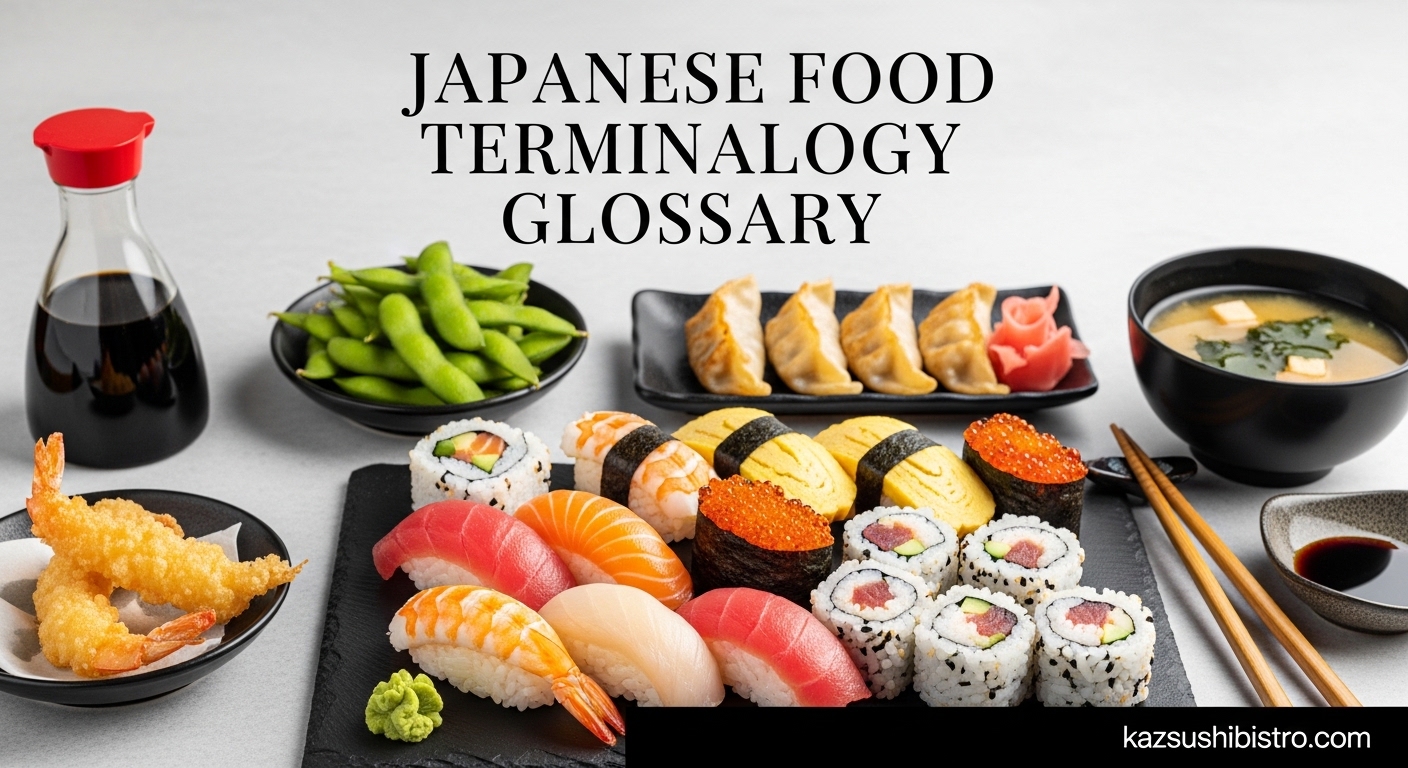
Walking into a Japanese restaurant for the first time can feel overwhelming when you’re staring at a menu filled with unfamiliar terms. I remember my first visit to an authentic sushi bar in Tokyo, desperately trying to decipher words like nigiri, maki, and sashimi while the chef waited patiently for my order.
This Japanese food terminology glossary is designed to transform that confusion into confidence. Whether you’re traveling to Japan, exploring local Japanese restaurants, or simply want to understand what you’re eating, mastering these essential terms will open up a whole new world of culinary appreciation.
By the end of this guide, you’ll understand the fundamental building blocks of Japanese menu language. You’ll know what prefixes like yaki and age mean, how to distinguish between different noodle types, and the proper etiquette phrases that show respect for the food and culture.
Table of Contents
Quick Reference: 25 Essential Japanese Food Terms Every Diner Should Know 2026
Before diving deep into categories, here are the most important terms you’ll encounter at any Japanese restaurant. Save this section for quick reference during your next dining experience.
| Japanese Term | Characters | Romaji | English Meaning |
|---|---|---|---|
| Washoku | 和食 | washoku | Traditional Japanese cuisine |
| Gohan | ご飯 | gohan | Rice (also means meal) |
| Sushi | 寿司 | sushi | Vinegared rice with toppings |
| Sashimi | 刺身 | sashimi | Fresh raw fish slices |
| Tempura | 天ぷら | tempura | Battered and deep-fried seafood/vegetables |
| Ramen | ラーメン | ramen | Chinese-style wheat noodles in broth |
| Udon | うどん | udon | Thick wheat noodles |
| Soba | そば | soba | Buckwheat noodles |
| Miso | 味噌 | miso | Fermented soybean paste |
| Dashi | 出汁 | dashi | Japanese soup stock |
| Shoyu | 醤油 | shoyu | Soy sauce |
| Donburi | 丼 | donburi | Rice bowl dish |
| Yakitori | 焼き鳥 | yakitori | Grilled chicken skewers |
| Teriyaki | 照り焼き | teriyaki | Grilled with glossy soy glaze |
| Kaiseki | 懐石 | kaiseki | Traditional multi-course dinner |
| Izakaya | 居酒屋 | izakaya | Japanese pub/tavern |
| Bento | 弁当 | bento | Boxed meal with compartments |
| Okonomiyaki | お好み焼き | okonomiyaki | Savory pancake with various toppings |
| Takoyaki | たこ焼き | takoyaki | Octopus balls |
| Tsukemono | 漬物 | tsukemono | Japanese pickles |
| Wasabi | 山葵 | wasabi | Japanese horseradish |
| Nori | 海苔 | nori | Dried seaweed sheets |
| Tofu | 豆腐 | tofu | Bean curd |
| Matcha | 抹茶 | matcha | Powdered green tea |
| Wagashi | 和菓子 | wagashi | Traditional Japanese sweets |
Keep this table bookmarked. Once you know these core terms, understanding menu items becomes significantly easier because most Japanese dish names combine these basic elements.
How to Decode Any Japanese Menu: Understanding Prefixes and Suffixes
Japanese food terminology follows logical patterns. Most dish names combine a cooking method (prefix) with a dish type or main ingredient (suffix). Understanding these building blocks allows you to decode unfamiliar menu items instantly.
The word yakitori demonstrates this perfectly. Yaki means grilled, and tori means chicken. Combined, they mean grilled chicken. This same pattern applies across thousands of Japanese dishes.
Common Menu Prefixes: Cooking Methods
These prefixes appear at the beginning of dish names and indicate how the food is prepared:
Yaki (焼き) – Meaning “grilled,” “pan-fried,” or “cooked.” This comes from the verb yaku. You’ll see this prefix everywhere: yakitori (grilled chicken), teriyaki (grilled with glaze), takoyaki (grilled octopus balls), and okonomiyaki (grilled savory pancake).
Age (揚げ) – Meaning “deep-fried.” From the verb ageru. Common examples include agedashi tofu (deep-fried tofu in dashi), karaage (Japanese fried chicken), and tonkatsu (breaded pork cutlet – note that katsu comes from “cutlet”).
Mushi (蒸し) – Meaning “steamed.” From the verb musu. Look for chawanmushi (steamed egg custard in a tea bowl), tamago preparations marked as mushi, and various fish dishes prepared this gentle way.
Nimono (煮物) – Meaning “simmered” or “boiled” dishes. The term literally means “simmered thing.” Nikujaga (simmered meat and potatoes) and various vegetable preparations use this technique.
Su (酢) – Meaning “vinegar” or “vinegared.” Sunomono refers to vinegared dishes, often cucumber or seaweed salads with acidic dressing. You’ll also see this in sushi preparation.
Shio (塩) – Meaning “salt” or “salted.” Shioyaki indicates fish or meat grilled simply with salt, letting the natural flavors shine through.
Common Menu Suffixes: Dish Types and Categories
These suffixes appear at the end of dish names and indicate the type of dish or serving style:
Don / Donburi (丼) – Meaning “rice bowl.” Any dish ending in don or donburi features ingredients served over rice in a bowl. Gyudon is beef bowl, katsudon is pork cutlet bowl, tekka-don is tuna sashimi over rice, and unadon is grilled eel over rice.
Soba / Udon / Men (麺) – Meaning “noodles.” Men literally means “noodle.” Any dish ending in these terms is a noodle dish: zaru-soba (chilled buckwheat noodles), kake-udon (hot wheat noodles in broth), hiyashi-chuka (cold Chinese-style noodles).
Maki (巻き) – Meaning “rolled.” In sushi contexts, this refers to rolled sushi: hosomaki (thin rolls), futomaki (thick rolls), uramaki (inside-out rolls like California rolls), and temaki (hand rolls).
Mono (物) – Meaning “thing” or “item.” Used as a general suffix for types of dishes: nimono (simmered things), tsukemono (pickled things), yakimono (grilled things).
Ryouri (料理) – Meaning “cuisine” or “cooking.” Washoku is traditional Japanese cuisine, youshoku is Western-influenced Japanese food, and individual dishes might be described with this suffix to indicate “prepared dish.”
Age (揚げ) – When used as a suffix, also means “fried.” Karaage (fried chicken), agemochi (fried rice cakes). Note this is the same character as the prefix but follows the ingredient being fried.
Putting It All Together: Menu Decoding in Practice
Now that you know the building blocks, you can decode unfamiliar dishes. Let’s practice:
Buta-no-shioyaki: Buta (pork) + no (possessive) + shio (salt) + yaki (grilled) = Salt-grilled pork.
Tori-tatsuta-age: Tori (chicken) + tatsuta (marinade style) + age (fried) = Fried chicken marinated in soy and ginger.
Kinoko-gohan: Kinoko (mushrooms) + gohan (rice) = Mushroom rice.
This pattern recognition transforms menu navigation from guesswork into understanding. You’ll order with confidence and know exactly what to expect when your food arrives.
Sushi and Sashimi Terminology: From Basic to Advanced
Sushi terminology deserves its own section because it’s both specialized and universally popular. Understanding these terms elevates your sushi experience from tourist-level to informed enthusiast.
The Fundamental Difference: Sushi vs. Sashimi
Sushi (寿司) refers to vinegared rice combined with other ingredients, usually seafood. The rice is essential – without it, you’re not eating sushi.
Sashimi (刺身) is simply fresh raw fish or seafood served without rice. It’s about appreciating the pure flavor and texture of the fish itself.
Here’s a quick comparison:
| Feature | Sushi | Sashimi |
|---|---|---|
| Base | Vinegared rice | No rice (just fish) |
| Presentation | Rice with toppings or rolled | Sliced fish on plate, often with garnish |
| Common Types | Nigiri, maki, temaki, chirashi | Maguro, sake, hamachi, tako, uni |
| Eating Method | Fingers or chopsticks | Chopsticks |
Types of Sushi
Nigiri (握り) – Hand-pressed sushi. A small mound of vinegared rice topped with a slice of fish or other ingredient. The chef applies a light brush of soy sauce, so you typically eat nigiri without additional dipping.
Maki (巻き) – Rolled sushi. Nori (seaweed) wrapped around rice and fillings. Subtypes include hosomaki (thin rolls with one filling), futomaki (thick rolls with multiple fillings), and uramaki (inside-out rolls like California rolls where rice is on the outside).
Temaki (手巻き) – Hand rolls. Cone-shaped rolls meant to be eaten immediately while the nori is still crisp. Usually made to order at the sushi counter.
Chirashi (ちらし) – Scattered sushi. A bowl of vinegared rice topped with various sashimi pieces, vegetables, and garnishes arranged artistically. Chirashizushi is popular for home cooking and special occasions.
Oshizushi (押し寿司) – Pressed sushi. Originating from Osaka, this involves pressing fish and rice into a wooden mold (oshigata) to create rectangular blocks, then slicing them.
Inari (稲荷) – Sushi rice stuffed into sweet, seasoned fried tofu pouches. Named after the Shinto god Inari, whose messengers were foxes said to love fried tofu.
Common Sushi Fish and Seafood Names
Knowing the Japanese names for common sushi ingredients helps when ordering:
Maguro (鮪) – Tuna. Different cuts include akami (lean red meat), chutoro (medium fatty), and otoro (fattiest belly meat). Toro specifically refers to the fatty cuts prized by connoisseurs.
Sake / Shake (鮭) – Salmon. Note: sake (salmon) and sake (rice wine) are different words in Japanese – the salmon is often pronounced shake to distinguish.
Hamachi (魬) – Yellowtail. Often called buri when mature. Rich, buttery fish popular for nigiri.
Ebi (海老) – Shrimp. Usually served cooked and butterflied for nigiri, though ama-ebi (sweet shrimp) is served raw.
Tako (蛸) – Octopus. Usually boiled and sliced thin, with a distinctive chewy texture.
Ika (烏賊) – Squid. Served raw, often scored with crosshatch pattern for texture.
Uni (雲丹) – Sea urchin. Creamy, briny, and often considered an acquired taste. Highly prized when fresh.
Ikura (イクラ) – Salmon roe. Bright orange, briny pearls that burst in your mouth. The word comes from Russian.
Tamago (卵) – Egg. Sweet, layered omelet often served as nigiri. A good test of a sushi chef’s skill.
Tai (鯛) – Sea bream. Considered a lucky fish in Japan, often served at celebrations.
Unagi (鰻) – Freshwater eel. Always served cooked (grilled with sweet sauce), never raw due to toxicity.
Anago (穴子) – Sea eel. Similar to unagi but from saltwater, with a softer, more delicate flavor.
Saba (鯖) – Mackerel. Often cured in vinegar (shime-saba) before serving as the oily fish benefits from the acid balance.
Aji (鯵) – Horse mackerel. Small, flavorful fish often served with ginger and scallion.
Sushi Ordering Terminology
Omakase (お任せ) – “I leave it to you.” The chef’s choice. You trust the sushi master to select and serve the best available fish in optimal order. This is how the pros eat and often provides the best experience.
Osusume (おすすめ) – “Recommendation.” Ask your chef “Osusume wa nan desu ka?” (What do you recommend?) for guidance.
Agari (あがり) – Tea. At sushi counters, green tea is often called agari rather than ocha.
Gari (ガリ) – Pickled ginger. The thin pink slices served alongside sushi to cleanse your palate between pieces. Never put it on top of your sushi.
Murasaki (紫) – Literally “purple,” this is sushi slang for soy sauce (shoyu).
Hashi (箸) – Chopsticks. At high-end sushi counters, you may eat nigiri with your fingers rather than chopsticks.
Japanese Noodle Types: Ramen, Udon, Soba, and Beyond
Noodles (menrui) are a cornerstone of Japanese cuisine. Each type has distinct characteristics, regional variations, and proper eating etiquette.
Ramen (ラーメン): The Beloved Wheat Noodle Soup
Ramen has evolved far beyond its Chinese origins to become a distinctly Japanese cultural phenomenon. The noodles are wheat-based, alkaline (kansui), and springy.
Regional ramen styles you should know:
Shoyu (醤油) – Soy sauce-based broth. Clear, brown, and savory. The original Tokyo style.
Miso (味噌) – Fermented soybean paste broth. Rich, cloudy, and hearty. Originated in Hokkaido where the cold climate demands warming food.
Shio (塩) – Salt-based broth. Lightest and clearest of the main styles, allowing chicken and seafood flavors to shine.
Tonkotsu (豚骨) – Pork bone broth. Creamy, white, and intensely rich. Hakata (Fukuoka) specialty that has spread nationwide.
Tsukemen (つけ麺) – Dipping noodles. Noodles and concentrated broth are served separately. You dip the noodles before eating.
Ramen terminology for ordering:
Kaemae (替え玉) – Extra noodle portion. For when you’ve finished your noodles but still have broth.
Nimori / Omori (大盛り) – Large portion. Chuumori means medium, oomori means large.
Men (麺) – Noodles. Men-kata means firm noodles, men-yawarakame means soft.
Abura (油) – Oil/fat. Abura-sukuname means less oil, abura-oome means extra oil.
Kara (辛) – Spicy. Karame means make it spicier.
Udon (うどん): Thick, Chewy Wheat Noodles
Udon are thick, white wheat noodles with a distinctive chewy texture. They’re versatile and served hot or cold depending on season and style.
Common udon preparations:
Kake-udon (かけうどん) – Hot udon in simple soy-based broth. The fundamental preparation.
Zaru-udon (ざるうどん) – Cold udon served on a bamboo tray (zaru) with dipping sauce (tsuyu).
Kitsune-udon (きつねうどん) – Udon with sweet fried tofu (abura-age). Named after foxes who supposedly love fried tofu.
Tempura-udon (天ぷらうどん) – Udon topped with tempura, usually shrimp or vegetable.
Curry-udon (カレーうどん) – Udon in thick curry sauce. A Japanese comfort food favorite.
Chikara-udon (力うどん) – Udon with mochi (rice cakes). The name means “strength” noodles.
Soba (そば): Nutty Buckwheat Noodles
Soba noodles are made from buckwheat flour, giving them a distinctive nutty flavor and grayish-brown color. They’re considered more refined than udon and have special cultural significance.
Important soba terms:
Mori-soba / Zaru-soba (盛り蕎麦/ざる蕎麦) – Cold soba served on a plate or bamboo tray with dipping sauce. The proper way to eat is to dip about two-thirds of the noodles into the tsuyu (dipping sauce).
Kake-soba (かけそば) – Hot soba in broth. Simple and warming.
Tempura-soba (天ぷらそば) – Soba topped with tempura.
Kitsune-soba (きつねそば) – Soba with sweet fried tofu. Note: this is different from udon with the same topping.
Toshikoshi-soba (年越し蕎麦) – Year-crossing soba. Eating soba on New Year’s Eve is a tradition symbolizing longevity and cutting away the old year’s troubles.
Cha-soba (茶そば) – Green tea (matcha) flavored soba. Light green color and subtle tea aroma.
Soba-yu (蕎麦湯) – The hot water used to boil soba, served at the end of a meal. Drink it mixed with leftover dipping sauce for nutrients.
Somen (そうめん) and Hiyamugi (冷麦): Summer Noodles
Somen are very thin, white wheat noodles served cold in summer. They’re often eaten flowing in a bamboo flume (nagashi-somen) where you catch them with chopsticks.
Hiyamugi are slightly thicker than somen but thinner than udon. Also served cold with dipping sauce during hot weather.
Japanese Cooking Methods and Techniques
Japanese cuisine (washoku) encompasses diverse cooking techniques, each with specific terminology. Understanding these methods helps you appreciate the skill behind your meal.
Agemono (揚げ物): The Art of Frying
Agemono refers to deep-fried foods, a category that includes some of Japan’s most beloved dishes.
Tempura (天ぷら) – Food coated in light, airy batter and quickly deep-fried. The batter is made from flour, egg, and ice-cold water to minimize gluten development. Tempura should be crisp, never greasy, and served immediately.
Karaage (唐揚げ) – Japanese fried chicken (though the term can apply to other marinated, potato-starch-coated fried foods). Chicken pieces are marinated in soy, ginger, and garlic, then coated in katakuriko (potato starch) before frying for an extra-crispy exterior.
Katsu (カツ) – Cutlets breaded in panko (coarse breadcrumbs) and fried. Tonkatsu (pork cutlet) is the most common, but you’ll also find chicken katsu and menchi-katsu (ground meat cutlets).
Agedashi-dofu (揚げ出し豆腐) – Deep-fried tofu cubes served in hot dashi broth with grated ginger and scallions. The contrast between crispy exterior and silky interior makes this a classic.
Korokke (コロッケ) – Japanese croquettes. Usually potato-based with ground meat or vegetables inside, breaded and fried.
Nimono (煮物): Simmered Dishes
Nimono represents the gentle, patient side of Japanese cooking. Ingredients are simmered slowly in seasoned broth until deeply flavored and tender.
Nikujaga (肉じゃが) – Simmered meat (niku) and potatoes (jagaimo). A home-style comfort food made with beef, potatoes, onions, and konnyaku simmered in sweet soy broth.
Kabura-mushi (かぶら蒸し) – Turnip steamed with seafood, often served in the turnip shell as an elegant presentation.
Chikuzen-ni (筑前煮) – Simmered chicken and vegetables. Named after the former Chikuzen province (now Fukuoka), this features root vegetables and konnyaku.
Oden (おでん) – Winter hot pot with various ingredients simmered in dashi: eggs, daikon, konnyaku, fish cakes. Available at convenience stores and specialty restaurants during colder months.
Yakimono (焼き物): Grilled and Pan-Fried
Yakimono encompasses all grilled, broiled, and pan-fried dishes.
Teriyaki (照り焼き) – Grilled with a glossy glaze of soy, mirin, and sugar. The name comes from the shine (teri) of the glaze.
Yakitori (焼き鳥) – Grilled chicken skewers, but the category includes various parts: momo (thigh), negima (thigh with scallion), tsukune (meatballs), sunagimo (gizzard), heart, liver, and even torikawa (skin).
Shioyaki (塩焼き) – Salt-grilled, usually fish. The simple preparation lets the fish’s natural flavor shine.
Saikyo-yaki (西京焼き) – Marinated in saikyo miso (sweet white miso from Kyoto) before grilling. Typically used for rich fish like black cod.
Unagi-no-kabayaki (鰻の蒲焼き) – Grilled eel basted with sweet soy sauce. The eel is butterflied, skewered, and grilled over charcoal.
Mushimono (蒸し物): Steamed Dishes
Mushimono highlights the clean, subtle flavors achievable through steaming.
Chawanmushi (茶碗蒸し) – Savory egg custard steamed in a tea bowl (chawan). Contains chicken, shrimp, ginkgo nuts, and mushrooms in a silky, delicate custard.
Sakamushi (酒蒸し) – Steamed with sake. Fish steamed with sake releases incredible aromatics and remains exceptionally moist.
Manjuu (饅頭) – Steamed buns with various fillings, both sweet and savory. Nikuman contains meat, ankoman contains sweet bean paste.
Nabemono (鍋物): Hot Pot Dishes
Nabemono are communal hot pot dishes cooked at the table, perfect for social dining.
Sukiyaki (すき焼き) – Sweet soy-based hot pot with thinly sliced beef, tofu, vegetables, and noodles. Dipped in raw egg before eating.
Shabu-shabu (しゃぶしゃぶ) – Milder, dashi-based hot pot where you swish thin meat slices in boiling broth (shabu-shabu mimics the sound). Served with sesame and ponzu dipping sauces.
Yosenabe (寄せ鍋) – Mixed hot pot with various seafood, meat, and vegetables in dashi broth.
Chankonabe (ちゃんこ鍋) – Hearty hot pot originally developed for sumo wrestlers. Protein-rich with meatballs, chicken, and vegetables.
Mizutaki (水炊き) – Simple chicken hot pot from Fukuoka. The name means “water cooked” referring to the light broth.
Tsukemono (漬物): Japanese Pickles
Tsukemono are essential accompaniments to Japanese meals, providing palate cleansing and digestive benefits.
Takuwan (沢庵) – Bright yellow pickled daikon radicon. Sweet, tangy, and crunchy. Named after the Buddhist monk Takuan who supposedly invented the recipe.
Umeboshi (梅干し) – Pickled plums. Extremely sour and salty, often placed in the center of rice (called hinomaru bento after the Japanese flag).
Asazuke (浅漬け) – “Light pickle” – vegetables pickled for just a few hours, retaining fresh crunch and milder flavor.
Nukazuke (糠漬け) – Vegetables pickled in rice bran (nuka). The fermented bran bed (nukadoko) requires daily stirring and can be maintained for generations.
Kasuzuke (粕漬け) – Pickled in sake lees (sake kasu). The residual alcohol and yeast create complex, mellow pickles often used for fish.
Essential Dining Etiquette and Phrases
Knowing the right words to use before, during, and after a meal shows respect for Japanese food culture. These phrases are as important as knowing menu items.
Before the Meal
Itadakimasu (いただきます) – Said before eating, this phrase literally means “I humbly receive.” It expresses gratitude to everyone involved in bringing the food to your table: the chef, the farmers, the fishermen, and even the animals and plants that gave their lives.
Say it with hands together in a brief gassho gesture, then pick up your chopsticks. At an izakaya or casual setting, you can say it while raising your beer glass with dining companions.
During the Meal
Osusume (おすすめ) – “Recommendation.” Ask your server or chef “Osusume wa nan desu ka?” (What do you recommend?) when you want guidance.
Oshibori (おしぼり) – The hot or cold hand towel provided at the start of a meal. Use it to clean your hands before eating, then fold it neatly and place it beside your plate.
Ohashi (お箸) – Chopsticks. When not in use, place them on the hashioki (chopstick rest). Never stick them vertically into rice (this resembles incense at funerals) or pass food directly from chopstick to chopstick.
Okaikei (お会計) / Okanjou (お勘定) – “Check” or “bill.” At casual restaurants, you might say “Okanjou onegai shimasu” when ready to pay. At higher-end establishments, the staff may bring the bill without being asked.
After the Meal
Gochisousama deshita (ごちそうさまでした) – Said after finishing a meal, this means “It was a feast” or “Thank you for the meal.” It acknowledges the effort and resources that went into preparing your food.
In casual settings, gochisousama is acceptable. Say it to the chef when leaving a sushi counter, and to your host when dining at someone’s home.
Osozai (お粗菜) – A humble phrase meaning “simple/humble food.” You might hear a host use this to modestly describe the meal they prepared.
Otsukaresama (お疲れ様) – “Thank you for your hard work.” Often said among colleagues after eating together, acknowledging the shared effort of the workday.
Special Dietary Needs
Travelers with dietary restrictions should know these useful phrases:
Wa-ga-shoku wa taberarenai (和食は食べられない) – “I cannot eat Japanese food.” (Useful when you need Western alternatives)
Bejitarian (ベジタリアン) – Vegetarian. Note: pure vegetarianism is uncommon in Japan, as dashi usually contains fish.
Arerugii ga arimasu (アレルギーがあります) – “I have allergies.” Follow with the allergen name.
Komon arerugii (コモンアレルギー) – Common allergens include: komugi (wheat), tamago (egg), nyuuseihin (dairy), piinatsu (peanuts), ebi (shrimp), kani (crab).
Niku (肉) – Meat. Specify butaniku (pork), gyuniku (beef), or toriniku (chicken) if needed.
Sakana (魚) – Fish/seafood. If you’re allergic to shellfish specifically, say kai-rui (shellfish).
Frequently Asked Questions
What does ‘yaki’ mean in Japanese food?
Yaki (焼き) means grilled, pan-fried, or cooked. It comes from the verb yaku (to cook, fry, or grill). You’ll see this prefix in countless dishes: yakitori (grilled chicken), teriyaki (grilled with glaze), okonomiyaki (grilled savory pancake), and takoyaki (grilled octopus balls). When yaki appears at the end of a word, it still indicates the cooking method.
What is the difference between sushi and sashimi?
Sushi (寿司) is vinegared rice combined with other ingredients, usually seafood. The rice is essential – without it, you’re not eating sushi. Sashimi (刺身) is simply fresh raw fish or seafood served without rice. Sashimi is about appreciating the pure flavor and texture of the fish itself, while sushi combines fish with seasoned rice.
What are the 5 S’s of Japanese cooking?
The 5 S’s refer to five key principles of Japanese cuisine: 1) Seasonality (Shun) – using ingredients at their peak, 2) Simplicity – letting natural flavors shine, 3) Sensation – appealing to all five senses, 4) Sustainability – respecting resources and minimizing waste, 5) Spirit – the chef’s dedication and gratitude expressed through food.
What is kaiseki vs izakaya?
Kaiseki (懐石) is a traditional multi-course haute cuisine dinner that represents the pinnacle of Japanese culinary art. It’s formal, expensive, and follows strict aesthetic principles. Izakaya (居酒屋) is a casual Japanese pub/tavern serving small plates, drinks, and a lively atmosphere. Kaiseki is a refined dining experience; izakaya is social, relaxed drinking and dining.
What does ‘itadakimasu’ mean?
Itadakimasu (いただきます) is said before eating and literally means ‘I humbly receive.’ It expresses gratitude to everyone involved in bringing the food to your table: the chef, farmers, fishermen, and even the animals and plants. It’s accompanied by a brief gesture of hands together before picking up chopsticks.
What does ‘don’ mean in Japanese food?
Don (丼) or donburi refers to a rice bowl dish. Any dish ending in ‘don’ features ingredients served over rice in a bowl. Examples include gyudon (beef bowl), katsudon (pork cutlet bowl), unadon (grilled eel bowl), and tekka-don (tuna sashimi over rice). The term comes from the large bowl (donburi-bachi) used to serve these meals.
How do you read a Japanese restaurant menu?
To read a Japanese menu, look for prefixes that indicate cooking methods and suffixes that indicate dish types. Common prefixes: yaki (grilled), age (fried), mushi (steamed), nimono (simmered). Common suffixes: don (rice bowl), soba/udon/men (noodles), maki (rolled sushi). Combined, these create dish names: buta-no-shioyaki means salt-grilled pork.
What does ‘maki’ mean in Japanese cuisine?
Maki (巻き) means ‘rolled’ in Japanese. In sushi contexts, maki refers to rolled sushi where nori (seaweed) wraps around rice and fillings. Types include hosomaki (thin rolls with one filling), futomaki (thick rolls with multiple fillings), uramaki (inside-out rolls like California rolls), and temaki (hand rolls shaped like cones).
Conclusion: Your Journey Into Japanese Food Terminology
You now have the essential tools to navigate Japanese menus with confidence. From understanding that yaki means grilled and don indicates a rice bowl, to knowing the difference between nigiri and maki, you’re equipped to order authentically and appreciate the culinary traditions behind each dish.
The beauty of Japanese food terminology lies in its logic. Once you master the prefixes and suffixes, unfamiliar menu items become transparent. Buta-no-shioyaki isn’t mysterious anymore – it’s simply salt-grilled pork.
Remember the dining phrases too. Saying itadakimasu before your meal and gochisousama deshita after shows respect for the food, the chef, and centuries of culinary tradition. These small gestures transform you from a tourist into an appreciative guest.
Keep this Japanese food terminology glossary handy as you explore restaurants, plan your trip to Japan, or experiment with recipes at home. The world of washoku awaits – and now you can navigate it with understanding and confidence.