
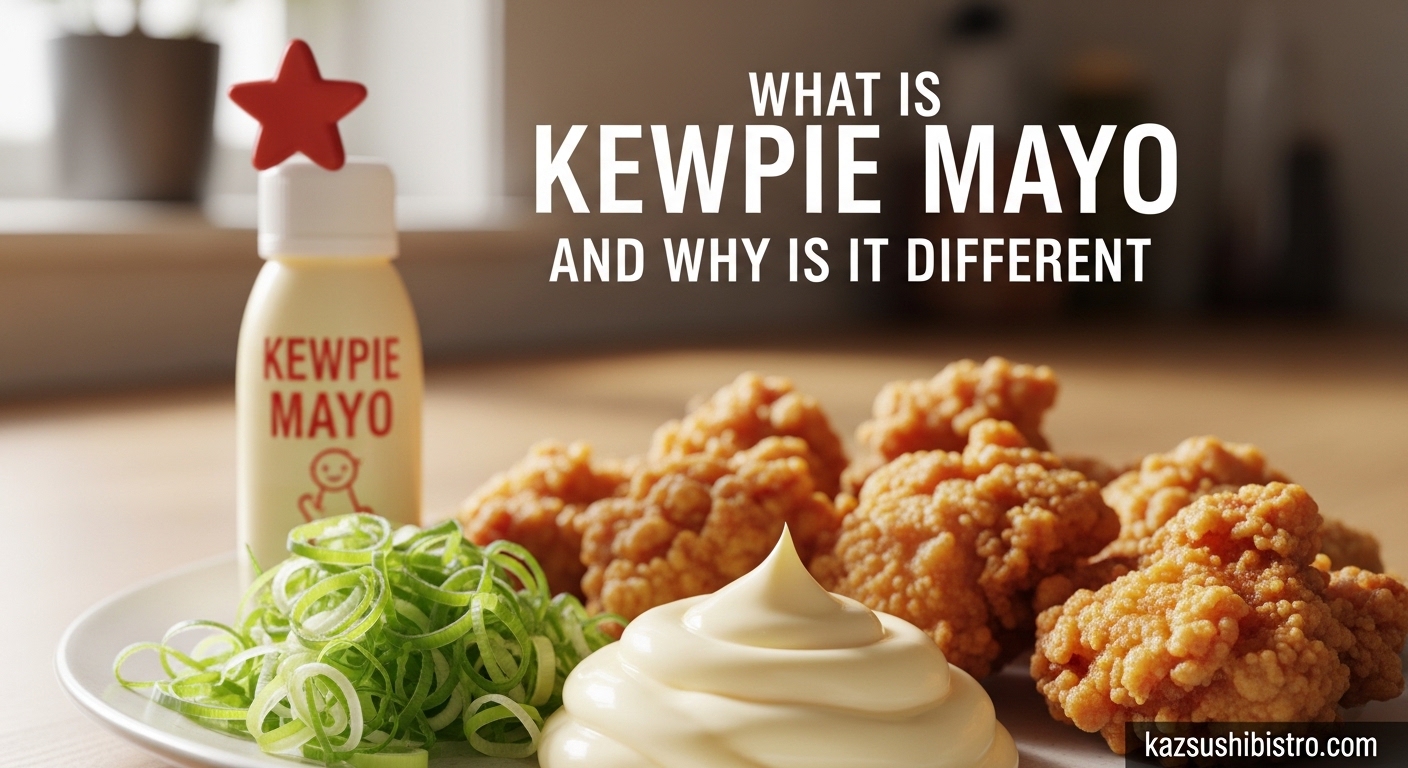
You have probably spotted that distinctive soft-squeeze bottle with the baby logo on Asian grocery store shelves or in the background of cooking videos. Kewpie mayo has become something of a cult favorite among home cooks and professional chefs, and for good reason. This Japanese mayonnaise delivers a flavor experience that regular American mayo simply cannot match.
In this guide, I will break down exactly what makes Kewpie mayo different from the Hellmann’s or Duke’s sitting in your refrigerator right now. We will explore its unique ingredients, its fascinating history dating back to 1925, and why this condiment has earned a permanent spot in my kitchen.
Whether you are curious about the MSG controversy, wondering why it tastes so much better on sushi, or trying to figure out if the Japanese and American versions are actually different, I have got you covered.
Table of Contents
What Is Kewpie Mayo?
Kewpie mayo is a Japanese mayonnaise that has been a staple condiment in Japan for nearly a century. Unlike standard American mayonnaise, Kewpie uses only egg yolks instead of whole eggs, incorporates MSG for umami depth, and relies on rice vinegar for its signature tangy bite.
The brand was founded in 1925 by Toichiro Nakashima, who was inspired by American mayonnaise during a business trip to the United States. He returned to Japan with a mission to create a mayonnaise suited to Japanese tastes, and the rest is culinary history. The name “Kewpie” comes from the popular Kewpie doll characters created by American illustrator Rose O’Neill, which were hugely popular in Japan at the time.
Physically, you will recognize authentic Japanese Kewpie by its unique packaging. It comes in a soft, transparent squeeze bottle that allows you to dispense the mayonnaise in a thin, precise ribbon. The color is distinctly more golden than American mayo, with a custard-like consistency that holds its shape rather than spreading thin.
Why Is Kewpie Mayo Different from Regular Mayonnaise?
The difference between Kewpie mayo and regular mayonnaise comes down to four key factors: the eggs, the vinegar, the umami boosters, and the overall texture. Let me break down each element.
Egg Yolks Only vs. Whole Eggs
Traditional American mayonnaise like Hellmann’s or Best Foods uses whole eggs, which include both the white and the yolk. Kewpie mayo uses only egg yolks. This single difference transforms everything about the final product.
Egg yolks contain lecithin, a natural emulsifier that creates stable, creamy textures. They also provide a richer flavor and that distinctive butter-yellow color you see in Kewpie. Whole eggs contain more water from the whites, which dilutes both the flavor and the richness. When you taste Kewpie, you are essentially getting a concentrated dose of everything good about eggs.
The protein yield from using only yolks also creates that thick, almost custard-like consistency that holds its shape on a plate. Regular mayo spreads and thins out. Kewpie maintains its body.
MSG and the Umami Factor
Here is where Kewpie mayo becomes controversial for some American consumers. Authentic Japanese Kewpie contains monosodium glutamate, commonly known as MSG. This ingredient is responsible for that savory, mouth-filling umami sensation that makes Kewpie so addictive.
MSG contains glutamic acid, an amino acid that occurs naturally in many foods including tomatoes, cheese, and mushrooms. It enhances savory flavors without adding saltiness, creating what Japanese cuisine calls “umami” – the fifth taste beyond sweet, sour, salty, and bitter.
Scientific studies have consistently debunked the myth that MSG causes health problems in typical dietary amounts. The FDA classifies it as GRAS (Generally Recognized As Safe), and numerous health organizations worldwide have confirmed its safety. That said, the American version of Kewpie mayo swaps MSG for yeast extract, which provides similar umami compounds without the three letters that make some shoppers nervous.
Rice Vinegar vs. Distilled Vinegar
Regular American mayonnaise typically uses distilled vinegar or a combination of distilled vinegar and lemon juice. Kewpie mayo uses rice vinegar, and this changes the entire tangy profile of the condiment.
Rice vinegar is milder and slightly sweeter than distilled white vinegar. It provides acidity without that harsh, sharp bite that can overpower other flavors. The Japanese version of Kewpie uses rice vinegar exclusively, while the American-manufactured version sometimes substitutes apple cider vinegar, which provides a middle ground between the two.
When I made a DIY version at home following online recipes, the rice vinegar was absolutely the make-or-break ingredient. Using distilled vinegar created something that tasted like slightly better regular mayo. Using rice vinegar created something that actually tasted like Kewpie.
Texture and Consistency
Put Kewpie mayo side by side with regular mayonnaise and the visual difference is immediate. Kewpie is thicker, silkier, and has a more luxurious mouthfeel. It coats food rather than soaking in. When you squeeze it from the bottle, it holds its shape in a way that regular mayo cannot match.
This texture makes Kewpie ideal for applications where you want the mayo to be a featured element rather than just a background binder. It works beautifully as a topping, a drizzle, or a dip because it maintains its presence on the plate.
The Ingredient Breakdown: What Goes Into Kewpie Mayo?
Understanding exactly what goes into this Japanese mayonnaise helps explain why it tastes so different from what most Americans grew up with. Here is the complete picture.
The base of Kewpie mayo starts with pasteurized egg yolks. Using pasteurized eggs is essential for food safety in a raw mayonnaise product. These yolks provide the color, the emulsification, and the rich foundation of flavor.
The oil component varies by version. Japanese Kewpie uses a blend that includes soybean oil as a primary ingredient. American Kewpie uses canola oil as the dominant oil. Both are neutral oils that let the other flavors shine through rather than competing with them.
For acidity, as mentioned, rice vinegar provides that gentle tang in the Japanese version. The American version may use apple cider vinegar instead, which creates a slightly different but still pleasant flavor profile.
The umami component is where the versions diverge significantly. Japanese Kewpie contains MSG directly. American Kewpie uses yeast extract, which naturally contains glutamic acid and provides similar savory depth without listing MSG on the label. Some food enthusiasts swear they can taste the difference, though in blind tests most people struggle to tell them apart.
Finally, salt and occasionally dashi powder round out the flavor. Dashi is a Japanese soup stock made from kelp and bonito flakes, and when present it adds another layer of savory complexity. Some batches of Kewpie have been noted to taste slightly “fishy” by American consumers, which usually traces back to dashi content or the specific yeast extract used in that production run.
Notably absent from Kewpie is added sugar. Many American mayonnaise brands include sugar or high fructose corn syrup, which creates a sweetness that some people find cloying. Kewpie has no added sugar, letting the natural sweetness of the egg yolks provide any subtle sweet notes.
History and Origin: The Story Behind Kewpie Mayo 2026
The story of Kewpie mayo begins in 1925 with a Japanese entrepreneur named Toichiro Nakashima. During a business trip to the United States, Nakashima encountered American mayonnaise and was impressed by its potential as a Western-style condiment. However, he believed he could improve upon it for Japanese palates.
Returning to Japan, Nakashima founded the Kewpie company and began producing mayonnaise using the Kewpie doll as his brand mascot. These cherubic little figures created by Rose O’Neill were already wildly popular in Japan, making them a natural choice for building brand recognition.
The original manufacturing took place in a small factory, but demand grew steadily throughout the 20th century. Kewpie became synonymous with mayonnaise in Japan the same way Kleenex became synonymous with tissues in America. Today, Kewpie commands an estimated 60% market share of Japanese mayonnaise sales.
2026 marked a significant milestone for the brand: its 100-year anniversary. The company celebrated a century of continuous production with special packaging and renewed interest in this classic condiment. Few food brands survive a century largely unchanged, which speaks to how perfectly Nakashima nailed the original formula.
The global expansion came later, as Japanese cuisine gained popularity worldwide. Today you can find Kewpie mayo in Asian grocery stores across America, in specialty food shops in Europe, and through countless online retailers. It has transcended its origins to become a global pantry staple for anyone serious about flavor.
Japanese vs. American Kewpie: Know Which One You’re Buying
Here is something that confuses many first-time buyers: not all Kewpie mayo is the same. The version manufactured in Japan differs from the version manufactured in America, and understanding these differences helps you get exactly what you want.
Japanese Kewpie is manufactured in Japan and imported. You can identify it by the all-Japanese labeling and the specific bottle design. This version contains MSG as an ingredient and uses rice vinegar and soybean oil in its formulation. It is generally considered the “authentic” version by purists.
American Kewpie is manufactured in the United States under license. It features English labeling and is more widely available in regular grocery stores. This version substitutes yeast extract for MSG to avoid the labeling concerns some American consumers have. It also tends to use canola oil rather than soybean oil, and may use apple cider vinegar instead of rice vinegar.
The taste difference is subtle but detectable to sensitive palates. Japanese Kewpie has a slightly more pronounced umami hit and a cleaner, more neutral oil flavor. American Kewpie is milder and slightly more acidic. Both are excellent products, but if you are chasing that exact flavor you experienced at a Japanese restaurant, you want the imported Japanese version.
Price is another differentiator. Japanese Kewpie typically costs between $8 and $15 for a standard bottle due to import costs. American Kewpie usually runs $4 to $7, making it competitive with premium American mayonnaise brands like Duke’s.
For sourcing authentic Japanese Kewpie, look for Asian grocery stores like H Mart, Mitsuwa, or 99 Ranch Market. Online retailers also carry both versions, though shipping costs can make the Japanese version significantly more expensive. Check the label language: all Japanese text means it is the import; English text means it is the American version.
Common Uses: How to Use Kewpie Mayo in Your Cooking?
Kewpie mayo shines in Japanese cuisine applications, but its versatility extends far beyond sushi rolls. Here are the best ways to put that squeeze bottle to work.
Tamago sando, the Japanese egg salad sandwich, is perhaps the purest expression of Kewpie’s talents. The rich mayo blends with mashed hard-boiled eggs to create a filling that is somehow both simple and luxurious. Japanese convenience stores sell millions of these sandwiches daily, and Kewpie is the secret ingredient that makes them special.
For sushi enthusiasts, Kewpie is essential. It binds spicy tuna rolls, adds creaminess to California rolls, and works as a base for spicy mayo sauce when mixed with sriracha. The thick texture means it stays where you put it rather than running off the rice.
Japanese potato salad differs significantly from American versions, and Kewpie is central to that difference. The potatoes are mashed rather than cubed, and the Kewpie creates a smooth, creamy base that carries additions like cucumber, ham, and corn. The result is more like potato spread than potato salad, and it is addictive.
Okonomiyaki and takoyaki, the savory Japanese pancakes and octopus balls, both rely on Kewpie as a finishing sauce. Drizzled on top with okonomiyaki sauce and bonito flakes, it adds richness that balances the savory-sweet sauces.
Karaage, Japanese fried chicken, reaches its full potential with a side of Kewpie for dipping. The tangy, rich mayo cuts through the fried exterior perfectly. You will find this combination at virtually every izakaya in Japan.
Beyond Japanese cuisine, try Kewpie on regular sandwiches, as a base for salad dressings, or in the viral “ramen hack” where you mix it with raw egg and garlic before stirring into instant ramen. The possibilities are endless once you start experimenting.
Frequently Asked Questions
Is Kewpie better than regular mayo?
Whether Kewpie is ‘better’ depends on your preferences. Kewpie offers a richer, more umami-forward flavor with a custard-like texture from using only egg yolks. If you find American mayo too sweet or thin, you will likely prefer Kewpie. For applications needing a neutral binder, regular mayo works fine.
Is Kewpie mayo healthy or unhealthy?
Kewpie mayo has similar calorie and fat content to regular mayonnaise since both are oil and egg-based emulsions. The Japanese version contains MSG, which the FDA recognizes as safe. Neither version contains added sugar. As with any high-fat condiment, moderation is key.
Does Kewpie mayo have MSG?
Authentic Japanese Kewpie contains MSG, which provides its distinctive umami flavor. American-manufactured Kewpie uses yeast extract instead, which contains naturally occurring glutamates but allows the label to remain MSG-free. Both provide similar savory depth.
Can I use Kewpie mayo like regular mayo?
Yes, you can substitute Kewpie for regular mayonnaise in any application. The flavor will be richer and more tangy. It works especially well in potato salad, sandwiches, and as a dip. The thicker texture may require slight recipe adjustments in some baking applications.
Is Kewpie mayo 100 years old?
Kewpie mayo was founded in 1925 by Toichiro Nakashima, meaning 2026 marked its 100-year anniversary. The original recipe has remained largely unchanged over this century, making it one of the oldest continuously produced mayonnaise brands in the world.
Conclusion
Kewpie mayo stands apart from regular mayonnaise through its exclusive use of egg yolks, inclusion of MSG for umami depth, and rice vinegar for gentle tang. Founded by Toichiro Nakashima in 1925, this Japanese mayonnaise has earned its century-long reputation as a superior condiment.
Whether you choose the Japanese import or the American-manufactured version, you are getting a product that elevates everything from sushi rolls to potato salad. Once you taste the difference, you will understand why so many home cooks and professional chefs refuse to go back to regular mayo.