
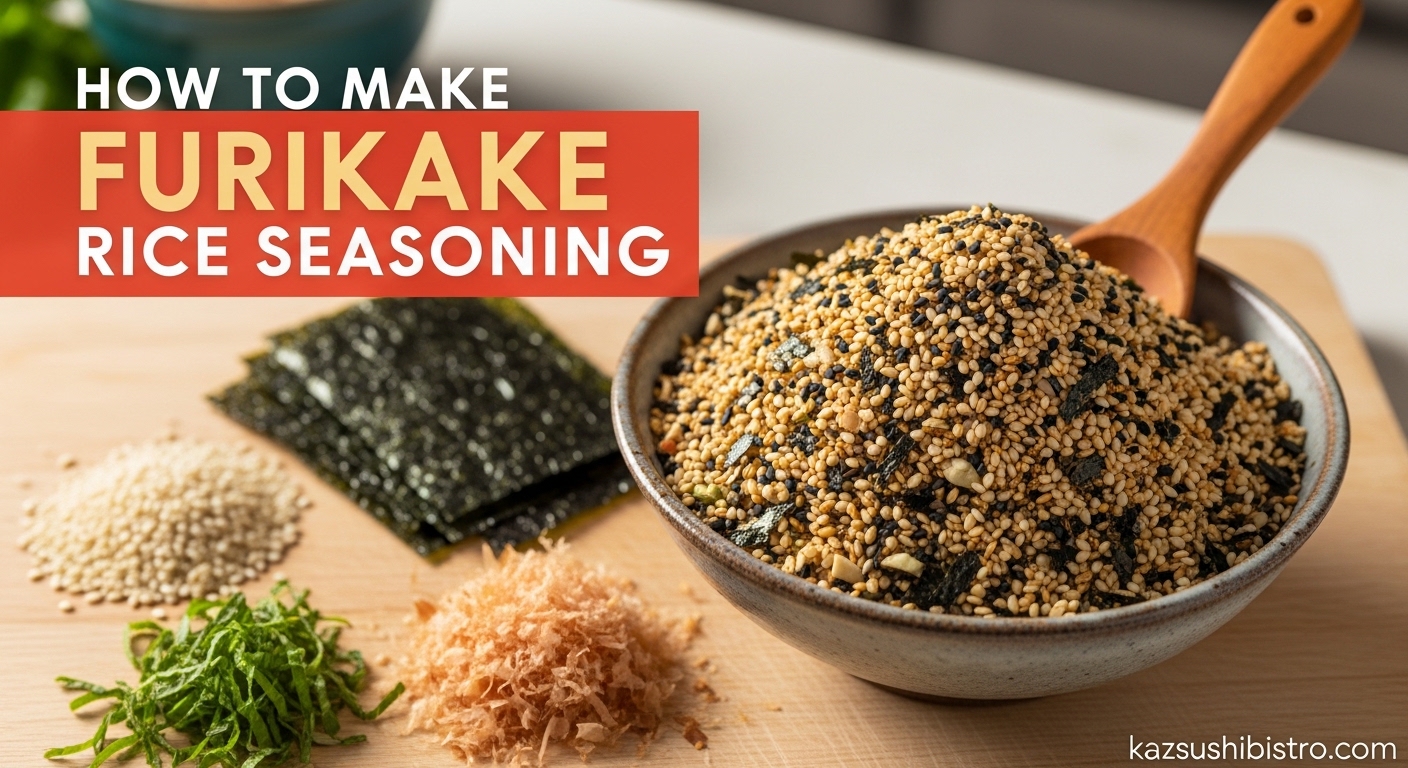
Have you ever tasted a simple bowl of steamed rice and wished it had more depth? That transformation from bland to extraordinary is exactly what furikake delivers. At KAZ Sushi Bistro, we have been crafting this essential Japanese seasoning for over a decade, and I am sharing our professional techniques so you can make restaurant-quality furikake rice seasoning at home in just 15 minutes.
Learning how to make furikake rice seasoning opens up an entire world of Japanese flavor. This versatile condiment combines toasted sesame seeds, nori seaweed, and savory seasonings into a sprinkle that turns plain rice into a crave-worthy dish. Whether you are preparing onigiri for lunch or want to elevate your weeknight dinner, homemade furikake gives you complete control over ingredients and freshness.
In this guide, you will discover the authentic methods we use in our kitchen, including the exact toasting techniques that develop deep umami flavor, professional tips for cutting nori into perfect flakes, and troubleshooting solutions for common issues. By the end, you will have a batch of homemade furikake that rivals any Japanese market brand, updated for 2026 with our latest chef refinements.
Table of Contents
What is Furikake (Japanese Rice Seasoning)
Furikake is a savory Japanese rice seasoning made from a blend of toasted sesame seeds, dried nori seaweed, salt, sugar, and often dried fish flakes like bonito (katsuobushi). The word itself comes from the Japanese verb “furikakeru,” meaning to sprinkle over, which perfectly describes how this condiment is used.
The seasoning originated in Japan in the early 20th century as a nutritional supplement to encourage calcium intake. Today, it has evolved into an essential pantry staple found in nearly every Japanese household. The magic of furikake lies in its ability to transform a humble bowl of steamed rice into a complex, satisfying meal through layers of umami flavor and contrasting textures.
Why does furikake taste so good? The answer is umami, the fifth taste sensation that creates a deeply satisfying savory quality. Toasted sesame seeds provide nutty richness and crunch. Nori contributes briny ocean notes and delicate texture. Bonito flakes add smoky, fish-based umami depth. When combined with the precise balance of salt and sugar, these ingredients create a seasoning that makes you want to take another bite immediately.
At KAZ Sushi Bistro, we consider furikake a fundamental building block of Japanese cuisine. It is not merely a condiment but a flavor system that enhances everything it touches while respecting the simplicity of the base ingredient.
Furikake Ingredients You’ll Need
Making authentic homemade furikake requires just a handful of quality ingredients. Our recipe at KAZ Sushi Bistro uses the classic combination that forms the foundation of most furikake varieties. Each ingredient plays a specific role in the final flavor profile.
Core Ingredients
1/4 cup white sesame seeds provide the base nuttiness and primary texture. We prefer unhulled seeds for deeper flavor, though hulled work fine. White sesame offers a milder, sweeter profile than black sesame.
2 tablespoons black sesame seeds add visual contrast and a more intense, slightly bitter sesame flavor. The combination of white and black creates both visual appeal and layered taste complexity.
3 sheets nori (dried seaweed) deliver the essential ocean umami and characteristic briny notes. Look for sushi-grade nori with a deep green-black color and crisp texture. Lower quality nori appears brownish and tastes stale.
2 tablespoons bonito flakes (katsuobushi), optional contribute smoky, savory umami depth. These dried, fermented skipjack tuna flakes are what separate basic furikake from restaurant-quality seasoning. For vegan versions, substitute with dried shiitake powder.
Seasoning Blend
1 teaspoon sea salt amplifies all other flavors. We use fine sea salt for even distribution. Adjust to taste if you prefer a less salty seasoning.
1 teaspoon sugar balances the saltiness and rounds out the flavor. The small amount of sweetness does not make the furikake taste sweet but rather creates harmony between ingredients.
1/2 teaspoon toasted sesame oil adds a final aromatic boost and helps the seasoning adhere to rice. Use pure, high-quality toasted sesame oil for best results.
Where to Source Ingredients
Most ingredients are available at Asian grocery stores, Japanese markets like Mitsuwa or Marukai, or online retailers. For nori, look for packages labeled “sushi nori” or “yaki nori.” Bonito flakes are typically found in the Japanese section near dashi ingredients. If you cannot find bonito locally, online sources offer excellent quality with reasonable shipping costs.
All ingredients for this homemade furikake recipe cost approximately $8-12 total and yield about eight servings, making it significantly more economical than buying pre-made furikake packets repeatedly.
How to Make Homemade Furikake?
Creating restaurant-quality furikake requires attention to toasting technique and proper ingredient preparation. Follow these professional steps from our KAZ Sushi Bistro kitchen for perfect results every time.
Step 1: Toast the Sesame Seeds
Place both white and black sesame seeds in a dry, heavy-bottomed skillet or cast-iron pan. Heat over medium-low heat, stirring constantly with a wooden spoon or spatula. The toasting process releases the oils that give furikake its signature nutty aroma and deep flavor.
Continue stirring for 3-4 minutes until the white sesame seeds turn golden brown and you smell a strong toasted nut aroma. The black seeds will not change color much visually, so rely on the fragrance and the white seeds as your indicator. Remove immediately from heat and transfer to a bowl to stop cooking.
Chef’s Tip: Sesame seeds can burn quickly in the final 30 seconds. Stay attentive and remove the pan from heat while they are still slightly lighter than your target color. Residual heat will complete the toasting process.
Step 2: Prepare the Nori
Hold each nori sheet with tongs over a low gas flame for 10-15 seconds per side, moving constantly. The nori should become crisp and slightly greener, not blackened. If you have an electric stove, toast in a dry pan over low heat for 20-30 seconds per side.
Once crisp, you have two options for cutting. The traditional method uses kitchen scissors to cut the nori into thin strips, then crosswise into small squares or flakes. For faster results and more uniform texture, pulse the toasted nori in a clean spice grinder or food processor for 3-4 short bursts.
Aim for pieces roughly 2-3 millimeters square. Too large and they will dominate each bite. Too small and they lose their textural contribution. The goal is flakes that distribute evenly while remaining distinct.
Step 3: Combine and Season
In a mixing bowl, combine the cooled toasted sesame seeds, prepared nori flakes, bonito flakes (if using), sea salt, sugar, and toasted sesame oil. Use your fingers or a fork to mix thoroughly, breaking up any clumps of bonito flakes as you go.
Taste the mixture and adjust seasoning as needed. If it tastes flat, add a pinch more salt. If too salty, add a few more sesame seeds. The mixture should taste savory with a subtle sweetness and prominent sesame flavor.
Chef’s Note: For the most professional results, toast and prepare each ingredient separately, then combine. This allows precise control over each component’s texture and prevents over-toasting of delicate ingredients like nori and bonito.
Step 4: Store Properly
Transfer your finished furikake to an airtight glass jar or container immediately. Press a small piece of parchment paper directly against the surface to minimize air exposure, then seal with the lid. Store at room temperature away from direct sunlight and heat sources.
For maximum freshness, add a food-safe desiccant packet to absorb moisture. This simple step extends shelf life significantly and prevents the clumping that ruins texture. Your homemade furikake will stay fresh for up to two weeks at room temperature or one month refrigerated.
Furikake Recipe Card
Prep Time: 10 minutes
Cook Time: 5 minutes
Total Time: 15 minutes
Yield: 1/2 cup (about 8 servings)
Diet: Pescatarian (vegan option available)
Ingredients
- 1/4 cup white sesame seeds
- 2 tablespoons black sesame seeds
- 3 sheets nori (dried seaweed)
- 2 tablespoons bonito flakes (katsuobushi), optional
- 1 teaspoon sea salt
- 1 teaspoon sugar
- 1/2 teaspoon toasted sesame oil
Instructions
- Toast sesame seeds in a dry skillet over medium-low heat for 3-4 minutes until fragrant and golden. Stir constantly. Transfer to a bowl to cool.
- Toast nori sheets briefly over low flame or in a dry pan for 10-15 seconds until crisp. Cut or crumble into small flakes using scissors or pulse in a spice grinder.
- Combine toasted sesame seeds, nori flakes, bonito flakes (if using), salt, sugar, and sesame oil in a bowl. Mix thoroughly.
- Store in an airtight container at room temperature for up to 2 weeks, or refrigerate for up to 1 month.
Nutrition (per tablespoon)
Calories: 25 | Protein: 1g | Fat: 2g | Carbohydrates: 1g | Sodium: 180mg
Delicious Furikake Variations
Once you master the basic furikake recipe, experiment with these professional variations from our kitchen. Each offers a distinct flavor profile while maintaining the essential umami character.
Nori Komi Furikake (Seaweed-Sesame)
This is the simplest, most versatile furikake variation. Omit the bonito flakes entirely and increase the nori to 4 sheets. Add 1 teaspoon of aonori (powdered green seaweed) if available for brighter color and deeper ocean flavor. This version is completely vegan and highlights the pure marriage of sesame and seaweed.
Katsuo Furikake (with Bonito Flakes)
The traditional umami-rich version follows our base recipe exactly. For enhanced smokiness, use freshly shaved katsuobushi from a block rather than pre-packaged flakes. The difference in aroma and flavor is remarkable. Some Japanese home cooks also add a pinch of dried kombu (kelp) powder for additional savory depth.
Vegan Shiitake Furikake
Replace bonito flakes with 2 tablespoons of dried shiitake powder. Grind dried shiitake mushrooms in a spice grinder until fine. The resulting furikake mimics the meaty umami of bonito while remaining plant-based. Add 1/4 teaspoon of white pepper for subtle heat that complements the earthy mushroom flavor.
Spicy Togarashi Furikake
Add 1/2 to 1 teaspoon of ichimi togarashi (Japanese chili powder) or shichimi togarashi (seven-spice blend) to the base recipe. The heat wakes up the palate and pairs beautifully with the nutty sesame. Reduce the salt slightly to compensate for the salt typically present in togarashi blends.
Shiso Furikake
Include 1 tablespoon of dried shiso (perilla) leaves, crumbled fine. Shiso adds an herbaceous, slightly minty complexity that works exceptionally well with grilled fish and cold noodles. This variation is particularly popular during summer months in Japan for its refreshing quality.
Ebi Furikake (with Dried Shrimp)
Substitute dried baby shrimp (sakura ebi) for half the bonito flakes. Pulse the dried shrimp in a spice grinder until roughly the same size as the sesame seeds. This creates a sweeter, more intensely seafood-forward furikake that pairs wonderfully with rice and butter.
Troubleshooting Common Issues
Even experienced cooks encounter challenges when making furikake. Here are solutions to the most common problems we see in our cooking classes at KAZ Sushi Bistro.
Problem: Furikake Becomes Soggy or Clumpy
Cause: Moisture from the air or ingredients that were not fully dried.
Solution: Ensure all ingredients are completely dry before mixing. Toast nori until crisp, not just warm. Store with a desiccant packet and avoid opening the container in humid conditions. If clumping occurs, spread on a baking sheet and dry in a 200 degree oven for 5 minutes, then cool before returning to storage.
Problem: Furikake Tastes Too Salty or Bland
Cause: Incorrect salt ratio or variations in ingredient saltiness (some nori brands are pre-salted).
Solution: Start with half the recommended salt, taste after mixing, and adjust gradually. Remember that furikake seasons plain rice, which has no salt, so it should taste slightly saltier than you might expect when sampled directly. For bland furikake, add salt in small pinches, mixing and tasting between additions.
Problem: Burnt or Bitter Sesame Seeds
Cause: Heat too high or inattention during toasting.
Solution: Always use medium-low heat and stay present during toasting. If seeds are only slightly over-toasted, balance the bitterness by adding 1/4 teaspoon more sugar. Severely burnt seeds must be discarded and replaced. The toasting process takes just 3-4 minutes but requires your full attention.
Problem: Nori Pieces Are Uneven or Too Large
Cause: Hand-cutting inconsistency or inadequate processing.
Solution: Stack 2-3 sheets of toasted nori and cut simultaneously with sharp kitchen scissors for more uniform pieces. Alternatively, use a spice grinder in 1-second pulses, checking texture between each pulse. Sift through a coarse mesh strainer to separate fine powder from usable flakes, returning powder to the grinder with the next batch.
Problem: Furikake Loses Flavor Quickly
Cause: Oxidation of sesame oils or absorption of off-odors from storage environment.
Solution: Store in an airtight glass container, not plastic which can absorb odors. Keep away from heat sources and direct sunlight that accelerate oxidation. Make smaller batches more frequently rather than large batches that sit for weeks. The flavor peak is within the first 3-5 days after making.
Creative Ways to Use Furikake
While furikake traditionally seasons plain rice, its applications extend far beyond the bowl. At KAZ Sushi Bistro, we use furikake to add instant umami to dozens of dishes. Here are our favorite ways to use this versatile seasoning.
Rice Applications
Onigiri (Rice Balls): Mix furikake directly into warm sushi rice before shaping into triangles or rounds. The seasoning distributes evenly and flavors the entire rice ball rather than just the surface.
Furikake Rice: Sprinkle generously over hot steamed white or brown rice, then mix thoroughly. This is the classic preparation that requires no other accompaniments.
Chazuke (Tea Rice): Top warm rice with furikake before pouring hot green tea or dashi over it. The seasoning creates an instant savory soup.
Beyond Rice
Avocado Toast: Sprinkle over avocado toast instead of everything bagel seasoning. The umami notes complement the creamy avocado perfectly.
Popcorn: Toss hot popcorn with melted butter and furikake for a Japanese-inspired snack. The nori adheres best when the popcorn is still warm.
Eggs: Top fried or scrambled eggs with furikake just before serving. The sesame adds crunch while the nori and bonito provide savory depth.
Ramen and Udon: Sprinkle over noodle soups as a finishing touch. The nori rehydrates slightly in the broth while sesame remains crunchy.
Poke Bowls: Add to any poke bowl for authentic Hawaiian-Japanese fusion flavor. It pairs especially well with salmon and tuna.
Roasted Vegetables: Toss roasted sweet potatoes, Brussels sprouts, or cauliflower with furikake immediately after removing from the oven.
Salmon and Fish: Press onto salmon fillets before baking or grilling. The seasoning creates a flavorful crust while protecting the fish from drying out.
Tofu: Dust pressed, pan-fried tofu with furikake for an instant flavor boost that makes tofu crave-worthy.
How to Store Homemade Furikake?
Proper storage preserves the texture and flavor of your homemade furikake. The enemies of freshness are moisture, air, heat, and light. Here is how we store furikake at KAZ Sushi Bistro to maintain peak quality.
Container Selection
Choose airtight glass jars over plastic containers. Glass does not absorb odors and provides a better barrier against air infiltration. Mason jars with two-piece lids work excellently, as do clamp-top jars with rubber gaskets. Avoid containers with loose-fitting lids that allow air exchange.
Size matters. Select a container that will be mostly full with your batch. Excess air space inside the container accelerates staleness. If necessary, add filler like a piece of clean paper towel to reduce air volume.
Moisture Control
Include a food-safe desiccant packet in every container of furikake. These small packets absorb moisture that enters when you open the jar. You can purchase desiccant packets online or save them from other products like seaweed snacks or dried fruit. Replace the packet every month or when it no longer feels gritty.
Storage Conditions
Store furikake at room temperature away from direct sunlight, stovetops, and other heat sources. A pantry or cupboard works perfectly. While refrigeration extends shelf life to about one month, it can cause condensation issues when removing the container. If refrigerating, let the sealed container come to room temperature before opening to prevent moisture from condensing inside.
Shelf Life Expectations
What is the shelf life of homemade furikake? Properly stored at room temperature with a desiccant, your furikake stays fresh for 2 weeks. The flavor is best within the first week when sesame aromatics are at their peak. Refrigerated furikake lasts up to one month. If you notice any off-odors, softening texture, or visible moisture, discard and make a fresh batch.
Furikake FAQs
What is furikake seasoning made of?
Furikake is a savory Japanese rice seasoning typically made from toasted sesame seeds, dried nori seaweed, salt, sugar, and often dried bonito flakes (katsuobushi). Basic versions contain just sesame and nori (nori komi furikake), while more complex varieties include dried shrimp, egg, shiso leaves, or wasabi powder. The ingredients are combined to create a umami-rich sprinkle that enhances rice and other dishes.
How to make furikake ingredients?
To make furikake, you need: 1/4 cup white sesame seeds, 2 tablespoons black sesame seeds, 3 sheets nori (dried seaweed), 2 tablespoons bonito flakes (optional), 1 teaspoon sea salt, 1 teaspoon sugar, and 1/2 teaspoon toasted sesame oil. Toast the sesame seeds until golden, crisp the nori and crumble it, then mix all ingredients together. Store in an airtight container for up to 2 weeks.
What is a substitute for furikake rice seasoning?
If you don’t have furikake, substitute with everything bagel seasoning mixed with crushed nori snack sheets, or combine toasted sesame seeds with salt and dried seaweed flakes. For the umami element bonito provides, use nutritional yeast or dried mushroom powder. You can also crush seaweed snacks and mix with sesame seeds and a pinch of salt for a quick approximation.
Is furikake good for babies?
Traditional furikake containing bonito flakes and salt is generally not recommended for babies under 12 months due to sodium content and potential allergen concerns. However, plain nori komi furikake made without added salt or bonito can be suitable for older infants in very small amounts. Always consult your pediatrician before introducing new foods to babies.
Is furikake healthy to eat every day?
Furikake can be part of a healthy diet when consumed in moderation. It provides beneficial minerals from seaweed including iodine and iron, plus healthy fats from sesame seeds. However, store-bought versions often contain high sodium levels and additives like MSG. Homemade furikake allows you to control salt content, making it a healthier choice for daily consumption.
What is the shelf life of homemade furikake?
Homemade furikake lasts up to 2 weeks at room temperature when stored in an airtight container with a desiccant packet to absorb moisture. In the refrigerator, it can last up to 1 month. The flavor is best within the first week when the toasted sesame aromatics are at their peak. Discard if you notice off-odors, softening texture, or visible moisture.
How can I make my own furikake?
To make your own furikake: (1) Toast 1/4 cup white and 2 tablespoons black sesame seeds in a dry pan until golden. (2) Toast 3 sheets of nori over a flame for 10-15 seconds, then cut or crumble into small pieces. (3) Mix toasted sesame, nori, 2 tablespoons bonito flakes (optional), 1 teaspoon salt, 1 teaspoon sugar, and 1/2 teaspoon sesame oil. (4) Store in an airtight container for up to 2 weeks.
Why does furikake taste so good?
Furikake tastes exceptionally good due to the science of umami, the fifth taste sensation. The combination of toasted sesame seeds (nutty richness), nori seaweed (briny ocean depth), and bonito flakes (smoky savory notes) creates multiple layers of glutamates that trigger umami receptors on your tongue. The salt and sugar balance enhances these savory compounds while the varied textures provide satisfying crunch.
Conclusion
Making your own furikake rice seasoning at home is one of the most rewarding skills for any Japanese food enthusiast. In just 15 minutes, you can create a batch of authentic, restaurant-quality seasoning that surpasses most store-bought options in both flavor and freshness. The techniques shared here from KAZ Sushi Bistro represent years of refinement, giving you the confidence to toast sesame seeds to perfection and balance seasonings like a professional chef.
Learning how to make furikake rice seasoning opens doors to countless meal possibilities. From simple rice bowls to creative applications like popcorn and avocado toast, this versatile condiment brings umami depth to everything it touches. Experiment with the variations we have shared, troubleshoot any issues using our guide, and soon you will have your own signature furikake blend perfected for 2026.
Ready to expand your Japanese cooking skills? Master the art of perfect sushi rice as your next step, then use your fresh homemade furikake to create onigiri rice balls that rival any Japanese convenience store. The foundation of great Japanese cuisine starts with these essential basics.