
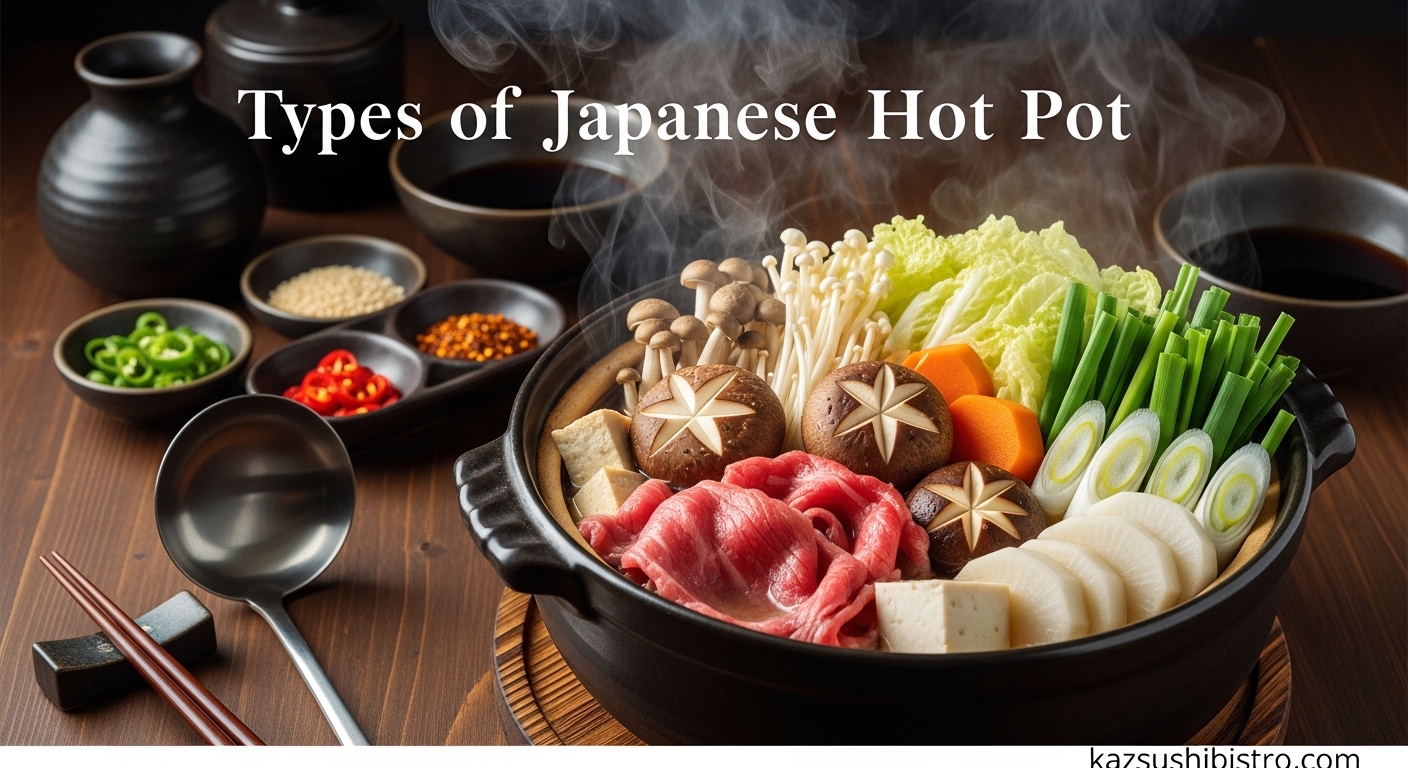
Nothing brings people together quite like a steaming pot of nabe simmering at the center of the table. I remember my first experience with Japanese hot pot during a snowy evening in Tokyo. A local friend invited me to her family home, where we gathered around a clay pot bubbling with dashi broth, adding thin slices of pork and fresh vegetables while sharing stories late into the night. That warmth stayed with me long after the meal ended.
Types of Japanese hot pot represent one of the most beloved culinary traditions in Japan. These one-pot dishes, collectively known as nabemono, have nourished families through harsh winters for thousands of years. Archaeological evidence suggests that communal pot cooking dates back to the Jomon period, roughly 14,000 years ago, when early inhabitants of the Japanese islands first began boiling ingredients together in clay vessels over open flames.
In this guide, I will walk you through the most popular varieties of nabe you will encounter in Japan and at Japanese restaurants abroad. You will learn what makes each type unique, the essential ingredients that define them, and how to recreate these comforting dishes in your own kitchen. Whether you are planning your first nabe night or looking to expand your repertoire beyond shabu-shabu, this article covers everything you need to know about types of Japanese hot pot.
Table of Contents
What Is Nabe? Understanding Nabemono 2026
Nabemono literally translates to “things in a pot.” The term encompasses any Japanese dish where ingredients simmer together in a communal vessel at the table. Unlike Western stews that cook for hours in the kitchen, nabe happens right in front of you. Everyone participates in the cooking process, adding raw ingredients to bubbling broth and retrieving them when perfectly done.
The traditional vessel for nabe is called a donabe, a thick-walled clay pot designed to retain and distribute heat evenly. These pots are typically glazed only on the outside, which allows the clay to breathe and develop character over time. Before first use, you must season a donabe by cooking a thin rice porridge in it, which seals the porous interior and prevents cracking.
Every nabe starts with a broth base, most commonly dashi made from kombu kelp and katsuobushi bonito flakes. From this foundation, regional variations emerge. Some add miso for depth, others incorporate soy milk for creaminess, and many include mirin and sake for subtle sweetness. The broth choice determines the personality of the entire meal.
Beyond the technical elements, nabe represents something deeper in Japanese culture. It embodies the concept of communal dining where hierarchy dissolves around the pot. Everyone shares the same space, cooks together, and enjoys the meal simultaneously. During winter months, families gather weekly for nabe nights, creating memories alongside their dinner.
Types of Japanese Hot Pot (September 2026) Complete Guide
Japan boasts dozens of regional nabe variations, each reflecting local ingredients, climate, and history. Here are the ten most significant types you should know, from the elegant simplicity of shabu-shabu to the hearty richness of chanko nabe.
Shabu-Shabu: The Elegant Swish
Shabu-shabu gets its name from the sound of thinly sliced meat swishing through hot broth. This onomatopoeic name perfectly captures the cooking technique that defines the dish. Paper-thin slices of beef or pork, often wagyu grade, cook in mere seconds when waved through simmering dashi.
The broth for shabu-shabu stays intentionally simple. A piece of kombu kelp simmered in water provides the umami base without overwhelming the delicate meat flavors. As the meal progresses, the broth develops richness from the meat juices and vegetable essences, creating a more complex flavor by the end.
Two dipping sauces accompany shabu-shabu. Ponzu offers a bright, citrus-forward counterpoint made from soy sauce, rice vinegar, and yuzu or sudachi juice. Goma dare, a creamy sesame sauce blended with dashi and sometimes a touch of sugar, provides a nutty, rich alternative. Most diners alternate between both throughout the meal.
Traditional shabu-shabu ingredients include napa cabbage, shungiku chrysanthemum greens, enoki and shiitake mushrooms, tofu, and shirataki noodles made from konjac yam. The vegetables cook longer than the meat, so add them early to soften and absorb broth flavor. A typical shabu-shabu session lasts 60 to 90 minutes, with diners cooking and eating continuously throughout.
Sukiyaki: Sweet and Savory Perfection
Sukiyaki differs fundamentally from shabu-shabu despite both featuring thinly sliced beef. While shabu-shabu uses a light dashi broth, sukiyaki builds its flavor from a sweet and savory sauce called warishita. This mixture of soy sauce, mirin, sake, and sugar creates a glaze that caramelizes slightly as it reduces.
The cooking process for sukiyaki involves searing beef slices first, then pushing them to the side while adding vegetables and tofu to the accumulated juices. Napa cabbage, negi scallions, shirataki noodles, grilled tofu, and shiitake mushrooms form the standard vegetable lineup. Some regions add additional ingredients like ito konnyaku noodles or chrysanthemum greens.
The signature sukiyaki experience involves dipping cooked ingredients into raw egg before eating. This practice, while alarming to some Western diners, serves multiple purposes. The egg cools the hot food instantly, adds silky richness, and creates a sauce that binds the sweet warishita to each bite. Use only pasteurized eggs or very fresh eggs from trusted sources when recreating this at home.
Wagyu beef has become synonymous with high-end sukiyaki, though the dish originated with more accessible cuts. The marbling in premium wagyu melts into the warishita, creating an almost buttery sauce that coats every ingredient. For home cooking, well-marbled ribeye or sirloin from your local butcher works beautifully at a fraction of the cost.
Chanko Nabe: The Sumo Wrestler’s Stew
Chanko nabe originated in sumo wrestling stables as the primary source of nutrition for athletes building mass and strength. This hearty hot pot packs protein from multiple sources, complex carbohydrates, and vegetables into a single balanced meal. Today, retired wrestlers often open chanko restaurants that serve the same recipes that once fueled champions.
The protein selection in chanko nabe varies by stable tradition but typically includes chicken, fish, tofu, and meatballs called tsukune. These meatballs combine ground chicken with seasonings, vegetables, and sometimes egg as a binder. Unlike delicate shabu-shabu slices, chanko ingredients are substantial and filling.
Chanko broth recipes are closely guarded secrets passed down through sumo generations. Most start with a chicken or dashi base seasoned with soy sauce, mirin, and sake. Some stables prefer miso-based versions, while others develop seafood-forward broths. The common thread is richness and depth designed to satisfy athletes consuming 8,000 calories daily during training.
Vegetables in chanko nabe are chosen for nutritional density rather than delicacy. Cabbage, bok choy, mushrooms, and daikon radish provide vitamins and fiber. Some versions include udon noodles or rice to add calories for wrestlers. For home cooks, chanko nabe offers a complete dinner requiring no side dishes.
Yosenabe: The Everything Pot
Yosenabe represents the most flexible approach to Japanese hot pot. The name literally means “putting together pot,” and that describes exactly how it works. You combine whatever proteins, seafood, and vegetables you have available into a single harmonious meal.
This flexibility makes yosenabe perfect for beginners and for cleaning out the refrigerator before grocery shopping. Chicken, pork, shrimp, clams, fish fillets, tofu, and any vegetables can coexist in the same pot. The key is adding ingredients based on cooking time, starting with items that need longer simmering.
The broth for yosenabe typically uses a straightforward dashi seasoned with soy sauce and mirin. Some variations add miso for heartiness, particularly during winter. Because the broth must complement diverse ingredients rather than highlight a single star, yosenabe dashi tends toward balance rather than boldness.
Seafood yosenabe is particularly popular in coastal regions where fresh fish is abundant. Clams and mussels contribute natural salinity that enhances the broth. A trick many home cooks use is adding a piece of kombu and a handful of katsuobushi directly to the pot as ingredients cook, continuously fortifying the dashi throughout the meal.
Mizutaki: Simplicity from Fukuoka
Mizutaki emerged from Hakata in Fukuoka prefecture during the early 20th century. The name means “water boiled,” which accurately describes the technique. Chicken pieces simmer in plain water with minimal seasoning, creating a pure, clean broth that highlights the quality of the poultry.
The magic of mizutaki lies in its restraint. The broth starts with just water, chicken bones, and perhaps a slice of ginger. As chicken pieces cook, they release gelatin and fat that gradually transform the water into a rich, golden liquid. This process takes 20 to 30 minutes, during which diners sip the developing broth between adding vegetables.
Ingredients for mizutaki are equally simple. Chicken thighs or wings provide the protein, while napa cabbage, tofu, mushrooms, and chrysanthemum greens round out the meal. Some variations include fish cakes or konnyaku. The vegetables cook in the chicken-infused broth, absorbing its savory essence.
Ponzu sauce is essential for mizutaki. The citrus cuts through the richness of the chicken broth, refreshing the palate between bites. Many restaurants serve their house-made ponzu with additional grated daikon or chopped scallions for texture. The simplicity of mizutaki makes it an excellent introduction to nabe for those intimidated by complex preparations.
Motsunabe: Bold Flavors from Fukuoka
Motsunabe features beef or pork offal as its star ingredient, making it a polarizing choice for some diners. The word motsu refers to organ meats, particularly intestine, which develops a tender, chewy texture when properly cleaned and cooked. This dish originated with coal miners in Fukuoka who needed affordable, calorie-dense meals.
Preparation quality determines whether motsunabe delights or repulses. Properly cleaned offal has minimal odor and offers a pleasant springy texture. Reputable restaurants and butchers handle motsu with care, removing any unpleasant smells through thorough washing. The result is a protein source with deep umami flavor and satisfying chew.
The broth for motsunabe is typically miso-based, often enhanced with garlic and chili for boldness. This combination cuts through the richness of the offal while complementing its intensity. Cabbage absorbs the flavorful broth beautifully, and some versions include tofu for additional protein.
Champon noodles often finish a motsunabe meal. These thick wheat noodles cook in the remaining broth, soaking up every last drop of the savory miso base. The resulting noodle dish is so satisfying that many diners consider it the highlight of the experience. Fukuoka-style motsunabe restaurants have spread throughout Japan, bringing this regional specialty to major cities.
Oden: The Winter Classic
Oden differs from other nabe varieties in its cooking method and social context. Rather than cooking at the table, oden simmers for hours at convenience stores, specialty shops, and home kitchens. Ingredients soak in a soy-dashi broth until they absorb maximum flavor and develop tender textures.
The hallmark oden ingredients include daikon radish slices, boiled eggs, konnyaku, fish cakes of various shapes, and fried tofu pouches called aburaage. Each ingredient contributes differently to the pot. Daikon absorbs broth while releasing subtle sweetness. Eggs develop a golden exterior and custardy interior. Fish cakes provide savory depth from their seafood base.
Japanese convenience stores transform into oden destinations from October through March. Large heated displays showcase individual ingredients simmering in broth, allowing customers to select their favorites by the piece. This accessibility makes oden the most commonly consumed nabe variety in Japan.
Karashi mustard is the traditional condiment for oden. A small dab adds sharp heat that contrasts with the gentle sweetness of the long-simmered broth. Some regions prefer yuzu kosho, a fermented paste of chili and yuzu peel. The portability and individual nature of oden make it unique among typically communal nabe styles.
Tonyu Nabe: Creamy Soy Milk Base
Tonyu nabe uses soy milk as its broth foundation, creating a silky, ivory-colored soup that sets it apart visually from other varieties. This Kyoto-influenced style has gained popularity for its health benefits and elegant appearance. The soy milk must be unsweetened and ideally fresh for the best results.
The broth combines soy milk with dashi, creating a rich yet light liquid that feels indulgent without heaviness. As the meal progresses, vegetable essences and protein drippings meld with the soy milk, developing complexity. The broth thickens slightly from natural emulsification, coating ingredients in a velvety layer.
Vegetables shine in tonyu nabe because the creamy broth complements their natural sweetness. Napa cabbage, spinach, mushrooms, and tofu are traditional choices. Thinly sliced pork or chicken adds protein without overwhelming the delicate broth. Some versions include collagen-rich ingredients for additional silkiness.
Ponzu sauce works beautifully with tonyu nabe, though some prefer a simple salt dip to preserve the soy milk flavor. The contrast between hot creamy broth and bright citrus creates a memorable sensory experience. Health-conscious diners appreciate tonyu nabe for its high protein content and lower fat compared to meat-heavy alternatives.
Kimchi Nabe: Korean-Japanese Fusion
Kimchi nabe represents the fusion of Korean and Japanese culinary traditions that characterizes much of modern Japanese home cooking. Spicy fermented kimchi forms the backbone of the broth, providing intense heat and complex fermentation flavors. This variety has become particularly popular among younger Japanese diners.
The broth starts with kimchi juice and additional gochujang or Korean chili flakes for those who prefer serious heat. Pork belly is the traditional protein pairing, its richness balancing the spice. Tofu, napa cabbage, bean sprouts, and mushrooms complete the vegetable component. Some versions include instant ramen noodles for a hearty finishing course.
Kimchi nabe offers an approachable entry point for those new to Japanese hot pot. The bold flavors feel familiar to anyone who enjoys Korean cuisine, while the communal cooking method introduces the nabe experience. Many Japanese families keep kimchi nabe ingredients ready for impromptu weeknight dinners.
The heat level varies dramatically between preparations. Mild versions use well-fermented kimchi that has lost initial pungency. Spicy versions add fresh chili and chili oil for face-flushing intensity. Diners can adjust by selecting more or less of the kimchi pieces floating in the broth.
Curry Nabe: Comfort Food Mashup
Curry nabe combines two Japanese comfort food staples into one satisfying dish. The thick, aromatic broth uses Japanese curry roux as its base, creating a stew-like consistency that coats ingredients rather than simply surrounding them. Children particularly love this approachable introduction to nabe dining.
Preparation involves dissolving curry roux blocks into dashi or water, then adjusting consistency with additional liquid as needed. Vegetables like potatoes, carrots, and onions that appear in standard Japanese curry work perfectly here. Chicken, pork, or meatballs provide protein options.
Udon noodles are the traditional shime for curry nabe. These thick wheat noodles absorb the thick curry broth beautifully, creating a noodle dish that rivals standalone curry udon. The noodles also help stretch the meal to feed more people economically.
Some innovative home cooks add cheese to curry nabe during the final minutes of cooking. The melted cheese creates stretchy, gooey pockets that add decadence to the already rich dish. This variation, while not traditional, has become popular on social media for its photogenic appeal.
Regional Nabe Specialties Across Japan
Beyond the nationally popular varieties, Japan’s regions have developed distinctive nabe styles using local ingredients. These specialty hot pots offer travelers unique tastes of place and provide home cooks with inspiration for seasonal variations.
Ishikari Nabe: Hokkaido’s Salmon Tradition
Hokkaido’s cold waters produce some of Japan’s finest salmon, and ishikari nabe celebrates this bounty. The dish originated along the Ishikari River, where fishermen once cooked their morning catch in miso-based broths. Salmon fillets, bones, and even roe contribute to this hearty winter staple.
The broth combines miso with dashi, creating a savory-sweet base that complements rich salmon. Potatoes, onions, and cabbage are standard vegetables, all of which grow abundantly in Hokkaido’s agricultural regions. Butter often finishes the dish, adding a final layer of richness that reflects the region’s dairy farming heritage.
Kiritanpo Nabe: Akita’s Rice Skewers
Kiritanpo nabe features unique rice skewers that set it apart from all other Japanese hot pot varieties. Pounded fresh rice is wrapped around cedar skewers and toasted over charcoal before being added to the pot. These cylinders absorb broth while maintaining a pleasant chewy texture at their centers.
The dish originated in Akita prefecture as sustenance for hunters in the mountainous region. Today it remains a point of local pride, with restaurants competing to offer the most authentic preparation. Chicken and burdock root are traditional protein and vegetable pairings.
Botan Nabe: Wild Boar from Northern Japan
Botan nabe features wild boar meat arranged in a flower pattern, giving the dish its name meaning peony. This delicacy appears in mountainous regions where boar hunting remains culturally significant. The meat has a rich, slightly gamey flavor that stands up to bold miso broths.
Shinshu, the region around Nagano, is particularly famous for botan nabe. Restaurants there specialize in wild game preparations, often serving boar alongside venison and bear meat hot pots during winter months. The experience offers a glimpse into pre-modern Japanese hunting culture.
Yudofu: Kyoto’s Tofu Simplicity
Yudofu represents the refined minimalism of Kyoto cuisine. Tofu cubes simmer gently in kombu dashi, transforming from firm blocks into silky, custard-like pillows. This Zen Buddhist-influenced preparation highlights ingredient quality over complex technique.
Specialized yudofu restaurants in Kyoto’s temple districts have served this dish for centuries. Many use locally made tofu from artisan producers who follow traditional methods. The experience is meditative, focusing attention on subtle flavors that might be overwhelmed by more aggressive preparations.
Essential Equipment for Japanese Hot Pot
Creating authentic nabe at home requires some specialized equipment, though substitutions exist for those not ready to invest in dedicated tools. Understanding your options helps you choose the right setup for your space and cooking frequency.
Choosing the Right Donabe
Donabe clay pots come in several styles designed for specific nabe types. Shallow, wide pots work best for sukiyaki and shabu-shabu where quick access to ingredients matters. Deeper pots suit chanko nabe and yosenabe with their larger volume of broth and ingredients.
Size selection depends on your typical party size. A pot 9 to 10 inches in diameter serves two to three people comfortably. For larger gatherings, consider two pots rather than one giant vessel, which becomes difficult to manage at the table and may heat unevenly.
Seasoning a new donabe is essential before first use. Fill it two-thirds with water and add cooked rice, making a thin porridge. Simmer over low heat for 20 minutes, then let it cool completely. The starch seals microscopic pores in the clay, preventing cracks and leaks during future use. Never expose an empty donabe to high heat, as thermal shock can shatter the clay.
Portable Burners and Setup
Butane gas burners designed specifically for tabletop cooking dominate Japanese home nabe setups. These compact units provide instant, adjustable heat that responds quickly to temperature needs. A single gas canister typically lasts through two to three nabe sessions.
Induction cookers offer a modern alternative with no open flame. These electric units heat the donabe through magnetic induction, providing precise temperature control and enhanced safety. They require compatible cookware, so verify your donabe works with induction before purchasing.
Without specialized equipment, you can still enjoy nabe using a Dutch oven or heavy pot on a portable electric burner. While lacking traditional aesthetics, this setup produces excellent results. Some home cooks prefer starting the pot on their kitchen stove, then moving it to the table once simmering begins.
Essential Utensils
Long chopsticks serve multiple functions in nabe dining. They add raw ingredients, retrieve cooked food, and skim foam from the broth surface. Dedicated cooking chopsticks are longer than eating chopsticks, keeping hands safely away from bubbling liquid. Metal or bamboo options resist heat better than standard wooden chopsticks.
Small mesh strainers or wire baskets help retrieve delicate ingredients that sink to the bottom. These tools prevent the fishing expedition that frustrates diners searching for that last piece of tofu. Individual bowls for each diner complete the setup, preferably with small dipping saucers for ponzu and goma dare.
Dipping Sauces and Condiments
The right sauce transforms good nabe into exceptional nabe. These condiments provide counterpoints to the savory broth and rich ingredients, refreshing the palate between bites and adding personalized flavor to each mouthful.
Ponzu is the most versatile nabe sauce, made by combining soy sauce with citrus juice. Sudachi, yuzu, and kabosu provide traditional Japanese citrus flavors, though lemon works well as a substitute. The acid brightens rich ingredients and cuts through fattiness. Many diners add grated daikon or chopped scallions to their ponzu for texture and additional freshness.
Goma dare brings creamy nuttiness to the table. This sesame-based sauce combines ground sesame seeds with dashi, soy sauce, and sometimes a touch of sugar or mirin. The result coats ingredients in a velvety layer that complements lean proteins and vegetables particularly well. Some versions include grated garlic or ginger for added complexity.
Raw egg serves as the essential sukiyaki dip, cooling hot food instantly while adding richness. Use only fresh, high-quality eggs from reliable sources. Crack the egg into your bowl and whisk lightly before adding cooked ingredients. The residual heat from the food slightly cooks the egg, creating a sauce-like consistency.
Shichimi togarashi adds dimension to any nabe experience. This seven-spice blend combines chili, sesame, nori, and other aromatics. A light sprinkle over finished bowls adds heat and complexity without overwhelming. Karashi mustard serves oden specifically, providing sharp heat that contrasts with the sweet soy broth.
The Art of Shime: Finishing Your Nabe Meal
Shime refers to the final course of a nabe meal, where diners add rice or noodles to the remaining broth. This tradition ensures nothing goes to waste while providing a deeply satisfying conclusion. The word literally means “closing” or “finishing,” and it completes the nabe experience.
Rice variations include zosui and ojiya, both essentially rice porridges. Zosui adds cooked rice to the broth with egg and scallions, creating a thick, comforting porridge similar to Chinese congee. Ojiya uses slightly less liquid, resulting in a texture closer to risotto. The concentrated broth flavors transform plain rice into something extraordinary.
Noodle shime options vary by region and preference. Udon is the most common choice, its thick wheat strands absorbing broth beautifully. Ramen noodles work well, particularly in curry nabe or kimchi nabe where their curl helps capture sauce. Some diners prefer somen or soba for lighter finishes after heavy meals.
The timing of shime depends on the broth remaining after the main nabe course. Ideally, enough liquid should cover your chosen starch with a small margin. If the broth has reduced too much, add a splash of water or additional dashi. Taste and adjust seasoning before adding starch, as the concentrated flavors may need dilution.
Nabe Etiquette and Table Manners
Nabe etiquette ensures everyone enjoys the communal experience without frustration. These unwritten rules may seem subtle, but observing them marks you as a considerate dining companion who understands Japanese social dynamics.
Never leave ingredients in the pot unattended beyond their optimal cooking time. Overcooked meat becomes tough, and vegetables dissolve into mush. Retrieve your additions promptly or ask someone to help if you are tending to children or conversation. This consideration keeps the shared resource at its best for everyone.
Take turns adding ingredients rather than dumping everything at once. The host or most experienced diner often manages the flow, adding items in batches that maintain steady availability without overwhelming the pot. Wait for the broth to return to a simmer between additions to maintain proper cooking temperature.
Use serving chopsticks or the opposite end of your eating chopsticks when adding raw ingredients to the shared pot. This practice, called mottenashi bashi, prevents cross-contamination between raw and cooked foods. It shows awareness of food safety and respect for fellow diners.
Share the choicest pieces equally rather than claiming all the premium ingredients. If you added expensive wagyu slices, offer some to others before taking multiple pieces yourself. This reciprocity builds goodwill and ensures everyone experiences the full range of the meal.
Let the host or eldest diner begin eating first as a sign of respect. This hierarchical courtesy acknowledges traditional Japanese social structures. In casual family settings, this rule relaxes, but it remains important when dining with colleagues or older relatives.
When finishing the meal, leave the broth in the pot rather than pouring it out. The remaining liquid represents the accumulated essence of everything cooked and is often considered too precious to discard. This is why shime exists, to honor and consume this flavorful concentrate.
Frequently Asked Questions
What are the different kinds of Japanese hot pot?
The main types of Japanese hot pot include shabu-shabu, sukiyaki, chanko nabe, yosenabe, mizutaki, motsunabe, oden, tonyu nabe, kimchi nabe, and curry nabe. Each variety features distinct broths, ingredients, and cooking methods that reflect regional traditions and seasonal preferences.
What is the difference between sukiyaki and shabu shabu?
Shabu-shabu uses a light dashi broth and diners swish thinly sliced meat through the liquid before dipping in ponzu or goma dare sauces. Sukiyaki cooks ingredients in a sweet and savory warishita sauce, and diners dip cooked food into raw egg before eating. Shabu-shabu emphasizes the pure flavor of meat while sukiyaki creates a caramelized, sweet profile.
Is Japanese hot pot healthy?
Japanese hot pot is generally a healthy meal option featuring lean proteins, abundant vegetables, and minimal added fats. The cooking method preserves nutrients better than frying, and the broth base provides hydration without heavy calories. Some varieties like chanko nabe were specifically designed for athlete nutrition. Control sodium by choosing lighter broths and using dipping sauces sparingly.
Does hot pot cause gout?
Some nabe varieties that use organ meats like motsunabe can contribute to uric acid buildup in susceptible individuals. However, most Japanese hot pots focus on lean meats and vegetables that do not pose gout risks. If you have gout concerns, choose shabu-shabu with lean beef or tonyu nabe with vegetables and avoid offal-based hot pots and excessive alcohol consumption.
What equipment do I need to make nabe at home?
Essential equipment includes a donabe clay pot or heavy Dutch oven, a portable burner (butane or induction), long cooking chopsticks, and individual bowls. A mesh strainer helps retrieve ingredients. While specialized equipment enhances the experience, you can start with any heavy pot and your kitchen stove.
Can I make vegetarian or vegan nabe?
Absolutely. Many nabe varieties adapt beautifully to vegetarian and vegan diets. Use kombu-based dashi without katsuobushi for the broth. Focus on tofu, mushrooms, and vegetables as proteins. Tonyu nabe and yudofu are naturally vegetarian-friendly. For vegan versions, ensure your sauces do not contain egg or bonito-derived ingredients.
What is shime in Japanese hot pot?
Shime is the final course of a nabe meal where diners add rice or noodles to the remaining concentrated broth. This tradition ensures nothing goes to waste while creating a deeply satisfying conclusion. Common shime options include rice porridge (zosui), udon noodles, or ramen noodles cooked in the flavorful remaining liquid.
What meat is used for sukiyaki?
Premium wagyu beef is the traditional choice for sukiyaki, prized for its marbling that melts into the sweet warishita sauce. However, well-marbled ribeye or sirloin from your local butcher works beautifully at home. Some variations use pork, particularly in regions where beef was historically less common. The key is thin slicing against the grain for tenderness.
Conclusion
Japanese hot pot offers something precious in our fast-paced world: the opportunity to slow down and share a meal in real time. Whether you are drawn to the elegant simplicity of shabu-shabu, the hearty nutrition of chanko nabe, or the bold fusion of kimchi nabe, each variety delivers warmth and connection.
I encourage you to start with whichever type of Japanese hot pot appeals most to your palate. Yosenabe makes an excellent entry point for beginners, while sukiyaki rewards those willing to seek out quality beef. As you gain confidence, explore regional specialties and adapt recipes to your local ingredients.
The beauty of nabe lies not just in the flavors but in the experience. Gather friends or family around your pot this season. Cook together, share stories, and finish with a satisfying shime that leaves everyone content. That is the true essence of nabemono.