
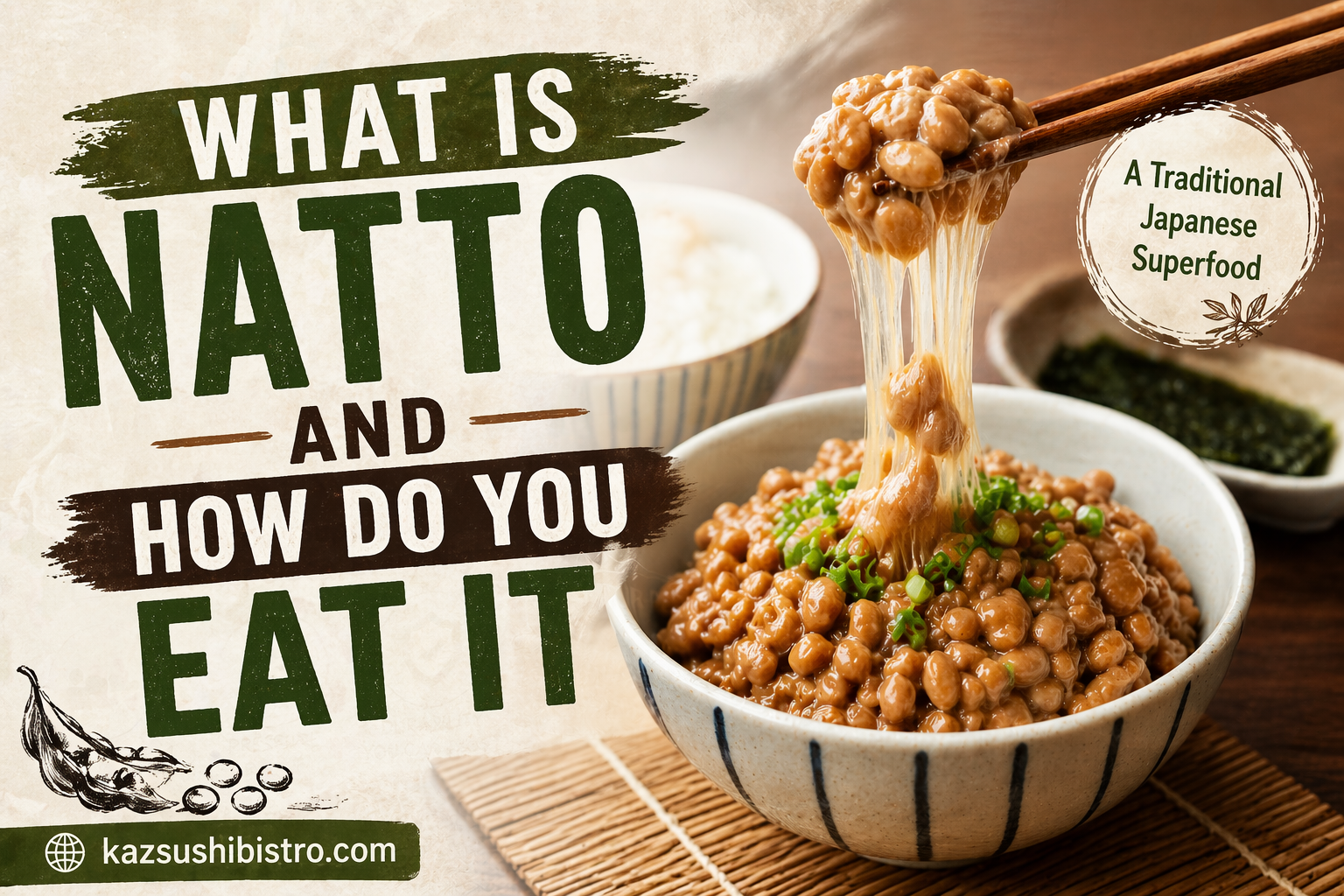
Natto is Japan’s most divisive food. Some people wake up craving its savory, pungent flavor every morning. Others can’t get past the first whiff without pushing the bowl away. If you are curious about what is natto and how do you eat it, you are in the right place.
I remember my first encounter with natto. The sticky threads stretched from the bowl to my chopsticks like some kind of culinary spiderweb. The smell was intense. But after learning the proper way to prepare it, I genuinely enjoy it now. This guide will walk you through everything you need to know about fermented soybeans, from the science behind that signature texture to the exact mixing technique that brings out the best flavor.
Whether you are a complete beginner or someone who has tried natto once and wants to give it another shot, this article covers the history, health benefits, types, and most importantly, how to eat natto in ways that actually taste good.
Table of Contents
What Exactly Is Natto?
Natto is a traditional Japanese food made from fermented soybeans, characterized by its sticky, stringy texture, strong aroma, and savory umami flavor. The fermentation process uses a specific bacteria called Bacillus subtilis, which breaks down the soybean proteins and creates the distinctive consistency that makes natto instantly recognizable.
The magic happens when cooked soybeans are inoculated with Bacillus subtilis var. natto, a beneficial bacteria that thrives in warm, humid conditions. Over 18 to 24 hours, these bacteria ferment the beans and produce polyglutamic acid. This compound creates the signature sticky, stringy threads that stretch between the beans when stirred.
During fermentation, the bacteria also generate nattokinase, an enzyme that has been studied for its potential cardiovascular benefits. Vitamin K2 in the form of MK-7 is produced naturally as well, making natto one of the best dietary sources of this nutrient essential for bone health.
The smell of natto is often described as pungent, earthy, or reminiscent of aged cheese. This aroma comes from the fermentation byproducts including ammonia and pyrazine compounds. While intense, the smell is part of what makes natto a complex, umami-rich food. The flavor itself is surprisingly mild and savory, with nutty and slightly bitter notes.
The History and Origin of Natto 2026
The origin story of natto dates back over a thousand years to ancient Japan. According to legend, natto was discovered accidentally around the year 1086 AD. Prince Shotoku was traveling through the northeastern region of Japan when his party stopped at a farmhouse for a meal. The hosts served cooked soybeans to the traveling group.
The story goes that the cooked beans were stored in straw containers near a warm fireplace while the group ate. When they opened the containers later, the beans had fermented from the heat and natural bacteria present in the straw. Despite the unusual appearance and smell, the group tried them and found the flavor compelling. The fermented soybeans were named natto, and the discovery spread throughout Japan.
While this tale is likely embellished, archaeological evidence confirms that fermented soybean products existed in Japan by at least the Nara period. The method of using straw as a fermentation vessel makes historical sense because straw naturally contains Bacillus subtilis bacteria. Traditional natto production involved packing cooked soybeans in rice straw bundles called warazuto, which served as both container and source of bacteria.
Natto consumption patterns in Japan show a clear regional divide. Eastern Japan, particularly the Kanto region centered around Tokyo, consumes the vast majority of natto produced in the country. In fact, many households in Tokyo eat natto daily as part of a traditional Japanese breakfast. Western Japan, including the Kansai region around Osaka and Kyoto, has historically consumed less natto, though this gap has narrowed in recent decades.
Today, natto remains a staple food in Japan with over 200,000 tons consumed annually. It is available in every convenience store, supermarket, and traditional market across the country. Modern production uses stainless steel containers and pure bacteria cultures rather than straw, but the fundamental fermentation process remains unchanged from centuries ago.
Types of Natto: Otsubu, Kotsubu, and Hikiwari
Not all natto is created equal. The three main types differ in bean size and texture, and choosing the right one can make your first experience much more pleasant. Understanding these differences helps you select the best variety for your taste preferences and intended use.
Otsubu natto uses whole, large soybeans that maintain their shape through fermentation. The beans remain distinct and offer a firm, chewy bite. This type produces fewer sticky threads compared to smaller varieties, making it a good choice if you want to experience the flavor with less of the gooey texture. Otsubu has a stronger bean flavor and is often preferred by long-time natto eaters who enjoy the substantial texture.
Kotsubu natto features smaller whole soybeans that create more surface area for fermentation. The increased surface area produces more sticky threads when mixed, giving kotsubu a stringier consistency than otsubu. The smaller beans also absorb more flavor from the fermentation process, resulting in a slightly milder taste. Kotsubu is the most commonly consumed type in Japan and works well for traditional natto rice preparations.
Hikiwari natto starts with soybeans that are crushed or chopped before fermentation. This process creates the highest surface area to volume ratio, resulting in the most intense sticky texture and the strongest aroma. However, hikiwari is actually the best choice for beginners because the crushed beans integrate more smoothly with rice and other ingredients. The texture is less “slimy” in the mouth because the bean pieces are smaller, even though the thread production is higher.
For first-time eaters, I recommend starting with hikiwari natto. The crushed texture blends better with toppings and rice, making the transition easier. Once you are comfortable with hikiwari, try kotsubu for a more traditional experience. Save otsubu for when you have fully acquired the taste and want the heartiest bean texture.
| Type | Bean Size | Stickiness | Best For |
|---|---|---|---|
| Otsubu | Large whole beans | Moderate | Experienced eaters |
| Kotsubu | Small whole beans | High | Traditional preparation |
| Hikiwari | Crushed beans | Very high | Beginners |
Nutrition and Health Benefits
Natto earns its reputation as a Japanese superfood through an impressive nutritional profile. A single 50-gram serving packs approximately 100 calories, 8 grams of protein, 5 grams of carbohydrates, and 5 grams of fat. But the macronutrients only tell part of the story. The real value lies in the unique compounds created during fermentation.
Nattokinase, the enzyme produced by Bacillus subtilis during fermentation, has been extensively studied for its effects on cardiovascular health. Research suggests this enzyme may help support healthy blood flow by breaking down fibrin, a protein involved in blood clotting. Studies indicate nattokinase may help maintain healthy blood pressure levels already in the normal range.
Vitamin K2 in the MK-7 form is another standout nutrient in natto. While vitamin K1 is found in leafy greens and primarily supports blood clotting, K2 MK-7 directs calcium to where it belongs in bones and teeth rather than allowing it to deposit in arteries. Natto contains more vitamin K2 than almost any other food, with a single serving providing several times the recommended daily intake.
The Bacillus subtilis bacteria in natto function as probiotics, supporting gut microbiome diversity. Unlike many probiotic foods that require refrigeration to maintain bacterial viability, the spores in natto are heat-stable and survive the digestive tract to colonize the gut. This makes natto a particularly effective probiotic food.
Additional nutrients in natto include vitamin B2 for energy metabolism, vitamin E as an antioxidant, magnesium for muscle and nerve function, and iron for oxygen transport. The fermentation process also breaks down phytic acid, making the minerals in soybeans more bioavailable than in unfermented forms like tofu or edamame.
How to Eat Natto: Step-by-Step Guide
Eating natto properly transforms it from a challenging food into a genuinely delicious one. The key lies in the mixing technique. Stirring natto aerates it, distributes the sauce and mustard, and develops the umami flavor. Here is the exact method for preparing natto the right way.
Step 1: Open the Package Carefully
Natto typically comes in small foam or plastic containers with a plastic film covering. Peel back the film slowly. You will notice the natto is covered in a thin, whitish film. This is completely normal and safe to eat. It is simply dried polyglutamic acid from the fermentation process.
Step 2: Add the Sauce and Mustard
Most commercial natto comes with two small packets: tare sauce (a dashi-based soy sauce blend) and karashi mustard. Open these and pour them over the natto. The karashi is essential. Its sharp heat cuts through the richness of the fermented soybeans. Do not skip the mustard, even if you are not a mustard fan in general.
Step 3: Mix Vigorously
This is the most important step. Using chopsticks, stir the natto in a circular motion. Keep stirring for at least 50 times. The community wisdom from long-time natto eaters suggests 100 to 150 stirs is ideal. As you stir, you will notice the natto becoming frothier and developing more sticky threads that stretch between the chopsticks and bowl.
The stirring does three things. First, it incorporates air, which creates a lighter texture and milder aroma. Second, it activates enzymes that break down proteins into amino acids, enhancing the umami flavor. Third, it distributes the sauce and mustard evenly throughout the sticky matrix.
Step 4: Serve Over Hot Rice
The classic preparation is natto gohan, natto served over steamed white rice. The hot rice slightly warms the natto and provides a neutral base that balances the strong flavors. Spoon the mixed natto over a bowl of freshly cooked short-grain Japanese rice. The temperature contrast between the hot rice and room-temperature natto is part of what makes this combination work.
Step 5: Add Toppings
After placing the natto on rice, add your chosen toppings. Green onions are the most traditional addition. A raw egg yolk creates a creamy richness that pairs beautifully with natto. See the next section for more topping ideas ranked by beginner-friendliness.
Beginner Tips for Your First Time
If the texture is your main concern, try these strategies from the community. Use hikiwari crushed natto for your first attempt. It integrates with rice more smoothly than whole bean varieties. Mix less vigorously if you want fewer sticky threads. While mixing develops flavor, you can do just 20 stirs instead of 100 if the texture bothers you.
Try salt instead of the included sauce for your first time. The included sauce intensifies the natto flavor, which can be overwhelming for beginners. A sprinkle of sea salt provides seasoning without amplifying the fermentation taste.
Eat it cold rather than warmed. While some people prefer warm natto, heating intensifies both the smell and the slimy texture. Room temperature or slightly chilled natto is milder and more approachable for beginners.
Best Toppings for Natto
The right toppings transform natto from an acquired taste into a genuinely delicious meal. Toppings serve two purposes. They add complementary flavors that balance natto’s strong profile, and they provide textural variety that distracts from the stickiness. Here are the best options organized by how beginner-friendly they are.
Beginner-Friendly Toppings
Green onions add a fresh, sharp contrast that cuts through natto’s richness. This is the single most popular topping in Japan. Use plenty of thinly sliced scallions.
Grated ginger provides warmth and zing that complements the fermentation flavors. The heat of ginger balances natto’s cooler, earthier notes.
Kimchi or other fermented vegetables create a double-fermentation flavor that works surprisingly well. If you already like kimchi, this combination will feel natural.
Shredded nori seaweed adds umami without additional moisture or strong aroma. It provides a familiar sushi-like element.
Intermediate Toppings
Raw egg yolk is the classic natto pairing. The creamy yolk creates a rich sauce when mixed with the sticky natto. Use only very fresh, high-quality eggs from a trusted source. This is standard in Japan but requires caution elsewhere.
Okonomiyaki sauce and Japanese mayonnaise create a savory-sweet combination similar to takoyaki flavors. This works particularly well for Western palates.
Grated daikon radish adds crunch and a peppery bite. The refreshing quality of daikon contrasts nicely with natto’s heaviness.
Tempura bits called tenkasu add crunch and absorb some of the natto’s moisture. This reduces the slimy sensation while adding texture.
Advanced and Creative Toppings
Natto and cheese is a surprisingly popular combination. The cheese forms a pocket that seals in the natto, managing the texture while adding richness. Try it on toast.
Yuzu ponzu or sudachi citrus juice brightens natto dramatically. The acidic citrus cuts through the umami heaviness and freshens the entire dish.
Chopped umeboshi pickled plum adds intense sourness and saltiness. This is for those who want maximum flavor impact.
Wasabi provides a different kind of heat than karashi mustard. The combination of both creates a sinus-clearing, palate-awakening experience.
Miso paste adds another layer of fermented complexity. A small dollop mixed in creates an ultra-savory depth.
Beyond Rice: Other Ways to Eat Natto
While rice is traditional, natto works in many other preparations. Natto toast with melted cheese has become popular as a Western-friendly option. The cheese creates a barrier that makes the texture less confrontational.
Natto soba or udon involves mixing natto into cold noodles with dipping sauce. The noodles provide a different vehicle that some find easier than rice.
Natto rolls wrapped in nori make a hand-held option similar to sushi. This is great for packed lunches.
Natto omelets or scrambled eggs incorporate natto into a familiar format. The eggs partially mask both texture and flavor for a gentle introduction.
Where to Buy and How to Store Natto
Finding natto outside Japan has become much easier in recent years. Asian grocery stores, particularly Japanese or Korean markets, almost always stock natto in the refrigerated section. Look for it near the tofu, kimchi, and other fermented products.
Many mainstream supermarkets now carry natto as well, especially in areas with significant Asian populations. Check the refrigerated international foods section. If you cannot find it locally, numerous online retailers ship frozen natto nationwide.
Popular brands for beginners include Shirakiku, Okame, and Mito. Look for packages labeled “niowa” or “low-smell” if you are sensitive to aroma. These varieties undergo processing that reduces the pungency while maintaining the health benefits and basic flavor profile.
Natto requires refrigeration. Fresh natto keeps for about one week in the refrigerator. Frozen natto lasts several months. Thaw frozen natto in the refrigerator overnight before eating. Never refreeze thawed natto as this damages the texture significantly.
Once opened, natto should be consumed immediately. The individual portion cups are designed for single servings. If you must save partially eaten natto, transfer it to an airtight container and consume within 24 hours. The exposed natto will continue to ferment and become stronger in flavor.
Frequently Asked Questions
How to eat natto for beginners?
Start with hikiwari crushed natto for a milder texture. Mix in the karashi mustard and sauce, then stir 20 to 50 times. Serve over hot white rice with plenty of green onions. Use salt instead of the included sauce if the flavor is too strong. Eat at room temperature or slightly chilled rather than warmed.
Why do I feel dizzy after eating natto?
Some people experience temporary blood pressure drops after eating natto due to nattokinase, an enzyme that affects blood flow. This is usually harmless and passes quickly. If you take blood thinning medications, consult your doctor before eating natto regularly, as the combination may enhance effects.
Does natto help with IBS?
Natto contains Bacillus subtilis probiotics that may support gut health and digestive function. Some people with IBS report improvement from fermented foods, while others may be sensitive to the high fiber and fermentation byproducts. Start with a small amount and monitor your individual response.
Can people with gout eat natto?
Natto is relatively high in purines, which can contribute to uric acid production. People with gout should consume natto in moderation. A standard 50-gram serving occasionally is unlikely to trigger attacks, but daily large portions may be problematic for sensitive individuals.
Is it good to eat natto every morning?
Eating natto daily is common in Japan and generally considered healthy for most people. The vitamin K2, nattokinase, and probiotics provide consistent benefits with regular consumption. A typical serving is 30 to 50 grams. If you take blood thinners, discuss daily natto consumption with your healthcare provider due to the high vitamin K content.
How much natto should I eat per day?
A standard serving of natto is one individual container, typically 30 to 50 grams. This amount provides meaningful amounts of nattokinase, vitamin K2, and probiotics without excessive calories. Most health benefits are seen with one to two servings daily. More than this is generally unnecessary and may cause digestive discomfort for some people.
Do you eat natto hot or cold?
Natto is traditionally eaten at room temperature or slightly chilled. While some people prefer it warmed, heating intensifies both the smell and the slimy texture, making it less approachable for beginners. The contrast between room-temperature natto and hot rice is part of the classic preparation.
Conclusion
Natto is one of those foods that rewards patience and proper technique. The first encounter can be challenging. The smell is strong. The texture is unlike anything most Westerners have experienced. But with the right preparation, mixing technique, and toppings, natto transforms into a genuinely delicious and nutritious meal.
Start with hikiwari crushed natto. Mix it thoroughly with the sauce and mustard. Serve it over hot rice with green onions. Give yourself permission to acquire the taste gradually. What is natto and how do you eat it? It is fermented soybeans with remarkable health benefits, and you eat it by embracing the sticky threads, mixing vigorously, and finding the topping combinations that work for your palate. With this guide, you are ready to join the millions of people who make natto part of their daily routine.