
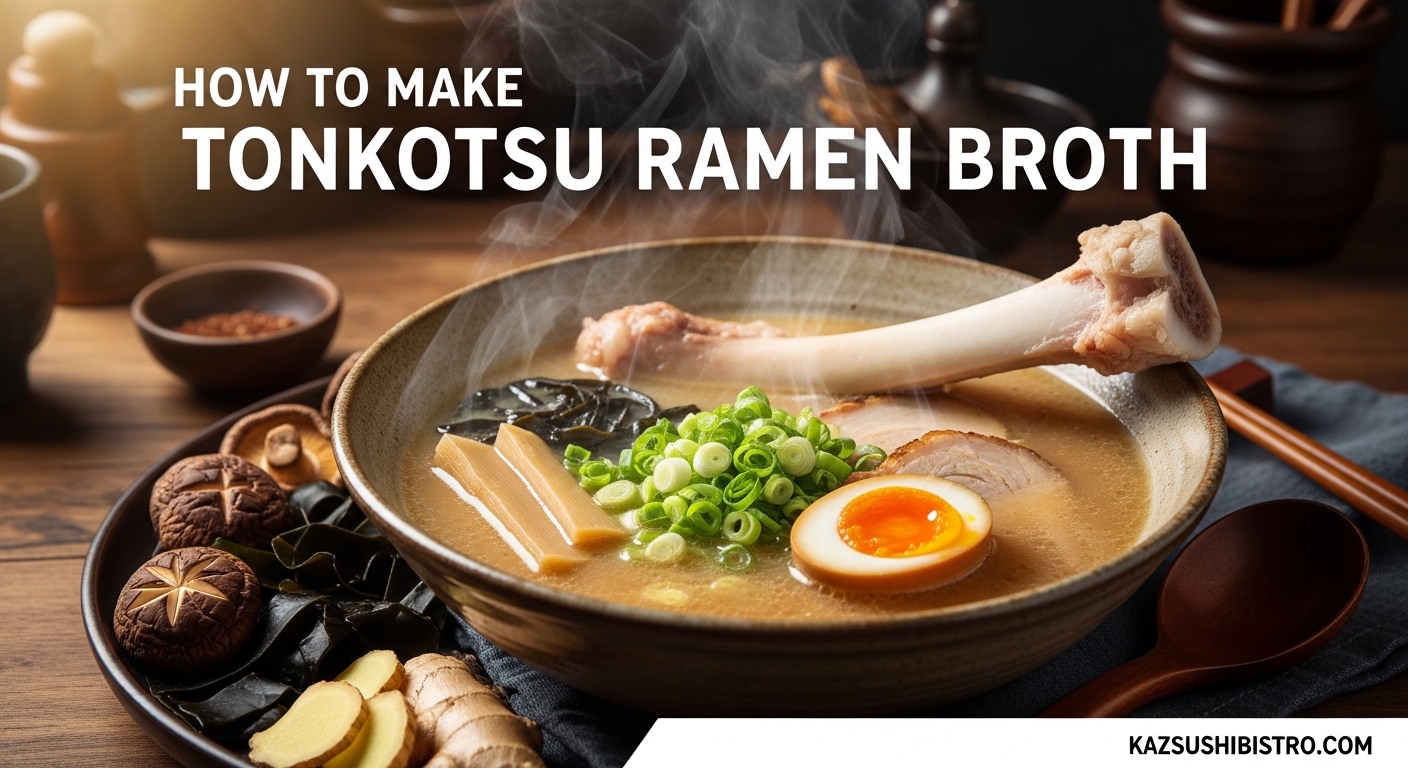
Making tonkotsu ramen broth from scratch is one of the most rewarding cooking projects you can tackle. This creamy, milky white broth is the heart and soul of authentic Japanese ramen, delivering a richness that store-bought versions simply cannot match.
Our team has spent months perfecting this technique, testing different bone combinations and cooking methods to bring you a foolproof guide. You will learn exactly how to make tonkotsu ramen broth that rivals what you would find in a top ramen shop in Fukuoka.
The process takes 12 to 18 hours of gentle cooking, but most of that time is hands-off. We will also share a pressure cooker shortcut that cuts the time down to 3 to 4 hours while delivering nearly identical results.
By the end of this guide, you will understand not just the steps, but the science behind why this broth becomes so creamy and white. You will be able to troubleshoot common problems and confidently serve restaurant-quality ramen to family and friends.
Table of Contents
What Is Tonkotsu Ramen Broth?
Tonkotsu ramen broth is a Japanese pork bone broth that originated in Fukuoka on the island of Kyushu. Unlike other ramen styles that use chicken or seafood as their base, tonkotsu relies exclusively on pork bones simmered at a rolling boil for many hours.
The word “tonkotsu” literally translates to “pork bones” in Japanese. This broth is instantly recognizable by its opaque, milky white appearance and intensely rich flavor. When done correctly, it should coat your spoon with a silky, almost creamy texture.
The magic happens through the breakdown of collagen, a protein found abundantly in pork bones and connective tissue. As the bones cook at high temperatures, this collagen converts into gelatin, which gives the broth its distinctive body and mouthfeel.
Simultaneously, the rapid boiling action emulsifies fat into the liquid, creating that signature white color. This emulsification is why tonkotsu looks more like milk than traditional clear broths.
Compared to shoyu ramen (soy sauce based), miso ramen (fermented soybean paste), or shio ramen (salt based), tonkotsu stands apart for its intensity. It is unapologetically pork-forward and requires no additional flavoring agents to taste complete.
Ingredients and Equipment You’ll Need
The ingredient list for authentic tonkotsu ramen broth is surprisingly short. Quality matters more than quantity here, so seek out the freshest pork bones available from a local butcher or Asian market.
Essential Ingredients
You will need 4 to 5 pounds of pork bones for a standard batch yielding about 2 quarts of finished broth. The ideal combination includes pork trotters (feet), which are loaded with collagen, and pork leg bones or neck bones for depth of flavor.
Many recipes also add 1 to 2 pounds of chicken backs or carcasses. This addition lightens the broth slightly and adds complexity without detracting from the pork flavor. It is optional but highly recommended.
For aromatics, gather one large onion (quartered), 10 to 12 cloves of garlic, and a 2-inch piece of ginger (sliced). These vegetables get charred to develop deeper, more complex flavors before joining the broth.
Optional additions include a few ounces of pork fatback for extra richness, a piece of kombu (dried kelp) for umami, or a handful of niboshi (dried sardines) for depth. These are not traditional in pure tonkotsu but can elevate your results.
Equipment Requirements
The most important piece of equipment is a large stockpot. You need at least an 8-quart capacity, though 10 to 12 quarts is better to prevent boil-overs during the long cooking process.
A fine-mesh strainer or chinois is essential for the final straining step. You will also need cheesecloth or a clean kitchen towel for additional clarification if desired.
A pressure cooker or Instant Pot offers an alternative cooking method that dramatically reduces time. We will cover both approaches in detail below.
Finally, keep a ladle handy for skimming scum throughout the cooking process. A large bowl or second pot will be needed for the initial bone cleaning steps.
How to Clean and Prepare Pork Bones?
Proper bone preparation is absolutely critical for achieving that signature white color. Skipping or rushing these steps results in a brown or gray broth that tastes fine but looks unappetizing.
Step 1: Soak the Bones
Place your pork bones in a large pot or clean sink and cover them completely with cold water. Let them soak for at least 1 hour, or up to 4 hours if you have the time.
This soaking period draws out blood and impurities that would otherwise cloud your broth. You will notice the water turning pink or red as the blood leaches out.
Change the water once or twice during soaking if it becomes very bloody. The cleaner your bones start, the whiter your finished broth will be.
Step 2: Blanch the Bones
Transfer the soaked bones to your stockpot and cover with fresh cold water. Bring the pot to a boil over high heat and let it boil vigorously for 10 to 15 minutes.
During this blanching phase, grayish scum and foam will rise to the surface. This is more blood and proteins being expelled from the bones and marrow.
The blanching water will look quite nasty when finished, resembling dirty dishwater. This is exactly what you want to see, as it means the impurities are leaving the bones rather than joining your final broth.
Step 3: Rinse and Scrub
Drain the blanching water and discard it completely. Rinse each bone thoroughly under cold running water, scrubbing away any remaining scum or dark bits.
Pay special attention to the marrow cavities in leg bones. Use your fingers or a small brush to clean out any dark, coagulated blood stuck inside.
Some cooks prefer to use a toothbrush or dedicated kitchen brush for this task. The goal is bones that look clean and pale, with no dark spots or residue remaining.
Once cleaned, your bones are ready for the long simmer. This preparation process takes about 2 hours total but makes the difference between an amateur and professional-looking broth.
How to Make Tonkotsu Ramen Broth: Step-by-Step 2026
Now comes the main event: transforming those clean bones into liquid gold. This process requires patience, attention to the boil, and about 12 hours of cooking time for the traditional method.
Step 1: Start the Rolling Boil
Return the cleaned bones to your stockpot and cover with fresh cold water. The water level should be about 2 inches above the bones to account for evaporation.
Place the pot over high heat and bring it to a full, aggressive rolling boil. This is crucial. A gentle simmer will not create the emulsification needed for creamy tonkotsu.
You want bubbles rapidly breaking the surface throughout the cooking process. This constant motion is what incorporates fat into the broth and creates that milky appearance.
Step 2: Monitor and Skim
During the first 30 to 60 minutes, scum will continue to rise as the bones release their final impurities. Use a ladle to skim this foam off the surface.
Do not stress about removing every speck, but do remove the majority. This early skimming prevents off-flavors and keeps the broth cleaner tasting.
Check the water level every hour or so. Add boiling water as needed to keep bones submerged. Adding cold water lowers the temperature and interrupts the emulsification process.
Step 3: Visual Progression Timeline
Understanding what your broth should look like at different stages helps you know everything is proceeding correctly.
At hour 1, the liquid remains mostly clear with a slight golden tint. You will see some fat droplets separating on the surface.
By hour 3, the broth turns light beige or tan as collagen begins dissolving. The liquid will look increasingly cloudy.
Around hour 6, you should see a noticeable shift toward opacity. The broth takes on a pale grayish-white color and feels slightly thicker.
By hour 10 to 12, the broth becomes truly milky white. It should coat the back of a spoon and feel silky in your mouth when tasted.
Step 4: Add the Aromatics
While the bones cook, prepare your aromatics. Char the quartered onion, garlic cloves, and ginger slices in a dry skillet or under a broiler until blackened in spots.
This charring adds depth and complexity that raw aromatics cannot provide. It also gives a subtle smoky quality to the finished broth.
Add the charred vegetables to the pot during the final 2 to 3 hours of cooking. Adding them too early can make the broth bitter or overly vegetal.
Step 5: Test for Doneness
After 12 hours, test the broth by dipping a spoon and checking the coating. It should leave a visible, creamy layer when you run your finger through it.
The bones should be soft and falling apart when poked. Pork trotters in particular should feel almost mushy, having given up all their collagen.
If the broth still seems thin or watery, continue boiling for another 2 to 4 hours. Some cooks prefer an 18-hour broth for maximum richness.
Step 6: Strain the Broth
Remove the pot from heat and let it cool slightly. Set up a large bowl with a fine-mesh strainer lined with cheesecloth.
Ladle the broth through the strainer in batches. Press gently on the solids to extract remaining liquid, but do not force sediment through.
For an ultra-smooth result, strain a second time through fresh cheesecloth. Your tonkotsu ramen broth is now ready for seasoning and serving.
Pressure Cooker Shortcut Method (3-4 Hours)
Not everyone can tend a pot for 12 hours, and that is perfectly fine. A pressure cooker or Instant Pot provides an excellent shortcut that produces surprisingly similar results.
Preparation Is Identical
Follow the exact same bone cleaning and soaking steps outlined above. This part cannot be rushed regardless of cooking method.
Clean bones are even more important for pressure cooking because the closed environment concentrates flavors. Any impurities will be more noticeable in the final broth.
Pressure Cooking Process
Place cleaned bones in your pressure cooker and cover with water to the maximum fill line. Cook at high pressure for 2 hours for chicken bones, or 3 to 4 hours for pork-only broths.
Allow a natural pressure release for at least 30 minutes. This gradual cooling prevents the hot liquid from erupting when you open the valve.
The rapid pressure and high temperature inside the cooker achieves in hours what takes all day on the stovetop. Collagen breaks down faster, and emulsification happens more quickly.
Results Comparison
Pressure cooker tonkotsu broth is slightly less complex in flavor than the traditional version. The extended stovetop cooking allows for more Maillard reactions and depth development.
However, the texture and color are remarkably similar. Most home cooks find the pressure cooker method produces results that exceed 90 percent of what the long method achieves.
For weeknight ramen cravings, this shortcut is invaluable. We recommend trying both methods to see which fits your schedule and taste preferences.
The Science Behind the Creamy Texture
Understanding why tonkotsu broth becomes creamy and white helps you troubleshoot problems and appreciate the process. Two scientific processes are at work here.
Collagen to Gelatin Conversion
Pork bones, especially trotters and joints, contain massive amounts of collagen. This structural protein gives connective tissue its strength and resilience.
When heated in water for extended periods, collagen molecules unwind and break down into gelatin. This transformation begins around 140 degrees Fahrenheit and accelerates as temperature increases.
Gelatin dissolves into the cooking liquid, creating viscosity and that silky mouthfeel. The more collagen in your bones, the richer and more unctuous your broth becomes.
This is why trotters, with their high connective tissue content, are essential for true tonkotsu. Leg bones provide flavor, but trotters provide body.
Emulsification of Fat
The milky white color comes from fat emulsification, not milk or cream. As the broth boils vigorously, fat molecules get broken into tiny droplets that scatter light.
This is the same principle that makes mayonnaise white or homogenized milk opaque. Tiny fat droplets suspended in liquid create a white appearance.
A rolling boil maintains the turbulence needed for this emulsification. A gentle simmer allows fat to separate and float, resulting in a clear golden broth instead of creamy white.
The combination of dissolved gelatin and emulsified fat creates tonkotsu’s signature texture. Neither alone achieves the full effect, which is why both time and technique matter.
Troubleshooting Common Problems
Even experienced cooks encounter issues when making tonkotsu ramen broth. Here is how to identify and fix the most common problems.
Problem: Brown or Gray Broth
The most common issue is broth that turns brown instead of white. This almost always results from insufficient bone cleaning or blood remaining in the bones.
Solution: Next time, extend your soaking time and be more thorough during the blanching and scrubbing phase. You cannot fix the color once cooked, but the broth will still taste good.
Another cause is adding aromatics too early. Vegetables can discolor broth if cooked too long. Wait until the final hours to add them.
Problem: Thin, Watery Broth
If your broth lacks body and creaminess, you likely need more collagen-rich bones or longer cooking time.
Solution: Add more pork trotters to your bone ratio. Increase cooking time by 2 to 4 hours next attempt. You can also reduce the finished broth by boiling it down further.
Check that you maintained a true rolling boil throughout. A simmering pot will not emulsify fat properly.
Problem: Greasy or Overly Fatty Broth
Sometimes tonkotsu turns out too rich or leaves a greasy coating in the mouth. This happens when too much fat emulsifies or the bone ratio favors fatty cuts.
Solution: Chill the finished broth completely, then scrape the congealed fat layer off the top before reheating. This removes excess fat while keeping the collagen-rich gelatin.
Next time, use fewer fatty cuts and more leg bones in your bone mix.
Problem: Off Flavors or Smell
A “barnyard” or sour smell indicates bones that were not fresh enough or scum that was not adequately skimmed.
Solution: Always buy the freshest bones possible from a reputable source. Skim more diligently during the first hour of boiling. If the broth smells bad during cooking, it will taste bad when finished.
Some pork has a stronger natural odor than others. Soaking longer and blanching twice can help with particularly strong-smelling bones.
Storage, Serving, and Topping Suggestions
You have put in the work to create amazing tonkotsu ramen broth. Here is how to store it and build the perfect bowl of ramen around it.
Proper Storage Methods
Store finished broth in airtight containers in the refrigerator for up to 5 days. The high gelatin content means it will solidify into a jelly-like consistency when cold.
For longer storage, freeze the broth in portion-sized containers or ice cube trays. Frozen tonkotsu keeps well for 3 months without quality loss.
We recommend freezing in 2-cup portions, which is roughly one large bowl of ramen. This makes thawing exactly what you need simple.
Reheating Techniques
Reheat refrigerated broth gently in a pot over medium heat. It will return to liquid as it warms. Do not boil vigorously once reheated, as this can break the emulsification.
From frozen, thaw overnight in the refrigerator or defrost in the microwave. Then reheat gently on the stovetop.
Building Your Ramen Bowl
True tonkotsu ramen requires a tare, a concentrated seasoning base placed in the bowl before adding broth. Common tare options include shoyu (soy sauce), shio (salt), or miso.
Start with 1 to 2 tablespoons of tare per bowl. Add your hot tonkotsu broth and stir to combine. Taste and adjust seasoning as needed.
Cook fresh ramen noodles according to package directions, typically 2 to 3 minutes in boiling water. Place them in the seasoned broth.
Top with traditional additions: sliced chashu (braised pork belly), a soft-boiled marinated egg, scallions, and bamboo shoots. A drizzle of mayu (black garlic oil) adds authentic Fukuoka style.
Other excellent toppings include nori sheets, corn kernels, bean sprouts, and a pat of butter for extra richness. Build your perfect bowl based on personal preference.
Frequently Asked Questions
What is tonkotsu ramen broth made of?
Tonkotsu ramen broth is made primarily from pork bones, specifically trotters and leg bones, simmered at a rolling boil for 12 to 18 hours. The broth contains no dairy or cream despite its milky appearance. The white color comes from collagen and fat emulsification. Optional additions include chicken backs, charred aromatics, and tare seasoning.
How is tonkotsu broth so creamy?
The creamy texture comes from two scientific processes: collagen converting to gelatin and fat emulsifying into the liquid. Pork bones contain abundant collagen that breaks down during long cooking, creating viscosity. The rolling boil emulsifies fat droplets throughout the broth, creating a silky mouthfeel that coats your tongue.
Is ramen good for high cholesterol?
Traditional tonkotsu ramen is high in fat and cholesterol due to the pork bone base and rich toppings. Those managing high cholesterol should enjoy it occasionally as a treat rather than a regular meal. Consider removing excess congealed fat from chilled broth before reheating to reduce the fat content. Shoyu or shio based ramen options are typically lighter alternatives.
Can I eat ramen with high blood pressure?
Ramen can be high in sodium, especially from the tare seasoning and toppings. Those with high blood pressure should use a lighter hand with salty tare and choose low-sodium soy sauce options. Making ramen at home allows you to control the salt content completely. Balance your meal with plenty of vegetables and stay hydrated.
Why is my tonkotsu broth brown instead of white?
Brown or gray tonkotsu broth usually results from insufficient bone cleaning. Blood and impurities left in the bones darken during cooking. Next time, soak bones longer, blanch more thoroughly, and scrub diligently. Adding aromatics too early can also contribute to discoloration. Wait until the final hours to add vegetables.
How long should I cook tonkotsu ramen broth?
Traditional tonkotsu ramen broth requires 12 to 18 hours of rolling boil to fully extract collagen and emulsify fat. A pressure cooker reduces this to 3 to 4 hours with similar results. The broth is ready when it coats the back of a spoon and bones feel soft and falling apart.
Can I make tonkotsu broth in an Instant Pot?
Yes, an Instant Pot or pressure cooker works excellently for tonkotsu broth. Clean and blanch bones as normal, then pressure cook on high for 2 to 4 hours depending on bone types. Allow natural pressure release. The results are nearly as good as the traditional method with a fraction of the time.
What bones are best for tonkotsu broth?
The best tonkotsu broth uses a mix of pork trotters for collagen and pork leg or neck bones for flavor. Many recipes add chicken backs for additional depth. Avoid overly fatty cuts unless you enjoy very rich broth. Ask your butcher for soup bones specifically.
Final Thoughts
Learning how to make tonkotsu ramen broth at home connects you to a centuries-old tradition of Japanese craftsmanship. The patience and attention required are part of what makes the final bowl so satisfying.
Remember that this broth is just the foundation. The true magic of ramen comes from layering flavors through your tare, toppings, and noodle selection. Experiment with different combinations to find your personal perfect bowl.
Whether you choose the traditional 12-hour method or the pressure cooker shortcut, you now have the knowledge to create restaurant-quality tonkotsu ramen broth in your own kitchen. Gather your bones, clear your schedule, and prepare for an unforgettable cooking experience.