
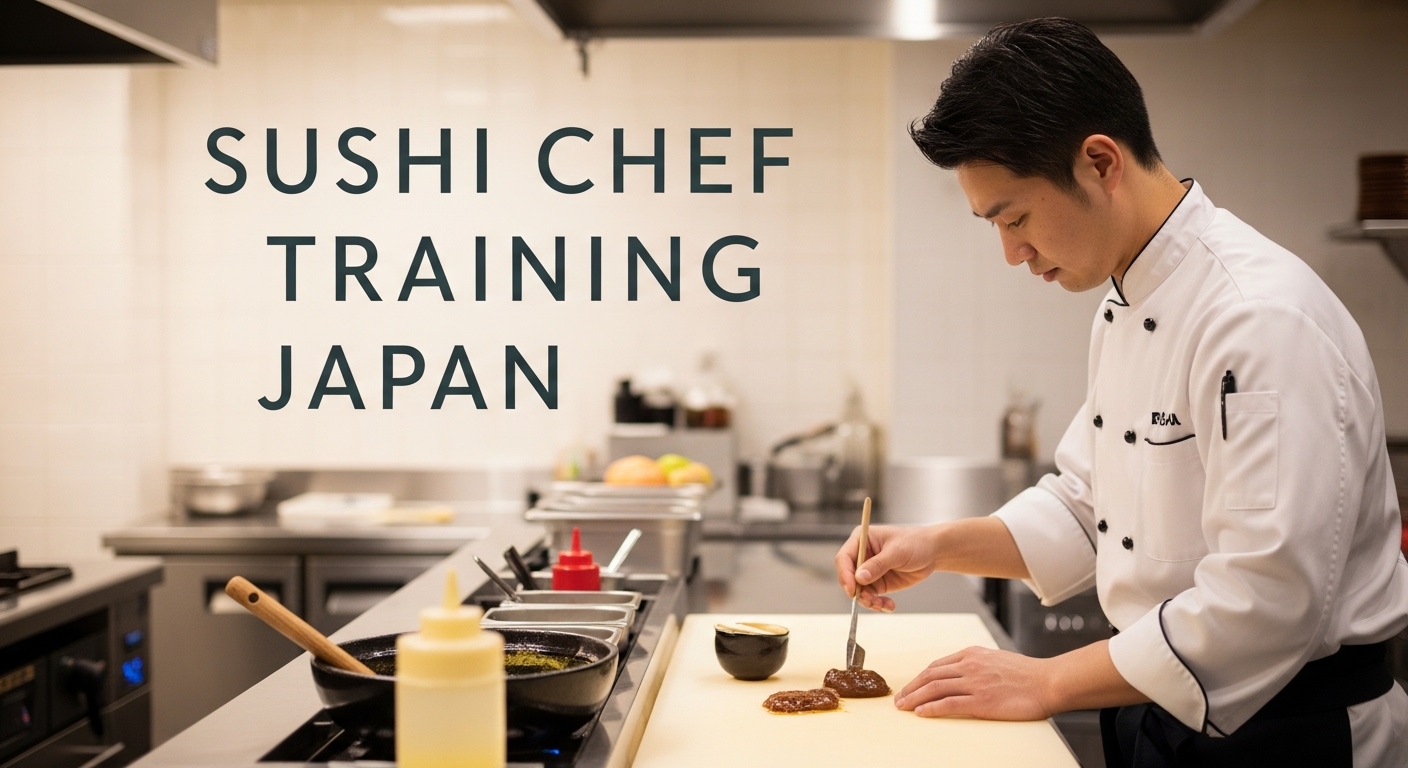
Becoming a sushi chef in Japan represents one of the most respected culinary journeys in the world. Yet the path seems shrouded in mystery. Does it really require a decade of washing rice before you touch a knife? Can a foreigner actually train in Japan? How much does it actually cost?
I spent weeks researching every major sushi school and interviewing chefs who have walked both paths. This guide gives you the straight answers. Whether you are considering a career change in your 40s or a 20-year-old dreaming of Tokyo, you will find exactly what you need to know about sushi chef training Japan programs.
Table of Contents
What Is Sushi Chef Training in Japan?
Sushi chef training Japan encompasses the formal education and apprenticeship programs that teach the art of Edomae sushi, the traditional Tokyo-style preparation that has defined Japanese cuisine for centuries. At its core, this training develops an itamae, the head sushi chef who orchestrates every aspect of the dining experience.
The training covers far more than rolling rice and slicing fish. You master knife skills that take years to perfect, learn to identify fish quality at a glance, understand the subtle science of rice vinegar seasoning, and develop the intuition to serve each piece at the perfect temperature. You also absorb the etiquette, philosophy, and cultural protocols that separate amateur attempts from professional artistry.
Historically, this training happened exclusively through apprenticeships where aspiring chefs would spend years working under a master, often starting with menial tasks before ever touching fish. Today, specialized sushi schools offer accelerated paths that compress years of knowledge into intensive months. Both approaches remain valid, and both produce successful chefs working in Japan and internationally.
Traditional Apprenticeship vs Modern Sushi Schools 2026
The first major decision you face is choosing between the traditional apprenticeship path or attending a modern sushi school. This choice shapes your entire experience, timeline, and potentially your career trajectory.
The Traditional Apprenticeship Path
Traditional apprenticeships operate on a centuries-old model. You join a working sushi restaurant and learn by observing and assisting the master chef over many years. This is the path that produced legends like Jiro Ono.
The structure follows a rigid hierarchy. Your first years typically involve cleaning, running errands, and preparing rice. Only after proving your dedication do you graduate to basic fish preparation. Making sushi for customers usually takes five to ten years of consistent work. Full mastery, where you might open your own restaurant or become head chef, often requires fifteen years or more.
Apprenticeships cost little to nothing financially, but they demand enormous time investment. You earn a modest wage while learning, making this accessible to those with limited savings but unlimited patience. The depth of knowledge gained is unparalleled, as you absorb not just technique but the rhythm, philosophy, and decision-making of a working kitchen.
Modern Accelerated Programs
Sushi schools emerged to meet demand from international students and career-changers who cannot dedicate a decade to apprenticeship. These programs compress essential training into 1 to 6 months of intensive daily instruction.
Schools like Tokyo Sushi Academy, Tokyo Sushi School in Ikebukuro, and Masazushi Dojo in Hokkaido have developed curricula that skip the years of menial work and focus directly on technique. You spend every day actively practicing knife skills, preparing fish, and making sushi under the guidance of experienced instructors, many of whom trained in prestigious Ginza restaurants.
These programs charge tuition, typically ranging from 300,000 to 1,200,000 yen depending on duration and intensity. However, they provide structured learning, certification, and often job placement assistance. For many students, the investment pays for itself through faster entry into paid positions.
Which Path Is Right for You?
| Factor | Traditional Apprenticeship | Modern Sushi School |
|---|---|---|
| Time Required | 5-15 years | 1-6 months |
| Cost | Minimal (earning while learning) | 300,000-1,200,000 yen tuition |
| Best For | Those with unlimited time, seeking deep mastery | Career changers, international students |
| Language | Fluent Japanese essential | Many offer English instruction |
| Job Readiness | Immediate upon completion | Varies; job placement support common |
Choose apprenticeship if you are young, financially flexible, and seeking the deepest possible mastery. Choose a school if you need to start earning as a chef within months, do not speak fluent Japanese, or are making a career transition later in life.
Duration and Time Commitment
Understanding realistic timelines helps set proper expectations and prevents disappointment. The journey varies dramatically depending on your chosen path.
Traditional Timeline (5-10+ Years)
Under the traditional system, you progress through distinct phases. Years 1-2 focus entirely on foundational work: cleaning, rice preparation, and observing the master. Years 3-5 bring basic knife skills and fish preparation. Years 6-10 see you making sushi for customers under supervision. True independence as a head chef typically comes after year 10.
Many legendary chefs report training for 15 years before feeling truly ready to open their own establishments. This timeline seems extreme to Western sensibilities, but it produces chefs with an almost instinctive understanding of ingredients and technique.
Accelerated Program Timelines (1-6 Months)
Modern schools offer several program lengths:
- 1-Week Courses: Basic introduction for enthusiasts. You learn fundamental techniques but remain far from job-ready.
- 1-Month Programs: Intensive full-time training. Schools like Tokyo Sushi School claim this equals three years of apprenticeship exposure to technique.
- 2-Month Programs: Deeper skill development with more practice time. Masazushi Dojo in Otaru offers this, targeting entry-level employment.
- 3-6 Month Programs: Comprehensive training that includes internships and advanced techniques. Tokyo Sushi Academy offers extended programs with job placement.
What You Learn in Each Phase
Regardless of path, your training follows a logical progression. First comes rice mastery, the foundation of all sushi. Then knife skills, requiring hundreds of hours to develop precision. Next, fish knowledge including identification, aging, and preparation. Finally, the art of service: timing, presentation, and customer interaction.
Skills You Will Learn
Sushi chef training Japan develops a comprehensive skill set that extends far beyond what cooking shows depict. Here is what you actually master during your education.
Knife Skills and Techniques
Japanese knife work represents a discipline unto itself. You learn to handle the yanagiba, the long single-bevel knife designed specifically for sashimi. Proper sharpening becomes second nature. You develop the ability to slice fish in one smooth motion without sawing, preserving texture and appearance.
The training includes maintaining your knives, understanding steel types, and the precise angles required for different cuts. Many chefs spend months perfecting basic slicing before moving to complex preparations.
Fish Preparation and Selection
Knowing fish separates competent chefs from masters. You learn to identify freshness through eyes, gills, and texture. You understand seasonal availability and how it affects flavor. You master the art of kombu-jime, wrapping fish with kelm to enhance umami. You study aging techniques that develop deeper flavors in tuna and other species.
Proper filleting eliminates waste while maximizing yield. Each species requires different handling, and you learn the specific approach for dozens of fish types common in Japanese cuisine.
Rice Preparation and Seasoning
Sushi rice, or shari, is deceptively simple and incredibly difficult. You learn to wash rice properly, cook it to the exact texture, and season it with vinegar while maintaining the perfect temperature. The balance of sweet, sour, and salty must be consistent batch after batch.
Mastering rice alone takes weeks or months of daily practice. Many apprentices spend their first year primarily on rice preparation, understanding that without this foundation, nothing else matters.
Presentation and Service Etiquette
The final skill set involves service. You learn the proper way to form nigiri, applying just enough pressure to hold the fish and rice together without crushing either. You understand serving temperature, ensuring fish and rice meet the customer at the optimal moment.
Beyond technique, you absorb the etiquette of the sushi counter. How to greet customers, pace the meal, and read preferences without being asked. The best chefs create an experience, not just food.
Top Sushi Schools in Japan
If you choose the accelerated school path, selecting the right program significantly impacts your outcomes. Here are the leading options 2026, each with distinct advantages.
Tokyo Sushi Academy
Located in Tokyo and billing itself as the world’s first sushi school, Tokyo Sushi Academy has trained over 4,000 students from 50 countries. They offer programs ranging from short courses to comprehensive multi-month training with certification.
Their international focus makes them particularly accessible to foreign students. Classes are available in English, and they provide job placement assistance both in Japan and internationally. Their certificate is recognized for visa applications in some countries. Programs typically run 200,000 to 800,000 yen depending on length.
Tokyo Sushi School (Ikebukuro)
Located in Tokyo’s Ikebukuro district, this school emphasizes intensive short-term programs. Their one-month course operates six days per week, claiming to deliver three years of apprenticeship exposure to technique in that compressed timeframe.
Instructors include master chefs from prestigious Ginza restaurants. The small class sizes ensure personal attention. They offer job hunting assistance and maintain partnerships with restaurants seeking graduates. Their philosophy centers on practical skill acquisition over theory. Costs range from 300,000 to 500,000 yen for primary programs.
Masazushi Dojo (Otaru, Hokkaido)
Operating from Otaru in Hokkaido, Masazushi Dojo offers something unique: training in a historic fishing port with direct access to morning market fish. Their two-month program accepts only five students per session, ensuring intensive personal instruction.
The program combines Edomae and Hokkaido regional styles, giving graduates versatility. They emphasize employment support, with connections to restaurants globally. The Hokkaido location offers lower living costs than Tokyo. Tuition runs approximately 600,000 yen plus living expenses.
Japan Culinary Institute
The Japan Culinary Institute offers structured Japanese cuisine chef training including sushi specialization. Their programs range from 6 to 22 weeks, with some including internship periods at working restaurants.
This option suits those wanting broader Japanese cuisine knowledge alongside sushi. The longer programs include substantial hands-on restaurant experience. They offer student visa support for qualifying programs. Costs vary from 400,000 to over 1,000,000 yen for extended programs with internships.
Frontier Zipang Culinary School
Frontier Zipang offers flexible programs including short one-week courses for beginners and longer professional tracks. Their Tokyo location provides accessibility and industry connections.
The school emphasizes step-by-step progression, making it suitable for those with no prior culinary experience. They offer both Japanese and English instruction depending on the program. Pricing starts around 100,000 yen for short courses, scaling up for professional programs.
Cost and Financial Considerations
Understanding the true cost of training helps you plan realistically. Expenses extend beyond tuition to living costs, tools, and hidden expenses.
Tuition Costs
Traditional apprenticeships cost virtually nothing in tuition, though you earn a modest wage, typically 150,000 to 200,000 yen monthly in Tokyo during early years.
Accelerated programs charge upfront:
- Short courses (1 week): 100,000-150,000 yen
- One-month programs: 300,000-500,000 yen
- Two-month programs: 500,000-700,000 yen
- Extended programs (3-6 months): 800,000-1,500,000 yen
These figures represent tuition only. Schools may charge additional fees for materials, certification, or examinations.
Living Expenses
Living costs vary dramatically by location. Tokyo represents the highest expense, with monthly costs of 100,000-150,000 yen for modest shared accommodation, plus 40,000-60,000 yen for food and essentials. A student in Tokyo should budget 150,000-200,000 yen monthly.
Regional cities like Otaru offer significant savings, with monthly costs potentially 30-40% lower. Some schools offer dormitory housing or assistance finding affordable accommodation.
Hidden Costs to Consider
Beyond the obvious, budget for professional knives, which represent a significant investment. A basic quality yanagiba starts around 20,000 yen, with professional-grade knives costing 50,000-100,000 yen or more. You also need sharpening stones, uniforms, and transportation.
Visa costs, health insurance, and emergency funds add to requirements. Plan for at least three to six months of living expenses beyond program duration while seeking employment.
Return on Investment
Entry-level sushi chef positions in Japan typically pay 200,000-250,000 yen monthly, increasing to 300,000-400,000 yen with experience. Head chefs at established restaurants can earn 500,000-800,000 yen or more.
International opportunities often pay differently. Sushi chefs working in high-end restaurants abroad can command significantly higher salaries, particularly in markets like the United States, Europe, or the Middle East where skilled Japanese cuisine chefs are in demand.
Opening your own restaurant requires substantial capital, typically 3-10 million yen minimum for a small operation, but offers unlimited earning potential for successful establishments.
Visa and Training Considerations for Foreigners
Foreigners face additional complexity in pursuing sushi chef training Japan. Understanding visa pathways and requirements prevents legal issues and disappointments.
Working Holiday Visa
Citizens of countries with working holiday agreements, including Australia, Canada, the UK, and several European nations, can enter Japan on this visa for up to one year. The visa allows both travel and employment, making it suitable for short training programs followed by restaurant work.
You cannot use this visa for programs longer than the visa duration. The application requires proof of funds, typically around 2,000-3,000 dollars equivalent, and a return ticket or funds to purchase one.
Student Visa Options
Student visas apply to full-time enrollment in accredited educational programs. Not all sushi schools qualify for student visa sponsorship. Verify with your chosen institution whether they can provide the necessary documentation.
Student visas typically permit limited part-time work, allowing you to earn while studying. The application process takes several months and requires proof of financial capacity to cover tuition and living expenses.
Language Requirements
Language needs vary by program. Schools catering to international students often offer English instruction. However, working in Japanese restaurants after training requires at least conversational Japanese, typically JLPT N3 level or higher.
Traditional apprenticeships demand near-fluent Japanese, as you work in all-Japanese environments with minimal accommodation for non-speakers. Consider language study before or alongside technical training if you plan this route.
Working as a Foreign Sushi Chef in Japan
Working legally as a foreign sushi chef in Japan requires appropriate visa status. The “Specified Skilled Worker” visa, introduced in recent years, offers a pathway for foreign workers in food service industries, though requirements include Japanese language proficiency and passing skill examinations.
Some restaurants sponsor visas for exceptional foreign graduates, though this remains relatively rare. Many foreign-trained chefs ultimately work outside Japan, where their Japanese training becomes a significant credential.
Career Paths After Training
Graduation opens multiple career avenues, each with distinct advantages and challenges. Understanding these options helps you plan your post-training steps.
Working in Japan
For those with appropriate visas, Japan offers the authentic sushi career experience. You might start in a chain restaurant, move to independent establishments, and eventually work in high-end Ginza counters. The progression follows merit, with skill determining advancement.
The work culture demands dedication. Hours are long, typically 10-12 hour days with few days off. However, the depth of experience gained is unmatched anywhere else.
International Opportunities
Many graduates leverage their Japanese training abroad. High-end sushi restaurants worldwide actively seek chefs with authentic Japanese education. Dubai, London, New York, Singapore, and Sydney all have thriving markets for qualified sushi chefs.
International salaries often exceed Japanese equivalents, particularly in luxury markets. A chef with solid Japanese training can earn 60,000-100,000+ dollars annually in major international cities.
Opening Your Own Restaurant
Entrepreneurial graduates eventually open their own establishments. Japanese training provides credibility that attracts customers seeking authenticity. Success requires not just culinary skill but business acumen, marketing sense, and substantial capital.
The typical timeline sees chefs working 5-10 years in various restaurants before attempting ownership, giving time to build skills, reputation, and savings.
Salary Expectations
Realistic salary expectations by career stage:
- Entry-level (0-2 years): 200,000-280,000 yen/month in Japan
- Mid-level (3-7 years): 300,000-450,000 yen/month
- Senior/Head Chef (8+ years): 450,000-800,000 yen/month
- International positions: 50,000-120,000+ dollars annually
- Restaurant owner: Highly variable, from minimal to exceptional
Age Considerations
One of the most common questions from aspiring chefs concerns age. Am I too old to start? The honest answer: it depends on your goals, not your birth year.
Is There an Age Limit?
There is no formal age limit for sushi chef training Japan programs. Schools accept students from their late teens through their 50s and beyond. The question is not whether you can start, but whether the investment aligns with your timeline and goals.
Starting in Your 30s, 40s, or Beyond
Many successful career changes happen in the 30s and 40s. At this age, you bring advantages: maturity, work ethic, and often financial resources to support training. The accelerated school path becomes particularly attractive, allowing entry into the profession within months rather than years.
Realistic expectations matter. Starting at 40 and pursuing traditional apprenticeship makes little sense if you hope to open a restaurant by 45. However, completing a 3-month program, working for 3-5 years to build skills, then opening a modest establishment by 48-50 is entirely feasible.
Success Stories
Numerous chefs have successfully transitioned later in life. Some left corporate careers at 35, trained in intensive programs, and now operate thriving restaurants. Others started at 50 simply for the love of the craft, without commercial ambitions.
The key is honest self-assessment. If you have 20 years of working life ahead and passion for this path, age is merely a number. If you expect to master the craft and become famous within five years starting at 55, you may face disappointment.
FAQs
What is the training process for Japanese sushi chefs?
The training process involves either traditional apprenticeship at a restaurant or enrollment in a modern sushi school. Traditional apprenticeships start with basic tasks like cleaning and rice preparation, gradually advancing to knife skills and fish handling over 5-10 years. Modern schools offer intensive programs lasting 1-6 months that focus directly on technical skills including knife work, fish preparation, rice seasoning, and presentation techniques.
How long does it typically take to become proficient in making sushi?
Proficiency varies by training path. Traditional apprenticeships require 5-10 years before making sushi for customers, with true mastery taking 10-15 years. Modern accelerated programs claim to teach job-ready skills in 1-6 months, though most graduates continue developing expertise through employment. Real proficiency that allows independent work typically requires 1-3 years of practice regardless of initial training method.
Can a foreigner become a sushi chef in Japan?
Yes, foreigners can become sushi chefs in Japan, though visa requirements present challenges. Short-term training is accessible through tourist or working holiday visas. Longer programs may require student visas. Working professionally in Japan requires appropriate work authorization, with the Specified Skilled Worker visa offering a pathway for those with Japanese language skills and culinary qualifications. Many foreign-trained chefs work internationally rather than in Japan.
How much does a sushi chef in Japan make?
Sushi chef salaries vary by experience level. Entry-level positions pay approximately 200,000-280,000 yen monthly. Mid-level chefs with 3-7 years experience earn 300,000-450,000 yen. Senior and head chefs at established restaurants make 450,000-800,000 yen or more. International positions often pay significantly more, with qualified Japanese-trained chefs earning 60,000-120,000+ dollars annually in major global markets.
Is 35 too late to become a chef?
No, 35 is not too late to become a sushi chef. Many successful career transitions happen in the 30s and 40s. At this age, you bring maturity, work ethic, and often better financial resources. Accelerated programs allow entry into the profession within months rather than years, making a career change practical. Realistic timeline planning matters more than age itself.
Does sushi really take 10+ years to master?
Traditional apprenticeships historically required 10+ years of training before full mastery. However, modern accelerated programs compress essential technical training into 1-6 months. While deep intuition and advanced skills still develop over years of practice, job-ready competence can be achieved much faster today. True mastery remains a lifelong pursuit, but professional entry points now exist for those who cannot dedicate a decade to training.
What is it like to train to be a master sushi chef?
Training is physically demanding and mentally intensive. Days often start early with market visits for fresh fish, followed by hours of repetitive practice perfecting knife skills and rice preparation. The work requires standing for long periods, precise attention to detail, and developing an intuitive understanding of ingredients. Apprenticeships include menial tasks alongside technical learning. Schools focus more intensely on skills but demand full dedication. Both paths require genuine passion to sustain motivation through challenges.
How much does sushi chef training cost in Japan?
Costs vary dramatically by path. Traditional apprenticeships require minimal tuition but pay modest wages of 150,000-200,000 yen monthly during early years. Modern sushi schools charge 300,000-1,500,000 yen in tuition depending on program length, from one-month intensives to six-month comprehensive courses. Living expenses add 100,000-200,000 yen monthly in Tokyo, less in regional cities. Professional knives and equipment represent additional costs of 50,000-150,000 yen.
Conclusion
Sushi chef training Japan offers multiple pathways to a respected culinary career. The traditional apprenticeship path demands years of dedication but produces unmatched depth of skill. Modern accelerated schools compress essential training into months, opening doors for career-changers and international students.
Your choice depends on your timeline, financial situation, language skills, and ultimate goals. Neither path is superior universally. Both have produced successful chefs working in Tokyo, New York, London, and Dubai.
If you are serious about this journey, start by contacting schools or restaurants that interest you. Visit if possible. Speak with graduates. Understand exactly what you are committing to before investing time and money.
The world needs more skilled itamae who respect the craft. Whether you are 22 or 52, the opportunity exists if you bring dedication, humility, and genuine passion for this remarkable culinary tradition.