
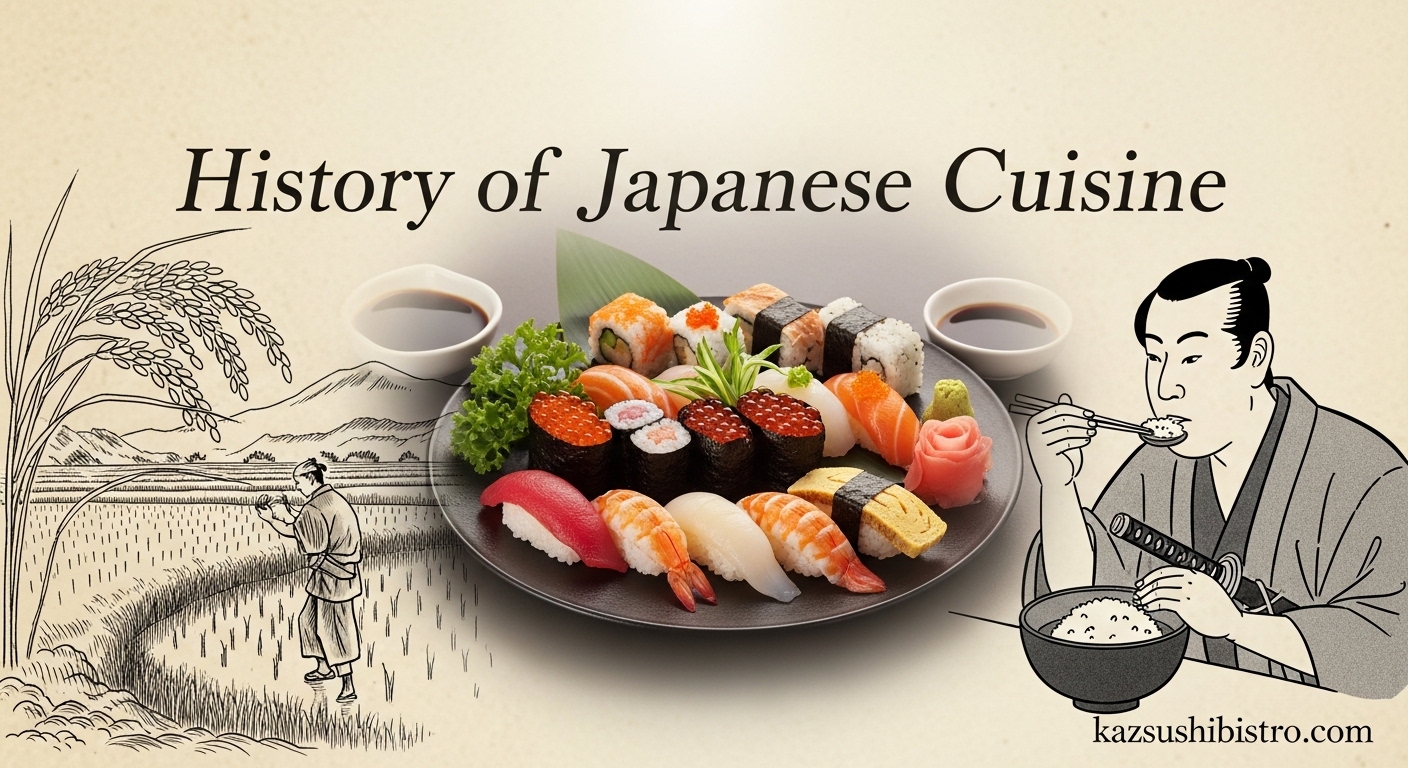
Japanese cuisine represents one of humanity’s most refined culinary traditions, earning UNESCO Intangible Cultural Heritage status in 2013. The journey from hunter-gatherer meals to global gastronomic phenomenon spans over 2,000 years of cultural evolution. Understanding this history reveals how geography, religion, trade, and politics shaped the food we recognize today.
Known as washoku (literally “Japanese eating”), this cuisine developed through distinct historical periods, each leaving indelible marks on ingredients, techniques, and philosophy. From the Jomon period’s wild harvests to the Edo period’s bustling street food culture, Japan’s culinary story reflects broader patterns of isolation and openness that defined the nation itself.
In this guide, we trace the complete evolution of the History of Japanese Cuisine across nine major historical periods. You’ll discover how Buddhism banned meat for twelve centuries, how Portuguese traders accidentally created tempura, and why sushi began as a fast-food street snack rather than haute cuisine.
Table of Contents
History of Japanese Cuisine: A Timeline Overview 2026
Japanese cuisine developed through distinct historical phases, each contributing essential elements to the culinary tradition we recognize today. The following periods trace this evolution from prehistoric times through modern globalization.
The Jomon Period: Before Rice (14,000 BCE – 300 BCE)
Long before rice became Japan’s defining staple, the archipelago’s earliest inhabitants lived as hunter-gatherers during the Jomon period. Named after the cord-marked pottery they created, these communities developed a diet based entirely on what nature provided without cultivation.
What Did Early Japanese People Eat?
Jomon diets centered on wild resources from land and sea. Archaeological evidence reveals extensive consumption of shellfish, wild boar, deer, nuts, berries, and edible roots. Coastal communities harvested abalone, sea urchin, and various fish species using early hooks and nets.
The invention of Jomon pottery around 14,000 BCE revolutionized food preparation. These durable clay vessels enabled boiling and stewing techniques previously impossible, expanding the edible food universe significantly. Pottery fragments show residues of fish oils and plant starches, suggesting early forms of stewed dishes.
Forest resources provided chestnuts, acorns, and walnuts, which required processing to remove bitterness. Early Jomon people developed sophisticated techniques for leaching tannins from acorns using water, transforming inedible nuts into storable food sources for winter months.
Early Fermentation Experiments
The Jomon period saw humanity’s earliest experiments with fermentation in Japan. While not as refined as later techniques, coastal communities discovered that buried fish developed interesting flavors over time. These accidental discoveries laid groundwork for the sophisticated fermentation culture that would define Japanese cuisine.
Without rice or soybeans, true fermented staples remained impossible. However, the environmental conditions of the Japanese archipelago—humid summers and specific microbial ecosystems—created perfect conditions for natural fermentation processes that later generations would harness deliberately.
The Yayoi Period: Rice Changes Everything (300 BCE – 300 CE)
The arrival of wet rice cultivation from continental Asia fundamentally transformed Japanese society and cuisine forever. This agricultural revolution, beginning around 300 BCE during the Yayoi period, established patterns that persist in Japanese food culture today.
Rice as Civilization’s Foundation
Wet rice farming required sophisticated irrigation systems, permanent settlements, and coordinated community labor. These demands shaped Japanese social structures while establishing rice as the dietary and spiritual center of the culture. Rice became currency, tribute, and religious offering simultaneously.
The Yayoi period introduced essential ingredients that now define Japanese cooking. Soybeans arrived alongside rice, enabling future development of miso, soy sauce, and tofu. These protein sources complemented rice’s amino acid profile, creating nutritionally complete meals without meat.
Archaeological sites from this period show rapid agricultural expansion. Paddy fields multiplied across western Japan’s suitable wetlands, while storage facilities multiplied to preserve harvests. This surplus enabled population growth and the eventual formation of complex societies and kingdoms.
The Birth of Narezushi
The earliest form of sushi emerged during this period as a practical preservation technique. Narezushi involved packing fish with salted rice and allowing natural fermentation to preserve the protein for months. The rice was originally discarded, serving only as a preservation medium for the fish.
This technique reflected practical necessity rather than culinary refinement. Without refrigeration, communities needed methods to store protein through harsh winters. The lactic acid produced by fermenting rice created an environment hostile to spoilage bacteria, effectively preserving fish without salt alone.
Regional variations developed quickly as different communities adapted the technique to local fish species. Lake Biwa’s freshwater fish, coastal mackerel, and mountain stream trout each received different treatment methods based on fat content and local microbial conditions.
Buddhist Influence: A Thousand Years Without Meat (538-1185 CE)
Buddhism’s arrival from Korea and China initiated the most profound transformation in Japanese dietary history. The religion’s prohibition against killing animals led to imperial meat bans that shaped Japanese cuisine for over twelve centuries.
The Meat Ban and Its Consequences
Emperor Tenmu issued Japan’s first official meat prohibition in 675 CE, banning consumption of cattle, horses, dogs, monkeys, and chickens. This edict, influenced by Buddhist teachings against taking life, gradually expanded through subsequent imperial decrees until meat essentially disappeared from Japanese tables.
The ban transformed Japan into a de facto vegetarian nation for nearly 1,200 years. Fish remained acceptable since Buddhism considered aquatic creatures differently, but land animal consumption became rare and socially stigmatized. This dietary restriction forced culinary creativity with plant-based ingredients.
Contrary to popular belief, the meat ban was never absolute. Hunters in remote mountain regions continued eating wild game. Imperial edicts were periodically ignored or relaxed during certain periods. However, the overall effect created a cuisine overwhelmingly dependent on plants, fish, and fermentation.
Shōjin Ryōri: Temple Cuisine Refined
Buddhist temples developed shōjin ryōri (devotion cuisine), transforming dietary restrictions into artistic expression. Monks created elaborate vegetarian meals using local seasonal ingredients, sophisticated knife techniques, and careful presentation. This temple cooking influenced all Japanese cuisine, not just religious communities.
Five principles guided shōjin ryōri preparation: avoiding animal products, using seasonal ingredients, minimizing waste, creating visual harmony, and expressing gratitude. These principles later expanded into general washoku philosophy, influencing home cooking and restaurant cuisine alike.
The five-color rule emerged during this period, requiring meals to include red, green, yellow, white, and black ingredients. This principle ensured nutritional variety while creating visually striking presentations. Temple kitchens became laboratories for developing umami-rich ingredients that compensated for absent meat flavors.
Miso, Soy Sauce, and Tofu Development
Buddhist vegetarianism drove innovation in fermented soy products. Tofu production techniques arrived from China during the Nara period (710-794 CE), providing essential protein without violating dietary restrictions. Buddhist monks refined tofu-making, developing regional styles that persist today.
Miso production advanced significantly during the Heian period (794-1185 CE). Originally a luxury import, miso became widely produced as temples and aristocratic households developed proprietary fermentation methods. The paste provided essential amino acids, vitamins, and the satisfying umami flavor missing from meatless diets.
Soy sauce emerged from the liquid byproduct of miso production. Initially considered inferior, this liquid seasoning eventually became valued for its versatility and complex flavor. By the Kamakura period (1185-1333 CE), distinct regional soy sauce styles were developing across Japan.
Chinese Cultural Influence: Chopsticks and Tea (600-900 CE)
While Buddhism shaped what Japanese people ate, broader Chinese cultural imports transformed how they ate it. The Tang dynasty’s sophisticated court culture provided templates for Japanese aristocratic dining that filtered down through society over centuries.
Chopsticks Replace Hands
Chopsticks arrived in Japan from China during the Kofun period (300-538 CE), initially as elite status symbols before spreading to general populations. By the Heian period, chopstick use distinguished Japanese dining from earlier customs of eating with hands or simple tools.
Japanese chopsticks developed distinct characteristics from Chinese originals. Shorter length, tapered ends, and different material preferences reflected Japanese aesthetics and practical needs. Lacquered chopsticks became essential tableware, with quality indicating social status.
Chopstick etiquette evolved into elaborate systems governing proper use. Rules about not sticking chopsticks vertically into rice (resembling funeral incense), passing food directly between pairs, or licking utensils developed during this period and remain important in Japanese culture today.
The Tea Ceremony’s Culinary Influence
Tea arrived from China during the Heian period, initially as a medicinal drink for Buddhist monks and aristocrats. The beverage gradually evolved into the sophisticated chanoyu (tea ceremony), which profoundly influenced Japanese cuisine beyond just beverages.
Tea ceremony required accompanying food, leading to development of kaiseki cuisine. Originally simple vegetarian meals served before tea, kaiseki evolved into elaborate multi-course dining that represents the pinnacle of Japanese culinary art. The emphasis on seasonality, presentation, and gratitude expressed through food originated here.
The concept of ichi-go ichi-e (one time, one meeting) emerged from tea ceremony philosophy. This principle holds that each gathering is unique and unrepeatable, demanding complete presence and appreciation. Applied to dining, this philosophy justifies the careful attention given to presentation, seasonal ingredients, and dining atmosphere.
Separating Dishes: The Hōchō Style
Chinese influence also brought the concept of serving individual dishes rather than communal plates. The hōchō style separated foods into distinct categories: rice, soup, and side dishes (okazu). This organization persists in the ichiju-sansai pattern (one soup, three sides) that defines traditional Japanese meals.
This structural organization enabled sophisticated nutritional balancing. Meals combined carbohydrate (rice), protein (fish, tofu, or legumes), vegetables, and fermented seasonings in harmonious proportions. The system remains visible in Japanese home cooking, bento boxes, and restaurant presentations today.
Portuguese Influence: The Unexpected Gateway (1543-1639)
European contact introduced ingredients and techniques that permanently altered Japanese cuisine. Portuguese traders and missionaries, arriving in 1543, brought foods that became so thoroughly integrated that most Japanese no longer recognize their foreign origins.
Tempura: From Portuguese Fasting Food to Japanese Icon
Tempura resulted from Portuguese influence during the 16th century. Portuguese sailors observed Catholic fasting days requiring abstinence from meat. They developed techniques for frying vegetables and fish in batter, which they introduced to Japan through Nagasaki trading posts.
Japanese cooks transformed the technique using sesame oil and lighter batter. Where Portuguese versions were heavy and filling, Japanese tempura became delicate, crispy, and focused on showcasing ingredient quality rather than hiding it. The dish evolved from foreign curiosity to beloved national specialty.
Tempura shops proliferated during the Edo period, particularly around Buddhist temples where meat-free eating remained common. The technique’s ability to make vegetables delicious and satisfying helped maintain Buddhist dietary traditions while expanding culinary possibilities within those constraints.
Kasutera and Other Sweet Imports
The Portuguese introduced castella sponge cake (kasutera), which Japanese confectioners transformed into a specialty product. Originally made with imported sugar, kasutera became associated with Nagasaki and evolved into a refined sweet requiring precise technique and quality ingredients.
Other Portuguese contributions included bread (called pan from Portuguese pão), confections made from sugar and eggs, and new preservation techniques. Many words in modern Japanese food vocabulary derive from Portuguese: tempura (possibly from tempero meaning seasoning), konpeitō (sugar candies), and bolo (a type of cake).
Shichimi Togarashi and Chili Peppers
Chili peppers arrived via Portuguese trading routes, revolutionizing Japanese spice culture. The seven-spice blend shichimi togarashi emerged, combining chili with sesame, nori, orange peel, and other aromatics. This seasoning became essential for noodles, rice dishes, and hot pot cooking.
The introduction of chili peppers predates the better-known story of peppers arriving with Korean invasions. Portuguese black ships brought New World crops including chilies, potatoes, and corn, though many required centuries before achieving widespread culinary adoption in Japan.
The Edo Period: Street Food and Modern Sushi (1603-1868)
The Edo period witnessed explosive urban growth, peaceful stability, and the emergence of recognizable modern Japanese cuisine. Tokugawa Ieyasu’s unification of Japan created conditions for unprecedented culinary innovation, particularly in the new capital of Edo (modern Tokyo).
The Birth of Modern Sushi
Edomae sushi emerged during the 1820s as fast food for busy urban workers. Hanaya Yohei, credited as sushi’s inventor, developed nigirizushi—hand-pressed vinegar-seasoned rice topped with fresh fish. This technique eliminated the months-long fermentation of narezushi, reducing preparation to minutes.
Edomae literally means “in front of Edo,” referring to fish caught in Tokyo Bay. Chefs used vinegar to preserve fresh fish for same-day consumption rather than fermentation for long storage. This innovation transformed sushi from preserved food to fresh delicacy, though it remained affordable street food rather than luxury dining.
Sushi stalls proliferated throughout Edo, serving customers who lacked cooking facilities in their cramped urban lodgings. The mobile nature of early sushi—eaten quickly while standing—explains why even modern sushi restaurants often lack extensive seating. This origin as working-class food contrasts with sushi’s current global luxury status.
Tempura Shops and Specialized Cuisine
Tempura evolved from home cooking to restaurant specialty during the Edo period. Specialized tempura shops opened, developing refined techniques for batter consistency, oil temperature control, and ingredient selection. These establishments established tempura as legitimate cuisine rather than foreign novelty.
The best tempura shops operated near major temples, serving Buddhist monks and pious laypeople who maintained vegetarian diets. This location pattern reinforced the meat-free tradition while demonstrating that vegetarian cuisine could achieve sophistication equal to any meat-based cooking.
Soba Culture and Ramen Roots
Buckwheat noodles (soba) became Edo period staples, with specialized shops serving diverse preparations. Zaru soba (cold with dipping sauce), kake soba (in hot broth), and tempura soba each attracted devoted customers. Soba shops proliferated to the point that Edo had one shop per 800 residents by period’s end.
Chinese noodle influences merged with soba culture, creating precedents for later ramen development. Wheat noodles (udon) also gained popularity, particularly in western Japan. The pattern of specialized noodle shops serving quick, affordable meals established the template that ramen would follow in the 20th century.
Urban Food Culture Explosion
Edo’s population exceeded one million by 1721, making it the world’s largest city. This concentration created unprecedented demand for prepared foods, specialty ingredients, and dining entertainment. Cookbooks proliferated, restaurants diversified, and food culture became central to urban identity.
The kaiseki tradition formalized during this period, establishing standards for multi-course dining that remain authoritative today. Tea ceremony schools codified their culinary practices, while urban restaurants competed to offer innovative interpretations within traditional frameworks.
Regional cuisines consolidated as travel increased and regional products reached Edo markets. Kyoto’s refined vegetarian traditions, Osaka’s merchant-class comfort food, and Edo’s working-class innovations each developed distinct identities while influencing each other through increased connectivity.
Meiji Restoration: Western Influence Returns (1868-1945)
The Meiji Restoration ended Japan’s isolation and initiated rapid modernization across all aspects of society. Food culture transformed dramatically as the new government actively promoted Westernization and lifted centuries-old dietary restrictions.
The Emperor Eats Beef: Ending the Meat Ban
Emperor Meiji publicly ate beef in 1872, signaling official acceptance of meat consumption. This dramatic gesture ended twelve centuries of Buddhist dietary restrictions and encouraged Japanese citizens to adopt Western meat-eating habits. The government viewed meat consumption as essential for physical strength and military preparedness.
The transition faced resistance. Many Japanese found beef and pork flavors unpleasant after generations of vegetarian conditioning. Buddhist temples protested the abandonment of traditional values. However, determined government promotion gradually normalized meat as everyday food.
New dishes emerged specifically to make meat palatable to Japanese tastes. Tonkatsu (breaded pork cutlet) adapted European schnitzel techniques to local ingredients. Gyudon (beef bowl) made beef affordable by combining thin slices with rice in fast, casual settings. These creations bridged traditional and Western culinary worlds.
Yoshoku: Western Food Japanese Style
Yoshoku (Western food) developed as a distinct category adapting European dishes to Japanese palates and available ingredients. Curry rice (kare raisu), hamburg steak (hambagu), and potato croquettes (korokke) became beloved “Western” dishes bearing little resemblance to their European origins.
Curry exemplifies this adaptation. British naval curry arrived in Japan through contact with the Royal Navy. Japanese cooks thickened the sauce, made it sweeter, and served it over rice rather than with bread. The dish became so thoroughly domesticated that most Japanese consider curry a native invention.
Yoshoku restaurants proliferated, offering affordable “Western” dining to middle-class urbanites. These establishments provided social cachet of modernity without requiring authentic European ingredients or techniques. The category remains popular today, representing comfort food for multiple generations.
Western Ingredients and Techniques
Beyond prepared dishes, Western influence introduced fundamental ingredients now considered essential. Butter, milk, and cheese entered Japanese cooking despite initial resistance to dairy flavors. Beef stock replaced traditional dashi in some Western-influenced preparations. Wheat consumption increased dramatically.
Western cooking techniques including baking, deep-frying in breadcrumbs, and roux-based sauces joined the Japanese culinary repertoire. Kitchen equipment evolved with cast iron stoves replacing charcoal braziers, and Western-style ovens enabling new preparations previously impossible.
Post-War Era: Instant Foods and Global Spread (1945-1980s)
Japan’s defeat in World War II triggered severe food shortages followed by unprecedented economic growth. This turbulent period created iconic Japanese foods while establishing the foundation for global Japanese cuisine popularity.
Instant Ramen: The Invention That Changed Everything
Momofuku Ando invented instant ramen in 1958, creating one of history’s most influential food products. Working in a shed behind his Osaka home, Ando developed flash-frying noodles that could be reconstituted with boiling water, providing cheap, convenient, satisfying meals for busy workers.
Ando’s invention addressed genuine post-war need. Food shortages remained severe, and American wheat imports created surplus that needed productive use. Instant ramen transformed surplus wheat into affordable calories that tasted authentically Japanese despite foreign ingredient origins.
The product evolved rapidly. Cup Noodle, launched in 1971, eliminated even the need for separate bowls. Flavor varieties multiplied, quality improved, and global export began. Today, over 100 billion servings of instant ramen are consumed annually worldwide, making it Japan’s most successful culinary export.
Food Shortages and Wheat Dependency
Post-war American occupation brought bread and wheat-based foods as humanitarian aid. School lunch programs featured bread and milk, introducing new generations to flavors their grandparents rejected. Wheat gradually replaced rice as Japan’s defining staple in everyday perception, if not actual consumption.
Ramen culture exploded during this period, transforming from obscure Chinese-Japanese hybrid to national obsession. Street vendors sold affordable bowls to hungry workers rebuilding the economy. Regional variations proliferated as different cities developed distinct styles: tonkotsu in Fukuoka, miso in Sapporo, shoyu in Tokyo.
Convenience Stores and Industrial Food
Japan’s first convenience store opened in 1969, initiating a retail revolution that changed how Japanese people eat. Seven-Eleven, Lawson, and FamilyMart stores proliferated, offering pre-made bento boxes, rice balls (onigiri), and hot prepared foods 24 hours daily.
These stores democratized access to varied, reasonably quality food without cooking skills or time. Office workers, students, and busy families increasingly relied on convenience store meals. The retailers developed sophisticated supply chains delivering fresh products multiple times daily, maintaining quality impossible in earlier eras.
Modern Japanese Cuisine: UNESCO Heritage and Global Influence 2026
Contemporary Japanese cuisine balances preservation of traditional washoku principles with constant innovation and global engagement. This dynamic tension produces one of the world’s most respected culinary traditions, recognized formally by UNESCO in 2013.
UNESCO Intangible Cultural Heritage Recognition
In December 2013, UNESCO designated washoku as an Intangible Cultural Heritage of Humanity. This recognition highlighted not specific dishes but the cultural system surrounding Japanese eating: respect for nature, social cohesion through shared meals, and the health benefits of traditional dietary patterns.
The UNESCO citation specifically noted washoku’s connection to New Year celebrations, rice cultivation cycles, and regional biodiversity preservation. This recognition validated traditional practices against modernization pressures, encouraging younger Japanese to value their culinary heritage.
Washoku Principles in Contemporary Practice
Four core principles define washoku: using diverse fresh ingredients, nutritional balance through the ichiju-sansai structure, representing natural beauty and seasons in presentation, and connecting food with annual festivals and lifecycle events. These principles guide both home cooking and high-end dining.
The concept of shun (seasonal peak) remains central. Ingredients are considered best when naturally harvested at specific times—spring bamboo shoots, summer eggplant, autumn persimmons, winter cod. This philosophy connects dining to natural cycles while ensuring optimal flavor and nutrition.
Umami awareness, recognized scientifically in the 20th century, validated centuries of Japanese culinary intuition. The fifth taste, identified by Japanese chemist Kikunae Ikeda in 1908, explains why dashi-based cuisine satisfies without heavy meat reliance. Modern Japanese cooking leverages this understanding precisely.
Regional Cuisine Diversity
Japan’s distinct regions maintain unique culinary identities developed over centuries. Kyoto’s refined vegetarian traditions reflect temple culture and imperial court aesthetics. Osaka’s hearty merchant-class cooking emphasizes wheat-based street foods. Hokkaido’s dairy-heavy cuisine developed from settler agriculture.
Coastal regions feature specific seafood preparations: Sanriku’s oysters, Toyama’s firefly squid, Tottori’s snow crab. Mountain regions developed distinct preservation techniques: Nagano’s pickled vegetables, Tohoku’s fermented mountain vegetables. These regional variations constitute Japan’s culinary biodiversity.
Travel television programs and food tourism have renewed interest in these regional specialties. Young chefs increasingly return to ancestral regions, combining traditional techniques with contemporary presentation. This regional renaissance preserves diversity while creating new economic opportunities in rural areas.
Frequently Asked Questions
What is the history of Japanese cuisine?
Japanese cuisine spans over 2,000 years, evolving from Jomon hunter-gatherer diets through rice cultivation in the Yayoi period. Buddhist vegetarianism shaped ingredients for twelve centuries, while Chinese imports brought chopsticks and tea ceremony culture. Portuguese traders introduced tempura in the 16th century, and the Edo period created modern sushi as street food. The Meiji Restoration ended meat bans and introduced Western influences, while post-WWII innovation produced instant ramen. Today, washoku is recognized as UNESCO Intangible Cultural Heritage.
How did Buddhism influence Japanese food?
Buddhism introduced meat prohibitions that lasted from 675 CE until the Meiji Restoration in 1868. This twelve-century ban created shōjin ryōri (temple vegetarian cuisine) and drove innovation in tofu, miso, soy sauce, and fermentation techniques. The five-color rule and emphasis on seasonal ingredients developed in temples before spreading to general cuisine. Buddhist principles of gratitude and non-waste remain embedded in Japanese food culture today.
What did the Japanese eat before rice?
Before rice arrived around 300 BCE, Jomon period inhabitants relied on hunting, fishing, and gathering. Their diet included wild boar, deer, shellfish, fish, chestnuts, acorns, berries, and roots. The invention of pottery enabled boiling and stewing techniques. Without agriculture, populations remained smaller and settlements less permanent than later rice-based communities.
When was sushi invented?
Sushi originated as narezushi during the Yayoi period (300 BCE – 300 CE), using fermentation to preserve fish with rice. Modern nigirizushi was invented in Edo (Tokyo) during the 1820s by Hanaya Yohei and others. This Edomae sushi used fresh fish on vinegar-seasoned rice, eliminating months of fermentation. Originally fast food for urban workers, sushi evolved into haute cuisine through the 20th century.
How did Western influence change Japanese cuisine?
Western influence during the Meiji Restoration (1868) ended twelve centuries of Buddhist meat prohibition. Emperor Meiji publicly ate beef in 1872, encouraging meat consumption for national strength. New dishes like tonkatsu, gyudon, and curry rice (kare raisu) emerged, blending Western ingredients with Japanese techniques. Yoshoku (Western-style Japanese food) became a distinct category, and wheat-based foods proliferated through post-WWII American influence.
What is washoku?
Washoku (和食) literally means Japanese eating and refers to the traditional dietary culture of Japan. It is characterized by respect for diverse fresh ingredients, nutritional balance through the ichiju-sansai structure (one soup, three sides), natural beauty in presentation, and connection to annual festivals. UNESCO designated washoku as Intangible Cultural Heritage in 2013, recognizing its cultural significance beyond mere recipes.
What is the oldest form of sushi?
Narezushi is the oldest form of sushi, originating during the Yayoi period (300 BCE – 300 CE). This preservation technique packed fish with salted rice and allowed natural fermentation over months. The rice was originally discarded, serving only to preserve the fish through lactic acid production. Narezushi still exists in regional varieties like funazushi from Lake Biwa, representing the direct ancestor of all modern sushi forms.
Conclusion
The History of Japanese Cuisine reveals a remarkable story of cultural adaptation and philosophical consistency. Over two millennia, Japan transformed foreign influences—from Chinese rice cultivation to Portuguese frying techniques to Western meat consumption—into distinctively Japanese expressions that honored traditional values.
Four themes persist throughout this history: respect for seasonal ingredients, technical precision in preparation, aesthetic presentation, and deep cultural meaning attached to eating. Whether in Jomon pottery stews, Buddhist temple vegetarianism, or Edo period street food, these principles guided culinary development.
Understanding this history enriches every Japanese meal you encounter. The sushi you enjoy today connects directly to Edo period innovation. The umami in your miso soup reflects centuries of Buddhist vegetarian experimentation. The tempura on your plate represents 16th-century Portuguese influence. Each bite carries thousands of years of cultural evolution.
As Japanese cuisine continues evolving in 2026, balancing preservation with innovation remains the central challenge. Washoku’s UNESCO recognition validates traditional practices, even as Japanese chefs innovate with new ingredients and techniques. This dynamic tension between respect for heritage and openness to change promises continued culinary excellence for generations to come.