
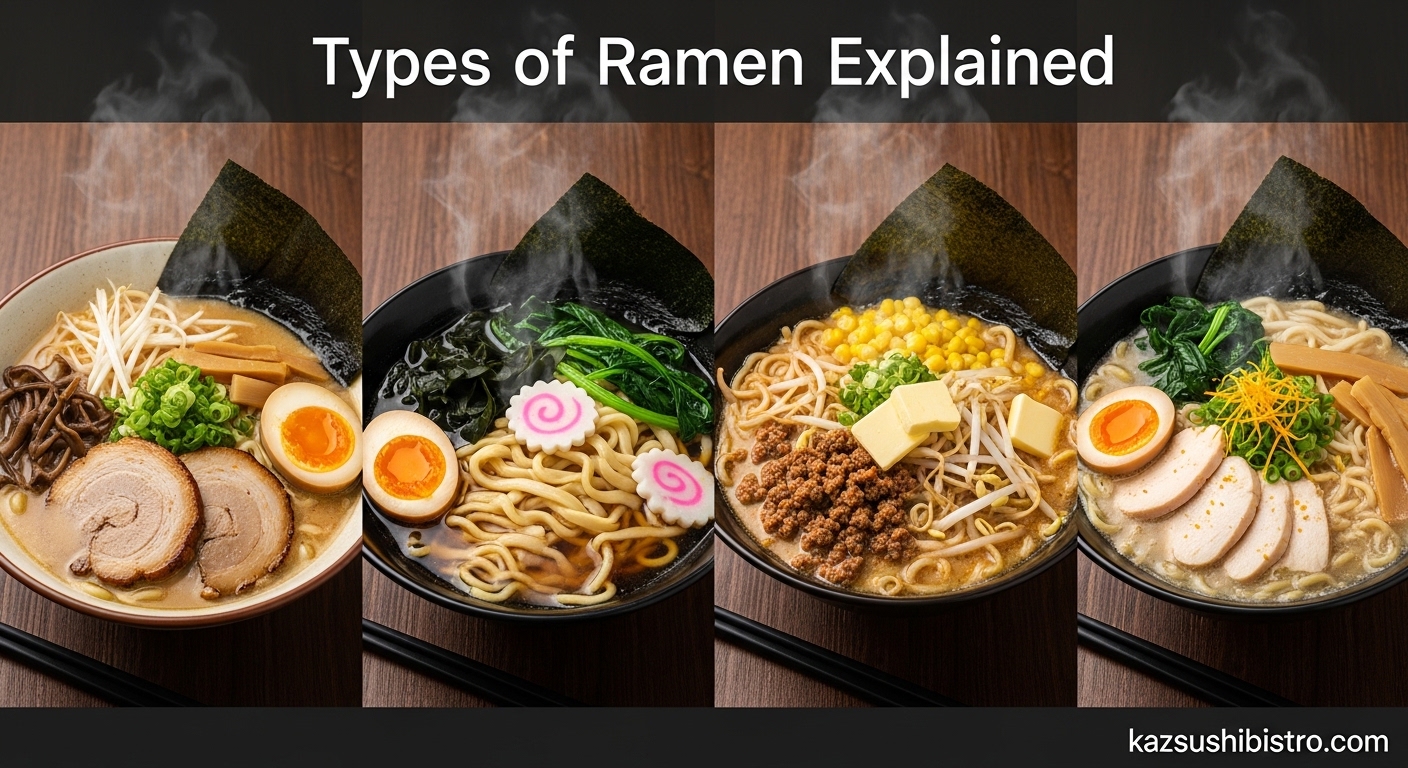
Walking into a ramen shop for the first time can feel overwhelming. The menu offers a dizzying array of options, each with unfamiliar Japanese names and descriptions that hint at flavors you are not quite sure about. I remember my first visit to a proper ramen-ya in Tokyo, staring at the ticket machine, hoping I would not accidentally order something too spicy or too rich for my morning stomach.
Here is the simple answer that would have saved me that anxiety. The four main types of ramen are shio (salt), shoyu (soy sauce), miso (fermented bean paste), and tonkotsu (pork bone broth). These categories describe how the broth is seasoned and prepared, giving you a clear map to navigate any ramen menu with confidence.
At KAZ Sushi Bistro, we believe understanding these differences transforms your dining experience. You move from randomly pointing at menu items to making intentional choices that match your mood and palate. This guide breaks down every major ramen type, explains how broths are actually constructed, and gives you practical tips for ordering at any Japanese restaurant.
Table of Contents
Understanding Ramen: The Building Blocks 2026
Before diving into specific types, you need to understand how ramen is actually built. This knowledge clears up the most common confusion I see among diners: the difference between stock and tare.
Stock vs Tare: The Foundation and the Seasoning
Every ramen broth consists of two components. The stock (also called broth base) is the liquid foundation made by simmering bones, meat, seafood, or vegetables for hours. The tare is the concentrated seasoning sauce added to the stock just before serving, which defines the final flavor profile.
Think of it like coffee. The stock is your brewed coffee, while the tare is whatever you add to flavor it, milk, sugar, vanilla. The same pork stock can become completely different ramen depending on whether shio, shoyu, or miso tare is added.
This distinction matters because it explains why tonkotsu is different from the other three main types. Shio, shoyu, and miso are tare types, meaning they describe the seasoning added to the stock. Tonkotsu is a stock type, meaning it describes the broth base itself, made specifically from pork bones.
Broth Heaviness: Kotteri vs Assari
Another way ramen is classified is by heaviness. Kotteri describes rich, heavy, opaque broths that coat your mouth, like the creamy tonkotsu you see in photographs. Assari describes light, clear, delicate broths that are easy to sip, typical of traditional shio ramen.
This classification is independent of flavor. You can have a rich shoyu or a light miso. When ordering, knowing whether you want something filling and hearty (kotteri) or clean and refreshing (assari) helps narrow your choices quickly.
The Noodles: Kansui and Texture
Ramen noodles are made from wheat flour, water, salt, and kansui, an alkaline mineral water that gives the noodles their characteristic yellow color and springy texture. The kansui also creates that satisfying chewiness that separates proper ramen noodles from pasta or instant noodles.
Noodle thickness and shape vary by region and broth type. Thin, straight noodles pair well with lighter broths like shio. Thick, wavy noodles hold up better in rich broths like miso or tonkotsu, catching more soup with each bite.
Shio Ramen (Salt-Based)
Shio means salt in Japanese, and this is the original ramen style, tracing back to the early 1900s when ramen first appeared in Japan. It is the lightest and most delicate of the four main types, offering a pure expression of the underlying stock without heavy seasoning masks.
Flavor Profile and Characteristics
Shio ramen presents a clear, golden broth that lets you see the noodles and toppings distinctly through the soup. The flavor is subtle, savory, and refined, showcasing the quality of the stock itself, whether chicken, seafood, or vegetable-based. Salt enhances rather than dominates.
The tare for shio ramen is typically made from sea salt, sometimes combined with dried seafood like scallops or anchovies to add umami depth without clouding the broth. The result is a clean, almost consomme-like experience that many Japanese people prefer for breakfast or as a refreshing meal on hot days.
Regional Origins and Variations
Hakodate, in Hokkaido, is considered the birthplace of shio ramen in Japan. The style developed from Chinese noodle soups adapted to local tastes, using the abundant local seafood to create light, flavorful broths. Hakodate shio remains the classic reference point for this style.
Chicken-based shio has gained popularity recently, especially in Tokyo, where chefs use whole chickens or specifically chicken feet to create rich yet clear broths. This tori paitan (chicken white broth) offers more body than traditional shio while maintaining the signature clarity.
Who Should Order Shio?
Choose shio if you appreciate delicate flavors, want something light and not overly filling, or are new to ramen and want to taste the fundamental elements without overwhelming intensity. It is also the best choice if you plan to eat multiple bowls in one day, a practice known as tabe-aruki or eating while walking from shop to shop.
Shoyu Ramen (Soy Sauce-Based)
Shoyu is the Japanese word for soy sauce, and this style represents the most widely consumed ramen in Japan. When most Japanese people picture ramen, they picture shoyu: a brown, fragrant broth with that unmistakable soy sauce aroma rising from the bowl.
Flavor Profile and Characteristics
Shoyu ramen offers a complex, savory flavor built on layers of fermented soy, often with hints of dried fish, seaweed, and sometimes a touch of sweetness from mirin. The color ranges from light amber to deep mahogany depending on the soy sauce variety used and how much tare is added.
The tare is typically made from koikuchi (regular dark) soy sauce combined with sake, mirin, and various aromatics. Some shops add niboshi (dried sardines) or katsuobushi (dried bonito flakes) to the tare for extra depth. The result is an umami bomb that hits immediately but finishes clean.
Tokyo-Style: The Standard Bearer
Tokyo-style shoyu is the classic form, served with medium-thick, curly noodles that trap the broth. The base stock combines chicken and various fish dashi, creating a balanced, complex flavor. Tokyo shoyu often includes a slab of chashu pork, menma (fermented bamboo shoots), and half an ajitsuke tamago (marinated soft-boiled egg).
This style spread throughout Japan as ramen became a national food in the post-war period. Even today, when ramen shops outside Japan serve something simply called “ramen” without specification, they are usually serving something in the Tokyo shoyu tradition.
Who Should Order Shoyu?
Shoyu is the safest bet for first-timers who want an authentic experience without extremes. It offers more complexity than shio but less heaviness than tonkotsu. If you enjoy Chinese food or generally savory flavors, shoyu will feel familiar and satisfying.
Miso Ramen (Fermented Bean Paste)
Miso ramen is the relative newcomer among the four main types, born in Hokkaido in the 1950s when a customer asked a shop owner to add noodles to their miso soup. This accidental creation became a beloved style, especially suited to cold climates where a hearty, warming bowl provides genuine comfort.
Flavor Profile and Characteristics
Miso ramen delivers a robust, nutty, slightly sweet flavor with substantial body. The fermented soybean paste adds depth and complexity that evolves as you eat, with different notes appearing as the temperature cools slightly. It is the most “rustic” tasting of the main ramen types.
The broth is typically chicken or pork-based, sometimes with seafood elements, enriched with miso tare added at the end of cooking rather than just before serving. This integration allows the miso to meld with the stock, creating a unified, hearty soup that clings to noodles and coats your palate.
Sapporo: The Miso Capital
Sapporo, Hokkaido’s largest city, remains the spiritual home of miso ramen. The local style features thick, wavy noodles that hold up to the rich broth, stir-fried vegetables (cabbage, bean sprouts, corn), and often a pat of butter floating on top. This combination creates an intensely satisfying meal that fuels workers through harsh winters.
The Sapporo style has spread across Japan, with variations including spicy miso (karé miso) and combinations with seafood. Some shops offer hokkaido miso made specifically with locally produced soybean paste, which tends to be darker and more intense than varieties from other regions.
Who Should Order Miso?
Miso is perfect if you want something filling and warming, enjoy fermented flavors like in Korean doenjang or Chinese doubanjiang, or are dining in cold weather. It is also the most customizable type, spicy, buttery, or loaded with vegetables, making it ideal if you like to personalize your order.
Tonkotsu Ramen (Pork Bone Broth)
Tonkotsu is where I need to clear up the most common confusion I hear from diners. Tonkotsu (豚骨, pork bones) is completely different from tonkatsu (豚カツ, breaded pork cutlet). The former is a rich, milky pork bone broth from Kyushu. The latter is a fried pork dish served with rice. They share the character for pork (豚) but are unrelated dishes.
The Science of the Creamy Broth
Tonkotsu broth achieves its distinctive white, opaque appearance through hours of vigorous boiling. Pork bones, particularly trotters and hocks rich in collagen and fat, are boiled at a rolling boil for 12 to 18 hours. This emulsifies the fat and gelatin into the liquid, creating a creamy, almost milk-like soup.
The result is a paitan (cloudy broth) as opposed to the chintan (clear broth) of shio and shoyu styles. When done correctly, tonkotsu broth should coat your chopsticks and cling to noodles. The mouthfeel is substantial and rich, delivering an intense pork flavor that dominates the bowl.
Hakata-Style: The Original Tonkotsu
Hakata, a district in Fukuoka city on Kyushu island, is the home of tonkotsu ramen. The local style is uncompromising: pure pork bone broth, ultra-thin straight noodles that cook in seconds, minimal toppings (typically just chashu, scallions, and pickled ginger), and optional mayu (black garlic oil) for depth.
Hakata shops traditionally offer kaedama, a second serving of noodles you can add to your remaining broth. This practice acknowledges that the broth is the star, worth extending even after the first noodle portion is gone. The thin noodles are specifically chosen because they do not dilute the intense broth as much as thick noodles would.
Modern Tonkotsu Variations
While purists stick to the Hakata template, many modern shops blend tonkotsu stock with other bases. Tonkotsu-shoyu combines the creamy pork broth with soy sauce tare. Tonkotsu-miso adds miso to the pork base for an even heartier bowl. These fusion styles have helped spread tonkotsu’s popularity beyond Japan.
Who Should Order Tonkotsu?
Choose tonkotsu if you love rich, intense flavors, want a substantial meal that will keep you full for hours, or are a fan of pork in general. It is not the best choice if you prefer light meals, are watching your fat intake, or are sensitive to strong smells, as proper tonkotsu has a distinct pork bone aroma that some find challenging.
Regional Ramen Styles Worth Knowing
Beyond the four main categories, Japan has developed dozens of regional styles that reflect local ingredients and preferences. Here are the most significant ones to know.
Tokyo (Shoyu Tradition)
As mentioned, Tokyo-style shoyu represents the baseline Japanese ramen experience. The balance of chicken and seafood dashi, dark soy sauce tare, and medium curly noodles set the standard that other regions define themselves against.
Sapporo (Miso and Innovation)
Sapporo’s cold climate produced the hearty miso style, but the city is also known for innovation. The stir-fried vegetable topping method (yakisaba) and the butter-and-corn combination are Sapporo signatures you will rarely find elsewhere.
Hakata (Tonkotsu Perfection)
Hakata represents tonkotsu at its most uncompromising. The pure pork broth, thin noodles, kaedama tradition, and minimal toppings create an intense, focused experience. Ippudo and Ichiran, two chains that have expanded globally, both originated in Hakata.
Kitakata (Flat Noodles and Light Shoyu)
Kitakata in Fukushima prefecture is famous for its flat, curly noodles and light shoyu broth. The local water produces unique noodle texture, and the shops often open early morning, serving as breakfast spots for locals.
Tsukemen (Dipping Ramen)
Tsukemen serves noodles and broth separately. You dip cold or room-temperature noodles into a concentrated, often warmer broth, then slurp. The broth is intentionally stronger than standard ramen soup since it is not meant to be drunk directly. This style is especially popular in summer or for those who want a more intense flavor experience.
Ramen Toppings and What They Add
Toppings transform a basic bowl into a complete meal. Understanding the standard options helps you customize your order and appreciate the balance chefs construct.
Chashu (Braised Pork)
Chashu is thinly sliced braised pork belly or shoulder, marinated in soy sauce, sake, and sugar until tender. It adds protein, richness, and sweet-savory depth. Some shops offer chicken chashu or duck as alternatives.
Ajitsuke Tamago (Marinated Egg)
The marinated soft-boiled egg with its custardy yolk and soy-stained exterior is perhaps the most beloved topping. The ajitsuke tamago adds richness, texture contrast, and visual appeal. Many diners consider a bowl incomplete without it.
Menma (Fermented Bamboo Shoots)
Menma provides crunch and earthy flavor. These bamboo shoots are fermented in brine, giving them a distinctive tang that cuts through rich broth. They are standard in shoyu and shio ramen.
Nori (Seaweed)
Dried seaweed sheets add oceanic umami and a textural element that softens as it contacts the broth. Nori is particularly common in Tokyo-style shoyu.
Negi (Scallions)
Fresh scallions provide color, sharpness, and freshness that balances heavy broths. They are standard across virtually all ramen types.
Other Common Toppings
Bean sprouts add crunch and bulk. Corn and butter are Sapporo signatures. Narutomaki, the fish cake with the pink spiral, is more common in anime than in serious ramen shops but still appears. Spicy rayu (chili oil) is offered as a condiment at many tonkotsu shops.
How to Order Ramen at a Restaurant
Armed with knowledge of the four main types, here is how to translate that into confident ordering.
Reading the Menu
Most ramen menus organize by the tare or stock type first. Look for the keywords: shio, shoyu, miso, tonkotsu. Some menus use the English translations (salt, soy sauce, miso, pork bone) or a combination.
Pay attention to descriptors like “rich” (kotteri), “light” (assari), “spicy” (karé), or “mild.” These indicate variations within the main types. A “rich shoyu” will be more intense than standard shoyu, while a “light tonkotsu” is a less heavy version of the classic.
Choosing by Preference
If you want something light and clean: Order shio or assari shoyu. If you want balanced umami: Order standard shoyu. If you want hearty and warming: Order miso. If you want intense and rich: Order tonkotsu.
For first-timers at a new shop, I recommend starting with their signature style, usually indicated on the menu with a star or “recommended” note. This represents the chef’s best work.
Customization Options
Many shops offer noodle firmness options: futsu (standard), katame (firm), or yawame (soft). Firmer noodles work better in rich broths that would otherwise overcook them.
Toppings are usually addable for extra cost. Extra chashu, a flavored egg, or additional nori are common upgrades. At tonkotsu shops, asking for kaedama gets you that second noodle serving.
Condiments on the table typically include garlic presses, chili oil, and vinegar. These are for adjusting flavor to your taste, but try the broth as served first to appreciate the chef’s intended balance.
FAQ: Common Questions About Ramen Types
What are the 4 types of ramen?
The four main types of ramen are shio (salt-based), shoyu (soy sauce-based), miso (fermented bean paste), and tonkotsu (pork bone broth). Shio, shoyu, and miso are seasonings (tare) added to the stock, while tonkotsu refers to the pork bone stock itself. These four categories form the foundation of Japanese ramen culture and appear on virtually every ramen menu in Japan and internationally.
Is ramen good for high cholesterol?
Ramen can be challenging for those managing high cholesterol, particularly tonkotsu ramen which contains significant fat from pork bones. The emulsified fat in tonkotsu broth contributes to its creamy texture but also increases saturated fat content. Lighter options like shio or assari shoyu ramen are better choices, as they use clearer broths with less fat. Requesting less oil and skipping the chashu pork topping can also help make ramen more suitable for cholesterol-conscious diners.
Can a diabetic eat ramen?
Diabetics can enjoy ramen with some considerations. The primary concern is the carbohydrate content from wheat noodles, which can affect blood sugar levels. Opting for smaller portions, requesting extra vegetables, or choosing tsukemen (dipping ramen) where you control the noodle-to-broth ratio can help. Shio and shoyu broths are generally lower in calories and sugar than miso-based varieties. Some shops now offer low-carb noodle alternatives made from konjac or soy.
Is ramen soup ok for acid reflux?
Ramen can trigger acid reflux depending on the type and individual sensitivity. Rich, fatty broths like tonkotsu are more likely to cause issues than lighter varieties. Spicy ramen and those with heavy garlic or onion content can also exacerbate symptoms. Shio ramen is typically the safest option for acid reflux sufferers, being light, clear, and minimally seasoned. Avoiding late-night ramen consumption and eating slowly can also help prevent discomfort.
Conclusion: Your Ramen Journey Starts Here
Understanding types of ramen explained here opens up a world of dining experiences. You now know that shio offers delicate clarity, shoyu delivers balanced umami, miso provides hearty comfort, and tonkotsu brings intense richness. You understand the difference between stock and tare, between kotteri and assari, between chintan and paitan.
More importantly, you have a framework for ordering confidently. When you walk into any ramen shop, you can read the menu with understanding, choose based on your preferences, and customize intelligently. The anxiety I felt at that Tokyo ticket machine can be replaced with the excitement of exploring a well-loved culinary tradition.
At KAZ Sushi Bistro, we celebrate the diversity of Japanese cuisine, from delicate sushi to hearty bowls of ramen. We invite you to visit and experience these flavors firsthand. Whether you are a shio purist or a tonkotsu devotee, there is a perfect bowl waiting for you. The best way to truly understand ramen types is to taste them, so start your exploration today.