
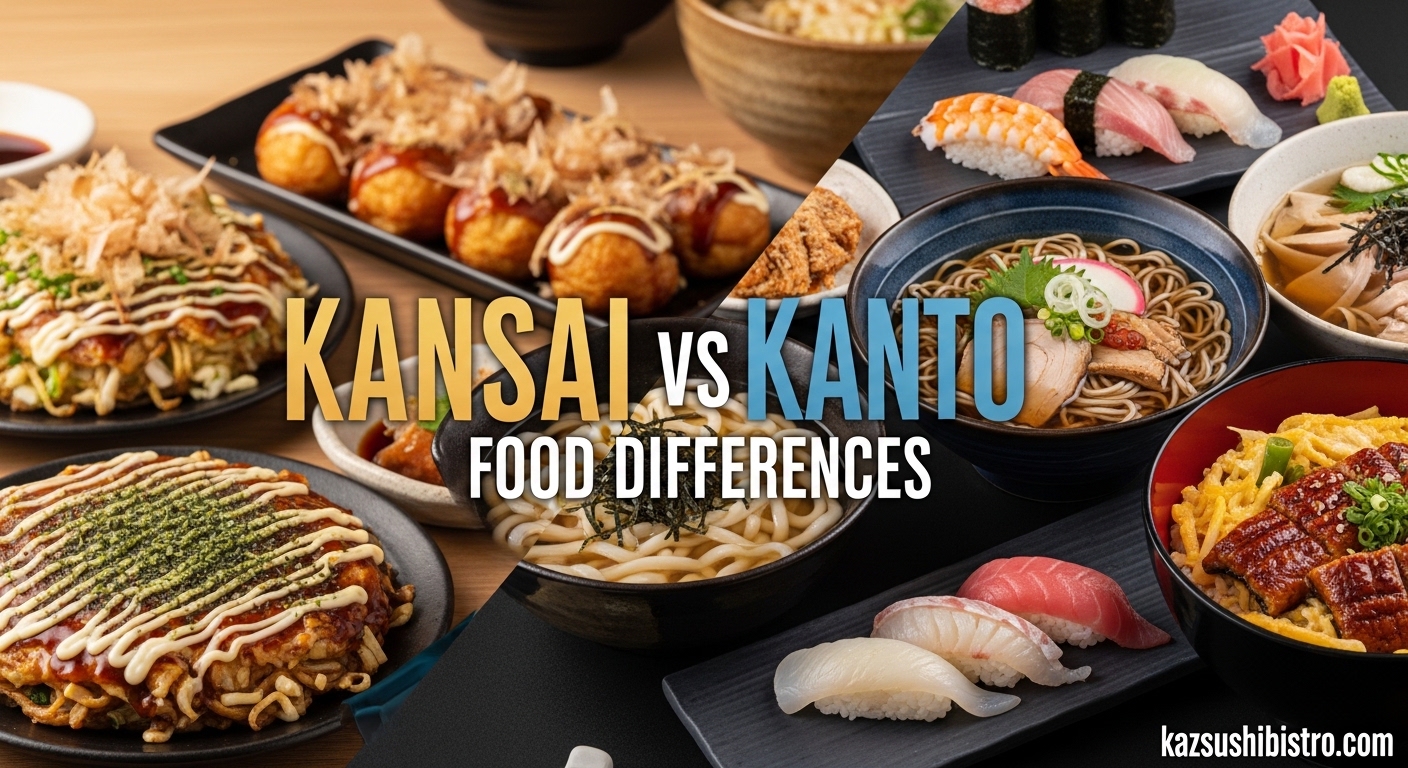
When you travel between Tokyo and Osaka, you will notice something surprising. The same dish tastes completely different depending on which side of Japan you are eating it on. Kansai vs Kanto food differences run deeper than just seasoning preferences. They reflect centuries of distinct culture, history, and social class influences that shaped how millions of Japanese people eat every single day.
The fundamental divide is simple but profound. Kanto cuisine, centered around Tokyo, favors stronger, bolder flavors with heavier use of dark soy sauce and salt. Kansai cuisine, encompassing Osaka and Kyoto, prefers lighter, more delicate seasoning that lets the natural umami of dashi broth shine through. This single difference affects everything from your morning toast to your evening sushi.
I spent months exploring both regions, talking to chefs, home cooks, and food historians. What I discovered changed how I understand Japanese food entirely. In this guide, I will walk you through the specific differences you need to know. Whether you are planning a trip to Japan or simply curious about regional cuisine, you will learn exactly what makes these two food cultures so distinct.
Table of Contents
The Core Difference: Strong vs Subtle Flavors 2026
Kanto food hits your palate with intensity. Chefs in Tokyo and the surrounding eastern region use dark soy sauce generously. They salt their broths more heavily. The overall effect is savory, bold, and assertive. This style developed to satisfy the appetites of Edo period laborers, samurai, and working-class people who needed hearty, satisfying meals.
Kansai food takes the opposite approach. Cooks in Osaka, Kyoto, and the western region use light soy sauce sparingly. They focus on extracting maximum flavor from dashi broth made from kombu kelp and katsuo bonito flakes. The result is subtle, refined, and elegant. This reflects the region’s history as Japan’s cultural and merchant capital, where sophistication and nuance were valued.
The soy sauce difference alone is dramatic. Kanto primarily uses koikuchi shoyu, a dark soy sauce with deep color and strong taste. Kansai prefers usukuchi shoyu, a light soy sauce that looks almost like diluted tea but actually contains more salt. The light color preserves the appearance of ingredients while the higher salt content provides seasoning without the heavy soy flavor.
Historical Roots: How Samurai and Merchants Shaped Regional Tastes
To understand why these differences exist, you need to travel back to Japan’s Edo period from 1603 to 1868. During this time, Japan was unified under the Tokugawa shogunate. The country was essentially divided into two spheres of influence with very different social structures.
Edo, modern-day Tokyo, was the political center. Samurai warriors and government officials dominated the city. Laborers, craftsmen, and fishermen supported the massive population. These working people needed quick, filling meals with strong flavors that satisfied after long hours of physical work. Salt and soy sauce preserved food well in the humid coastal climate. Heavy seasoning made sense for people burning thousands of calories daily.
Osaka and Kyoto formed the cultural and economic heart. Kyoto had been the imperial capital for over a thousand years. The nobility and their refined culture influenced everything, including food. Osaka became Japan’s merchant capital, where wealth and sophistication developed a cuisine that prioritized quality ingredients and subtle preparation over heavy seasoning. These were people who wanted to taste the essence of their food, not mask it.
Geography played a role too. Kanto had excellent access to seafood from the Pacific Ocean but lacked the kelp forests that thrive in colder northern waters. Kansai had access to both fresh seafood and high-quality kombu kelp from Hokkaido, shipped down through trade routes. This kombu became the foundation of Kansai’s lighter dashi-based cuisine.
Soy Sauce Wars: Dark Koikuchi vs Light Usukuchi
Soy sauce represents the most visible difference between Kanto and Kansai cooking. Walk into any Tokyo home and you will see bottles of dark, rich koikuchi shoyu. Visit an Osaka kitchen and you will find lighter, amber-colored usukuchi shoyu instead.
Koikuchi shoyu dominates about 80 percent of Japan’s soy sauce consumption. It is brewed with roughly equal parts soybeans and wheat, fermented for months to develop deep color and complex flavor. The taste is full-bodied, slightly sweet, and intensely savory. When you think of soy sauce, you are probably imagining koikuchi.
Usukuchi shoyu is actually the older style, developed in Japan’s Kansai region centuries ago. It uses more wheat and less soybeans in the brewing process. The fermentation is carefully controlled to prevent darkening. The result looks light and mild but packs a surprising salt punch. Usukuchi actually contains about 10 to 15 percent more salt than koikuchi.
The reason for this salt paradox is preservation. In the hot, humid Kansai summers before refrigeration, higher salt content prevented spoilage. The light color kept dishes looking fresh and appealing. Modern chefs continue this tradition because usukuchi lets the natural colors of vegetables and proteins remain vibrant on the plate.
When you order sushi in Tokyo, the chef brushes dark soy sauce on the fish before serving. In Osaka, they might use usukuchi or skip soy sauce entirely, letting the fish speak for itself. This single difference transforms the entire experience.
Broth Fundamentals: Katsuo vs Kombu Dashi
Dashi broth forms the soul of Japanese cooking. Every soup, stew, and simmered dish depends on this simple stock. The difference between Kanto and Kansai dashi reveals the philosophical divide between the regions.
Kanto dashi starts with katsuo, dried bonito flakes. The flakes are briefly steeped in hot water to extract their smoky, fishy essence. The result is bold and assertive, a broth that announces itself immediately. Chefs might add a small piece of kombu for extra depth, but katsuo dominates.
Kansai dashi flips this ratio. The broth begins with kombu kelp, soaked slowly in water to release its glutamate-rich umami. Katsuo is added, but as a supporting player rather than the star. The resulting dashi is clearer, lighter in color, and more delicate in flavor. It enhances ingredients without overwhelming them.
This difference affects every bowl of soup you drink. Miso soup in Tokyo tastes robust and hearty, perfect for a cold morning. Miso soup in Kyoto feels refined and gentle, suited to a tea ceremony or elegant meal. Both are delicious, but they serve different purposes and express different values.
Home cooks in each region develop an intuitive sense for their local dashi. A Kanto cook knows exactly how long to steep katsuo before it turns bitter. A Kansai cook understands the perfect temperature for extracting kombu flavor without releasing fishy notes. These skills pass down through generations.
Udon Noodle Showdown: Kanto vs Kansai Styles
Udon noodles might look identical on the plate, but taste them side by side and you will notice the difference immediately. Kanto udon comes in a dark, soy sauce-rich broth. Kansai udon floats in a lighter, dashi-forward soup. The experience is completely different.
Kanto style udon features noodles served in a brown, savory broth made with koikuchi soy sauce, mirin, and katsuo-based dashi. The broth is salty, slightly sweet, and intensely flavored. Some variations include meat toppings or thick, hearty accompaniments. The overall impression is substantial and filling.
Kansai style udon uses a light amber broth made primarily from kombu dashi with just a touch of usukuchi soy sauce for seasoning. The broth is subtle, allowing the wheat flavor of the noodles themselves to shine. Toppings tend toward simple, elegant options like green onions, tempura, or light vegetables.
The noodle thickness varies too. Kansai traditionally favors thicker, chewier noodles that hold up to lighter broths. Kanto often serves thinner noodles that absorb the stronger broth efficiently. These differences are less strict today, but traditional shops maintain their regional styles.
Instant noodle packages reveal this divide perfectly. Buy a Donbei udon cup in Tokyo and you will get a dark, rich soup. Buy the same brand in Osaka and the broth will be noticeably lighter. The manufacturer literally produces different formulas for each market.
Sushi Rivalry: Edomae Nigiri vs Osaka Hako-zushi
Sushi presents the most dramatic regional divide in Japanese cuisine. Tokyo-style Edomae sushi and Osaka-style hako-zushi represent completely different approaches to the same ingredients. Understanding this difference is essential for any sushi lover.
Edomae sushi, developed in Tokyo during the Edo period, features hand-pressed nigiri. A skilled chef forms vinegared rice into a small oval and tops it with fresh fish. The fish might be brushed with soy sauce, lightly torched, or marinated in vinegar depending on the type. The focus is on the freshness and texture of the fish itself, with rice serving as a subtle base.
Hako-zushi, or pressed sushi, originates from Osaka and Kyoto. Layers of vinegared rice and toppings are pressed in a wooden box called an oshibako. The result is cut into neat rectangles, each piece containing rice and fish in perfect proportion. The fish is often cured, cooked, or marinated rather than served completely raw.
The cultural difference runs deep. Edomae sushi evolved as fast food for busy Edo laborers. It was quick, portable, and focused on immediate satisfaction. Hako-zushi developed for the merchant class and special occasions, emphasizing presentation, preservation, and refined flavor combinations.
Modern sushi culture has blended these styles. You can find excellent nigiri in Osaka and pressed sushi in Tokyo. But traditional restaurants maintain their regional loyalties. When you sit at a Kansai sushi counter, expect more cured fish and elaborate preparations. At a Kanto shop, look for pristine raw fish and simple, direct flavors.
Unagi Preparation: Belly vs Back Cutting Methods
Unagi, freshwater eel, is one of Japan’s most beloved delicacies. The preparation method differs so dramatically between Kanto and Kansai that you are essentially eating two different dishes. This difference has historical roots that stretch back to samurai culture.
Kansai chefs prepare unagi using har-biraki, cutting the eel open along the belly. The eel is skewered and grilled over charcoal from the belly side first. The fat renders beautifully, creating crispy edges and tender meat. This method produces eel with a lighter texture and cleaner flavor.
Kanto chefs use se-biraki, cutting the eel open along the back. This method was developed because the belly was associated with seppuku, the samurai ritual suicide. Cutting the back avoided this association and became the standard in samurai-dominated Edo. The eel is steamed before grilling, creating a softer, more tender texture that melts in your mouth.
The sauce differs too. Kansai unagi sauce tends toward lighter, sweeter profiles that complement the grilled flavor. Kanto sauce is richer and more soy-forward, creating a luxurious coating on the steamed-then-grilled eel. Both are served over rice as unadon or in premium versions as unaju.
When you visit a traditional unagi restaurant, ask about their preparation method. A chef will proudly explain their regional heritage. Some modern shops blend techniques, steaming briefly then grilling intensely to capture the best of both worlds.
More Than Just Soy: Okonomiyaki and Tamagoyaki Differences
Beyond the fundamental building blocks of soy sauce and dashi, specific dishes reveal the regional character of Kanto and Kansai cooking. Okonomiyaki and tamagoyaki showcase these differences in delicious, accessible ways.
Okonomiyaki, the savory Japanese pancake, has distinct regional styles. Osaka-style okonomiyaki mixes cabbage, batter, and ingredients together before cooking. The result is a thick, hearty pancake that you eat with a small spatula called a kote. Hiroshima-style layers ingredients including noodles on a thin crepe. Both are technically Kansai traditions, showing the region’s love for substantial, satisfying street food.
Monjayaki is Kanto’s answer to okonomiyaki. This runnier, more liquid batter creates a crispy-edged, creamy-centered dish that you eat directly off the griddle with tiny metal spatulas. It developed in Tokyo’s Tsukishima district and remains a local specialty. The texture is completely different from Osaka okonomiyaki, showing Kanto’s preference for intense, concentrated flavors.
Tamagoyaki, Japanese rolled omelet, differs dramatically between regions. Kanto tamagoyaki is sweet, made with sugar and sometimes mirin, creating a dessert-like egg dish. Kansai dashimaki tamago is savory, incorporating dashi broth into the egg mixture. The Kansai version is juicier and more umami-forward, while the Kanto version satisfies a sweet tooth.
These differences extend to preparation methods. Kanto okonomiyaki uses more sauce and mayonnaise on top, while Kansai versions emphasize the ingredients within the batter. Kanto tamagoyaki is often made in rectangular pans for precise layers, while Kansai versions might be softer and more irregular.
Daily Surprises: Toast, Onigiri, and Rice Crackers
Some of the most interesting Kansai vs Kanto food differences appear in everyday foods you might not expect. Toast thickness, onigiri seaweed placement, and even rice cracker textures vary by region.
Breakfast toast reveals a surprising divide. Kanto toast is typically thin-sliced, crispy, and served plain or with light butter. Kansai toast comes thick-cut, often an inch or more, creating a fluffy interior with crispy exterior. Osaka cafes specialize in this thick toast, called shokupan, served with butter, jam, or even savory toppings.
Onigiri rice balls show regional preferences too. Kanto onigiri usually has nori seaweed wrapped around the outside, often separated by plastic to prevent sogginess. Kansai onigiri might have the nori tucked inside or wrapped differently, with different filling preferences. Kansai fillings tend toward umeboshi plum and kombu, while Kanto favors salmon and tuna mayo.
Senbei rice crackers complete the picture. Kanto senbei are typically hard, crunchy, and intensely flavored with soy sauce. Kansai senbei are often lighter, airier, and more delicate in both texture and taste. Some Kansai crackers dissolve almost like meringue in your mouth, a texture that would seem strange to Tokyo natives.
These small differences add up. When I lived in Osaka for a month, I found myself craving the thick toast and light seasoning I had grown used to. Returning to Tokyo, the stronger flavors felt reassuring but almost overwhelming. Your palate adapts to your environment more than you might realize.
Regional Identity Through Food: What Locals Say
Food in Japan is deeply personal and regional identity runs strong. When I asked locals about Kansai vs Kanto food differences, their responses revealed pride, loyalty, and occasional friendly rivalry.
Kansai people often describe their cuisine as more sophisticated and ingredient-focused. One Osaka resident told me, “We respect the food itself. Kanto people cover everything in soy sauce.” Another Kyoto native explained that their dashi tradition reflects a thousand years of aristocratic culture where subtlety was valued over boldness.
Kanto residents defend their stronger flavors as honest and satisfying. A Tokyo chef explained that Edo cuisine developed to feed working people, not nobility. “Our food gives you energy. It fills you up and keeps you going through long days.” Another resident noted that Kanto’s access to fresh seafood from the Pacific made heavy seasoning unnecessary for quality ingredients.
The truth lies somewhere in between. Both regions produce exceptional food. Both have passionate advocates and skilled practitioners. The difference is cultural preference rather than quality judgment. A sophisticated palate appreciates both styles for what they offer.
Travelers often develop strong preferences. Some fall in love with Kansai’s delicate kaiseki cuisine and refined sushi. Others prefer Kanto’s hearty ramen culture and bold izakaya flavors. Many find that their preference depends on mood, weather, and what they grew up eating at home.
Kansai vs Kanto Food Differences: FAQ
What is the difference between Kanto and Kansai cuisine?
The fundamental difference is seasoning intensity. Kanto cuisine uses dark soy sauce (koikuchi) and stronger salt content, creating bold, savory flavors. Kansai cuisine uses light soy sauce (usukuchi) and focuses on dashi broth made from kombu kelp, resulting in lighter, more delicate tastes. This difference affects everything from sushi preparation to noodle broths and daily cooking.
What kind of food is Kanto known for?
Kanto is famous for Edomae sushi, hearty ramen, monjayaki, and strongly seasoned dishes. The region specializes in katsuo-based dashi, dark soy sauce, and substantial flavors developed for Edo period laborers. Tokyo’s food culture emphasizes fresh seafood, bold seasonings, and satisfying portions suitable for busy urban life.
What is the difference between Unagi Kanto and Kansai?
Kanto unagi is prepared using se-biraki (back cutting) and steaming before grilling, creating a soft, tender texture with rich soy-based sauce. Kansai unagi uses har-biraki (belly cutting) and direct grilling over charcoal, resulting in crispy edges and lighter flavor. The back-cutting method avoided associations with samurai ritual suicide in Edo-period Tokyo.
What is the difference between Kanto udon and Kansai udon?
Kanto udon features a dark, soy sauce-rich broth made with koikuchi shoyu and katsuo dashi, creating a bold, savory flavor profile. Kansai udon uses a light amber broth made primarily from kombu dashi with usukuchi soy sauce, letting the natural wheat flavor of the noodles shine. Kansai noodles are traditionally thicker and chewier.
What is the difference between Kanto and Kansai onigiri?
Kanto onigiri typically features nori seaweed wrapped around the outside of the rice ball, often with a plastic separator to prevent sogginess. Fillings favor salmon and tuna mayonnaise. Kansai onigiri may have nori arranged differently and prefers traditional fillings like umeboshi plum and kombu. Kansai also favors thicker cut toast for breakfast, while Kanto uses thinner slices.
Planning Your Culinary Journey: Where to Experience Both Styles
Experiencing authentic Kansai and Kanto cuisine requires some planning. Both regions offer incredible food experiences, but knowing where to go makes all the difference.
In Tokyo, visit the Tsukiji Outer Market for Edomae sushi at dawn. Head to Tsukishima for monjayaki on Monja Street. Explore the back alleys of Shinjuku and Shibuya for izakaya serving strongly seasoned Kanto specialties. For unagi, look for restaurants advertising “Edo-mae” style or “se-biraki” preparation.
In Osaka, Dotonbori offers street food including Osaka-style okonomiyaki. Kyoto’s Nishiki Market showcases refined Kansai ingredients and dashi-based dishes. Kobe provides access to world-famous beef prepared with Kansai techniques. For the best Kansai unagi, look for “Kansai style” or “har-biraki” on the menu.
Many modern restaurants now blend styles, creating fusion approaches that combine the best of both regions. These can be excellent, but traditionalists should seek out older establishments that maintain regional purity. Look for restaurants with decades of history and multi-generational ownership.
For home cooks wanting to experiment, start with the soy sauces. Buy both koikuchi and usukuchi and prepare the same simple dish with each. Make dashi using primarily katsuo, then primarily kombu, and taste the difference. These simple experiments reveal the foundations of Japan’s great regional cuisines.
Kansai vs Kanto Food Differences: Final Thoughts
The Kansai vs Kanto food differences reveal something profound about Japanese culture. Food is not just sustenance. It carries history, class identity, and regional pride across centuries. When you taste the difference between dark and light soy sauce, you are experiencing the legacy of samurai and merchants, of laborers and nobility, of geography and climate.
Neither style is better. Both represent peak achievements in culinary tradition. Kanto’s bold flavors satisfy deeply. Kansai’s delicate approach inspires appreciation. The best Japanese food enthusiasts learn to enjoy both, matching the cuisine to their mood and the occasion.
As you explore these regional differences, remember that traditions evolve. Modern chefs experiment. Boundaries blur. But understanding the foundations helps you appreciate what you are eating and why it tastes the way it does. Whether you are slurping udon in Osaka or grabbing sushi in Tokyo, you are participating in a culinary heritage that stretches back hundreds of years.
Plan your trip. Taste both styles. Develop your own preferences. The journey through Japan’s regional cuisines is one of the great food adventures available in 2026.