
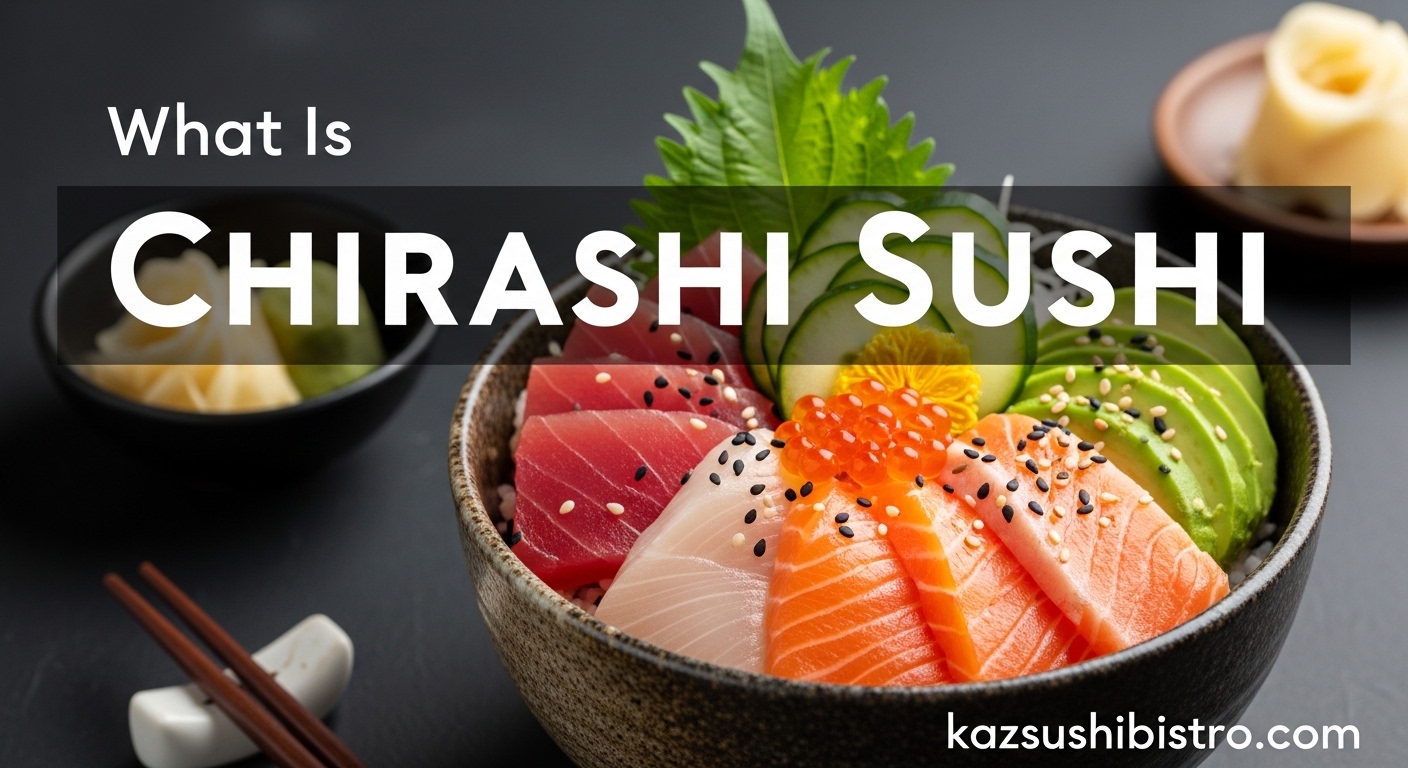
Chirashi sushi means scattered sushi in Japanese, a traditional dish featuring seasoned vinegared rice topped with an artful arrangement of fresh fish, vegetables, and egg. Unlike rolled maki or hand-pressed nigiri, chirashi presents its ingredients scattered across the rice surface in a colorful, bowl-style presentation. The dish is typically served at room temperature, making it both elegant and accessible for home cooks.
I remember the first time I encountered chirashi at a small Tokyo restaurant. The bowl arrived like a canvas of color, ruby tuna and coral salmon arranged with precision over glistening rice. That moment sparked my appreciation for this deceptively simple dish that balances visual artistry with pure, clean flavors.
In this guide, you will discover everything about chirashi sushi, from its historical roots and regional variations to practical tips for making it in your own kitchen. Whether you are planning a special celebration or simply want to expand your Japanese cooking repertoire, this complete guide covers what you need to know.
Table of Contents
What Is Chirashi Sushi?
The term chirashi sushi breaks down simply: chirashi translates to scattered or dispersed, while zushi (sushi) refers to the vinegared rice that forms the foundation of the dish. This naming perfectly describes how fresh ingredients are scattered across the surface of seasoned rice rather than rolled or pressed together.
Traditional chirashi sushi features short-grain Japanese rice seasoned with a mixture of rice vinegar, sugar, and salt. This vinegared rice serves as the bed for various toppings that can include raw sashimi-grade fish, cooked vegetables, shredded omelette, and roe. The result is a complete meal in one bowl that showcases both the quality of individual ingredients and the harmony of their combination.
What distinguishes chirashi from other sushi forms is its presentation philosophy. Where nigiri requires precise hand-shaping and maki demands rolling technique, chirashi allows ingredients to shine through loose, artistic arrangement. This makes it particularly welcoming for home cooks who want to create impressive Japanese food without years of training.
Regional Styles: Edomae vs Gomoku Chirashi 2026
Japan’s regional culinary traditions have produced two distinct styles of chirashi sushi, each with its own character and historical origins. Understanding these differences helps explain the variety you might encounter in restaurants or recipes.
Edomae Chirashi (Kanto Style)
Edomae chirashi originates from the Tokyo region, formerly known as Edo, and represents the style most familiar to Western diners. This approach prioritizes fresh, raw seafood as the star ingredient, with toppings like tuna, salmon, yellowtail, and shrimp taking center stage over the rice.
The Edomae style emerged during the Edo period (1603-1868) when Tokyo’s bay provided abundant fresh seafood to the capital. Chefs developed techniques to showcase this bounty with minimal manipulation, letting the pure flavor of sashimi-grade fish speak for itself. You will typically see Edomae chirashi arranged with geometric precision, fish slices fanned across the rice surface like petals.
Gomoku Chirashi (Kansai Style)
Gomoku chirashi comes from the Kansai region, encompassing Osaka, Kyoto, and the surrounding area. The term gomoku means five ingredients, though the actual number can vary. This style features cooked and prepared ingredients mixed throughout the rice rather than simply topped.
Kansai-style chirashi commonly includes simmered vegetables like shiitake mushrooms, lotus root, and bamboo shoots alongside kinshi tamago (shredded sweet omelette) and pickled vegetables. The ingredients are often diced smaller and distributed throughout the rice, creating a more integrated dish. This style reflects the Kansai region’s historical merchant culture, where practical, hearty dishes were valued alongside refinement.
Chirashi Sushi and Hinamatsuri (Girls’ Day)
Chirashi sushi holds special significance in Japanese culture as the traditional food for Hinamatsuri, the Doll Festival or Girls’ Day celebrated annually on March 3rd. This connection adds layers of meaning to a dish already rich with visual appeal.
The colorful presentation of chirashi symbolizes the blossoming of spring and the health and happiness of girls in the family. The various ingredients represent different aspects of a flourishing life, while the scattered arrangement evokes the festive, celebratory atmosphere of the holiday. Families gather to enjoy chirashi together while displaying ornamental dolls that represent the emperor, empress, and their court.
Beyond Hinamatsuri, chirashi remains popular for other celebrations including birthdays, graduations, and family gatherings. Its make-ahead nature and room-temperature serving make it ideal for parties where hosts want to prepare food in advance and enjoy time with guests.
Traditional Chirashi Sushi Toppings and Ingredients
The beauty of chirashi lies in the variety of ingredients that can top the seasoned rice, from pristine raw fish to delicate vegetable preparations. Understanding these components helps you appreciate the dish and plan your own creations.
Raw Fish and Seafood
Sashimi-grade fish forms the heart of Edomae-style chirashi, with quality and freshness being paramount. Common choices include maguro (tuna) in various grades from lean to fatty, sake (salmon) with its distinctive orange-pink color, hamachi (yellowtail) offering rich, buttery texture, and ebi (cooked shrimp) providing sweetness and visual contrast.
Roe varieties add bursts of flavor and jeweled appearance. Ikura (salmon roe) provides bright orange pearls that pop with briny juice. Tobiko (flying fish roe) offers smaller, crunchier eggs in natural orange or dyed colors like black (squid ink) or green (wasabi). These roes should be sourced fresh and handled gently to maintain their delicate membranes.
Vegetables and Prepared Ingredients
Kinshi tamago, the fine golden threads of shredded omelette, appears in nearly every chirashi preparation. Making this component involves cooking a thin egg crepe, rolling it tightly, and slicing it into hair-thin strips. The result adds protein, color, and a slightly sweet flavor that balances the vinegared rice.
Traditional vegetables include renkon (lotus root) sliced and simmered until tender with a characteristic lacy pattern. Takenoko (bamboo shoots) add earthy flavor and pleasant crunch when properly prepared. Shiitake mushrooms, often simmered in a sweet-savory broth, contribute umami depth. Snow peas, cucumber, and avocado provide fresh green accents and textural variety.
Garnishes and Flavor Accents
Shiso leaves (perilla) contribute a distinctive herbaceous flavor that pairs beautifully with raw fish. Thinly sliced or chiffonaded, they add bright green color and aromatic complexity. Nori (seaweed), either as thin strips or crumbled flakes, provides oceanic flavor and textural contrast.
Beni shoga (red pickled ginger) offers palate-cleansing sharpness between bites. Wasabi, either fresh grated or reconstituted from powder, should be available for those who want its fiery heat. These condiments let diners adjust each bite to their personal taste preferences.
Chirashi Sushi vs Kaisen-don vs Poke Bowl
Three popular bowl dishes, chirashi sushi, kaisen-don, and poke bowl, share visual similarities that can confuse diners. Understanding their distinct characteristics helps you know what to expect and appreciate each dish on its own terms.
| Feature | Chirashi Sushi | Kaisen-don | Poke Bowl |
|---|---|---|---|
| Rice Type | Seasoned sushi rice (vinegared) | Plain steamed rice | Plain or lightly seasoned rice |
| Serving Temperature | Room temperature | Room temperature or slightly warm | Chilled or room temperature |
| Topping Arrangement | Artistically scattered | Neatly arranged or layered | Mixed or casually topped |
| Primary Ingredients | Sashimi, egg, vegetables | Primarily raw fish | Marinated raw fish, sauces |
| Origin | Japan (Tokyo/Osaka) | Japan (coastal regions) | Hawaii |
| Sauce Style | Minimal sauce, on the side | Light soy-based sauce | Heavy marinade or dressing |
The fundamental difference lies in the rice preparation. Chirashi sushi absolutely requires seasoned vinegared rice, making the rice itself flavorful and tangy. Kaisen-don uses plain white rice, letting the fish and any accompanying sauce provide all the flavor. Poke bowls from Hawaii often feature rice that may be seasoned but typically with different flavor profiles, plus the fish is usually marinated before topping.
Presentation philosophy also distinguishes these dishes. Chirashi emphasizes visual artistry with careful placement of colorful ingredients. Kaisen-don focuses on generous portions of premium fish. Poke bowls prioritize convenience and customization with mixed ingredients and heavy sauce coverage.
How to Make Chirashi Sushi at Home
Making chirashi sushi at home is more accessible than many people assume. With quality ingredients and attention to a few key techniques, you can create a bowl that rivals restaurant versions.
Step 1: Prepare the Sushi Rice
Start with short-grain Japanese rice, rinsing it thoroughly until the water runs clear to remove excess starch. Cook according to package directions, either in a rice cooker or on the stovetop. The rice should be tender with each grain distinct but slightly sticky.
While the rice is still warm, transfer it to a large non-reactive bowl, traditionally a wooden sushi oke or hangiri. Pour over a mixture of rice vinegar, sugar, and salt, using approximately 3 tablespoons vinegar, 1 tablespoon sugar, and 1 teaspoon salt per 2 cups of uncooked rice. Fold the mixture gently with a rice paddle using cutting motions to avoid crushing the grains. Fan the rice simultaneously to help it cool and develop its characteristic sheen.
Step 2: Source Quality Fish
Finding sashimi-grade fish requires visiting a reputable fish market or Japanese grocery store. The label sashimi-grade indicates the fish has been frozen to specific temperatures to kill parasites, making it safe for raw consumption. Common options include tuna, salmon, and yellowtail, though availability varies by region.
Keep the fish refrigerated until just before serving. Slice against the grain into pieces approximately 1/4 inch thick. A sharp knife is essential here, as a dull blade will tear the delicate flesh rather than cut cleanly.
Step 3: Prepare Additional Toppings
Make kinshi tamago by whisking eggs with a pinch of sugar and salt, cooking a thin layer in a non-stick pan, rolling it tightly, and slicing into fine threads. Prepare vegetables by simmering lotus root and bamboo shoots in seasoned broth, or use fresh cucumber and avocado for simpler preparation.
All toppings should be ready before assembling the bowl. Chirashi moves quickly once you begin, so organization matters.
Step 4: Assemble Your Chirashi Bowl
Place a bed of seasoned rice in a bowl or on a serving platter. The rice should be at room temperature, never hot or refrigerator-cold. Arrange your toppings artfully across the surface, considering color distribution and height variation for visual interest.
Start with larger items like fish slices, add smaller components like roe and shredded egg, then finish with delicate garnishes like shiso and nori. The goal is a balanced, colorful presentation that invites the eye before the first bite.
How to Serve and Eat Chirashi Sushi
Proper service and etiquette enhance the chirashi experience, whether you are hosting guests or dining out. These traditions reflect Japanese culinary culture and help you enjoy the dish as intended.
Chirashi sushi is always served at room temperature. This allows the rice to maintain its ideal texture and the fish to express its full flavor without the numbing effect of cold. If you have refrigerated your chirashi, remove it 20-30 minutes before serving to reach the proper temperature.
Provide small dishes of soy sauce and wasabi on the side, allowing each diner to season to taste. Some prefer to mix wasabi into their soy sauce, while others place a small amount directly on the fish. Either approach is acceptable in casual settings. An oshibori, a warm damp towel, is traditionally offered before eating to cleanse the hands.
When eating, take small portions that include both rice and toppings in each bite. This ensures you taste the complete flavor combination the chef intended. Chopsticks are the traditional utensil, though Western-style forks are acceptable for those less comfortable with chopsticks.
For beverages, consider pairing chirashi with cold sake, Japanese beer, or green tea. The clean flavors of the dish complement these drinks without competing. Avoid heavy or overly sweet wines that might overpower the subtle flavors of the fish.
Modern Variations and Dietary Adaptations
While traditional chirashi follows established patterns, modern interpretations and dietary accommodations have expanded its appeal. These variations let more people enjoy the essence of chirashi regardless of dietary restrictions or cooking experience.
Vegetarian chirashi replaces fish with additional vegetables and protein sources. Consider adding marinated tofu, seasoned tempeh, or extra varieties of mushrooms for umami depth. Roasted vegetables like sweet potato or asparagus add substance and color. The key is maintaining that variety of textures and flavors that defines great chirashi.
Vegan adaptations require eliminating egg as well, replacing kinshi tamago with seasoned tofu strips or additional vegetables. Ensure your sushi vinegar contains no honey or other animal products, and verify that any prepared ingredients like pickled vegetables are vegan-friendly.
For quick preparation, chirashi sushi mix products offer pre-seasoned vegetables and toppings that simply need to be scattered over rice. While purists might object, these mixes make chirashi accessible for weeknight meals and introduce the dish to beginners.
Chirashi cups present the dish in individual muffin-tin portions, perfect for parties and potlucks. Press seasoned rice into small cups, top with ingredients, and serve as finger food. This format transforms chirashi from a bowl dish into an elegant appetizer.
Frequently Asked Questions
What is the difference between sushi and chirashi?
Traditional sushi typically refers to nigiri (hand-pressed rice with fish) or maki (rolled sushi). Chirashi is a specific style where seasoned rice is topped with scattered ingredients in a bowl. While both use vinegared rice, chirashi presents ingredients loose and arranged artfully rather than rolled or pressed.
What does chirashi sushi mean?
Chirashi sushi literally means scattered sushi in Japanese. The word chirashi means to scatter or disperse, describing how ingredients are spread across the surface of vinegared rice. This presentation style differs from the precise shaping required for other sushi forms.
What fish is usually in chirashi?
Common fish in chirashi include tuna (maguro), salmon (sake), yellowtail (hamachi), and shrimp (ebi). High-quality chirashi may also feature sea urchin (uni), scallops, or octopus. All fish must be sashimi-grade, meaning it is safe to eat raw and has been handled according to strict standards.
How do you eat chirashi sushi?
Eat chirashi sushi at room temperature using chopsticks, taking bites that include both rice and toppings together. Soy sauce and wasabi are provided on the side for seasoning to taste. Serve with pickled ginger to cleanse the palate between bites. The dish is meant to be enjoyed as a complete flavor experience in each bite.
Is chirashi sushi healthy?
Chirashi sushi is generally considered a healthy dish, offering lean protein from fish, complex carbohydrates from rice, and various vitamins from vegetable toppings. The omega-3 fatty acids in fatty fish like salmon provide heart health benefits. However, the dish can be high in sodium from soy sauce and carbohydrates from rice, so those monitoring intake should adjust accordingly.
Can you make chirashi ahead of time?
You can prepare components of chirashi sushi ahead of time, but final assembly should happen shortly before serving. The seasoned rice can be made a few hours in advance and kept at room temperature. Vegetables and egg can be prepared the day before. However, add raw fish and final garnishes just before serving to maintain freshness and food safety.
Conclusion
Understanding chirashi sushi opens a window into Japanese culinary tradition that values both simplicity and artistry. From its scattered presentation to its seasonal significance during Hinamatsuri, this dish offers home cooks an accessible entry point into authentic Japanese cooking.
Whether you choose to make traditional Edomae style with pristine sashimi or prefer the heartier Gomoku approach with cooked ingredients, the fundamentals remain the same. Quality vinegared rice, fresh toppings, and thoughtful arrangement create a bowl that satisfies both the eye and the palate.
Now that you understand what chirashi sushi is and how to create it, the next step is gathering your ingredients and making your first bowl. Start with a simple version featuring just a few toppings, then expand your repertoire as you grow more comfortable with the techniques.