
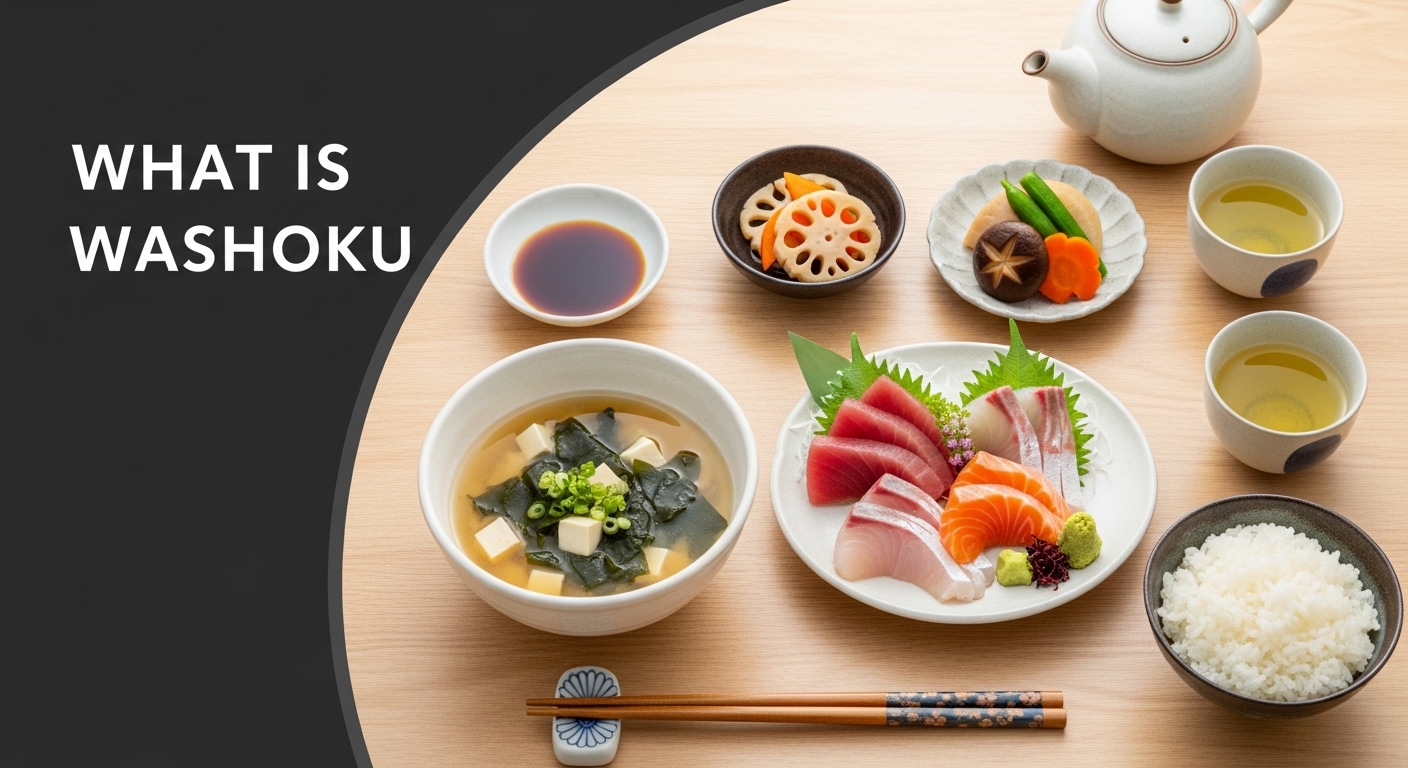
Have you ever wondered what makes Japanese cuisine so distinctive beyond just sushi and ramen? Washoku (和食) represents the heart of traditional Japanese food culture, a culinary tradition so significant that UNESCO recognized it as an Intangible Cultural Heritage in 2013.
Our team has spent years exploring Japanese dining traditions, and we keep returning to Washoku as the foundation that connects food, nature, and community. This is not merely about recipes or ingredients. It is a philosophy that has shaped Japanese meals for centuries.
In this guide, you will learn exactly what Washoku means, why it earned UNESCO protection, and how its principles of harmony and seasonality can transform the way you think about food in 2026.
Table of Contents
What Is Washoku? The Meaning Explained 2026
Washoku literally translates to “Japanese food” or “harmony of food.” The kanji characters reveal everything: 和 (wa) means “Japan” or “harmony,” while 食 (shoku) means “food” or “to eat.”
Together, these characters express a core Japanese value: balance. Washoku aims to create harmony between the five tastes (sweet, salty, sour, bitter, and umami), five colors (red, green, yellow, white, and black), and five cooking methods (raw, simmering, grilling, steaming, and frying).
This balance extends beyond the plate. It encompasses the relationship between people and nature, the social bonds formed during meals, and the gratitude expressed before and after eating. When you understand Washoku, you understand why Japanese meals feel so thoughtfully composed compared to Western-style dining.
The Five Key Characteristics of Washoku
Japan’s government has officially defined four key characteristics that make Washoku unique. These principles have guided home cooks and professional chefs alike for generations.
1. Diverse Ingredients Rooted in Nature
Japan stretches from snowy Hokkaido to subtropical Okinawa, creating incredible regional diversity. Washoku embraces this geographic variety by using local ingredients that reflect each area’s climate and terrain.
Coastal regions feature fresh fish and seaweed. Mountain villages use wild vegetables and mushrooms. This connection to place creates what Japanese call chisan-chisho: consuming locally grown food.
2. Nutritional Balance Supporting Health
The traditional Japanese diet contributes to the country’s remarkable longevity. Japan consistently ranks among the top nations for life expectancy, and researchers point to Washoku as a significant factor.
The ichiju-sansai format naturally creates balanced meals. One soup and three side dishes alongside rice provide proteins, carbohydrates, and vegetables in proportions that satisfy without excess. This explains why Japan has maintained low obesity rates compared to Western nations.
3. The Beauty of Seasonal Expression
Japanese chefs obsess over shun, the peak season for each ingredient. Strawberries taste different in spring versus winter. Bamboo shoots appear briefly in early spring. Cherry blossom viewing brings special bento boxes.
This seasonality connects diners to the natural calendar. You eat what the land provides, when it provides it. This practice has sustained Japanese agriculture and created annual food traditions that mark the passage of time.
4. Annual Events and Festive Traditions
Washoku intertwines with Japanese festivals and life events. New Year brings osechi ryobi, elaborate boxes of symbolic foods. Cherry blossom season means hanami picnics with seasonal treats.
Buddhist ceremonies feature shojin ryori, vegetarian temple cuisine. Family celebrations include specific dishes that have been prepared the same way for centuries. These traditions strengthen social bonds and pass culinary knowledge between generations.
5. Sustainable Relationship with Nature
Washoku reflects Buddhist and Shinto values about respecting nature. Traditional fishing practices avoided overharvesting. Vegetable cultivation worked with natural cycles rather than against them.
This sustainability focus has become increasingly relevant in 2026. As global food systems face environmental challenges, Washoku offers a model for eating that honors the resources we consume.
UNESCO Intangible Cultural Heritage Recognition
In December 2013, UNESCO added Washoku to its Representative List of the Intangible Cultural Heritage of Humanity. This designation recognized Washoku as more than just tasty food. It acknowledged a social practice that strengthens community identity and sustainable living.
UNESCO specifically noted four aspects that made Washoku worthy of protection. They highlighted the diversity of fresh ingredients, the healthy diet it produces, the expression of nature’s beauty through presentation, and the way it strengthens family and community bonds during annual festivities.
This recognition placed Washoku alongside other protected food cultures like French gastronomy and Mediterranean diets. It confirmed what Japanese people have known for centuries: their traditional cuisine represents a meaningful cultural achievement worth preserving.
Understanding the Ichiju-Sansai Format
Ichiju-sansai (one soup, three sides) describes the basic structure of a traditional Japanese meal. This format appears in homes, restaurants, and ceremonial occasions across Japan.
A typical ichiju-sansai meal includes steamed rice, miso soup, a main protein dish (often grilled fish or meat), a simmered vegetable dish, and a small serving of pickles. This combination provides complete nutrition while maintaining visual and textural variety.
The format remains flexible. Home cooks adapt it based on available ingredients and family preferences. Yet the core principle stays constant: balance across food groups, colors, and preparation methods. When you see a Japanese meal with rice, soup, and multiple small dishes arranged thoughtfully, you are witnessing ichiju-sansai in action.
Common Washoku Dishes You Should Know
Traditional Japanese cuisine extends far beyond the sushi counter. Understanding these core dishes helps you recognize authentic Washoku when you encounter it.
Rice and Miso Soup Foundation
Gohan (steamed rice) and miso shiru (miso soup) form the foundation of nearly every Washoku meal. Short-grain Japanese rice provides the neutral base that balances stronger flavors. Miso soup combines dashi broth with fermented soybean paste and ingredients like tofu, wakame seaweed, or vegetables.
Together, these staples represent the soul of Japanese home cooking. They appear at breakfast, lunch, and dinner in millions of households every day.
Protein Dishes
Yakizakana (grilled fish) stands as the quintessential Washoku protein. Mackerel, salmon, and sea bream appear frequently, simply salted and grilled over charcoal or in an oven.
Nimono (simmered dishes) cook proteins and vegetables together in dashi seasoned with soy sauce, sake, and mirin. This gentle cooking method creates deep umami flavors while preserving nutrients.
Vegetables and Pickles
Tsukemono (pickled vegetables) accompany every traditional meal. These preserved vegetables aid digestion and provide contrasting flavors to the main dishes. Common varieties include takuan (yellow daikon), umeboshi (pickled plum), and kyuri asazuke (lightly pickled cucumber).
Ohitashi features blanched greens like spinach or greens dressed lightly with soy sauce and bonito flakes. Aemono describes vegetables dressed with sesame, tofu, or other seasonings.
Specialty Dishes
Tempura (battered and fried seafood or vegetables), sushi (vinegared rice with fish), sashimi (raw fish slices), and udon or soba noodles all fall under the Washoku umbrella. Each represents centuries of refinement and regional variation.
These dishes have spread globally, but experiencing them within a traditional Japanese meal context reveals their intended purpose as part of a balanced whole rather than standalone items.
Types of Washoku Dining Experiences
Washoku encompasses various dining styles, from casual home meals to elaborate ceremonial feasts. Understanding these distinctions helps you appreciate the full range of traditional Japanese cuisine.
Honzen Ryori
Honzen ryori represents the formal banquet style of samurai and aristocratic families during Japan’s feudal era. This highly ritualized format serves meals on legged trays called zen. While rarely seen in modern daily life, it influences ceremonial dining and high-end traditional restaurants.
Kaiseki Ryori
Kaiseki (会席料理) describes multi-course meals served at traditional restaurants and ryokan inns. A kaiseki meal progresses through multiple small courses, each highlighting seasonal ingredients and artistic presentation.
Chefs select dishes to balance flavors, textures, and colors across the meal. A typical kaiseki experience might include an appetizer, sashimi, simmered dish, grilled dish, steamed dish, rice, soup, and dessert. This represents Washoku at its most refined.
Cha-Kaiseki
Cha-kaiseki serves as the meal preceding formal tea ceremonies. Lighter than restaurant kaiseki, it follows specific rules about sequence and serving style. This tradition connects Washoku to the Japanese tea ceremony, another UNESCO-recognized cultural practice.
Shojin Ryori
Shojin ryori (精進料理) refers to vegetarian Buddhist temple cuisine. Monks developed this style to follow Buddhist precepts against killing animals. It relies on seasonal vegetables, tofu, sesame, and mountain ingredients.
This cuisine demonstrates how Washoku principles adapt to dietary restrictions. Temple visitors can experience shojin ryori at many Buddhist establishments across Japan, particularly in Kyoto.
Casual Washoku
Everyday home cooking represents Washoku at its most accessible. Families adapt traditional principles to modern schedules and budgets. A typical dinner might include rice, miso soup, a grilled fish from the supermarket, a simple vegetable dish, and store-bought pickles.
This practical application keeps Washoku alive in contemporary Japan, even as Western fast food competes for attention.
Washoku vs Yoshoku: Understanding the Difference
Many people feel confused about where Washoku ends and other Japanese food begins. This confusion stems from yoshoku, the term for Western-influenced Japanese cuisine.
Washoku refers specifically to traditional Japanese food developed before significant Western influence. It uses traditional ingredients, preparation methods, and presentation styles that existed in Japan for centuries.
Yoshoku describes dishes adopted and adapted from Western cuisine during the Meiji era and beyond. Curry rice, hambagu (hamburger steak), tonkatsu (breaded pork cutlet), and omuraisu (omelet rice) all fall under yoshoku. These dishes use Western techniques or ingredients but have been modified to suit Japanese tastes.
The distinction matters because yoshoku, while delicious and culturally significant in its own right, does not represent the traditional practices UNESCO sought to protect. When you want to experience authentic Japanese food culture, you seek Washoku. When you want comfort food that Japanese families love, yoshoku hits the spot.
The Health Benefits of Eating Washoku
Japan consistently ranks among the healthiest nations on earth. While genetics and lifestyle factors contribute, nutritionists agree that traditional Japanese eating patterns play a major role.
The Washoku diet naturally limits processed foods, added sugars, and unhealthy fats. It emphasizes fish over red meat, vegetables at every meal, and fermented foods like miso and tsukemono that support gut health.
Portion control happens naturally through the small-dish format. You stop eating when the dishes are empty rather than continuously serving yourself from large platters. This built-in moderation helps explain Japan’s low obesity rates despite high life expectancy.
Fermented soy products provide protein without saturated fat. Dashi adds depth without heavy cream or butter. Seaweed supplies minerals rarely found in Western diets. These nutritional advantages make Washoku worth studying for anyone interested in healthy eating in 2026.
Mindfulness and Gratitude in Washoku
Washoku transcends nutrition to become a spiritual practice. The customs surrounding Japanese meals reflect deep respect for food, nature, and the people who make eating possible.
Before eating, Japanese people say itadakimasu. This phrase acknowledges the lives given for the meal, whether plant or animal. It thanks the farmers, fishermen, and cooks whose work brought the food to the table. It recognizes the interconnectedness of all beings.
After eating, gochiso-sama deshita expresses gratitude for the feast. Even a simple home meal deserves this acknowledgment. These rituals slow down the eating process and encourage appreciation rather than rushing through nourishment.
This mindfulness connects to sustainability. When you truly appreciate your food, you waste less. You choose quality over quantity. You recognize your place within the natural cycles that provide sustenance. In an era of climate concern, these ancient values feel remarkably modern.
FAQs
What is an example of a Washoku?
A classic example of Washoku is ichiju-sansai: a meal consisting of steamed rice, miso soup, grilled fish (like salmon or mackerel), a simmered vegetable dish, and pickled vegetables. Other examples include sushi, sashimi, tempura, udon noodles, and kaiseki multi-course meals served at traditional Japanese restaurants.
What is the meaning of Washoku?
Washoku (和食) literally means Japanese food or harmony of food. The character 和 (wa) means Japan or harmony, while 食 (shoku) means food or to eat. It represents a traditional dietary culture that emphasizes balance between five tastes, five colors, and five cooking methods while respecting seasonality and nature.
What is the difference between washoku and kaiseki?
Washoku is the broad term for traditional Japanese cuisine, while kaiseki is a specific type of Washoku dining experience. Kaiseki refers to an elaborate multi-course meal served at traditional restaurants and inns, featuring small, artfully presented seasonal dishes. Washoku encompasses all traditional Japanese food including home cooking, while kaiseki represents its most refined formal expression.
What is the 5 minute rule in Japan?
The 5 minute rule refers to the Japanese custom of waiting approximately five minutes after food arrives before eating, particularly in business or formal settings. This allows time for appreciation of the presentation and ensures everyone receives their meal before starting. However, for very hot items like ramen or tempura, eating promptly while food is at optimal temperature takes priority.
Conclusion: Embracing the Spirit of Washoku
What Is Washoku? It is far more than a cuisine. It is a philosophy of balance, a practice of gratitude, and a bridge between humanity and nature that has sustained Japanese culture for centuries.
UNESCO recognized Washoku in 2013 because it embodies principles worth protecting: sustainable food systems, healthy eating patterns, and social bonds strengthened through shared meals. In 2026, these values feel more relevant than ever.
Whether you experience Washoku through a humble home-cooked meal or an elaborate kaiseki dinner, you participate in a living tradition. The harmony of tastes, the respect for seasonality, and the gratitude expressed through itadakimasu connect you to generations of Japanese diners who valued food as something sacred. We invite you to seek out authentic Washoku and discover why this traditional cuisine earned its place among humanity’s cultural treasures.