
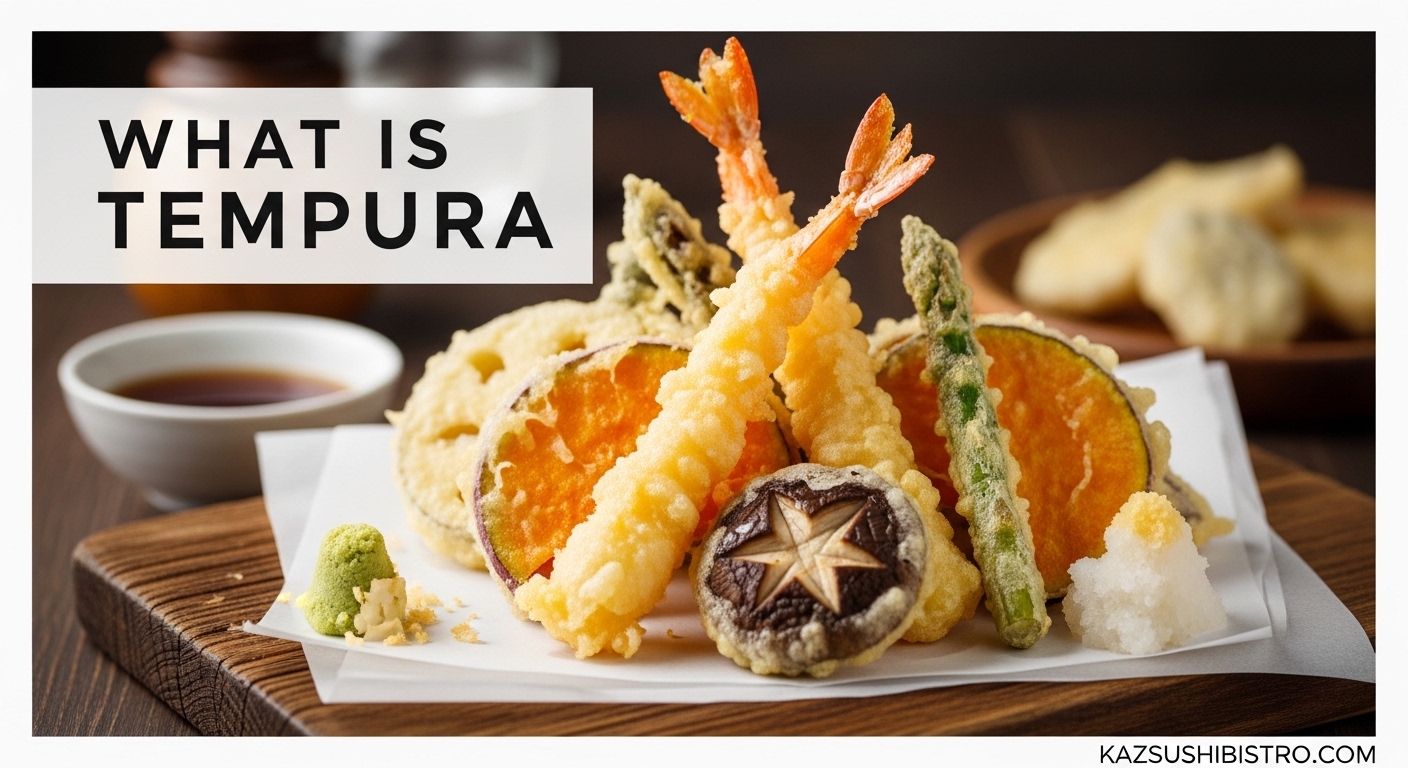
If you have ever wondered what is tempura and why it tastes so different from other fried foods, you are not alone. Tempura is a beloved Japanese cooking technique that transforms simple seafood and vegetables into something extraordinary. This light batter coating creates a delicate, crispy shell that lets the natural flavors of the ingredients shine through.
At KAZ Sushi Bistro, tempura holds a special place in our kitchen. Our chefs have spent years perfecting the technique that makes this dish so distinctive. Understanding what makes tempura unique will help you appreciate it even more the next time you see it on a menu.
Below, we will explore everything you need to know about this iconic Japanese dish. From its fascinating Portuguese origins to the science behind the batter, this guide will answer all your questions about what is tempura and why it has become a staple of Japanese cuisine worldwide.
Table of Contents
What Is Tempura? Definition and History
So what is tempura exactly? Tempura is a Japanese dish consisting of seafood or vegetables that have been battered and deep-fried. The coating is remarkably thin, creating a light, airy, and crispy texture that is completely different from the heavy breading you find on most Western fried foods.
The word “tempura” itself has an interesting origin story. It comes from the Portuguese phrase “tempero” or “temporas,” which referred to fasting periods when Catholics abstained from meat. Portuguese missionaries brought the frying technique to Japan in the 16th century during the Edo period (1603-1868).
When Portuguese missionaries arrived in Nagasaki around 1543, they introduced the Japanese to a new way of frying fish. The locals were fascinated by this foreign cooking method and quickly adapted it to their own ingredients and tastes. What started as a Portuguese technique evolved into something distinctly Japanese over the following centuries.
During the Edo period, tempura became popular among common people in Tokyo (then called Edo). Street vendors would set up stalls near bridges and sell freshly fried seafood and vegetables to hungry passersby. The dish was affordable, delicious, and could be eaten quickly without utensils.
Today, tempura is enjoyed worldwide as both a standalone dish and as an ingredient in other Japanese favorites. You will find it in sushi rolls, on top of udon noodles, in rice bowls called tendon, and as a popular appetizer. Its versatility and appealing texture have made it one of the most recognizable elements of Japanese cuisine.
The Secret Behind Tempura Batter 2026
The magic of tempura lies in its batter. Unlike heavy Western batters that use thick coatings and breadcrumbs, tempura batter is intentionally thin and delicate. The goal is to create a protective, crispy layer that enhances rather than masks the flavor of the ingredients inside.
Traditional tempura batter contains just three simple ingredients: flour, egg, and ice-cold water. The simplicity is deceptive, though. Each component plays a crucial role in creating that signature light and airy texture.
Why Ice Water Matters
One of the most important secrets of great tempura is using ice water in the batter. The cold temperature prevents gluten development, which is what makes bread chewy. Less gluten means a lighter, more delicate coating that shatters pleasantly when you bite into it.
Professional chefs often keep their flour refrigerated and add ice cubes directly to the water before mixing. Some even go a step further and use carbonated water or club soda. The carbon dioxide bubbles create additional air pockets in the batter, resulting in an even lighter texture.
Low-Protein Flour Is Key
Another critical factor is the type of flour used. Regular all-purpose flour contains too much protein, which leads to more gluten formation. Instead, tempura chefs use cake flour or specially milled tempura flour with lower protein content.
Some recipes also add a small amount of cornstarch or rice flour to the mix. These starches do not develop gluten at all, further ensuring that the coating stays light and non-greasy. The result is a batter that crisps up beautifully without becoming heavy or doughy.
The Mixing Technique
Here is something that surprises many home cooks: you should not overmix tempura batter. In fact, lumps are perfectly fine and even desirable. Overmixing develops gluten, which creates a chewy, heavy coating.
Experienced tempura chefs mix the batter briefly with chopsticks, leaving visible lumps of dry flour. These lumps create irregularities in the coating that become extra-crispy when fried. The batter should be used immediately after mixing while it is still ice cold.
Frying Temperature and Technique
The oil temperature is equally important. Tempura is typically fried at 350-375 degrees Fahrenheit (175-190 degrees Celsius). This high heat cooks the batter quickly, creating a crisp exterior while keeping the interior moist and tender.
Ingredients are dipped in the cold batter just before entering the hot oil. The dramatic temperature difference causes the water in the batter to instantly turn to steam, puffing up the coating and creating the airy texture that defines great tempura.
Types of Tempura: From Shrimp to Sushi
Tempura is incredibly versatile. Nearly any ingredient that can be fried can become tempura. However, some varieties have become classics that you will find on nearly every Japanese restaurant menu.
Shrimp Tempura (Ebi Tempura)
Shrimp tempura is perhaps the most popular variety worldwide. Large, succulent shrimp are butterflied to prevent curling, then coated in batter and fried until golden. The contrast between the sweet, tender shrimp and the crispy coating is irresistible.
At KAZ Sushi Bistro, we use only the freshest shrimp for our tempura. The quality of the seafood matters enormously because the light batter does not hide any imperfections. When you bite into our shrimp tempura, you taste pure, clean flavor with that satisfying crunch.
Vegetable Tempura
Vegetable tempura showcases the natural sweetness and texture of fresh produce. Popular choices include sweet potato, pumpkin, eggplant, asparagus, bell peppers, and mushrooms. Each vegetable brings its own character to the dish.
Sweet potato tempura is particularly beloved for its creamy interior and crispy exterior. Japanese sweet potatoes have a natural sweetness that intensifies when fried. Asparagus tempura offers a elegant, spear-shaped presentation with a satisfying snap when you bite into it.
Tempura Sushi
Tempura has found a special home in the world of sushi. Tempura sushi rolls combine the crispy texture of fried ingredients with the traditional elements of sushi rice, nori, and fresh toppings.
The most common tempura sushi features shrimp tempura inside a roll, often accompanied by avocado, cucumber, and a drizzle of spicy mayo or eel sauce. The combination of warm, crispy tempura and cool, vinegared rice creates a delightful textural contrast.
Some creative rolls feature entire rolls that are tempura-battered and lightly fried. This creates a warm, crunchy exterior around the traditional sushi ingredients inside. It is a perfect example of how Japanese cuisine evolves while honoring tradition.
Other Popular Varieties
Beyond shrimp and vegetables, you will find tempura made with white fish, squid, scallops, and even shiso leaves. In Japan, certain regions specialize in specific varieties. Kyoto is known for its vegetable tempura, while coastal areas feature the freshest local seafood.
Tempura Flakes (Tenkasu)
There is one more tempura element worth mentioning: tempura flakes, known in Japanese as tenkasu. These are the crispy bits of batter that break off during frying. Rather than discarding them, Japanese chefs use tenkasu as a topping for udon noodles, salads, and even sushi rolls.
Tenkasu adds an extra layer of crunch and flavor to dishes. At KAZ, we sprinkle tempura flakes on certain specialty rolls to add that satisfying textural element that keeps guests coming back for more.
Serving Styles
Tempura is served in various ways depending on the occasion. As an appetizer, it arrives on a plate with a small bowl of tentsuyu dipping sauce. Tendon bowls feature tempura served over rice with a sweet soy glaze. Tempura udon includes the crispy items floating atop a steaming bowl of noodle soup.
Tempura at KAZ Sushi Bistro
At KAZ Sushi Bistro, we approach tempura with the same dedication to quality that defines everything we do. Our tempura is not just a side dish. It is a carefully crafted expression of Japanese culinary tradition.
What sets restaurant tempura apart from home cooking? It comes down to three factors: ingredient quality, oil freshness, and technique. We source the freshest seafood daily and change our frying oil frequently to ensure every piece tastes clean and light.
Our chefs have trained extensively in the proper tempura technique. They know exactly when the oil is at the perfect temperature. They understand how to mix the batter to achieve that ideal consistency. They can tell by sight and sound when each piece is perfectly cooked.
You will find tempura throughout our menu. Our shrimp tempura appears in several signature rolls. Vegetable tempura makes an excellent appetizer or addition to a sushi combination. We also offer tempura as a standalone dish for those who want to experience it in its purest form.
If you have struggled to make tempura at home, you are not alone. As we discussed earlier, the technique requires precise temperature control and timing that is difficult to achieve with standard home equipment. When you dine at KAZ, you get to experience tempura the way it is meant to be: light, crispy, and absolutely delicious.
We invite you to try our tempura offerings and taste the difference that expertise and quality ingredients make. Whether you are new to Japanese cuisine or a longtime enthusiast, our tempura is sure to impress.
Frequently Asked Questions
Here are answers to the most common questions we receive about tempura at KAZ Sushi Bistro.
What is a tempura made of?
Tempura is made of seafood (usually shrimp) or vegetables coated in a light batter consisting of flour, egg, and ice-cold water, then quickly deep-fried until pale golden and crispy. The simple batter creates a delicate, airy coating that enhances rather than masks the natural flavor of the ingredients.
What is the difference between fried and tempura?
See the comparison table below for the key differences.
| Characteristic | Regular Fried Food | Tempura |
|---|---|---|
| Batter thickness | Thick, heavy coating | Thin, light batter |
| Color | Deep golden brown | Pale golden |
| Texture | Crunchy and substantial | Airy and delicate |
| Oil absorption | More oil retained | Less oil, lighter |
| Coating ingredients | Often uses breadcrumbs | No breadcrumbs, just batter |
| Flavor focus | Breading flavor prominent | Ingredient flavor shines |
What exactly is tempura sushi?
Tempura sushi refers to sushi rolls that contain tempura-fried ingredients inside, most commonly shrimp tempura. The combination of warm, crispy fried seafood with cool vinegared rice and fresh vegetables creates a delightful contrast in textures and temperatures. Some variations feature entire rolls that are tempura-battered and lightly fried for an extra-crunchy exterior.
What does tempura taste like?
Tempura has a delicate, crispy, and airy texture with a light, non-greasy coating. The batter itself is intentionally subtle in flavor, designed to let the natural taste of the seafood or vegetable shine through. When you bite into properly prepared tempura, you experience a satisfying crunch followed by the pure, clean flavor of the ingredient inside. It is never heavy, greasy, or overwhelming.
Conclusion
Now that you understand what is tempura and what makes it special, we hope you will visit KAZ Sushi Bistro to experience authentic tempura prepared by our skilled chefs. Whether you enjoy it as an appetizer, in a sushi roll, or as part of a complete Japanese meal, our tempura represents the finest expression of this beloved cooking technique. Make your reservation today and taste the difference that quality and expertise make.