
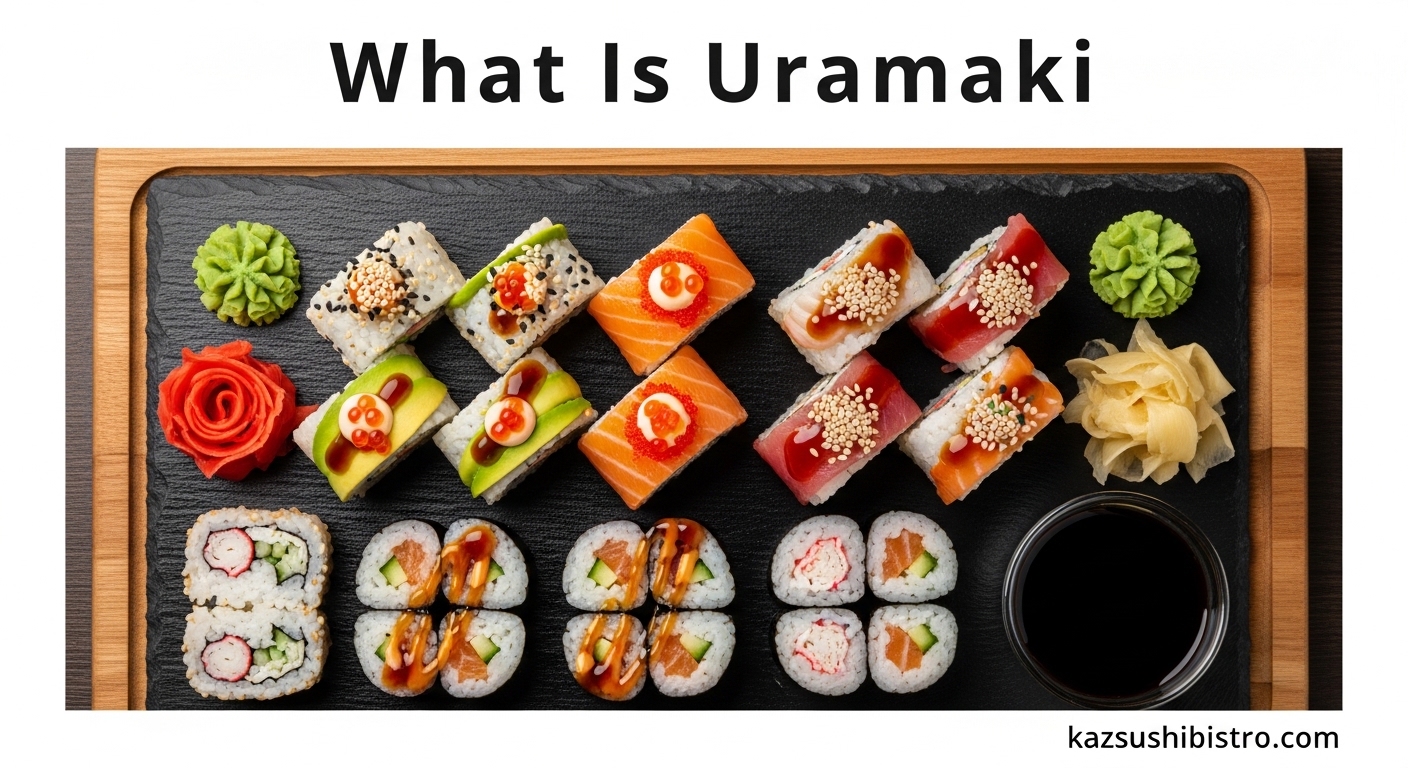
Uramaki (裏巻き) is an inside-out sushi roll where the rice is on the outside and the nori seaweed is hidden inside. This unique structure makes uramaki visually distinctive and approachable for those new to sushi. The literal meaning of “ura” is “reverse” or “inside out,” perfectly describing this roll’s construction.
If you have ever wondered what is uramaki and how it differs from the sushi rolls you see at restaurants, this guide covers everything from its Canadian origins to proper eating techniques. Whether you are a sushi beginner or looking to expand your knowledge, understanding uramaki opens up a world of flavorful possibilities.
Table of Contents
What Is Uramaki: The Inside-Out Sushi Roll 2026
Uramaki is a type of makizushi, or rolled sushi, characterized by having sushi rice on the exterior and a sheet of nori seaweed wrapped around the fillings on the interior. This inside-out configuration is the defining feature that sets uramaki apart from traditional maki rolls.
When preparing uramaki, the chef spreads seasoned sushi rice over a sheet of nori, then flips the entire sheet so the rice faces down. Fillings are placed on the nori side, and the roll is formed using a bamboo mat called a makisu. The result is a cylindrical roll with white rice visible on the outside, often garnished with sesame seeds, tobiko (flying fish roe), or thinly sliced fish.
The rice-on-outside design serves both practical and aesthetic purposes. Many Western diners initially found the dark nori seaweed unappealing or intimidating. By hiding the nori inside, uramaki became a gateway sushi style that introduced countless people to Japanese cuisine in 2026.
The Origin and History of Uramaki
The story of uramaki begins not in Japan, but in Vancouver, Canada, during the 1970s. Japanese chef Hidekazu Tojo is credited with creating the first inside-out roll to appeal to North American customers who were hesitant about traditional sushi presentation.
Chef Tojo noticed that many Western diners would peel away the nori seaweed or avoid sushi altogether because of the visible seaweed and raw fish. His solution was ingenious: flip the roll so the rice was on the outside, creating a more familiar and approachable appearance while maintaining authentic Japanese flavors.
The California roll, arguably the most famous uramaki variety, emerged from this innovation. Originally made with avocado, crab, and cucumber, it featured cooked ingredients that eased Western customers into sushi without the shock of raw fish. Today, uramaki has come full circle and is now served and celebrated in Japan itself, recognized as a legitimate evolution of sushi culture.
At KAZ Sushi Bistro, we honor this history by crafting uramaki with the same attention to detail that Chef Tojo pioneered decades ago. The fusion of East and West that uramaki represents continues to inspire new flavor combinations in sushi restaurants worldwide.
How Uramaki Differs From Other Types of Sushi?
Understanding what is uramaki becomes clearer when comparing it to other makizushi varieties. Each type has distinct characteristics that appeal to different preferences and occasions.
Uramaki vs Maki (Hosomaki)
Hosomaki represents the traditional thin maki roll with nori on the outside and rice on the inside. These rolls typically contain only one filling, such as cucumber (kappa maki) or fresh tuna (tekka maki). The nori provides a crisp texture and oceanic flavor that nori-wrapped enthusiasts love.
Uramaki reverses this arrangement entirely. The rice exterior creates a softer, more substantial bite while concealing the nori for those who prefer milder seaweed presence. Uramaki rolls also tend to be larger and can accommodate multiple fillings, making them more complex in flavor profile.
Uramaki vs Futomaki
Futomaki are thick rolls with nori on the outside, similar to hosomaki but containing four or more fillings. These festive rolls are popular during Japanese celebrations and feature colorful ingredient combinations arranged to create patterns when sliced.
While both futomaki and uramaki can hold multiple fillings, uramaki’s rice exterior allows for additional garnishes on the outside. You might find thin slices of avocado draped over a dragon roll or bright orange tobiko coating the surface, visual possibilities that nori-outside rolls cannot achieve.
Uramaki vs Temaki
Temaki, or hand rolls, are cone-shaped sushi made by wrapping nori around rice and fillings into a portable, ice-cream-cone form. These are designed for immediate consumption and offer a higher nori-to-rice ratio than any rolled variety.
Uramaki requires a bamboo mat for shaping and is always cut into bite-sized pieces. The eating experience differs significantly: temaki delivers a crisp nori texture throughout, while uramaki offers a softer rice-dominated mouthfeel with the nori contributing subtler background notes.
Popular Uramaki Varieties and Fillings
The versatility of uramaki has spawned countless creative combinations. Here are the most popular varieties you will encounter at sushi restaurants in 2026:
The California Roll
The original gateway uramaki contains crab meat (or imitation crab), avocado, and cucumber. The creamy avocado complements the sweet crab while cucumber adds refreshing crunch. Many versions feature tobiko or sesame seeds coating the rice exterior for added texture and visual appeal.
The Rainbow Roll
This stunning presentation layers thin slices of different fish over a California roll base. Salmon, tuna, yellowtail, and avocado create a colorful spectrum that makes this roll as beautiful as it is delicious. The rice exterior provides the perfect canvas for this edible artwork.
The Dragon Roll
Typically featuring shrimp tempura and cucumber inside, the dragon roll gets its name from the sliced avocado arranged on top to resemble dragon scales. Eel sauce and spicy mayo often finish this popular creation, adding sweet and spicy dimensions.
The Spicy Tuna Roll
Fresh sashimi-grade tuna mixed with spicy mayo creates a flavorful filling that contrasts beautifully with the seasoned rice exterior. This roll demonstrates that uramaki works equally well with raw fish as with cooked ingredients.
Vegetarian Options
Uramaki accommodates plant-based diets with combinations like sweet potato tempura, avocado, cucumber, and pickled vegetables. The rice exterior can be garnished with black or white sesame seeds, adding nutty flavor and visual distinction.
How to Eat Uramaki Properly?
Part of appreciating what is uramaki involves understanding the proper way to enjoy it. While there is no single “correct” method, these guidelines will enhance your experience.
Chopsticks or Fingers?
Traditional sushi etiquette permits eating with either chopsticks or fingers. Because uramaki has rice on the outside, the roll can be slightly stickier than nori-outside varieties. Many diners find chopsticks easier for picking up uramaki without the rice sticking to their fingers.
If you do use your hands, touch only the sides of the roll rather than the top, and aim to eat the entire piece in one bite. This prevents the roll from falling apart and delivers the complete flavor combination as intended.
Dipping Technique
When dipping uramaki into soy sauce, flip it so the rice side touches the sauce, not the filling side. Rice absorbs soy sauce quickly, so a brief dip is sufficient. Over-soaking makes the roll fall apart and overwhelms the delicate flavors.
Some rolls come with sauce already applied, like the eel sauce on dragon rolls. These do not need additional soy sauce and are ready to eat as served.
Wasabi and Ginger Etiquette
If your uramaki contains wasabi inside the roll, avoid adding more to your soy sauce. For rolls without internal wasabi, you may mix a small amount into your soy sauce or apply it directly to the roll.
Pickled ginger serves as a palate cleanser between different types of sushi, not as a topping. Eat a thin slice between rolls to reset your taste buds and fully appreciate each distinct flavor.
Frequently Asked Questions
What is the difference between maki and uramaki?
The main difference is the position of the rice and nori. In maki (including hosomaki and futomaki), the nori seaweed is on the outside with rice inside. In uramaki, this is reversed: the rice is on the outside and the nori is hidden inside around the fillings. Uramaki was created specifically to make sushi more appealing to Western diners who were hesitant about visible seaweed.
Is uramaki cooked?
Uramaki can contain either cooked or raw ingredients, or a combination of both. Popular cooked uramaki options include California rolls with crab or imitation crab, shrimp tempura rolls, and vegetable rolls with sweet potato tempura. Raw options include spicy tuna rolls and salmon avocado rolls. When ordering, check the menu description or ask your server if you prefer cooked sushi.
Why is uramaki called inside-out roll?
Uramaki means inside-out roll because the rice and nori positions are reversed from traditional maki. The Japanese word ura translates to reverse or inside out, while maki means rolled. This describes how the roll is constructed with rice on the exterior rather than the interior, effectively turning the traditional roll inside-out.
Is the California roll a type of uramaki?
Yes, the California roll is the most famous example of uramaki. Created in the 1970s in Vancouver, Canada, it was designed to introduce sushi to Western palates using familiar ingredients like crab and avocado. The rice-on-outside construction makes the California roll visually approachable while delivering authentic sushi flavors. It remains one of the most popular sushi rolls worldwide in 2026.
Is uramaki considered authentic Japanese sushi?
While uramaki was invented in Canada during the 1970s, it is now considered part of global sushi culture and is served in Japan alongside traditional varieties. Chef Hidekazu Tojo created it to adapt sushi for Western tastes, and the innovation has been embraced worldwide. Today, uramaki represents the evolution and internationalization of Japanese culinary tradition rather than a departure from it.
What are the best fillings for uramaki?
The best uramaki fillings depend on personal preference. Popular protein options include crab, shrimp tempura, spicy tuna, salmon, and eel. Common vegetables include avocado, cucumber, and asparagus. Many rolls combine multiple fillings for complex flavor profiles. For beginners, the California roll offers a mild introduction, while adventurous diners might try spicy tuna or dragon rolls.
Conclusion
Now that you understand what is uramaki, you can appreciate this innovative sushi style that bridged Eastern tradition with Western tastes. The inside-out roll represents more than just a clever reversal of ingredients; it symbolizes how food evolves to welcome new audiences while maintaining its essential character.
From its Canadian origins to its current status as a global favorite, uramaki continues to introduce new generations to the pleasures of sushi. Whether you prefer the classic California roll or adventurous combinations like the rainbow roll, uramaki offers accessible entry points into Japanese cuisine.
Visit KAZ Sushi Bistro to experience expertly crafted uramaki made with fresh, quality ingredients. Our chefs bring the same care to every inside-out roll that Hidekazu Tojo pioneered decades ago, ensuring each bite delivers the perfect balance of flavors and textures that make uramaki special.