
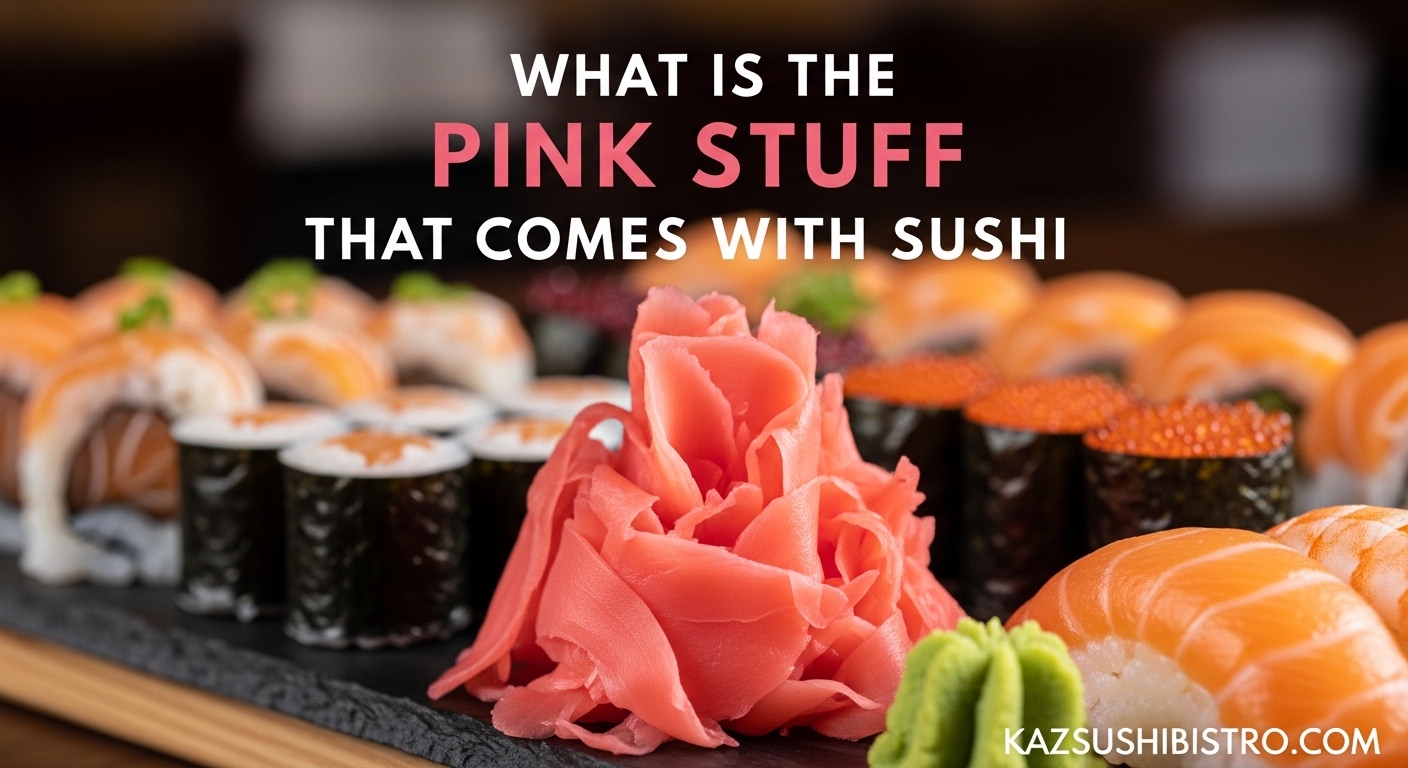
The pink stuff that comes with sushi is pickled ginger, known as gari in Japanese. This thinly sliced, sweet-tangy accompaniment serves as a palate cleanser between different pieces of sushi. Understanding what gari is and how to use it properly will completely change your sushi dining experience.
I remember the first time I noticed the small pink pile on my sushi plate. Like many people, I assumed it was some kind of garnish or decoration. It took years before I learned that this humble condiment plays a crucial role in traditional Japanese dining etiquette. In this guide, I will explain exactly what is the pink stuff that comes with sushi, why it turns pink, and how to use it like a seasoned sushi enthusiast.
Table of Contents
What Is the Pink Stuff That Comes with Sushi?
Gari is the Japanese term for pickled ginger served alongside sushi. The word itself is onomatopoeic, meant to mimic the sound of a knife cutting through the tender ginger rhizome. Traditional gari is made from shin shoga, or young ginger, which has a milder flavor and more delicate texture than mature ginger.
The preparation process is straightforward but precise. Harvesters pull young ginger roots before they fully mature, when the skin is still thin and pale. Chefs then peel and slice the ginger paper-thin, almost translucent, using sharp knives or mandolines. These delicate slices soak in a mixture of rice vinegar and sugar for several days, creating the characteristic sweet-tangy flavor profile.
Gari belongs to the broader category of tsukemono, or Japanese pickled vegetables. Unlike heavily salted pickles, gari uses the amazuzuke method, which relies on vinegar and sugar rather than salt fermentation. This technique preserves the ginger’s crunch while mellowing its natural heat. The result is a condiment that cleanses the palate without overwhelming it.
The texture of quality gari is nearly as important as its flavor. Each slice should be thin enough to see light through, with a slight crunch that yields to a tender bite. Fresh gari has a clean, bright aroma that hints at both the ginger’s spice and the vinegar’s tang. When you encounter gari that feels rubbery or smells overly sour, it is likely past its prime.
Why Is Sushi Ginger Pink?
The pink color of sushi ginger comes from two different sources depending on whether you are eating natural or commercially produced gari. Naturally pink gari gets its hue from a chemical reaction between the young ginger and the acidic pickling liquid. Commercially produced gari often relies on artificial food coloring to achieve that familiar pink shade.
Natural Pink: The Anthocyanin Reaction
Young ginger contains compounds called anthocyanins, which are the same pigments that give blueberries and red cabbage their color. When exposed to the acidic environment of rice vinegar, these anthocyanins react and turn pink. This is the same chemical principle that makes red cabbage change color when you add vinegar to it.
The intensity of the natural pink varies based on the ginger’s age and the specific anthocyanin content. Some batches turn a delicate blush pink, while others develop deeper salmon tones. This variation is completely normal and actually indicates authentic, naturally processed gari. If you notice slight color differences between batches at a quality sushi restaurant, you are likely seeing the real deal.
Artificial Coloring in Commercial Gari
Most grocery store pickled ginger and lower-end restaurant offerings use artificial coloring to achieve that bright, uniform pink. Common dyes include E124 (Ponceau 4R) and cochineal extract, which provide the vivid Barbie-pink color many consumers associate with sushi ginger. Manufacturers dye mature ginger because it is cheaper and more readily available than young ginger, but it lacks the natural anthocyanins needed for pink coloration.
There is nothing inherently dangerous about food-grade coloring, but dyed ginger often indicates lower quality. Mature ginger has a tougher, more fibrous texture and a sharper, more aggressive flavor than young ginger. When you see ginger that looks almost neon pink, you can assume it is artificially colored. The best gari has a softer, more natural pink or pale peach tone.
Why Some Ginger Is White or Pale
An increasing number of high-end sushi restaurants serve white or pale yellow ginger instead of pink. This trend reflects a shift toward natural preparation methods without artificial coloring. When young ginger is pickled without added dyes, it often retains its natural pale color rather than developing a strong pink hue.
Some restaurants specifically seek out ginger that stays pale to signal their commitment to natural preparation. Others simply accept whatever color the natural anthocyanin reaction produces, which can range from white to light pink depending on the harvest. Forum discussions reveal that many experienced sushi diners actually prefer the taste of pale or white ginger, associating it with higher quality and less commercial processing.
How to Use Pickled Ginger with Sushi?
Gari serves one primary purpose: cleansing your palate between different pieces of sushi. The combination of vinegar and ginger resets your taste buds, removing residual flavors from the previous piece so you can fully appreciate the next. Think of it as pressing a reset button on your mouth.
Proper Sushi Etiquette
Eat a small slice of gari between different types of sushi, not on top of the fish. Place the ginger directly on your tongue and let the flavors work their magic before you pick up your next piece. This timing matters because you want a clean palate when the next sushi touches your tongue, not a mouthful of competing flavors.
One common misconception is that gari belongs on top of sushi like a garnish. Some people even mix it into their soy sauce or wasabi. Both practices are considered poor etiquette in traditional Japanese dining. The chef carefully balances flavors in each piece, and adding ginger directly interferes with that intended experience.
Common Mistakes to Avoid
After reviewing dozens of forum discussions, I noticed the same mistakes appear repeatedly. Here are the most common errors and how to correct them:
Mistake 1: Putting ginger ON your sushi. This masks the fish’s flavor and disrupts the chef’s intended balance. Keep ginger separate from the sushi itself.
Mistake 2: Eating ginger only at the end. Gari works best when used between different types of fish. Eating it only after your meal misses its primary purpose as a palate cleanser during the dining experience.
Mistake 3: Mixing ginger with soy sauce or wasabi. Each condiment serves a distinct purpose. Combining them creates a muddled flavor that defeats the point of having separate accompaniments.
Mistake 4: Using ginger to “kill parasites”. This is an outdated myth. Modern sushi-grade fish is flash-frozen to eliminate parasites, and wasabi or ginger cannot reliably kill bacteria or parasites. Use gari for flavor, not food safety.
Gari vs Beni Shoga vs Sakura Denbu: What is the Pink Stuff That Comes with Sushi Compared to Other Condiments 2026
Japanese cuisine features three distinct pink condiments that often confuse Western diners. While they may look similar at first glance, each serves a different purpose and has unique preparation methods.
| Characteristic | Gari (Sushi Ginger) | Beni Shoga | Sakura Denbu |
|---|---|---|---|
| Primary Ingredient | Young ginger (shin shoga) | Mature ginger | Cod or pollock fish |
| Preparation | Pickled in rice vinegar and sugar | Pickled in umezu (plum vinegar) | Shredded, dried, seasoned, and dyed |
| Color Source | Natural anthocyanin or artificial dye | Umezu (plum vinegar) gives red color | Food coloring (traditional or artificial) |
| Flavor Profile | Sweet, tangy, mildly spicy | Sharp, sour, very spicy | Sweet, mild, slightly salty |
| Texture | Thin, tender, slightly crunchy | Thick, coarse, crunchy | Fluffy, cotton-like, dissolves quickly |
| Primary Use | Palate cleanser with sushi | Garnish for savory dishes (gyudon, yakisoba) | Decorative topping for rice, chirashi |
| Served With | Sushi, sashimi | Beef bowls, fried noodles, takoyaki | Hinamatsuri (doll festival) chirashi |
Beni shoga is the red pickled ginger you often see on top of beef bowls or mixed into yakisoba. Its sharp, aggressive flavor comes from being pickled in umezu (plum vinegar) rather than the milder rice vinegar used for gari. The thickness and crunch of beni shoga make it unsuitable as a palate cleanser but perfect as a flavor accent in heavier dishes.
Sakura denbu is the outlier here because it contains no ginger at all. This fluffy pink topping consists of shredded, dried, and seasoned white fish that has been dyed pink. You will most commonly encounter it during Hinamatsuri (Girls’ Day) celebrations, where it tops special chirashi sushi. Its sweet flavor and dissolving texture make it a decorative element rather than a functional condiment.
Health Benefits of Pickled Ginger
Beyond its role in sushi dining, gari offers several legitimate health benefits. While you should not treat it as medicine, regular consumption of pickled ginger can support your overall wellness in measurable ways.
Digestive Aid. Ginger has been used for centuries to support digestion. The compounds in ginger help stimulate digestive enzymes and speed up the movement of food through the stomach. Eating gari between pieces of rich, fatty fish like toro or salmon can help prevent that heavy, sluggish feeling.
Anti-Nausea Properties. The gingerol compounds in ginger are well-documented nausea fighters. Studies show ginger can reduce motion sickness, morning sickness, and post-operative nausea. While gari contains less gingerol than fresh ginger due to the pickling process, it still retains enough to provide mild anti-nausea benefits.
Anti-Inflammatory Effects. Gingerol also acts as a natural anti-inflammatory agent. Regular consumption of ginger products may help reduce chronic inflammation in the body, though you would need to eat substantial amounts to see significant effects. Think of gari as a small contributor to an anti-inflammatory diet rather than a standalone treatment.
Low Calorie Content. Gari is essentially calorie-free, with about 5 calories per tablespoon. The vinegar and sugar brine adds minimal calories while providing flavor. If you are watching your calorie intake, gari is one condiment you never need to worry about.
Probiotic Potential. Traditionally fermented pickles can contain beneficial bacteria, though commercial gari is often pasteurized, which kills these probiotics. If you make homemade pickled ginger or find small-batch artisanal versions, you may get some digestive benefits from the fermentation process.
Related Sushi Condiments and Their Proper Use
Gari works alongside two other essential sushi accompaniments: wasabi and soy sauce. Understanding how all three function together helps you appreciate the complete sushi experience.
Wasabi: The Green Heat
Real wasabi comes from the root of the Wasabia japonica plant, a member of the Brassicaceae family that includes mustard and horseradish. The heat from wasabi is different from chili pepper heat because it affects the nasal passages rather than the tongue. Authentic wasabi is grated fresh and loses its potency within about 15 minutes of preparation.
Most sushi restaurants outside Japan serve wasabi made from horseradish powder mixed with green food coloring. This imitation wasabi is much hotter and longer-lasting than the real thing, which has a more complex, slightly sweet flavor beneath the heat. Both versions serve the same purpose: adding a kick that complements the fish’s richness and cuts through fatty flavors.
A persistent myth claims that wasabi kills bacteria or parasites in raw fish. This is not true. While wasabi does have mild antimicrobial properties in laboratory settings, the amounts used in dining are far too small to have any meaningful effect on food safety. Modern sushi fish is made safe through flash-freezing, not condiments.
Soy Sauce: The Salty Dip
Soy sauce adds salt and umami to sushi, but it should be used sparingly. The goal is to enhance, not mask, the fish’s natural flavor. When dipping nigiri, turn the piece upside down so the fish touches the soy sauce, not the rice. This prevents the rice from falling apart and absorbing too much salty liquid.
Many sushi chefs apply soy sauce directly to the fish before serving, especially for fatty cuts like toro. In these cases, skip the additional soy sauce at the table. The chef has already balanced the flavors precisely. Trust their judgment.
Never mix wasabi into your soy sauce dish to create a green slurry. This practice, common in Western sushi restaurants, dilutes both condiments and creates a one-note flavor. Apply wasabi directly to the fish if desired, then use soy sauce separately.
Frequently Asked Questions
Are you supposed to eat the ginger that comes with sushi?
Yes, you should eat the ginger that comes with sushi, but use it as a palate cleanser between different pieces rather than eating it all at the beginning or end. Take a small slice of gari between different types of fish to reset your taste buds. This allows you to fully appreciate the unique flavor of each piece of sushi without interference from previous bites.
Is it true that wasabi kills bacteria?
No, this is a myth. While wasabi does have mild antimicrobial properties in laboratory settings, the amounts used in dining are far too small to kill bacteria or parasites in raw fish. Modern sushi-grade fish is made safe through flash-freezing at specific temperatures for set time periods, not through condiments. You should enjoy wasabi for its flavor and heat, not for food safety.
Is eating pickled ginger healthy?
Yes, pickled ginger offers several health benefits. It aids digestion by stimulating digestive enzymes, contains gingerol compounds that help reduce nausea, provides anti-inflammatory effects, and is very low in calories. However, commercial gari may contain added sugar and artificial coloring, so consuming it in moderation as part of a balanced diet is recommended.
Why is some sushi ginger white and some pink?
The color difference depends on the ginger’s age and processing method. Young ginger naturally turns pink when pickled due to anthocyanin compounds reacting with vinegar. Mature ginger stays pale or white unless artificially dyed. Some high-end restaurants intentionally serve white or pale ginger to indicate they use natural preparation without artificial coloring. Both colors taste similar, though naturally processed ginger often has a superior texture.
Conclusion
Now you know exactly what is the pink stuff that comes with sushi and how to use it properly. That small pile of gari is far more than a garnish. It is a functional palate cleanser that has been part of Japanese sushi culture for generations.
Whether your ginger is naturally pink from young ginger anthocyanins or artificially colored to meet commercial expectations, the proper usage remains the same. Eat it between pieces, not on top. Appreciate it as a tool for experiencing sushi the way it was meant to be enjoyed. Your next sushi meal will taste better because of it.