
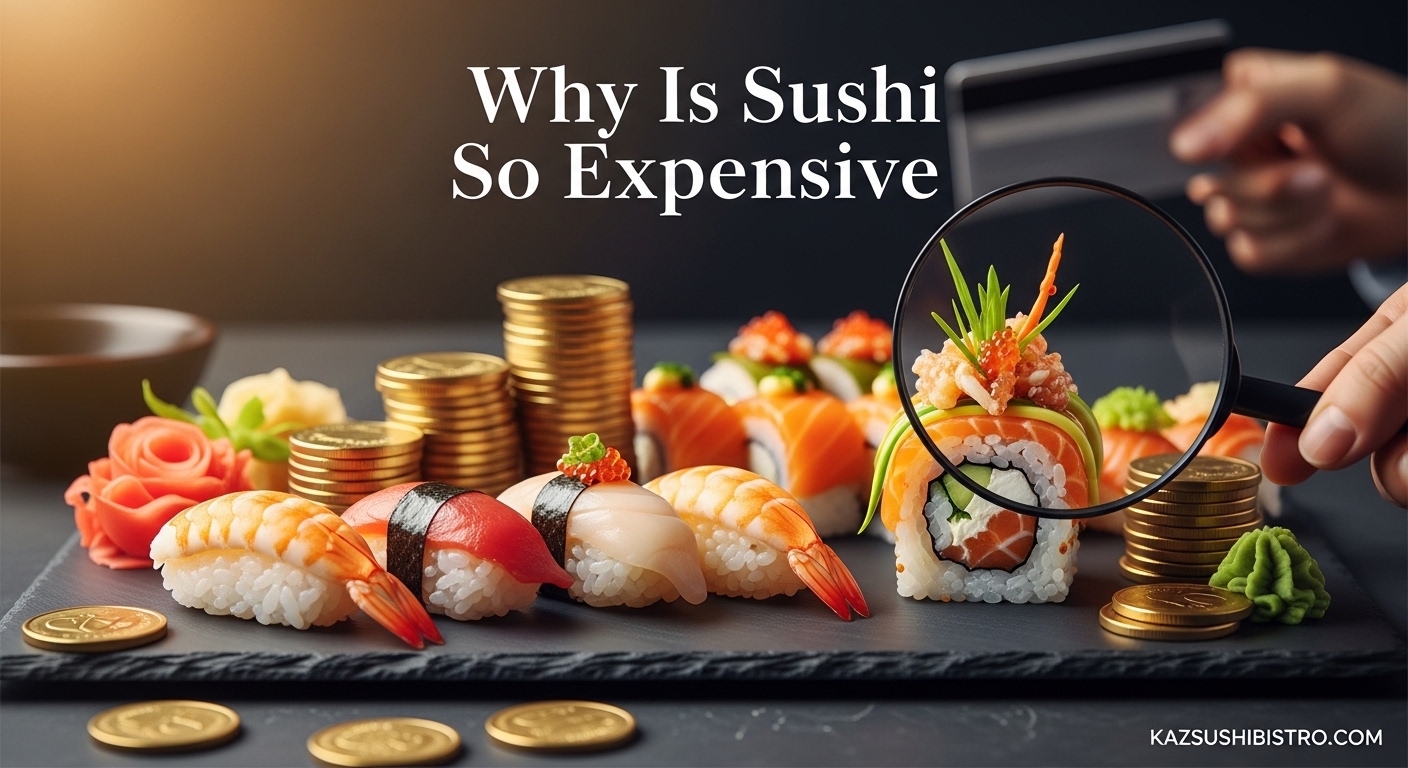
Sushi is expensive because it combines premium sushi-grade seafood that costs 25-50% more than standard fish, highly trained chefs who often spend a decade mastering their craft, significant spoilage losses from perishable ingredients, and complex import logistics that drive up costs. When you order that $15 roll, you are paying for food safety compliance, specialized refrigeration equipment, years of culinary expertise, and the reality that 20-30% of fresh fish inventory may never reach a customer’s plate.
I remember the first time I sat at a proper sushi counter and watched the itamae work. The precision, the knife skills, the understanding of each fish’s texture and optimal serving temperature—it became clear this was not simple fast food. Over the years running our sushi bistro and researching the industry, I have learned that sushi pricing reflects genuine cost pressures that most diners never see.
Table of Contents
Why Is Sushi So Expensive? Breaking Down the Six Major Cost Factors
Understanding sushi pricing requires looking beyond the plate. The costs stack up in ways that surprise even restaurant industry veterans. Here is a detailed breakdown of where your sushi dollars actually go.
Premium Seafood and Sushi-Grade Fish Costs
The foundation of sushi pricing starts with the fish itself. Sushi-grade seafood represents the top tier of freshness and quality, commanding significantly higher prices than cooking-grade alternatives. Suppliers must maintain rigorous cold chains and rapid turnover to ensure safety for raw consumption.
FDA regulations require that all fish served raw (except tuna) be frozen at specific temperatures to kill parasites. This flash-freezing process demands specialized equipment and adds costs at every step. A pound of sushi-grade salmon can cost $25-35 wholesale, while cooking-grade salmon might run $12-18. Bluefin tuna, a sushi staple, can reach $50-200 per pound depending on quality grade and seasonal availability.
The seasonal nature of premium fish creates additional pricing pressure. When yellowfin tuna migrates or when certain harvesting restrictions apply, restaurants must either absorb higher costs or substitute lower-grade alternatives. Many high-end establishments refuse to compromise, paying premium rates to maintain consistent quality year-round.
The Hidden Cost of Spoilage and Waste
Fresh fish has a remarkably short shelf life. Unlike canned goods or frozen foods, sushi ingredients typically last 24-48 hours at peak quality. This perishability creates a constant risk of inventory loss that restaurants must factor into every menu price.
Industry estimates suggest that sushi restaurants lose 20-30% of their fresh fish inventory to spoilage. A restaurant ordering $1,000 worth of seafood daily may discard $200-300 worth before it ever reaches a plate. This is not poor management—it is the unavoidable reality of working with ultra-fresh ingredients in a market where demand fluctuates.
Experienced sushi chefs develop an almost sixth sense for predicting busy nights and adjusting orders accordingly. Even then, weather events, local competition, and changing customer patterns create ordering challenges that directly impact the bottom line. These spoilage losses are spread across every dish served, contributing to higher base prices.
Sushi Chef Training and Labor Costs (Itamae)
The person behind the counter represents years of investment in human capital. Traditional itamae (sushi chefs) in Japan often undergo apprenticeships lasting 5-10 years before they are considered fully qualified. This extended training timeline creates a limited supply of truly skilled practitioners.
In the United States, sushi chef wages range from $30,000 for entry-level positions to $70,000 or more for experienced itamae at premium establishments. The skill requirements go far beyond basic knife work. A qualified sushi chef must understand fish anatomy, rice preparation chemistry, flavor pairing, and food safety protocols simultaneously.
The labor shortage in the sushi industry has intensified in 2026. Fewer young people are entering the long apprenticeship pipeline, while demand for authentic sushi continues growing. This supply-demand imbalance pushes wages higher, which restaurants must reflect in menu pricing to attract and retain qualified talent.
Import and Logistics Costs
Unless you are dining at a coastal restaurant with direct dock access, your sushi fish has likely traveled thousands of miles. Premium seafood often originates in Japan, Norway, Scotland, New Zealand, or Hawaii before reaching American restaurants. Each mile adds transportation and preservation costs.
Import fees, tariffs, and customs processing add 10-20% to the base cost of internationally sourced fish. Currency fluctuations between the dollar and yen or euro create additional pricing volatility that restaurants must hedge against. Cold chain requirements mean specialized refrigerated shipping containers that cost significantly more than standard freight.
Domestic sourcing offers some relief, but high-end sushi establishments often prefer specific regional varieties. Hokkaido sea urchin, Japanese bluefin tuna, and Scottish salmon carry geographic premiums that discerning customers expect. The logistics network supporting these supply chains represents a substantial ongoing operational expense.
Equipment and Operational Expenses
Walk into any sushi restaurant kitchen and you will see specialized equipment that most casual dining spots do not need. Thermal rice warmers maintain precise temperatures for vinegared rice. Specialized refrigeration units keep fish at optimal freshness without freezing. High-carbon steel knives require regular professional sharpening.
The energy costs alone for maintaining proper storage temperatures run higher than typical restaurants. Multiple refrigeration units operating 24/7, rice cookers running constantly, and climate-controlled prep areas all contribute to utility bills that can reach $3,000-8,000 monthly depending on location and size.
Rent costs hit sushi establishments particularly hard because location matters enormously for this cuisine. High-traffic urban areas, proximity to business districts for lunch crowds, and visibility all command premium real estate prices. The combination of specialized equipment needs and prime location rents creates a fixed cost base that requires higher menu prices to achieve profitability.
The Real Wasabi vs. Imitation Cost Factor
Here is a secret most sushi lovers do not know. That green paste on your plate is almost certainly not real wasabi. Authentic wasabi (Wasabia japonica) is one of the most expensive vegetables in the world, costing $100-200 per pound wholesale. It grows only in specific Japanese mountain stream conditions and takes 2-3 years to mature.
The vast majority of American sushi restaurants use a horseradish-based paste colored with green dye. This substitute costs roughly $2-5 per pound—less than 5% of the real thing. Some high-end establishments do offer fresh wasabi, but the price reflects the genuine article, often adding $3-8 to a single order.
This cost disparity illustrates a broader point about sushi economics. The gap between authentic ingredients and acceptable substitutes is enormous. Restaurants choosing quality over cost savings make conscious decisions that affect their pricing structure across the entire menu.
Regional Price Comparison: Japan vs. United States
One of the most common questions I hear is why sushi costs significantly less in Japan. The answer involves infrastructure, cultural factors, and market maturity rather than quality differences. In Japan, sushi is everyday food with an established supply chain that American markets simply cannot match.
Japanese sushi restaurants benefit from local fish markets like Toyosu (formerly Tsukiji) where massive volumes create economies of scale. The infrastructure for handling, distributing, and storing fresh fish has evolved over centuries. American restaurants importing the same fish face international shipping, customs delays, and additional handling that Japanese establishments avoid entirely.
Cultural expectations also shape pricing. In Japan, customers accept simpler preparations in neighborhood spots. Conveyor belt sushi (kaiten-zushi) offers meals for $1-3 per plate that would cost $8-12 in the United States. The American sushi market has trended toward premium experiences and elaborate rolls that inherently carry higher price tags regardless of ingredient quality.
Coastal American cities like Seattle, Los Angeles, and New York do offer better sushi values than inland locations. Access to fresh Pacific seafood and established Japanese-American communities create pockets of more affordable, authentic options. However, even these locations cannot match Japanese pricing due to regulatory compliance costs and smaller market volumes.
How to Enjoy Great Sushi Without Breaking the Bank 2026
Understanding why sushi is expensive does not mean accepting inflated prices blindly. There are legitimate strategies for enjoying quality sushi at reasonable costs. After years in the industry, here are my recommendations for value-conscious diners.
Look for Lunch Specials
Many sushi restaurants offer lunch combinations that provide significant savings over dinner pricing. A $15-18 lunch box with soup, salad, and 6-8 pieces of nigiri represents excellent value compared to ordering a la carte. Restaurants use lunch specials to drive traffic during slower hours, passing some savings to customers.
Explore All-You-Can-Eat Options
All-you-can-eat sushi has proliferated for good reason. When run properly, these establishments manage inventory efficiently and make profit through beverage sales and volume. For $25-35, you can sample extensively. Just temper expectations—the fish quality typically runs one tier below premium a la carte establishments.
Seek Out Local Neighborhood Spots
Tourist-area sushi commands premium pricing due to rent and foot traffic economics. Venture into residential neighborhoods with established Japanese communities. Family-run spots in these areas often offer better value because they own their properties, have loyal customer bases, and focus on repeat business over one-time tourist dollars.
Consider the DIY Route
Making sushi at home is absolutely possible and significantly cheaper per piece. A basic setup requires a bamboo mat, sharp knife, and access to a fish market selling sushi-grade seafood. Initial attempts may look rustic, but the learning curve is manageable. Expect to spend $40-60 for ingredients serving 4-6 people—roughly equivalent to one restaurant meal with leftovers.
Home sushi making does have limitations. Without professional refrigeration and rapid turnover, your fish selection is more constrained. You also miss the itamae’s knife skills and rice preparation expertise. However, for casual enjoyment, DIY offers substantial savings and a fun cooking experience.
FAQs
Is sushi overpriced compared to the actual ingredient costs?
Sushi is generally fairly priced when considering all cost factors, though some premium establishments charge significant markups for ambiance and reputation. The typical breakdown shows roughly 30-35% going to ingredients, 25-30% to labor, 20-25% to overhead, and 10-15% profit. When you account for spoilage losses, specialized equipment, and skilled labor, the pricing often reflects genuine costs rather than gouging.
Why is sushi cheaper in Japan?
Sushi costs less in Japan due to established local supply chains, massive fish markets creating economies of scale, cultural acceptance of simpler preparations, and infrastructure optimized for fresh seafood distribution over centuries. American restaurants must import many fish varieties, comply with different regulations, and serve smaller markets without the same volume advantages.
Is $50 a day enough for food in Japan?
Yes, $50 per day provides ample food budget for Japan. A typical day might include a $6-8 convenience store breakfast, $10-15 lunch at a local restaurant, and $20-30 dinner with room for snacks. Even enjoying mid-range sushi occasionally fits within this budget, though high-end omakase experiences would require separate allocation.
Is sushi good for cholesterol?
Sushi can be beneficial for cholesterol when chosen wisely. Fatty fish like salmon and mackerel contain omega-3 fatty acids that may improve HDL cholesterol levels. However, tempura rolls and mayonnaise-based sauces add unhealthy fats. Stick to simple nigiri and sashimi for the most heart-healthy options.
Can you eat sushi on Mounjaro?
Medical professionals generally advise caution with raw fish while taking Mounjaro (tirzepatide) due to potential gastrointestinal side effects and altered digestion. The medication slows gastric emptying, which may affect how your body processes raw foods. Consult your prescribing physician for personalized guidance based on your specific health situation and dosage.
Understanding When Sushi Is Worth the Price
After exploring why sushi is so expensive, the question becomes whether the experience justifies the cost. In most cases, quality sushi represents fair value when you consider the expertise, ingredient quality, and operational complexity involved.
The key is recognizing the difference between fair pricing and inflated pricing. A $20 omakase lunch at a skilled neighborhood spot often delivers better value than a $40 mall sushi platter with fancy garnishes. Learn to identify restaurants that invest in quality fish, employ trained chefs, and maintain proper handling standards. These establishments earn their pricing through genuine investment in the dining experience.
Understanding sushi economics also helps set realistic expectations. That $8 salmon roll covers real costs that casual dining simply does not face. When you choose to enjoy sushi, you are participating in a culinary tradition that demands premium ingredients, specialized skills, and significant operational investment. The price tag reflects these realities—and for many of us, the experience remains worth every dollar.