
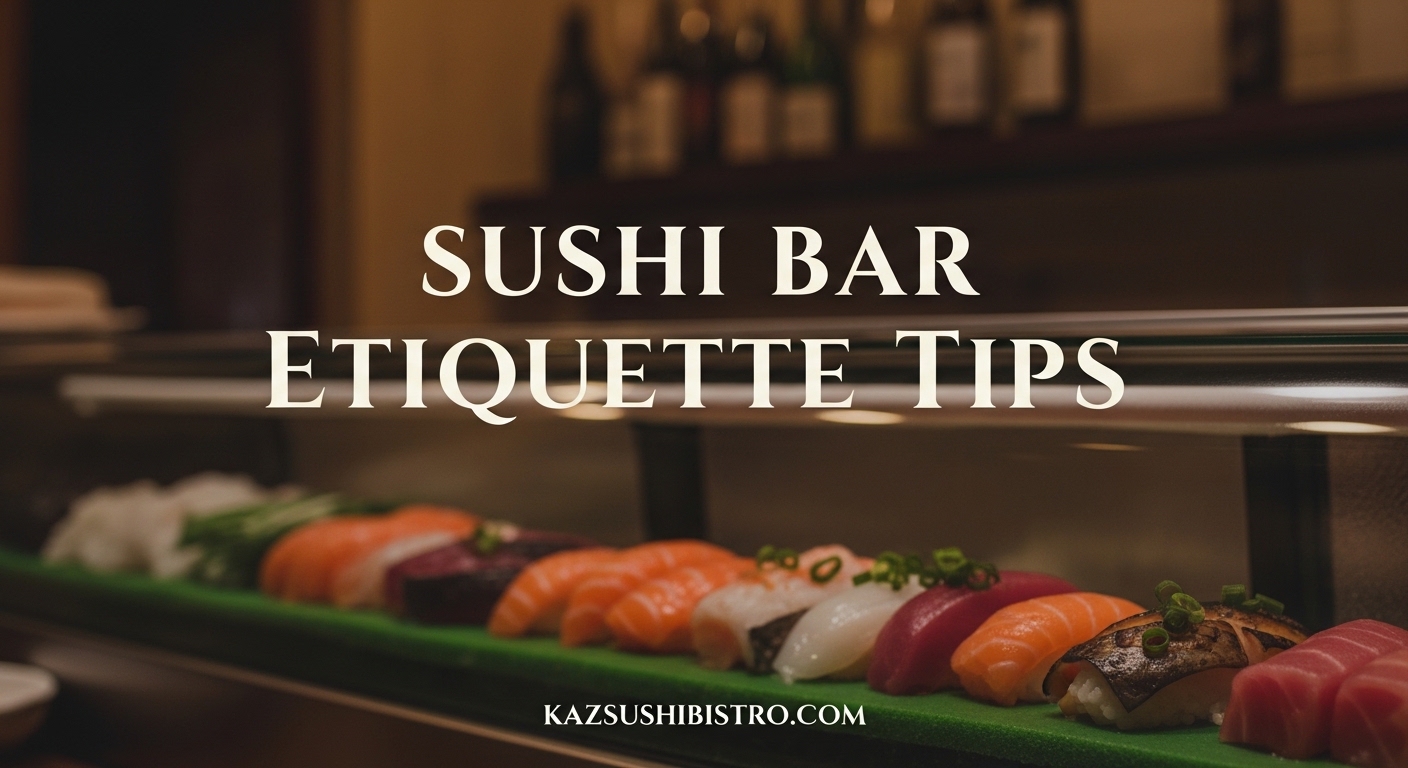
Walking into a traditional sushi bar for the first time can feel intimidating. You see the chef working behind the counter, other diners eating quietly, and you wonder if you are about to break some unwritten rule. I have been there too, sitting nervously at my first omakase counter in 2026, afraid to pick up the wrong chopstick or dip my nigiri the wrong way.
These Sushi Bar Etiquette Tips are not about rigid rules that shame you for doing something wrong. They are about helping you enjoy sushi the way it was meant to be experienced. When you understand why chefs prepare fish a certain way or why certain customs exist, every bite becomes more meaningful. The goal is to show respect for the craft while feeling confident and comfortable at the bar.
Our team at KAZ Sushi Bistro has spent years studying Japanese sushi customs, visiting top sushi bars across Japan and America, and talking with dozens of itamae (sushi chefs). We created this guide to eliminate the anxiety and help you walk into any sushi restaurant with confidence.
Table of Contents
Why Sushi Bar Etiquette Matters
Sushi is one of the most craft-intensive foods in the world. A master itamae trains for 10 years before being considered fully skilled. Every piece of nigiri is shaped by hand at a specific temperature, with rice seasoned to complement the specific fish being served.
Following proper etiquette shows respect for that years-long dedication. When you dip rice-side down instead of soaking the rice, you preserve the texture the chef carefully created. When you eat a piece in one bite, you experience the flavor balance exactly as intended.
Beyond respect, good etiquette actually improves your meal. The chef notices diners who appreciate the craft, often rewarding them with better cuts of fish, insider recommendations, or a more personalized experience. At high-end counters, building rapport with the chef transforms a simple meal into an unforgettable culinary journey.
The Essentials: Do’s and Don’ts at a Glance
Before diving into details, here is a quick reference guide for your next visit. Print this mentally or bookmark this page to review before you go.
The Do’s
- Do sit at the sushi bar when possible for the full experience and interaction with the itamae.
- Do use your hands for nigiri sushi, especially at traditional Japanese establishments.
- Do flip nigiri fish-side down when dipping in soy sauce to protect the rice.
- Do eat sushi in one bite when possible to experience the intended flavor balance.
- Do eat pickled ginger between pieces to cleanse your palate.
- Do trust the chef’s recommendations when ordering, especially with seasonal fish.
- Do make eye contact and greet the chef when you sit down – a simple “hello” builds rapport.
- Do use the oshibori towel provided at the beginning to clean your hands before eating.
- Do communicate dietary restrictions before ordering omakase or when the chef asks.
- Do pace yourself and enjoy each piece as it is served rather than rushing through.
The Don’ts
- Don’t rub your chopsticks together – this implies the wood is cheap or splintered.
- Don’t soak sushi in soy sauce – a light dip is enough and preserves the chef’s seasoning.
- Don’t put ginger on top of your sushi – gari is a palate cleanser, not a topping.
- Don’t pass food chopstick-to-chopstick with another diner – this resembles a funeral ritual in Japan.
- Don’t stick chopsticks upright in a bowl of rice – this also resembles funeral incense.
- Don’t separate fish from rice or pick apart maki rolls – eat sushi as composed.
- Don’t use too much wasabi – start with the amount the chef applied, add more only if needed.
- Don’t bring strong-smelling perfume or cologne – sushi is about subtle aromas that fragrance overpowers.
- Don’t ignore the chef’s warnings about certain fish being an acquired taste.
- Don’t be loud or disruptive – sushi bars are traditionally quiet, contemplative spaces.
Using Your Hands vs Chopsticks: The Right Choice 2026
One of the most common questions we see in forums is whether using your hands at a sushi bar is acceptable. The answer is yes, and in many cases, it is actually preferred.
In Japan, traditionalists often eat nigiri sushi with their hands. The rice is packed loosely to dissolve in your mouth, and fingers provide better control than chopsticks. When you use your hands, you avoid the risk of squeezing the rice too hard or breaking the delicate construction.
Chopsticks are perfectly acceptable too, especially for sashimi, which has no rice to hold together. For maki rolls, either hands or chopsticks work – use whichever feels more comfortable. Temaki (hand rolls) are literally designed to be eaten with your hands. The name itself means “hand roll” in Japanese.
The key is to do what feels natural and non-awkward. If you are comfortable with chopsticks, use them. If you prefer your hands for nigiri, that is completely fine. A good chef will not judge you either way. What matters more is that you handle the sushi gently and eat it promptly after it is served.
The Correct Way to Dip Sushi in Soy Sauce
Soy sauce is meant to enhance fish, not drown it. The proper dipping technique preserves the texture of the rice and prevents overpowering the subtle flavors of the seafood.
For nigiri sushi, flip the piece so the fish side faces down. Touch just the fish lightly to the soy sauce, then bring it directly to your mouth. Never dip the rice side first – it absorbs too much liquid and falls apart. The rice may also carry too much soy sauce, masking the fish flavor completely.
For sashimi, you can dip directly or use your chopsticks to coat the fish lightly. Some diners pour a small amount of soy sauce on the plate and mix in wasabi if desired. Maki rolls are trickier – dip the open end of the roll lightly if needed, or use your chopsticks to apply a small amount of soy sauce to the top.
Many high-end sushi bars now serve nigiri already seasoned with nikiri (sweetened soy sauce) or a brush of soy glaze. In these cases, the chef has already applied optimal seasoning, and additional dipping is unnecessary. When in doubt, ask the chef or watch what other diners at the bar are doing.
Wasabi: To Mix or Not to Mix?
The wasabi debate is one of the most contentious topics in sushi etiquette. Traditional etiquette guides say never mix wasabi into your soy sauce. Reality is more nuanced.
In high-end omakase establishments, the chef applies the optimal amount of fresh wasabi between the fish and rice. Fresh wasabi is aromatic and complex, not just spicy. Adding more would disrupt the balance the chef created. In these cases, trust the chef and skip additional wasabi.
However, mixing wasabi into soy sauce to create a slurry is actually common in Japan at casual sushi restaurants. Many Japanese people do this regularly. The “never mix” rule is more of a Western invention or applies specifically to fine-dining contexts.
Most sushi bars in America use powdered horseradish-based wasabi, not the real root. This type is spicier but less nuanced. If you prefer more heat, adding some to your soy sauce or directly to the fish is perfectly acceptable at casual establishments. The key is moderation – you want to enhance the fish, not burn your sinuses.
The One-Bite Rule and Why It Matters
Sushi is crafted as a complete, bite-sized experience. The rice temperature, the fish slice thickness, the dab of wasabi, and any glaze are all calibrated to deliver specific flavors and textures in one motion.
When you take a piece of nigiri in one bite, you experience the rice dissolving on your tongue while the fish releases its oils. The flavors combine in the exact ratio the chef intended. Biting sushi in half disrupts this balance – the second bite has different ratios of fish to rice.
In Japan, sushi is typically served in smaller portions that are genuinely one-bite sized. American sushi bars often serve larger pieces that may require two bites. If a piece looks too large, you have two polite options. Eat it in two bites without returning it to the plate, or quietly ask the chef if they can make the next piece slightly smaller.
Never put partially eaten sushi back on the plate or counter. If you must take two bites, hold the piece in your hand or chopsticks between bites. This rule exists for hygiene and aesthetics – half-eaten food is unappealing to see.
Essential Chopstick Etiquette at the Sushi Bar
Chopstick manners at sushi bars follow standard Japanese dining etiquette with a few sushi-specific additions. Mastering these basics shows cultural awareness.
Never rub disposable wooden chopsticks together after breaking them apart. This gesture implies the chopsticks are cheap or splintered, which can be insulting to the restaurant. Quality chopsticks do not need rubbing.
Do not pass food directly from your chopsticks to someone else’s chopsticks. This resembles a funeral ritual in Japan where bones are passed between chopsticks. Instead, place the item on their plate or ask them to pick it up from a shared plate.
Never stick chopsticks upright into a bowl of rice. This resembles incense sticks at a Buddhist funeral and is considered highly inappropriate. When not using your chopsticks, rest them on the hashioki (chopstick rest) or lay them across your plate or wrapper.
If you struggle with chopsticks, it is acceptable to ask for a fork at casual sushi restaurants. At high-end counters, trying your best with chopsticks or hands is appreciated, but no one will shame you for imperfect technique. The effort matters more than perfection.
Pickled Ginger: Palate Cleanser, Not a Topping
Gari, the thinly sliced pickled ginger served with sushi, has a specific purpose that many diners misunderstand. It is not a condiment to put on your sushi.
The acidic, slightly sweet ginger acts as a palate cleanser between different types of fish. After eating a rich piece of tuna, a slice of gari resets your taste buds so you can fully appreciate the delicate flavor of flounder next. Think of it like the sorbet course in a French tasting menu.
Never put ginger on top of your nigiri or inside your maki rolls. This changes the flavor profile the chef created and misses the point of the palate cleansing function. Some diners do this thinking it adds flavor, but it actually masks the subtle tastes you paid to experience.
Eat a small piece of ginger between different types of fish. Chew it thoroughly and let the acidity clear your mouth before the next piece arrives. At high-end omakase bars, the chef may pause service between courses specifically to let you cleanse your palate.
The Right Order to Eat Sushi
The sequence in which you eat sushi matters for your palate. Starting with the wrong fish can overwhelm your taste buds early and prevent you from appreciating lighter flavors later.
Begin with lighter, milder white fish such as flounder (hirame), red snapper (tai), or halibut. These have delicate flavors that are easily overwhelmed by stronger fish. Progress to medium-flavored fish like yellowtail (hamachi), salmon (sake), or amberjack.
Move to richer, oilier fish like tuna (maguro) and fatty tuna (otoro) in the middle of your meal. These have stronger flavors but are still clean tasting. Finish with the boldest flavors – mackerel (saba), sea urchin (uni), or eel (unagi/anago).
Traditional ordering also follows a pattern: sashimi first, then nigiri sushi, then maki rolls. Sashimi prepares your palate with pure fish flavor before rice is introduced. Nigiri showcases the chef’s skill with rice and fish balance. Rolls often contain multiple ingredients and are eaten toward the end.
When you order omakase (chef’s choice), the itamae handles this sequencing for you. They know which fish are freshest that day and will serve them in the optimal order. This is one reason omakase is considered the purest sushi experience.
Respecting the Itamae (Sushi Chef)
The relationship between diner and itamae defines the sushi experience. Unlike most restaurant interactions, you are sitting directly across from the person preparing your food. This proximity creates both opportunity and responsibility.
Always sit at the bar if you want the full experience. Table service is fine for groups or privacy, but the bar puts you in direct contact with the chef. Make eye contact when you sit down and offer a greeting. In Japan, regulars often say “okawari kudasai” (please give me another) when ready for the next piece.
Trust the chef’s recommendations above all else. They know which fish came in fresh that morning, which cuts are best, and what is in peak season. Asking for salmon at a traditional counter in winter might disappoint when the chef has exceptional mackerel that day.
Ask questions, but read the room. At busy counters during peak hours, keep conversation brief. At slower times, many chefs love explaining the origin of a fish, demonstrating a technique, or sharing stories about their training. We have learned some of our best sushi insights from casual bar conversation with itamae.
Never correct or lecture the chef about how sushi should be made. Even if you read conflicting advice online, the chef in front of you has years of training and is making sushi their way. If they serve wasabi under the fish, that is their style. If they brush soy sauce on top, that is their choice. Respect their craft.
Omakase: Trusting the Chef’s Choice
Omakase, which translates to “I’ll leave it to you,” represents the highest form of sushi dining. Instead of ordering specific items, you trust the chef to select and serve a progression of their best offerings.
This dining style requires surrendering control. You do not choose the fish, the order, or the quantity. The chef decides based on what is freshest, what is in season, and what will create a balanced meal. Prices are typically set in advance based on the number of courses or a price range.
Communication is essential before starting omakase. Inform the chef of any allergies or dietary restrictions immediately. Mention if you are uncomfortable with raw seafood or specific items like sea urchin. A good chef will accommodate without judgment.
Eat what is served without cherry-picking. Omakase is a curated journey – skipping the mackerel because you prefer tuna disrupts the palate progression the chef designed. If you genuinely cannot eat something, quietly mention it, but try to be adventurous.
At high-end omakase bars in Japan, diners often do not order drinks until the sushi portion is complete. Alcohol affects your palate, and serious omakase is about experiencing pure fish flavor. This rule is more relaxed in American establishments.
Drinks That Pair Well with Sushi
Beverage choices can enhance or interfere with sushi flavors. The right pairing cleanses your palate and complements the fish without overpowering it.
Green tea (agari) is the traditional choice. Served hot at the end of the meal or throughout at more casual spots, its tannins cut through fish oils and cleanse the palate. Bancha and sencha are common varieties, while gyokuro is premium and served at high-end counters.
Japanese beer like Asahi, Sapporo, or Kirin works wonderfully with sushi. The crisp, dry, carbonated profile refreshes your mouth between pieces. The slight bitterness contrasts nicely with fatty fish like tuna and salmon.
Sake pairing gets complex. Junmai (pure rice) sake pairs with rich, oily fish. Ginjo and daiginjo (premium sakes with highly polished rice) complement delicate white fish. Honjozo (sake with added alcohol) is versatile. Temperature matters too – warm sake with fatty tuna, chilled with delicate flounder.
Avoid red wine, which contains tannins that clash with fish. Heavy cocktails with strong flavors also mask the subtle tastes of good sushi. If you drink wine, stick to dry white varieties like sauvignon blanc or Champagne.
First-Time Visitor Tips
If you have never sat at a sushi bar before, these tips will help you feel confident on your first visit.
Call ahead if you have dietary restrictions or allergies. Most sushi bars can accommodate, but they need to prepare. Kosher, vegetarian, or severe shellfish allergies should be mentioned when making the reservation, not after you sit down.
Do not be afraid to ask questions. A good chef prefers explaining something once rather than watching you struggle. Ask how to eat a specific item, what a particular fish tastes like, or whether to use hands or chopsticks.
Start with a la carte ordering before attempting omakase. Order a few pieces of nigiri and a simple roll to get comfortable with the format. Once you understand the flow, try omakase on your second or third visit.
Watch other diners at the bar, especially regulars who know the chef. Observe how they interact, what they order, and how they eat. This is often the best way to learn local customs specific to that restaurant.
Most importantly, relax. A good sushi chef wants you to enjoy the experience. They will guide you if you seem uncertain. The anxiety you feel is almost always worse than the reality.
Tipping Protocol at Sushi Bars
Tipping at sushi bars follows standard American restaurant practices with some nuances specific to omakase dining.
At most sushi restaurants, a standard 15-20% gratuity is expected on the total bill. This is added automatically for large parties at some establishments. The tip is typically shared between the sushi chef and service staff.
At high-end omakase counters, tipping can work differently. Some restaurants include gratuity in the set price. Others expect a cash tip handed directly to the chef at the bar, especially if you developed a rapport. $20-50 cash for an exceptional omakase experience is appreciated but not mandatory.
In Japan, tipping is not expected or necessary. Service staff are paid adequately, and attempting to tip can cause confusion or even offense. Simply say “gochisousama deshita” (thank you for the meal) when leaving.
When paying at the bar, hand money or cards to the chef or place them on the counter rather than passing them server-to-server. At the end of an omakase meal, a polite thank you and genuine compliment about the food often means more than cash to a proud itamae.
Common Sushi Etiquette Myths Debunked
Online forums are full of self-proclaimed sushi experts correcting others on “proper” etiquette. Many of these hard rules are myths or apply only to specific contexts.
Myth: Mixing wasabi in soy sauce is always wrong. Reality: Many Japanese people do this at casual restaurants. The “never mix” rule applies mainly to high-end omakase where the chef pre-seasons each piece.
Myth: You must eat everything exactly as served without modifications. Reality: Good chefs accommodate dietary restrictions and preferences. If you genuinely cannot eat something, politely declining is better than forcing it down.
Myth: Chopsticks are required and hands are improper. Reality: Hands are traditional and preferred for nigiri in Japan. Chopsticks work fine too. Use what feels comfortable.
Myth: Real Japanese people never break these rules. Reality: Japanese dining customs vary by region, age, and formality level. Casual sushi in Tokyo is different from formal kaiseki in Kyoto.
The truth is that most sushi etiquette “rules” are guidelines meant to enhance your experience, not rigid laws to judge others by. A good chef cares more about your genuine enjoyment than your perfect form.
Frequently Asked Questions About Sushi Bar Etiquette
Is it okay to use your hands when eating sushi?
Yes, using your hands is perfectly acceptable and even preferred for nigiri sushi at traditional Japanese establishments. Hands provide better control and prevent squeezing the delicate rice. Chopsticks work well too, especially for sashimi and maki rolls.
Should you dip sushi in soy sauce rice-side down?
No, you should flip nigiri fish-side down when dipping. The rice absorbs too much soy sauce and can fall apart if dipped directly. Touch only the fish lightly to the sauce for optimal flavor.
How do you use wasabi properly?
At high-end omakase bars, trust the amount the chef applies between the fish and rice. At casual restaurants, adding more wasabi or mixing it into soy sauce is common and acceptable. Start with less and add more only if you need extra heat.
What is the correct order to eat sushi?
Start with lighter, milder white fish like flounder or snapper. Progress to medium flavors like yellowtail and salmon. Finish with stronger, oilier fish like tuna, mackerel, and eel. Sashimi typically comes first, followed by nigiri, then maki rolls.
Can you eat sushi rolls with your hands?
Yes, maki rolls can be eaten with either hands or chopsticks. Temaki (hand rolls) are specifically designed to be eaten with your hands. Use whichever method feels more comfortable and natural to you.
Do you tip at sushi bars?
At American sushi bars, a standard 15-20% gratuity is expected. At high-end omakase counters, cash tips handed directly to the chef are appreciated for exceptional experiences. In Japan, tipping is not expected or necessary.
Is it rude to ask for smaller pieces of sushi?
Not at all. If American-sized portions are too large for one bite, quietly asking the chef to make the next piece slightly smaller is perfectly acceptable. This is better than struggling with oversized pieces or taking multiple bites awkwardly.
Should you eat the ginger with the sushi?
No, pickled ginger (gari) is a palate cleanser meant to be eaten between pieces, not on top of them. Eating ginger with sushi masks the delicate flavors the chef intended you to experience.
Conclusion: Sushi Bar Etiquette Tips for Your Next Visit
These Sushi Bar Etiquette Tips are meant to enhance your experience, not create anxiety. The most important rule is to enjoy the food and respect the craft behind it. A good chef will appreciate your curiosity and guide you through the meal.
Remember that most “rules” are actually flexible guidelines. Whether you use hands or chopsticks, dip fish-side or rice-side, or mix wasabi into soy sauce matters less than your genuine appreciation for the food. What matters is that you handle sushi gently, eat it promptly, and show basic respect for the chef.
Start with a casual sushi bar to practice these basics. Once comfortable, try sitting at the counter of a more traditional establishment. Eventually, work your way up to omakase. Each step builds confidence and deepens your appreciation for this remarkable cuisine.