
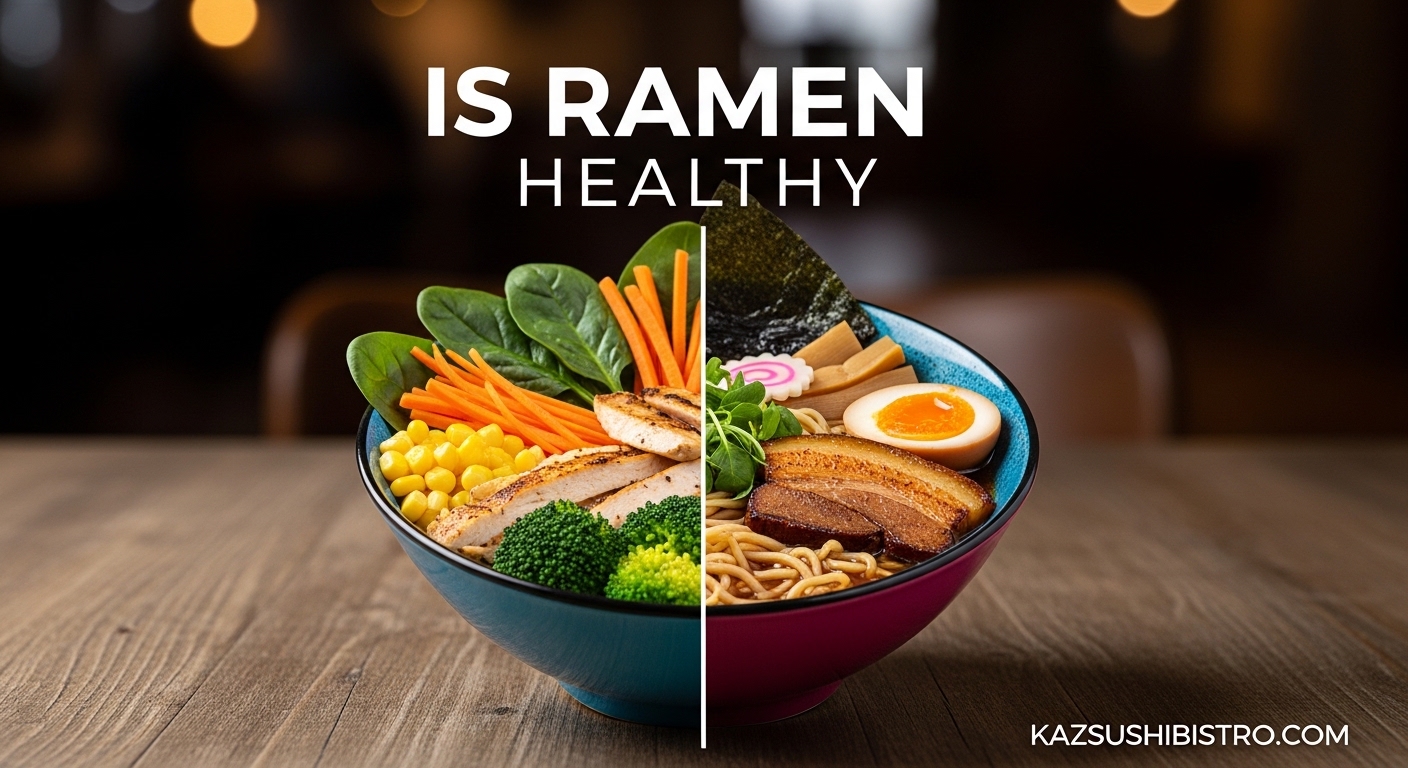
Ramen is not inherently healthy or unhealthy, but it provides limited nutritional value on its own. The truth depends entirely on what type of ramen you eat, how often you eat it, and what you add to it.
In this guide, our team breaks down exactly what’s in ramen, compares instant versus restaurant varieties, and shares practical tips from registered dietitians. By the end, you’ll know whether ramen fits into your diet and how to make it more nutritious if you choose to eat it.
Table of Contents
What Is Ramen?
Ramen is a Japanese noodle soup dish consisting of Chinese-style wheat noodles served in a broth, topped with ingredients like sliced pork, nori (dried seaweed), green onions, and sometimes a soft-boiled egg. The dish originated in China but became a cultural icon in Japan after World War II, when wheat flour imports made noodles more accessible.
Today, ramen has evolved into several distinct styles across Japan. Shoyu ramen features a clear chicken or vegetable broth flavored with soy sauce. Shio ramen uses a lighter, salt-based broth. Miso ramen incorporates fermented soybean paste for a rich, savory depth. Tonkotsu ramen, perhaps the most famous internationally, is made by simmering pork bones for hours to create a creamy, thick white broth.
The noodles themselves are made from wheat flour, water, salt, and kansui, an alkaline water that gives ramen its distinctive chewy texture and yellow color. This differs from regular pasta, which is made with regular water and has a different protein structure.
When people ask “is ramen healthy,” they’re usually asking about one of two categories: instant ramen from a packet or fresh ramen from a restaurant. These are vastly different products with very different nutritional profiles.
Ramen Nutrition Facts: The Breakdown 2026
Understanding ramen nutrition requires separating instant ramen from restaurant ramen, since the difference is substantial.
Instant Ramen Nutrition
A single packet of instant ramen typically contains:
- Calories: 380-470 per packet
- Sodium: 1,500-2,000 mg (60-80% of daily value)
- Carbohydrates: 50-60 grams
- Protein: 8-10 grams
- Fat: 14-18 grams
- Fiber: 2-3 grams (minimal)
The biggest concern with instant ramen is the sodium content. One packet can contain nearly a full day’s recommended sodium intake. The noodles are also typically fried during processing, adding unnecessary fat and calories.
Instant ramen contains refined carbohydrates, meaning the wheat has been processed stripped of fiber and many nutrients. The seasoning packet often includes MSG (monosodium glutamate) for flavor enhancement and TBHQ (tert-butylhydroquinone) as a preservative to extend shelf life.
Restaurant Ramen Nutrition
Fresh ramen from a quality restaurant is a completely different experience nutritionally. A typical bowl of tonkotsu ramen contains:
- Calories: 500-800 depending on broth richness
- Sodium: 1,200-1,800 mg
- Carbohydrates: 60-80 grams
- Protein: 25-35 grams (from rich toppings)
- Fat: 20-30 grams
- Fiber: 4-6 grams (from vegetables)
Restaurant ramen typically contains air-dried or fresh noodles rather than fried ones, and the broth is made from actual simmered bones and ingredients. The toppings add significant protein and fiber that instant ramen lacks. A standard restaurant ramen bowl includes a soft-boiled egg, sliced pork, nori, and green onions, turning it into a more complete meal.
Is Ramen Healthy? The Complete Answer
The answer to “are ramen noodles healthy” depends on which type we’re discussing and how often you eat them. Let’s look at both the concerns and potential benefits.
Health Concerns with Ramen
High Sodium Content: This is the primary health concern with ramen, particularly instant ramen. A single packet can contain 1,800 mg of sodium or more. The American Heart Association recommends limiting sodium to 2,300 mg per day, with an ideal limit of 1,500 mg for most adults. Regular consumption of high-sodium foods can contribute to elevated blood pressure and increased risk of heart disease over time.
Refined Carbohydrates: Ramen noodles are made from refined wheat flour, meaning they’ve been stripped of fiber and many vitamins and minerals. This makes them a high-glycemic food that can cause rapid blood sugar spikes. The low fiber content also means ramen doesn’t promote feelings of fullness as long as whole grain alternatives would.
Processed Ingredients: Instant ramen often contains preservatives like TBHQ, a petroleum-based antioxidant used to prevent oxidation in oils. While the FDA considers TBHQ safe in small amounts, it’s still a processed chemical additive that doesn’t belong in whole, natural foods.
MSG Concerns: Monosodium glutamate has been subject to scrutiny since the 1960s. Current scientific consensus, according to the FDA, is that MSG is generally recognized as safe. However, some individuals report sensitivity and experience symptoms like headaches after consuming foods with MSG.
Potential Benefits of Ramen
Quick Energy Source: The carbohydrates in ramen provide readily available energy. For athletes or people with high physical demands, the quick energy from ramen noodles can be useful, especially when combined with protein and vegetables.
Protein Content (Restaurant Ramen): A quality bowl of ramen with traditional toppings like chashu pork and soft-boiled eggs provides substantial protein. The protein in ramen noodles themselves is actually relatively high quality compared to other refined grain products.
Cultural and Social Benefits: Food isn’t just about nutrition. The ritual of eating ramen, particularly at a dedicated ramen shop, provides cultural connection and social enjoyment that contributes to overall wellbeing. Japanese dietary patterns, which include ramen in moderation as part of a balanced diet, are associated with good health outcomes.
Who Should Limit Ramen?
People with specific health conditions should be cautious with ramen consumption. Those with high blood pressure or heart disease should minimize sodium intake, making instant ramen a poor choice. Individuals with diabetes should be aware that the refined carbohydrates in ramen can cause significant blood sugar spikes. Those watching their weight may find ramen less filling than equivalent calories from protein and fiber-rich foods.
Instant Ramen vs Restaurant Ramen: Which Is Healthier?
When comparing instant versus restaurant ramen, the difference is night and day in terms of nutrition.
Instant ramen noodles are typically fried during manufacturing to reduce moisture content and extend shelf life. This frying process adds significant fat and calories and creates compounds called advanced glycation end products (AGEs) that may promote inflammation. The seasoning packets in instant ramen are concentrated sodium bombs that provide flavor but few nutrients.
Restaurant ramen uses fresh or air-dried noodles that haven’t been fried. Air-dried noodles retain more of their original nutrients and have a cleaner ingredient list. The broth in restaurant ramen is made by simmering bones and aromatics for hours, extracting collagen, minerals, and flavor compounds. While still high in sodium, restaurant ramen broth contains genuine nutritional elements like amino acids and gelatin.
The toppings at a ramen restaurant also contribute meaningful nutrition. A soft-boiled egg adds 6 grams of protein and important nutrients like choline. Sliced pork provides iron and B vitamins. Vegetables like bamboo shoots, corn, and spinach add fiber and micronutrients. When you order ramen with toppings at a restaurant, you’re getting a more complete meal.
Instant ramen can be upgraded by adding fresh vegetables, a protein source like eggs or pre-cooked chicken, and using only part of the seasoning packet. However, even with improvements, instant ramen noodles remain a processed product with lower nutritional value than fresh alternatives.
Can You Eat Ramen and Still Lose Weight?
Yes, you can include ramen in a weight loss diet, but moderation and preparation matter significantly.
The key challenge with ramen for weight loss is satiety. Due to its low fiber content and high glycemic index, ramen doesn’t keep you feeling full for long. Many people report feeling hungry again within a couple of hours after eating instant ramen, which can lead to overall higher calorie consumption.
To include ramen while losing weight, consider these approaches. Choose restaurant ramen over instant when possible for better protein and fiber content. Add generous portions of vegetables to increase volume without many calories. Use only half the seasoning packet to reduce sodium while maintaining flavor. Consider ramen an occasional treat rather than a daily staple. Skip the extra rice or gyoza dumplings that often accompany ramen meals.
From a caloric standpoint, a bowl of restaurant ramen at 500-700 calories can fit into a weight loss plan if it replaces an equivalent meal. The mistake people make is treating ramen as a “light” meal when it’s actually quite calorie-dense due to the rich broth and noodle volume.
How often can you eat ramen while losing weight? Most nutrition experts suggest treating ramen as an occasional meal rather than a regular occurrence. Once a week or less is reasonable for most people pursuing weight loss, while daily ramen consumption makes achieving a calorie deficit difficult.
How to Make Your Ramen Healthier
If you enjoy ramen and want to make it a more nutritious part of your diet, here are practical strategies our team has tested.
Add vegetables: Throw in fresh spinach, sliced mushrooms, bok choy, or shredded cabbage. These add fiber, vitamins, and minerals while increasing meal volume without many calories. Frozen vegetable mixes work well for instant ramen when fresh produce isn’t available.
Include a protein source: Top instant ramen with a soft-boiled egg, pre-cooked chicken breast, tofu, or leftover roast pork. Protein increases satiety and transforms ramen from a snack into a more complete meal. A single egg adds 6 grams of protein and only 70 calories.
Reduce sodium: Use half or even a quarter of the seasoning packet. You can add flavor with fresh ginger, garlic, sesame oil, or a small amount of low-sodium soy sauce instead. This single change dramatically improves the sodium profile of instant ramen.
Choose air-dried or fresh noodles: If buying instant ramen, look for brands that use air-dried rather than fried noodles. Some Asian grocery stores carry fresh ramen noodles that cook in minutes and have better nutritional profiles than instant versions.
Don’t finish the broth: The broth contains the most sodium in a bowl of ramen. Leaving half the broth behind significantly reduces sodium intake. If you’re making homemade ramen, use low-sodium broth and season to taste at the table.
Balance your other meals: If you’re eating ramen, pair it with lighter meals earlier and later in the day. Include plenty of fruits and vegetables in other meals to compensate for ramen’s nutritional gaps.
Cultural Context: Why Some Cultures Eat Ramen Daily
You might wonder how populations in Japan and Korea eat ramen frequently yet maintain good health. The answer involves portion sizes, meal composition, and dietary patterns.
In Japan, ramen is typically eaten as a single-course meal rather than part of a larger spread. A standard ramen bowl doesn’t come with rice, bread, or multiple side dishes as American restaurant meals often do. The bowl contains noodles, broth, and toppings, providing carbohydrates, protein, and some vegetables in one dish. This means total meal calories are often lower than a typical American fast food meal.
Japanese eating patterns also emphasize variety across the day rather than in a single meal. If someone eats ramen for lunch, dinner might be lighter or emphasize fish, vegetables, and rice. This balance across meals and days matters more than any single food choice.
Regarding broth, many Japanese ramen shops serve extremely rich broth that newcomers might find overwhelming. Long-term residents of Japan report that while ramen broth is delicious, the intensity of flavor and fat content naturally limits consumption. Many people genuinely prefer to eat the noodles and toppings while leaving some broth, rather than guzzling it down.
Korean ramen culture differs somewhat, with instant ramen being more prevalent in daily diets. Korea has among the highest per-capita instant noodle consumption in the world. However, Korean meals typically include multiple banchan (side dishes) and kimchi, providing fiber and probiotics that balance the meal. The overall Korean dietary pattern includes more vegetables and fermented foods than typical Western diets.
The key insight is that ramen in Japan and Korea is part of a broader dietary pattern that includes variety, moderation, and plenty of vegetables. Transplanting ramen into a typical Western diet context, where it might be eaten alone with few other nutritious foods, produces different health outcomes.
Frequently Asked Questions
Is Japanese ramen considered junk food?
Japanese ramen is not considered junk food when eaten in its traditional context. Restaurant ramen contains protein from pork or chicken, vegetables, and nutrients from slow-simmered broth. However, instant ramen with its high sodium content and fried noodles does fit the ultra-processed food category. The key distinction is between traditional ramen and instant noodles.
Is ramen okay for losing weight?
Ramen can fit into a weight loss diet when eaten occasionally and with modifications. Choose restaurant ramen over instant, add vegetables and protein, and be mindful of portion sizes. The challenge is that ramen’s low fiber content may leave you hungry sooner, potentially leading to overall higher calorie intake.
Why don’t Japanese drink ramen broth?
Many Japanese people don’t finish their ramen broth because traditional broth is extremely rich, fatty, and salty. The intensity of flavor naturally limits consumption. Additionally, restaurant ramen broth contains significant sodium, so leaving some behind is a practical way to reduce sodium intake.
Why do Koreans eat so much ramen?
Korea has high ramen consumption due to convenience, affordability, and cultural factors. Instant ramen is readily available and inexpensive, making it a staple for students and workers. Korean meals also include plenty of vegetables and kimchi that balance the meal, and ramen is often one component of a varied diet rather than the entire diet.
The Bottom Line
So, is ramen healthy? The honest answer is that it depends. Traditional restaurant ramen, eaten occasionally as part of a balanced diet, can be a satisfying and reasonably nutritious meal. Instant ramen, with its high sodium content, fried noodles, and minimal nutritional value, is not a healthy choice for regular consumption.
The key factors are type, frequency, and preparation. Choose air-dried or fresh noodles over fried instant noodles when possible. Add vegetables and protein to increase nutritional value. Be mindful of sodium by using less seasoning or choosing lower-sodium varieties. Consider ramen an occasional treat rather than a dietary staple.
Our team’s research suggests that most people can include ramen in their diet without negative health consequences if they treat it as an occasional meal rather than a daily staple. The cultures that eat ramen regularly do so as part of broader dietary patterns that include plenty of vegetables, variety, and moderation.
If you have specific health concerns like high blood pressure, diabetes, or are pursuing weight loss, talk with a registered dietitian about how ramen fits into your personal eating plan. General guidelines suggest limiting instant ramen to once a week or less and choosing restaurant ramen with vegetables and protein when possible.