
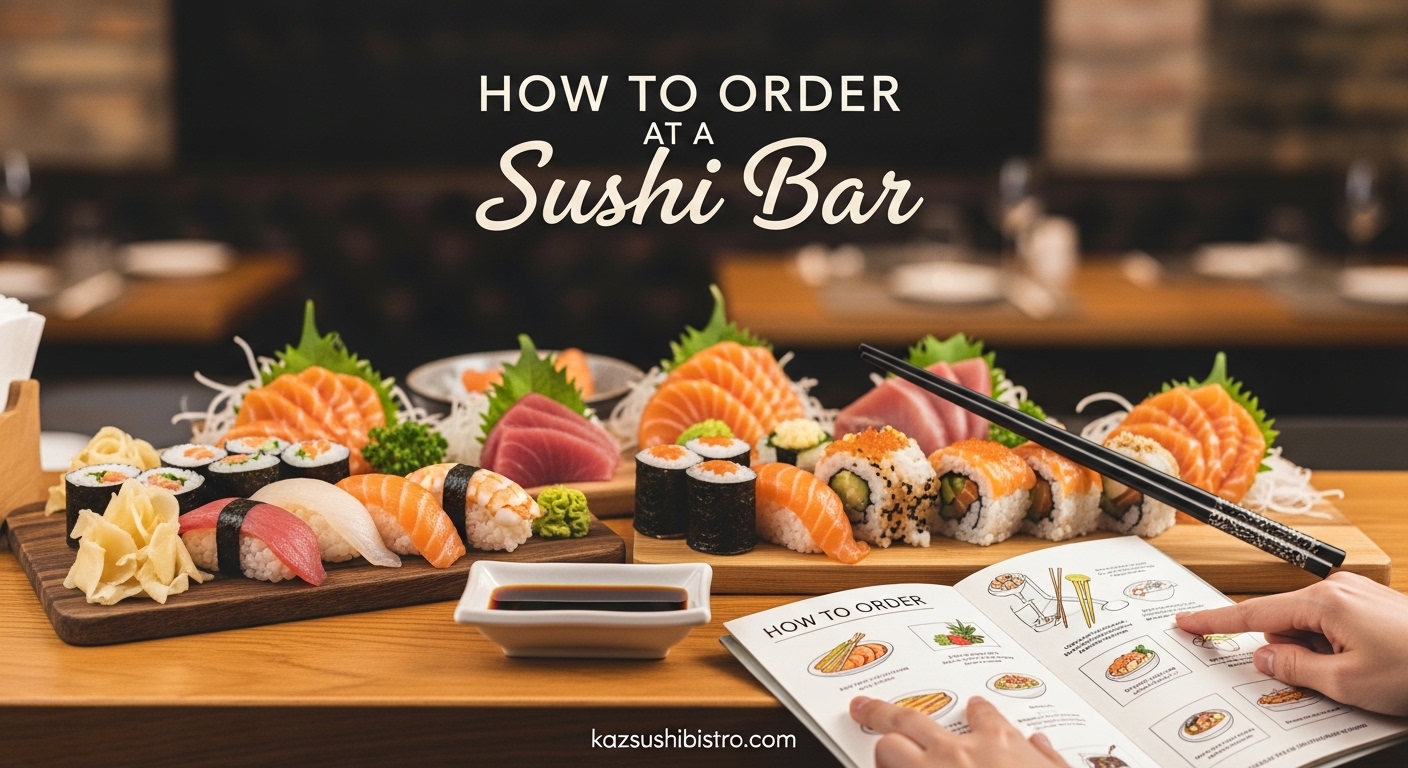
Walking into a sushi bar for the first time can feel intimidating. The quiet atmosphere, the skilled chef working behind the counter, and the unfamiliar terminology on the menu all create pressure to “get it right.” I remember my first visit to a traditional sushi bar in 2026 – I sat down, opened the menu, and had no idea whether to order everything at once or pace myself piece by piece.
This guide will walk you through exactly how to order at a sushi bar with confidence. You will learn the different types of sushi, step-by-step ordering instructions, proper etiquette, and what to order as a beginner. By the end, you will feel prepared for your next sushi experience, whether it is your first time or your fiftieth.
Table of Contents
Understanding the Different Types of Sushi 2026
Before you can order confidently, you need to understand what you are ordering. Sushi comes in several distinct forms, each offering a different experience in texture, flavor, and presentation.
Nigiri: The Classic Sushi Experience
Nigiri consists of a hand-pressed mound of vinegared rice topped with a slice of fresh fish or other seafood. This is what most people picture when they think of “traditional sushi.” The rice is lightly seasoned with rice vinegar, sugar, and salt, creating a subtle tangy base that complements the fish.
Common nigiri toppings include maguro (tuna), sake (salmon), hamachi (yellowtail), ebi (shrimp), and unagi (freshwater eel). The chef places a small amount of wasabi between the rice and fish, though you can request more or less based on your preference.
Sashimi: Pure Fish Without Rice
Sashimi is thinly sliced raw fish served without rice. This preparation lets you experience the pure flavor and texture of the seafood. Sashimi is typically arranged artfully on a plate and may include garnishes like shredded daikon radish or shiso leaves.
Popular sashimi choices include fatty tuna (toro), sea bream, and octopus. Since there is no rice to temper the flavor, sashimi offers the most direct taste of the fish quality. Many sushi enthusiasts eat sashimi first to cleanse their palate before moving to nigiri.
Maki: Rolled Sushi
Maki refers to sushi rolls wrapped in nori (dried seaweed) with rice and fillings inside. These are cut into bite-sized pieces, usually six or eight per roll. Maki comes in several varieties including hosomaki (thin rolls with one filling), futomaki (thick rolls with multiple ingredients), and uramaki (inside-out rolls with rice on the outside).
The California roll – with crab, avocado, and cucumber – remains the most popular beginner choice. Other common rolls include spicy tuna, salmon avocado, and cucumber maki for vegetarians. Maki offers a gentler introduction to sushi since the flavors are balanced and the seaweed provides a familiar wrapper.
Temaki: Hand Rolls
Temaki are cone-shaped hand rolls made by wrapping nori around rice and fillings. Unlike maki, temaki is not cut into pieces – you eat it whole, holding it in your hand like an ice cream cone. The nori stays crisp, providing a satisfying crunch with each bite.
These are often made to order and should be eaten quickly while the nori remains crispy. Common fillings include spicy tuna, salmon skin, and California-style combinations. Temaki is casual, fun, and perfect when you want something quick and satisfying.
How to Order at a Sushi Bar: A Step-by-Step Guide
Now that you understand the types of sushi available, here is the exact process for placing your order. Follow these steps to navigate the experience smoothly from the moment you walk in.
Step 1: Choose Your Seat Wisely
Sitting at the sushi bar itself offers the best experience, especially for beginners. You can watch the chef prepare each piece and ask questions directly. The bar seating also allows for the most personal interaction – the chef can gauge your reactions and adjust recommendations accordingly.
If the bar is full, table seating works fine too. At tables, you typically order through a server rather than speaking directly with the chef. Either option is perfectly acceptable, but the bar provides a more immersive education in sushi dining.
Step 2: Greet the Chef
When you sit at the bar, acknowledge the head sushi chef (called the itamae) with a polite nod or greeting. In Japan, customers might say “onegaishimasu” (a general request meaning “please” or “I ask of you”), but a simple smile and hello work perfectly in American sushi bars.
This small gesture establishes rapport. The chef now knows you are present and engaged. Building this connection early makes the entire meal more comfortable, especially when you want advice later.
Step 3: Decide on Your Ordering Style
You have two main approaches: ordering a la carte (picking specific items) or choosing omakase (chef’s choice). For beginners, I recommend starting with a few specific items you recognize, then asking the chef for one or two recommendations based on what is fresh that day.
Order two to three pieces or one roll to start. This lets you gauge your appetite and see how the flavors suit you. You can always order more. Pacing yourself this way also ensures each piece arrives at its optimal temperature and texture.
Step 4: Pace Your Order
Traditional sushi bars prepare each piece as you order it, not all at once. This preserves freshness and lets you appreciate each item individually. Tell the chef you would like to start with specific items, then pause to enjoy them before ordering more.
If you are sitting at a table, the same principle applies – order in rounds rather than all at once. This prevents rushed eating and keeps the experience relaxed. Good sushi should be savored, not rushed through like fast food.
Step 5: Signal When You Are Finished
When you have had enough, thank the chef and ask for the check. In traditional settings, you might say “gochisousama deshita” (thank you for the meal), but a genuine “thank you, that was excellent” conveys the same appreciation. Tipping practices vary – at the bar, tipping the chef directly is appreciated, while at tables the standard restaurant gratuity applies.
What to Order: Beginner-Friendly Sushi Recommendations
If this is your first time or you are still developing your palate, certain sushi choices offer a gentler introduction. These recommendations prioritize mild flavors, familiar textures, and cooked options for those hesitant about raw fish.
Start with California Rolls
The California roll contains cooked crab (or imitation crab), avocado, and cucumber wrapped in rice and nori. It contains no raw fish, making it the perfect entry point. The creamy avocado balances the crab sweetness, while cucumber adds refreshing crunch.
Despite being an American invention rather than traditional Japanese sushi, the California roll is universally accepted. Even at high-end sushi bars, chefs respect this roll as a legitimate choice. Do not feel embarrassed ordering it.
Try Cooked Options First
Many sushi options feature cooked seafood. Unagi (barbecued freshwater eel) comes glazed with a sweet soy-based sauce and is always served cooked. Ebi (shrimp) arrives poached and chilled, offering a firm texture without any raw fish concerns.
Tamago (sweet egg omelet) is another cooked option, often served as nigiri with a strip of nori holding the egg to the rice. These choices let you experience the sushi format without confronting raw fish immediately.
Explore Mild Raw Fish
Once you are comfortable, try salmon (sake) or tuna (maguro). These fish have clean, mild flavors without the “fishy” taste some beginners worry about. Salmon offers a buttery texture that melts in your mouth, while tuna provides a meatier, steak-like experience.
Yellowtail (hamachi) offers another excellent starting point with its rich, slightly sweet flavor. Ask the chef which fish is freshest that day – they will guide you toward the best choices available.
Build Your Order Strategically
A solid beginner order might include one California roll to share, two pieces of salmon nigiri, two pieces of tuna nigiri, and one piece of unagi nigiri. This gives you variety without overwhelming your palate. Total cost typically runs $25-40 per person depending on your location and restaurant quality.
For portion sizing, plan on six to eight pieces of nigiri or one to two rolls per person for a light meal. If you are hungry, double those amounts. Sushi is surprisingly filling despite its delicate appearance.
Sushi Bar Etiquette: The Essential Dos and Don’ts
Sushi etiquette exists to show respect for the chef’s craft and to ensure you experience the flavors as intended. These rules are not meant to intimidate – they genuinely improve your dining experience.
Chopsticks or Hands: Both Are Acceptable
Here is good news for chopstick novices: eating nigiri with your hands is completely acceptable and even traditional in Japan. Pick up the nigiri, turn it fish-side down, and dip the fish (not the rice) into soy sauce if desired. Then place the entire piece in your mouth fish-side first.
For sashimi, use chopsticks or a fork if provided. Maki and temaki can be eaten with hands or chopsticks – either works fine. Use whatever feels comfortable. No one judges your technique as long as you are not dropping food everywhere.
Soy Sauce: Less Is More
Pour a small amount of soy sauce into your dish – just enough to coat the bottom. Drowning sushi in soy sauce masks the delicate fish flavors the chef worked to highlight. The goal is enhancing, not overpowering.
When dipping nigiri, touch only the fish to the soy sauce. The rice absorbs liquid quickly and will fall apart if soaked. If the chef has already brushed sauce on the nigiri (common with unagi), skip the additional soy sauce entirely.
Wasabi: Trust the Chef’s Application
The chef already places wasabi between the rice and fish in traditional nigiri. Adding more is unnecessary and can overwhelm the fish flavor. If you love wasabi’s heat, apply a small amount directly to the fish before eating, or mix a tiny bit into your soy sauce for sashimi.
Wasabi in soy sauce for nigiri is actually controversial among purists. The rice can absorb too much liquid and fall apart. Try the sushi as prepared first, then adjust on subsequent pieces if you need more heat.
Ginger: Your Palate Cleanser
The pickled ginger (gari) on your plate is not a topping for your sushi. It is a palate cleanser meant to be eaten between different types of fish. Take a small slice after finishing one variety before starting another.
Never put ginger on top of your nigiri or roll. This confuses the flavors and wastes the ginger’s intended purpose. Think of it like a sorbet course in a French meal – it resets your taste buds between courses.
Eat in One Bite When Possible
Nigiri is designed to be eaten in a single bite. This preserves the balance between rice and fish that the chef carefully constructed. If the piece is too large, two bites are acceptable, but try to avoid nibbling or taking multiple small bites.
Turn the nigiri fish-side down in your soy sauce, then flip it so the fish touches your tongue first. This delivers the full flavor profile as intended. Eating rice-first dulls the fish taste.
Basic Behavioral Etiquette
Do not rub your chopsticks together – this implies the wood is cheap or has splinters, which can offend the restaurant. Do not pass food chopstick-to-chopstick (this resembles funeral customs in Japan). Place chopsticks on the holder or across your plate when not using them – never sticking upright in rice.
Keep your phone away from the bar. Sushi dining is meant to be a focused, present experience. The chef is creating art in front of you – give them your attention and appreciation.
What to Drink with Your Sushi
The right beverage enhances your sushi experience and aids digestion. While wine and cocktails work fine, traditional Japanese drinks offer the most authentic pairings.
Green Tea: The Traditional Choice
Hot green tea (ocha or agari) is the classic sushi accompaniment. Its slight bitterness and astringency cut through the fish oils and refresh your palate between pieces. Most sushi bars serve tea complimentary and will refill your cup throughout the meal.
Sencha is the standard green tea served, though higher-end places might offer gyokuro (a premium shaded tea) for special occasions. The tea also warms you if the sushi bar feels chilly from refrigeration.
Sake: Rice Wine Pairing
Sake, made from fermented rice, pairs naturally with sushi since both share rice as a base ingredient. Junmai sake (pure rice wine without added alcohol) offers earthier flavors, while honjozo (with a small amount of distilled alcohol added) tends to be lighter and more aromatic.
Sake can be served chilled, at room temperature, or warm depending on the variety and season. Ask your server for recommendations based on what you are ordering. A dry sake works beautifully with fatty fish like salmon and tuna.
Beer: The Casual Option
Japanese lagers like Asahi, Sapporo, and Kirin are staples at sushi bars worldwide. The crisp, clean profile of these beers complements sushi without competing for attention. Beer is particularly refreshing with fried rolls like tempura shrimp or spicy tuna with crunchy toppings.
One consideration: beer can fill you up faster than tea or sake. If you plan to eat a substantial amount of sushi, you might pace your beer consumption or switch to tea partway through.
Understanding Omakase: Letting the Chef Decide
Omakase (meaning “I leave it to you”) represents the pinnacle of sushi bar dining. You place complete trust in the chef to select and prepare each course based on what is freshest and most exceptional that day.
What to Expect from Omakase
An omakase meal typically includes 10 to 20 courses progressing from lighter to richer flavors. The chef might start with delicate white fish, move through various nigiri selections, include a cooked item or two, and finish with tamago (egg omelet) as a traditional closer.
The experience is interactive – the chef explains each piece as they serve it. You learn about the fish origin, preparation technique, and recommended way to eat it. This educational component makes omakase particularly valuable for those wanting to deepen their sushi knowledge.
Pricing and Expectations
Omakase pricing varies dramatically. In major cities, expect $100-300 per person at high-end establishments. More casual sushi bars might offer abbreviated omakase experiences for $50-75. Always ask about price ranges when booking – surprises are never pleasant when the bill arrives.
The price reflects not just the ingredients but the chef’s expertise, the personalized attention, and often the rarity of certain fish selections. Consider omakase for special occasions or when you want to treat yourself to the definitive sushi experience.
How to Order Omakase
Simply tell the chef “I would like omakase, please” when you sit down. Specify any dietary restrictions or strong dislikes immediately (shellfish allergies, aversion to raw octopus, etc.). The chef will accommodate these while crafting your meal.
Pace yourself – omakase meals unfold slowly over one to two hours. Do not rush. Engage with the chef, ask questions, and express appreciation. The best omakase experiences feel like a personal performance where you are both audience and participant.
Understanding Your Table Setting
When you sit down at a sushi bar, several items will be placed before you. Understanding their purposes helps you navigate the meal confidently.
The Oshibori: Your Fresh Towel
The hot or cold towel (oshibori) presented at the start is for cleaning your hands before eating. Use it thoroughly, then fold it neatly and place it beside your plate. In traditional settings, you might receive another towel between courses for refreshing.
Never use the oshibori on your face or neck – this is considered improper. It exists solely for hand hygiene before handling food, especially important since you may eat with your hands.
Chopsticks and Rest
Your chopsticks (hashi) may rest on a ceramic holder or directly on the soy sauce dish. If no holder is provided, lay them across your plate when not in use. The paper sleeve they arrive in can be folded into a makeshift rest if needed.
Some high-end places provide two sets of chopsticks – one for shared plates and one for your personal eating. Use the designated pairs correctly to avoid mixing flavors or appearing unsanitary.
Soy Sauce Dishes and Plates
The small ceramic dish is for your personal soy sauce portion. Pour sparingly – you can always add more, but you cannot return excess. Your main plate is for sushi pieces and any shared items you select.
Pickled ginger arrives in a small pile or dish. Keep it separate from your soy sauce and sushi. Some restaurants provide additional condiments like ponzu sauce or spicy mayo – these are optional additions for those who want extra flavor.
Frequently Asked Questions
How do you order at a sushi bar for the first time?
Start by sitting at the bar if possible. Order two to three pieces of nigiri or one roll to begin. Popular beginner choices include California rolls, salmon nigiri, and tuna nigiri. Pace yourself by ordering in rounds rather than all at once. Do not hesitate to ask the chef for recommendations based on what is freshest.
What is the etiquette at a sushi bar?
Use chopsticks or your hands – both are acceptable. Dip only the fish side of nigiri into soy sauce, not the rice. Eat pickled ginger between different fish types as a palate cleanser, not with your sushi. Eat nigiri in one bite when possible. Show respect by keeping your phone away and engaging with the chef.
Is it okay to order just rolls at a sushi bar?
Yes, ordering just rolls is completely acceptable, especially for beginners. Rolls like California, spicy tuna, and salmon avocado are popular and delicious choices. As you become more comfortable, consider adding nigiri to experience more traditional sushi.
How much sushi should I order per person?
Plan on six to eight pieces of nigiri or one to two rolls per person for a light meal. For a full dinner, double those amounts to twelve to sixteen pieces or two to three rolls. Sushi is filling, so start conservatively and order more if you are still hungry.
Should I put wasabi in my soy sauce?
For sashimi, mixing a small amount of wasabi into soy sauce is acceptable. For nigiri, the chef has already placed wasabi between the rice and fish, so additional wasabi in your soy sauce is unnecessary and can make the rice fall apart. Try the sushi as prepared first before adding extras.
What does omakase mean?
Omakase means ‘I leave it to you’ in Japanese. When you order omakase, you entrust the chef to select and prepare each course based on the freshest ingredients available that day. It is typically a multi-course experience ranging from ten to twenty items and represents the pinnacle of sushi dining.
Can beginners eat at the sushi bar?
Absolutely. Sushi chefs welcome beginners and appreciate genuine curiosity. Sit at the bar, introduce yourself politely, and do not hesitate to ask questions. Chefs enjoy educating customers about their craft. Start with familiar rolls and mild fish, then branch out as your confidence grows.
Is it rude to eat sushi with your hands?
No, eating nigiri with your hands is traditional and completely acceptable. In fact, many sushi purists prefer hands for nigiri since chopsticks can compress the rice too much. Sashimi requires chopsticks or a fork, but maki and temaki can be eaten with either hands or chopsticks.
Conclusion: Order with Confidence
Learning how to order at a sushi bar opens up one of the most rewarding dining experiences available. You now understand the difference between nigiri, sashimi, maki, and temaki. You know the step-by-step ordering process, from choosing your seat to thanking the chef. You have beginner-friendly recommendations that let you start comfortably and progress naturally.
Remember the core etiquette: respect the craft, pace yourself, and engage with the experience. Do not worry about perfect technique – chefs appreciate genuine enthusiasm far more than rigid adherence to rules. Whether you choose familiar California rolls or dive into an omakase adventure, you are participating in a culinary tradition that spans centuries.
Visit your local sushi bar this week. Sit at the counter, order that salmon nigiri you have been curious about, and strike up a conversation with the chef. How to order at a sushi bar becomes second nature once you take that first confident step. Your next great meal awaits.