
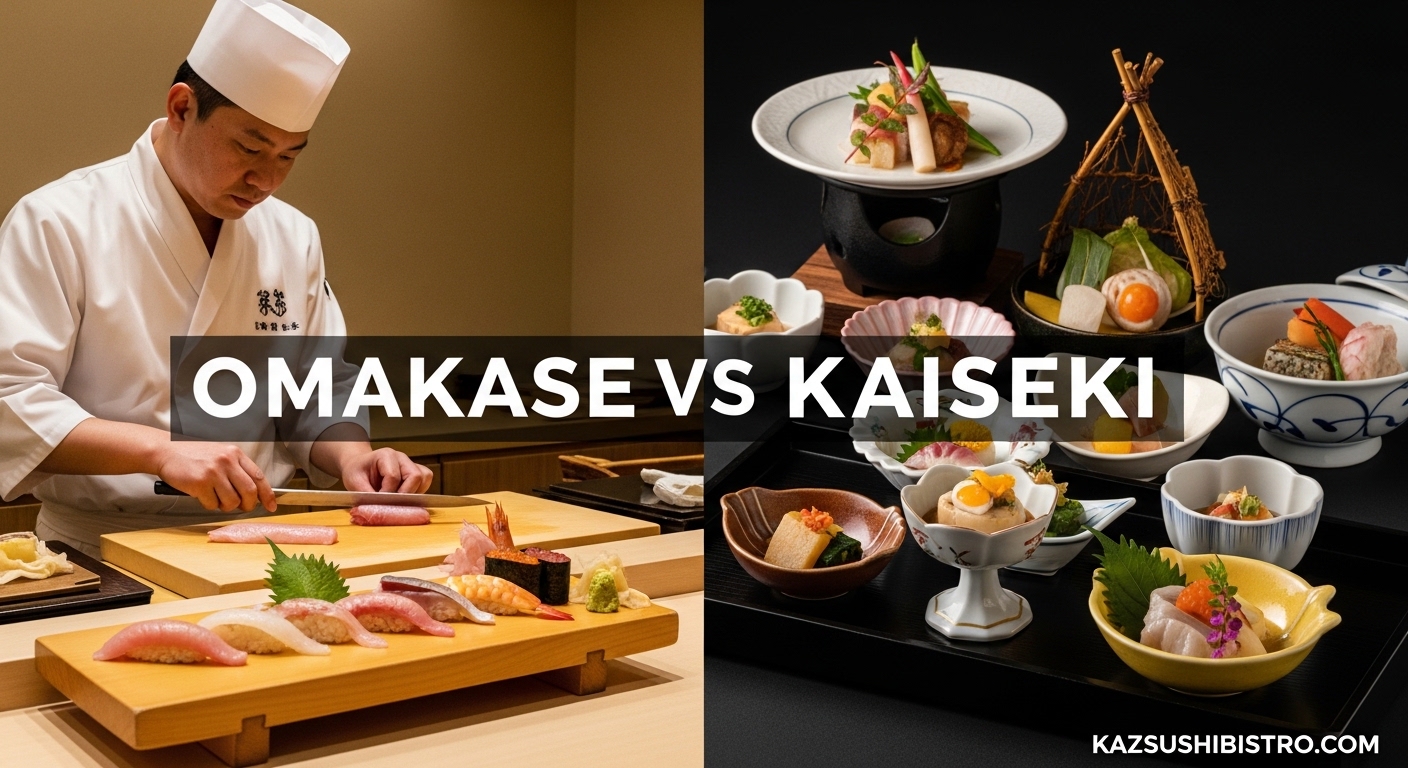
No, kaiseki and omakase are not the same. While both represent the pinnacle of Japanese fine dining and celebrate seasonal ingredients, they differ fundamentally in structure, philosophy, and the role of the chef. Understanding these differences will help you choose the right experience for your next special occasion or trip to Japan.
I have spent years exploring Japanese cuisine across Tokyo, Kyoto, and beyond. Through countless meals at sushi counters and traditional ryokan, I have developed a deep appreciation for what makes each dining style unique. In this guide, I will break down everything you need to know about omakase versus kaiseki.
Table of Contents
What Is Omakase?
Omakase literally translates from Japanese as “I will leave it up to you.” When you order omakase at a sushi restaurant, you are placing complete trust in the chef to select and prepare each course based on the freshest ingredients available that day. There is no printed menu. There are no choices to make. You simply sit back and experience the chef’s vision.
The typical omakase experience takes place at a sushi counter, where you watch the chef work just inches away. This intimate setting allows for real-time interaction. The chef might notice your reaction to a particular piece of tuna and adjust the next course accordingly. I have had chefs ask about my preferences mid-meal and completely pivot the remaining courses based on my feedback.
While traditional omakase centers on Edomae-style sushi, the concept has evolved in 2026. You can now find fire omakase featuring flame-seared proteins, Italian omakase with pasta courses, and even dessert-focused omakase experiences. The core principle remains unchanged: the chef decides, and you trust.
Seasonality drives every omakase meal. A spring omakase might highlight baby sardines and cherry blossom snapper. Summer brings sea urchin and bonito. Fall features mackerel and matsutake mushrooms. Winter showcases fatty tuna and amberjack. The chef sources the best ingredients each morning and builds the menu around what nature provides.
What Is Kaiseki?
Kaiseki traces its origins to the traditional Japanese tea ceremony, where light meals were served to guests before drinking matcha. Over centuries, these simple preparations evolved into kaiseki-ryouri, an elaborate multi-course dining art form that represents the height of Japanese culinary tradition. Unlike omakase’s spontaneity, kaiseki follows a carefully prescribed structure.
A traditional kaiseki meal consists of a minimum of nine courses, each served in a specific order with precise timing. The progression moves from delicate appetizers to heartier dishes, then rice and soup, and finally dessert. This structure reflects the Japanese philosophy of balance and harmony, ensuring that each course complements the next without overwhelming the palate.
Presentation matters as much as taste in kaiseki. Each dish arrives on carefully selected ceramic ware, lacquerware, or seasonal plates that enhance the food’s visual appeal. The art of moritsuke (plating) considers color balance, texture contrast, and the vessel’s relationship to the season. A spring kaiseki course might feature a sakura-shaped dish, while autumn courses arrive on maple-leaf plates.
The concept of omotenashi underlies every kaiseki experience. This Japanese hospitality philosophy centers on anticipating guest needs before they are expressed. The kaiseki chef plans the entire meal in advance, considering the occasion, the guests, and the season. Every detail, from the room’s decoration to the sequence of courses, serves to create a moment of tranquility and reflection.
Omakase vs Kaiseki: Key Differences 2026
While both omakase and kaiseki celebrate seasonal Japanese cuisine, they differ across several key dimensions. The following comparison breaks down what you can expect from each experience.
| Dimension | Omakase | Kaiseki |
|---|---|---|
| Structure | Dynamic and flexible; changes based on chef’s inspiration and ingredient availability | Fixed and ritualized; follows traditional course sequence |
| Chef Role | Interactive and improvisational; adapts to guest reactions in real-time | Guiding and prescriptive; executes predetermined menu with precision |
| Menu Format | No menu; courses revealed one at a time as surprises | Set menu known in advance; courses follow established progression |
| Presentation Focus | Sushi craftsmanship; minimal plating, maximum ingredient quality | Ceramic artistry; elaborate presentation with seasonal vessels |
| Setting | Sushi counter; intimate and casual interaction | Private tatami room or formal dining space; quiet contemplation |
| Philosophy | Spontaneity and trust; chef and diner collaborate | Ritual and tradition; prescribed experience honoring season |
| Course Count | Typically 8-15 pieces or courses | Minimum 9 courses; often 12+ |
| Primary Cuisine | Sushi-focused (though expanding) | Traditional Japanese haute cuisine |
This table captures the essential distinctions, but the differences run deeper than these surface characteristics. Omakase rewards the adventurous diner who enjoys surprises and values personal connection with the chef. Kaiseki appeals to those who appreciate ritual, want to know what to expect, and seek a contemplative dining experience.
Understanding the Kaiseki Course Sequence
One aspect that confuses many first-time kaiseki diners is the course sequence. Unlike Western tasting menus that might change structure between restaurants, kaiseki follows a traditional progression that has remained consistent for generations. Here is what you can expect:
- Sakizuke: An appetizer that sets the seasonal tone, similar to an amuse-bouche in French dining
- Hassun: The seasonal platter and conceptual heart of the meal, featuring multiple small bites that represent the current season
- Suimono: A clear soup designed to cleanse the palate and prepare you for the courses ahead
- Mukozuke: Sashimi course featuring the freshest raw fish of the day
- Takiawase: Simmered dish combining vegetables and protein in a delicate broth
- Yakimono: Grilled course, often featuring fish or seafood prepared over charcoal
- Shiizakana: A more substantial dish served with sake, bridging lighter and heavier courses
- Gohan: Rice course, often featuring seasonal ingredients mixed into the rice
- Tome-wan: Miso soup served with the rice course
- Konomono: Seasonal pickles that provide a tart contrast
- Dessert: Fresh fruit, sweet bean paste, or another light sweet to conclude
The hassun course deserves special mention. This platter serves as the anchor of the entire meal, showcasing the chef’s interpretation of the current season through a carefully arranged collection of small bites. The name comes from the eight-inch square plate traditionally used for this course. When you see the hassun arrive, you are experiencing the essence of kaiseki philosophy.
Price Ranges and Dining Etiquette
Budgeting for these experiences requires understanding the price spectrum. In major cities like New York, Los Angeles, or Tokyo, omakase typically ranges from $100 to $300 per person for mid-tier establishments. Michelin-starred omakase counters can exceed $500 per person. In Japan, you can find more affordable options starting around $50 for lunch omakase.
Kaiseki pricing varies even more widely depending on setting. A kaiseki meal at a high-end ryokan (traditional Japanese inn) might cost $150 to $500 per person, often included as part of an overnight stay. Standalone kaiseki restaurants range from $80 to $600 or more. The price reflects not just the food but the room, service, and the extensive ceramic ware collection.
Regarding etiquette, many diners worry about the rules. For omakase, arrive on time (seating is often precise), do not use strong perfume (it affects the sushi experience), and eat each piece promptly when served. For kaiseki, finish what is served if possible, though leaving small amounts is acceptable. In Japan, tipping is not customary and can even be considered rude. In Western countries, check the restaurant’s policy, as service charges are sometimes included.
A common concern I see online: is it rude to not finish kaiseki? The answer depends on context. Kaiseki portions are designed to be finished, and leaving significant amounts might concern the chef. However, dietary restrictions or feeling full are understood. If you cannot finish, a polite explanation to your server suffices. The chef would rather know you enjoyed what you ate than force yourself to finish.
Omakase vs Kaiseki: Which Should You Choose?
Deciding between omakase and kaiseki depends on your personality, the occasion, and what you hope to gain from the experience. After years of enjoying both, I have developed some simple guidelines.
Choose omakase when: You enjoy surprises and spontaneity, want to interact with the chef, love sushi and raw fish, prefer a more casual atmosphere, or want to see the creative process unfold in real-time. Omakase suits curious diners who ask questions and engage with their food.
Choose kaiseki when: You appreciate ritual and tradition, want a contemplative and quiet experience, are celebrating a significant milestone, want the full cultural immersion of a ryokan stay, or prefer knowing what to expect. Kaiseki suits reflective diners who value presentation and atmosphere as much as taste.
For first-timers to Japanese fine dining, I often recommend starting with omakase. The interactive nature helps you learn about ingredients and techniques through conversation with the chef. Once comfortable with Japanese flavors and dining customs, a kaiseki meal offers the next level of cultural depth.
Both experiences reward repeat visits. A regular omakase customer builds a relationship with their chef, leading to personalized experiences that evolve over time. A regular kaiseki diner learns to appreciate the subtle seasonal changes and ceramic selections that vary throughout the year.
Frequently Asked Questions
Is kaiseki the same as omakase?
No, kaiseki and omakase are different Japanese dining styles. Omakase is a chef’s choice experience where the chef decides each course based on available ingredients, typically at a sushi counter. Kaiseki is a traditional multi-course meal with a fixed sequence rooted in the tea ceremony, served in a formal setting with artful presentation.
Is it rude to not finish kaiseki?
While kaiseki portions are designed to be finished, leaving small amounts is generally acceptable if you are full or have dietary restrictions. The key is to communicate politely with your server. Chefs prefer guests to enjoy what they eat rather than forcing themselves to finish every bite.
How much does a kaiseki meal cost?
Kaiseki pricing varies widely. In Japan, expect $80 to $300 per person at standalone restaurants. At high-end ryokan with overnight stays, the meal might cost $150 to $500 or more. In Western countries, kaiseki ranges from $100 to $600 depending on the restaurant’s prestige and location.
What is the etiquette for kaiseki?
Key kaiseki etiquette includes: arriving on time, removing shoes before entering tatami rooms, not wearing strong perfume, waiting for the host to begin eating, using chopsticks properly, and finishing courses when possible. Tipping is not customary in Japan. In Western kaiseki restaurants, check if service is included.
What’s the difference between kaiseki and omakase?
The main differences are structure and philosophy. Omakase is dynamic and flexible, with the chef improvising based on daily ingredients and guest reactions. Kaiseki follows a fixed, ritualized course sequence with predetermined dishes. Omakase focuses on sushi and counter dining, while kaiseki emphasizes ceramic artistry and formal presentation in a quiet setting.
What does omakase mean in Japanese?
Omakase literally translates to ‘I will leave it up to you’ in Japanese. When dining omakase, you are placing complete trust in the chef to select your meal based on the freshest seasonal ingredients available that day. There is no menu and no choices to make.
Conclusion
Omakase and kaiseki represent two distinct expressions of Japanese culinary mastery. Omakase offers spontaneity, personal connection, and the thrill of the unknown. Kaiseki provides ritual, contemplation, and a journey through carefully orchestrated seasonal flavors. Neither is better than the other, they simply serve different purposes and appeal to different moods.
If you are planning a trip to Japan or seeking a special dining experience in 2026, understanding the difference between omakase versus kaiseki ensures you choose the right experience for the occasion. Both will leave you with a deeper appreciation for Japanese cuisine and the dedication of the chefs who practice these arts.