
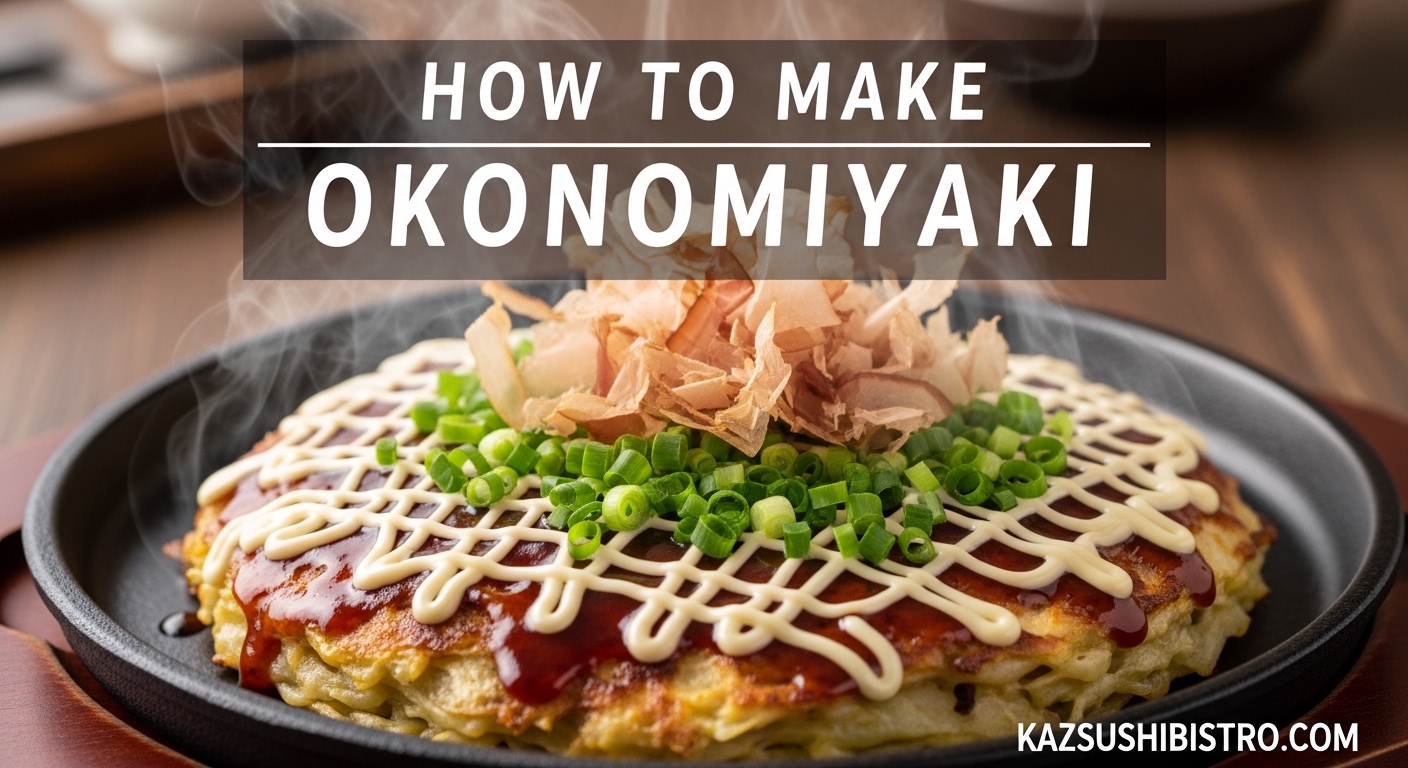
Learning how to make okonomiyaki at home brings the authentic flavors of Osaka street food right to your kitchen. This savory Japanese cabbage pancake offers the perfect balance of crispy edges, custardy interior, and endless topping possibilities. I spent months perfecting this recipe after returning from Japan, and now I am sharing everything I learned about creating restaurant-quality okonomiyaki without specialized equipment.
Okonomiyaki, which literally translates to “grilled as you like it,” represents everything wonderful about Japanese home cooking. The dish combines humble ingredients into something far greater than the sum of its parts. You will discover how simple pantry staples transform into a meal that rivals what you would find at a dedicated okonomiyaki-ya in Osaka.
This guide covers the complete process from gathering ingredients to that satisfying first bite. We will explore both traditional techniques and practical substitutions for hard-to-find ingredients. Whether you are a beginner cook or experienced home chef, you will learn to make okonomiyaki that impresses family and friends.
Table of Contents
What Is Okonomiyaki?
Okonomiyaki is a savory Japanese pancake made primarily from shredded cabbage, flour, eggs, and dashi stock. The batter mixture cooks on a hot griddle or skillet until golden brown and crispy on the outside while remaining tender and custard-like within. Toppings traditionally include okonomiyaki sauce, Kewpie mayonnaise, bonito flakes (katsuobushi), and dried seaweed powder (aonori).
The dish originated in Osaka during the post-war period when food was scarce and people needed filling, affordable meals. Street vendors began mixing whatever ingredients were available with flour and cabbage, creating a customizable dish that fed hungry workers and families. This “grilled as you like” philosophy allowed each person to add their preferred proteins and vegetables.
Today okonomiyaki remains one of Osaka’s most beloved foods, with dedicated restaurants where diners cook their own pancakes at tableside griddles. The experience brings people together around the cooking process, making it as much about social connection as sustenance. Many Japanese families also make okonomiyaki at home as a casual weeknight dinner or weekend treat.
Essential Okonomiyaki Ingredients 2026
Authentic okonomiyaki requires specific ingredients that create its signature texture and umami depth. Understanding each component helps you source properly and know which substitutions work when specialty items are unavailable. Here is the complete ingredient list with explanations.
Base Batter Ingredients
All-purpose flour (1 cup / 120g): Provides the structural foundation for the pancake. Regular all-purpose flour works perfectly; you do not need special okonomiyaki flour from Japan.
Nagaimo or yamaimo (1/4 cup grated, about 50g): This long Japanese yam creates the characteristic fluffy, custard-like interior texture. The grated yam releases a sticky substance that binds the batter and adds irreplaceable lightness. Look for nagaimo at Asian grocery stores or substitute with regular sweet potato if necessary.
Eggs (2 large): Bind the batter together and contribute to the rich flavor profile. Room temperature eggs incorporate more smoothly into the mixture.
Dashi stock (3/4 cup / 180ml): Japanese soup stock adds essential umami that defines authentic okonomiyaki flavor. You can make dashi from scratch with kombu and bonito flakes or use instant Hondashi powder mixed with water.
Shredded cabbage (4 cups / 300g): The heart of okonomiyaki. Use fresh, crisp cabbage shredded into thin strips about 1/8 inch wide. The cabbage volume seems excessive but cooks down significantly.
Mix-ins and Additions
Tenkasu (1/2 cup / 30g): Crispy tempura bits that add crunch and absorb sauce beautifully. These can be purchased at Asian markets or made at home by dropping small bits of tempura batter into hot oil.
Beni-shoga (2 tablespoons): Pickled red ginger provides bright, acidic contrast to the rich batter. Available at Japanese grocery stores or online.
Green onions (1/2 cup sliced): Fresh allium flavor that complements the savory batter. Both the white and green parts add different dimensions of flavor.
Pork belly slices (8-10 thin slices): Traditional protein topping placed on the raw batter before flipping. Thinly sliced pork belly cooks through as the pancake finishes.
Toppings and Sauces
Okonomiyaki sauce: A thick, sweet-savory condiment similar to Worcestershire sauce but richer and more complex. Otafuku is the most popular brand, or you can make your own with Worcestershire, ketchup, oyster sauce, and sugar.
Kewpie mayonnaise: Japanese mayonnaise has a distinct eggy richness and umami punch from MSG that makes it essential for authentic flavor. Regular mayo works but lacks the same depth.
Katsuobushi (bonito flakes): Paper-thin shavings of dried, fermented, smoked skipjack tuna that wave and curl when placed on hot food. These add intense umami and visual drama.
Aonori: Dried green laver seaweed ground into fine powder that adds oceanic flavor and vibrant color.
Osaka Style vs Hiroshima Style Okonomiyaki
Japan features two distinct regional styles of okonomiyaki that differ significantly in preparation and presentation. Understanding these differences helps you choose which style to attempt and appreciate the regional diversity of this dish.
Osaka Style (Kansai Style): The most common version internationally and throughout western Japan. All ingredients mix together into a single batter before cooking. The cabbage and other mix-ins distribute evenly throughout the pancake. This style produces a cohesive, fluffy texture where each bite contains all components.
Hiroshima Style: Features distinct layers rather than a mixed batter. Cooks start with a thin crepe-like base, then pile shredded cabbage, bean sprouts, and other vegetables on top. They add noodles (either soba or udon) as a distinct layer, then pour additional batter over everything to bind it together. The result resembles a layered tower with crispy edges and varied textures.
This guide focuses on Osaka style because it requires less technique and specialized equipment. The mixed-batter approach is more forgiving for home cooks and produces excellent results with standard kitchen tools. Once you master Osaka style, Hiroshima style makes an interesting next challenge.
How to Make Okonomiyaki: Step-by-Step Instructions
Follow these detailed steps to create authentic Osaka-style okonomiyaki in your home kitchen. Each step builds toward that perfect balance of crispy exterior and custardy interior. Read through all steps before beginning to understand the full process.
Step 1: Prepare Your Ingredients
Shred the cabbage into thin strips approximately 1/8 inch wide and 2-3 inches long. The shape matters because larger pieces create structural problems while finer shreds disappear into the batter. Place shredded cabbage in a large mixing bowl.
Grate the nagaimo using a fine grater or the fine side of a box grater. The grated yam becomes very sticky and slightly slimy—this is exactly what you want for binding. Measure out your tenkasu, beni-shoga, and sliced green onions. Having everything ready before mixing prevents the batter from sitting too long, which can make it gummy.
Slice the pork belly into thin pieces if not already pre-sliced. You want pieces thin enough to cook through during the pancake’s cooking time. Cover and set aside.
Step 2: Mix the Batter
Whisk together the all-purpose flour, grated nagaimo, eggs, and dashi stock in a separate bowl until just combined. The batter should be slightly lumpy and thick, similar to heavy cream in consistency. Do not overmix or the okonomiyaki becomes tough.
Pour the batter over the prepared cabbage in the large mixing bowl. Add the tenkasu, beni-shoga, and green onions. Gently fold everything together using a spatula or chopsticks until the cabbage is evenly coated with batter. The mixture looks like too much cabbage and not enough batter—this is correct.
Let the mixture rest for 5 minutes. This resting period allows the flour to hydrate and the nagaimo to activate its binding properties. Meanwhile, preheat your cooking surface.
Step 3: Preheat Your Cooking Surface
Heat a large nonstick skillet, cast-iron pan, or electric griddle over medium heat. The ideal cooking surface is 10-12 inches in diameter to accommodate the full recipe as one large pancake. If using a smaller pan, divide the batter into two portions.
Add 1 tablespoon of neutral oil (vegetable, canola, or grapeseed) to the pan and spread evenly. The surface is ready when a drop of water sizzles immediately upon contact. Too hot burns the exterior before the interior cooks; too cool creates a soggy pancake.
Step 4: Cook the First Side
Pour the entire cabbage mixture into the center of the preheated pan. Shape it into a round pancake approximately 8 inches in diameter and 1 inch thick. Use a spatula to gently press and shape, creating an even thickness throughout.
Place the pork belly slices on top of the raw batter, pressing them slightly into the surface. The pork will cook into the pancake as it continues heating. Cover the pan with a lid to trap steam and heat, which helps cook the interior without burning the bottom.
Cook covered for 4-5 minutes until the bottom is golden brown and the edges begin to set. You can peek carefully by lifting an edge with your spatula to check color.
Step 5: The Flip Technique
Flipping okonomiyaki intimidates many first-time makers, but the lid method makes it manageable. Place a large plate or second pan over the cooking okonomiyaki. Hold the plate firmly against the pan with one hand while gripping the pan handle with the other.
In one quick, confident motion, flip the entire setup so the plate ends up on bottom and the pan on top. The okonomiyaki should now rest cooked-side-up on the plate. Slide the pancake back into the pan raw-side-down.
Cook uncovered for another 4-5 minutes until the second side is golden and the interior sets completely. Press gently with your spatula—the pancake should feel firm, not squishy. If the center still feels loose, cover and cook another 2 minutes.
Step 6: Add Toppings and Serve
Slide the finished okonomiyaki onto a serving plate with the pork side facing up. Immediately apply toppings while the surface remains hot. First, brush or drizzle okonomiyaki sauce generously across the entire surface.
Squeeze Kewpie mayonnaise in a zigzag or spiral pattern over the sauce. The combination of these two condiments creates the signature okonomiyaki flavor profile.
Sprinkle aonori generously over the sauces, then add a large handful of katsuobushi. The heat from the pancake causes the bonito flakes to wave and curl, creating the classic animated appearance. Serve immediately while hot and crispy.
Okonomiyaki Sauce and Toppings Guide
The toppings transform simple cabbage pancake into the complex, addictive dish known as okonomiyaki. Understanding how to apply each component creates the authentic restaurant experience at home.
Homemade Okonomiyaki Sauce Recipe
If you cannot find bottled okonomiyaki sauce, make your own with pantry staples. Mix 3 tablespoons Worcestershire sauce, 2 tablespoons ketchup, 1 tablespoon oyster sauce, and 1 teaspoon sugar in a small bowl. Stir until the sugar dissolves completely. This mixture approximates the sweet-savory-tangy balance of authentic sauce.
For deeper flavor, add 1 teaspoon soy sauce and a pinch of garlic powder. Some recipes include a dash of honey or mirin for extra sweetness. Store homemade sauce in the refrigerator for up to one month.
Traditional Toppings
Katsuobushi provides the most dramatic topping effect. These feather-light bonito flakes react to heat by curling and waving as if dancing. Add them generously immediately before serving so guests experience the visual show.
Aonori adds essential oceanic umami and vibrant green color. The fine powder sticks to the sauces and distributes evenly across each bite. Without aonori, okonomiyaki looks incomplete.
Beni-shoga (pickled red ginger) often appears as an additional garnish rather than mix-in. The bright pink strips add color contrast and acidic punch that cuts through the rich batter.
Creative Variations
Once you master the classic version, experiment with different proteins. Shrimp, squid, and scallops create seafood okonomiyaki popular in coastal regions. Thinly sliced beef works beautifully as a pork alternative. For vegetarian versions, add extra mushrooms or tofu.
Some cooks add cheese between the batter and toppings, creating a molten layer that adds richness. Corn kernels mixed into the batter add sweetness and texture variation. Mochi pieces inside create delightful chewy pockets.
Ingredient Substitutions and Variations
Finding authentic Japanese ingredients presents challenges outside major metropolitan areas. These substitutions maintain the spirit of okonomiyaki while using more accessible ingredients.
Nagaimo Alternatives
Regular sweet potato grated finely substitutes for nagaimo when the Japanese yam is unavailable. While the texture differs slightly, sweet potato provides similar binding properties and moisture. Use the same quantity (1/4 cup grated).
Some recipes omit yam entirely and increase egg quantity by one. This creates a denser pancake but still tastes delicious. The yam truly elevates the texture, but okonomiyaki remains enjoyable without it.
Dashi Stock Options
Instant dashi powder (Hondashi) mixed with water provides the easiest solution. Use 1 teaspoon powder per cup of water. This product is widely available at Asian grocery stores and many regular supermarkets.
Vegetarian dashi made from kombu (dried kelp) and dried shiitake mushrooms works for plant-based diets. Soak one 4-inch piece of kombu and 2 dried shiitakes in 2 cups water for 30 minutes, then simmer gently for 10 minutes.
In a pinch, use low-sodium chicken broth with a splash of soy sauce. The flavor profile changes but remains tasty and savory.
Tenkasu Substitutes
Fried onions from the salad topping aisle substitute for tenkasu acceptably. The texture differs but adds similar crunch and allium flavor. Crushed fried shallots also work well.
For homemade tenkasu, drop small bits of tempura batter (flour and water mixed to thin consistency) into hot oil until golden. Drain on paper towels and cool before using.
Some cooks omit tenkasu entirely without significant quality loss. The pancakes remain delicious, just slightly less texturally complex.
Protein Variations
Thinly sliced bacon substitutes for pork belly when the specific cut is unavailable. Standard American bacon is thicker than ideal, but the flavor profile works beautifully. Partially cook thick bacon before adding to prevent undercooking.
Ground pork can be sprinkled over the batter instead of sliced pork belly. The texture differs but the flavor remains authentic. Cook thoroughly since ground meat requires higher internal temperature.
Vegetarian proteins include firm tofu (pressed and cubed), tempeh, or extra vegetables like shiitake mushrooms and sweet potato.
Tips for Perfect Okonomiyaki
These insights from my testing process solve common problems and elevate your okonomiyaki from good to restaurant-quality.
Achieving Crispy Edges
The secret to crispy okonomiyaki lies in proper heat management and oil distribution. Preheat your pan thoroughly before adding batter—cast iron retains heat best but quality nonstick works well too.
Use enough oil to coat the pan surface thinly. Add a little extra around the edges halfway through cooking the first side. The edges fry in this oil pool, creating the coveted lacy, crispy perimeter.
Do not press down on the pancake while cooking. Pressing squeezes out air and moisture, creating density rather than fluffiness. Let the okonomiyaki cook undisturbed except when flipping.
Avoiding Dense Texture
Overmixing the batter develops gluten and creates tough, dense pancakes. Mix wet and dry ingredients until just combined—lumps are acceptable and even desirable.
Do not let the mixed batter sit too long before cooking. The nagaimo continues activating and can make the mixture gummy if rested beyond 10 minutes. Work efficiently once you combine wet and dry ingredients.
Insufficient cabbage creates batter-heavy pancakes. The recipe may look like too much cabbage, but this proportion creates the characteristic fluffy, vegetable-forward texture. Do not reduce cabbage quantity.
Troubleshooting Common Problems
Problem: The center remains raw while edges burn.
Solution: Your heat is too high. Reduce to medium-low and cover the pan during cooking. The trapped steam helps cook the interior without burning the exterior.
Problem: The okonomiyaki falls apart when flipping.
Solution: You flipped too early. Wait until the bottom is well-browned and set. The flip lid method provides more support than trying to flip with a spatula alone.
Problem: The pancake sticks to the pan.
Solution: Use more oil and ensure your nonstick surface is in good condition. Cast iron properly seasoned works beautifully for okonomiyaki.
Problem: The flavor is bland.
Solution: Check your dashi strength and ensure you are using enough sauce and toppings. Okonomiyaki relies heavily on condiments for its full flavor impact.
Frequently Asked Questions
How to make simple okonomiyaki?
Mix 4 cups shredded cabbage with batter made from 1 cup flour, 2 eggs, 3/4 cup dashi, and grated nagaimo. Add tenkasu and green onions. Cook in an oiled pan for 4-5 minutes per side, flipping using a plate. Top with okonomiyaki sauce, mayonnaise, bonito flakes, and aonori.
What are the ingredients in okonomiyaki?
Essential ingredients include cabbage, all-purpose flour, eggs, dashi stock, grated nagaimo (Japanese yam), tenkasu (tempura bits), green onions, pork belly, okonomiyaki sauce, Kewpie mayonnaise, katsuobushi (bonito flakes), and aonori (seaweed powder).
What is the secret to a great okonomiyaki?
The secret is grated nagaimo, which creates a fluffy, custard-like interior texture. Proper heat management ensures crispy edges without burning, and generous toppings of okonomiyaki sauce and bonito flakes provide authentic flavor.
Can I make okonomiyaki with pancake batter?
Regular pancake batter is too sweet and lacks the savory umami from dashi stock. While you can adapt pancake mix by omitting sugar and adding dashi, the results differ significantly from authentic okonomiyaki.
Conclusion
Learning how to make okonomiyaki opens up a world of Japanese home cooking that is both accessible and impressive. This savory cabbage pancake brings together simple ingredients in a way that creates something truly special. The combination of crispy edges, fluffy interior, and umami-rich toppings satisfies in a way few other dishes can match.
Master the basic technique described here, then experiment with toppings and mix-ins to make the recipe your own. The “grilled as you like it” philosophy encourages personalization. Whether you prefer traditional pork belly or vegetarian variations, the core method remains the same.
Invite friends over for an okonomiyaki party where everyone customizes their own pancake. The interactive cooking experience brings people together just as it does in Osaka restaurants. With practice, you will flip these pancakes with confidence and serve restaurant-quality Japanese street food from your own kitchen.