
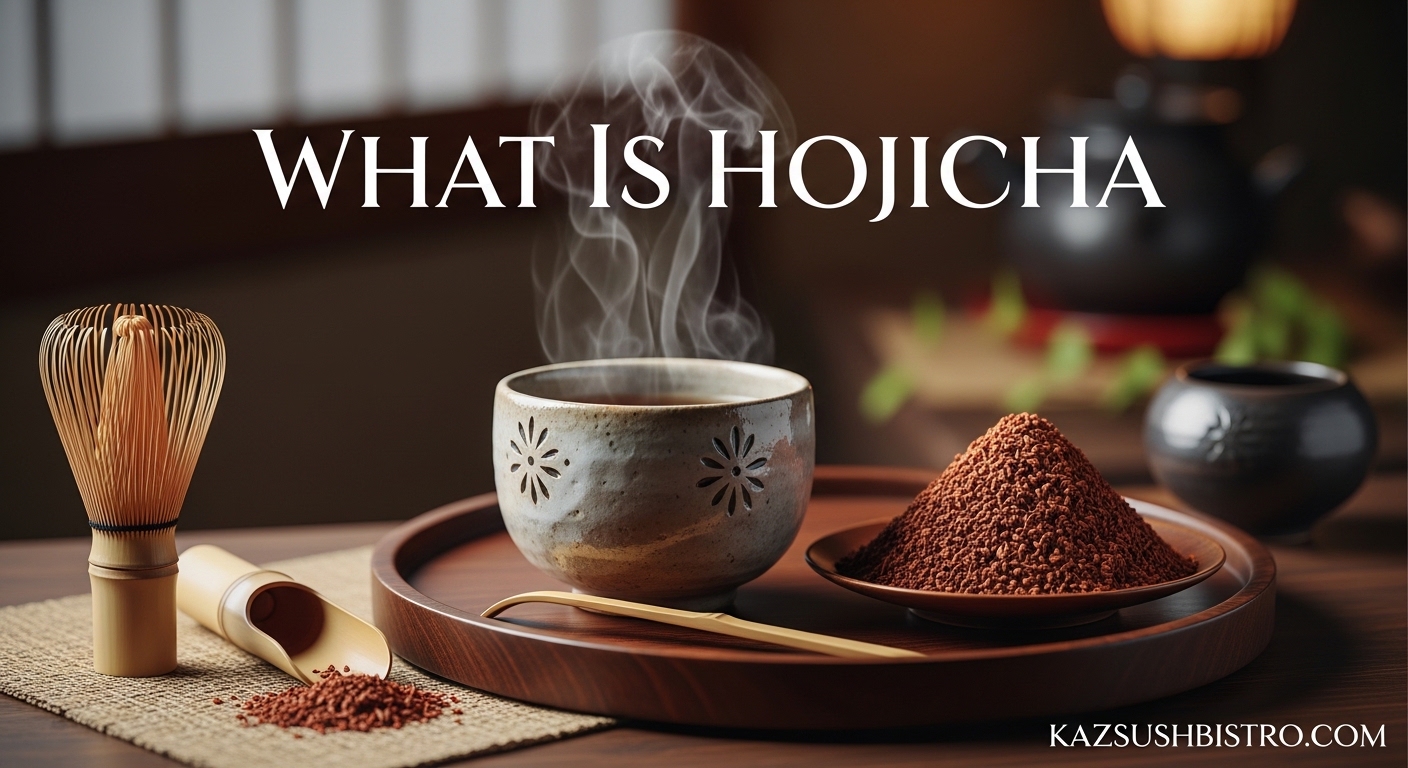
If you have ever wondered what is hojicha and why it seems to be everywhere from coffee shops to tea menus, you are not alone. This distinctive Japanese tea has been gaining popularity worldwide for its unique roasted flavor and low caffeine content. In this complete guide, we will explore everything you need to know about hojicha, from its origins in Kyoto to the reasons it has become a favorite for evening tea drinkers everywhere.
Table of Contents
What Is Hojicha?
Hojicha (pronounced ho-jee-cha, also spelled houjicha) is a Japanese green tea that stands apart from other teas because it is roasted rather than steamed. While most Japanese green teas like sencha and matcha go through a steaming process, hojicha undergoes a second step where the leaves are roasted at high temperatures. This roasting process transforms the tea entirely, giving it a distinctive reddish-brown color, a warm toasty aroma, and a smooth flavor profile that many describe as nutty with subtle caramel notes.
The transformation during roasting is what makes hojicha so unique among Japanese teas. The high heat changes the chemical composition of the leaves, reducing bitterness and astringency while developing those characteristic roasted flavors. Our team has sampled hojicha from multiple producers across Japan, and the difference in quality is immediately noticeable. Premium hojicha has a rich, complex roasted character, while lower quality versions can taste flat or overly smoky.
Key characteristics of hojicha include:
- Reddish-brown colored infusion (not green like most Japanese teas)
- Toasty, nutty aroma with caramel undertones
- Smooth, non-bitter taste
- Very low caffeine content (5-15mg per cup)
- Made from bancha, kukicha, or sencha leaves
The Origin and History of Hojicha 2026
The history of hojicha traces back to Kyoto in the 1920s, when tea merchants began developing this roasted variety as a way to utilize older tea leaves that were considered lower quality for drinking. The traditional production centered around the Uji region of Kyoto, which has been famous for tea production for over 800 years. What started as an economical solution quickly became a beloved tea variety in its own right.
According to historical records, the commercial production of hojicha as we know it began around 1925 in Kyoto. Tea merchants discovered that by roasting leaves that would otherwise be discarded, they could create a beverage with a completely different character. The roasting process not only transformed the flavor but also extended the shelf life of the tea, which was particularly important before modern preservation methods.
Today, hojicha is produced in several Japanese tea regions, with Kyoto, Shizuoka, and Kagoshima being the primary production areas. Each region produces hojicha with slightly different characteristics based on the tea leaves used and the roasting techniques employed. Shizuoka, as the largest tea-producing region in Japan, creates significant quantities of hojicha, while Kyoto’s versions are often considered the most traditional and premium.
How Hojicha Is Made: The Roasting Process
Understanding how hojicha is made requires knowing that it actually starts as a conventional Japanese green tea. The most common bases for hojicha are bancha (late-season tea leaves), kukicha (tea stems and twigs), and sometimes sencha. These leaves are first processed like regular green tea, which involves steaming and drying to prevent oxidation.
The critical difference comes in the roasting stage, which is where the magic happens. The dried green tea leaves are placed in a porcelain pot or drum and roasted at temperatures between 150-200 degrees Celsius (300-400 degrees Fahrenheit). Traditional methods use charcoal roasting, which imparts additional depth to the flavor. The roasting typically takes 5-10 minutes, and the operator carefully monitors the color and aroma to achieve the desired result.
During roasting, several chemical changes occur within the tea leaves. The chlorophyll breaks down, causing the leaves to turn from green to brown. Catechins, which are responsible for bitterness in green tea, are reduced significantly. Simultaneously, new aromatic compounds develop, creating those distinctive toasty, nutty, and slightly sweet flavors that hojicha is known for. The caffeine content also decreases during this process, which is why hojicha is one of the lowest caffeine Japanese teas available.
The result is a tea that shares almost no characteristics with its green tea origins. Unlike the vegetal, sometimes grassy taste of regular green tea, hojicha offers warmth and comfort in a cup. The roasting process is an art form, and experienced producers develop their own techniques and timings to create signature flavor profiles.
What Does Hojicha Taste Like?
If you are curious about what does hojicha taste like, the simplest description is toasty, nutty, and smooth with subtle sweetness. Unlike other Japanese green teas that can be vegetal or slightly bitter, hojicha has embraced roasting to create something entirely different. When you lift a cup of freshly brewed hojicha to your nose, you will immediately notice the warm, inviting aroma of roasted nuts and caramelized sugar.
The flavor follows the aroma closely. You will taste notes of toasted chestnuts, roasted barley, and a gentle sweetness reminiscent of caramel or brown sugar. There is no grassy quality, no astringency, and no bitter aftertaste. The mouthfeel is smooth and comforting, making hojicha particularly enjoyable in the evening when you want something warm without the sharpness of other teas.
From our team’s extensive tasting notes and from reviewing user experiences shared in tea communities, common descriptors for hojicha include:
- Toasted nuts (especially chestnuts and walnuts)
- Caramel and brown sugar sweetness
- Roasted barley or grain
- Slight smokiness without being overpowering
- Comforting and warm
- Clean finish with no bitterness
Several Reddit users who have tried hojicha describe it as slightly reminiscent of grilled mackerel in its smoky complexity, though the comparison stops there since hojicha is entirely plant-based. Others note that the flavor is so comforting and cozy that it has become their go-to for fall and winter evenings. The consensus among enthusiasts is that hojicha fills a unique niche in the tea world, offering the warmth of a roasted beverage with the smoothness of a well-crafted tea.
Hojicha vs Matcha: Key Differences
One of the most common questions about hojicha involves how it compares to matcha. Both are Japanese teas, but that is where the similarities end. The hojicha vs matcha comparison reveals two completely different beverages in terms of production, appearance, flavor, and caffeine content.
The most fundamental difference lies in how each tea is processed. Matcha is made by grinding shade-grown tea leaves into a fine powder, which is then whisked with hot water to create a suspension. The entire tea leaf is consumed, which contributes to matcha’s intense flavor and higher nutritional content. Hojicha, in contrast, is an infused tea where the leaves are steeped and discarded, similar to conventional tea brewing.
| Characteristic | Hojicha | Matcha |
|---|---|---|
| Color | Reddish-brown | Bright green |
| Flavor | Toasty, nutty, caramel | Grassy, umami, vegetal |
| Caffeine | 5-15mg per cup | 35-70mg per cup |
| Processing | Roasted green tea | Ground shade-grown leaves |
| Preparation | Steeped and strained | Whisked into suspension |
| Best for | Evening, low caffeine needs | Morning, energy boost |
Another significant difference is caffeine content. If you are sensitive to caffeine or avoiding it in the evening, hojicha is clearly the better choice. A typical cup of hojicha contains only 5-15 milligrams of caffeine, while matcha contains 35-70 milligrams per serving. This makes hojicha an excellent option for children, elderly individuals, or anyone monitoring their caffeine intake.
In terms of flavor preferences, it really comes down to what you are looking for. Matcha offers an intense, vibrant experience with its grassy freshness and umami depth. Hojicha provides comfort, warmth, and a gentle sweetness that many find soothing. Both have their place in Japanese tea culture, and many enthusiasts enjoy both depending on the time of day and mood.
Caffeine Content and Health Benefits
One of the most appealing aspects of hojicha is its naturally low caffeine content. Studies and tea analysis consistently show that a typical cup of hojicha contains only 5-15 milligrams of caffeine, making it one of the lowest caffeine tea options available. To put this in perspective, a standard cup of coffee contains 40-60 milligrams, and even other Japanese green teas like sencha can have 20-40 milligrams per cup.
The reason for hojicha’s low caffeine lies in the roasting process. When tea leaves are roasted at high temperatures, a significant portion of the caffeine is actually burned off along with other volatile compounds. This is why hojicha has become such a popular evening tea in Japan and increasingly worldwide. People who want to enjoy a warm beverage before bed without disrupting their sleep have found hojicha to be an ideal solution.
Beyond low caffeine, hojicha offers several potential health benefits. Like other green teas, hojicha contains antioxidants, though the specific antioxidant profile differs due to the roasting process. The roasting creates unique compounds called pyrazines, which not only contribute to the toasty flavor but also have antioxidant properties. Research suggests that these compounds may help protect cells from oxidative damage.
Hojicha also contains L-theanine, an amino acid found in tea that promotes relaxation and mental clarity. Unlike caffeine, which can cause jitters in some people, L-theanine works synergistically with caffeine to create a calm, focused state. The combination of low caffeine and L-theanine in hojicha makes it particularly suitable for promoting relaxation without drowsiness.
Health benefits commonly associated with hojicha include:
- Promoting relaxation and reducing stress
- Supporting digestive health
- Providing antioxidants through unique roasted compounds
- Being gentle on the stomach (lowered catechins reduce stomach irritation)
- Suitable for caffeine-sensitive individuals
Several users in tea communities have noted that hojicha is one of the few teas that does not upset their stomach, likely due to the reduced catechin content from roasting. This makes it a good option for those with sensitive digestive systems who still want to enjoy the benefits of tea.
How to Brew the Perfect Cup of Hojicha
Brewing hojicha is straightforward, and the process is more forgiving than brewing other Japanese teas like matcha or delicate sencha. The recommended brewing temperature for hojicha is around 82 degrees Celsius (180 degrees Fahrenheit), which is significantly cooler than the near-boiling water used for black tea. Using water that is too hot can bring out bitterness that hojicha does not naturally have, and it will diminish those delicate roasted flavors you are looking for.
For loose leaf hojicha, use approximately 2-3 grams of tea per 200 milliliters of water. This is roughly one teaspoon, though you can adjust to taste. The steeping time is short, typically 30 seconds to one minute for the first infusion. Some enthusiasts prefer a quick 30-second steep for a lighter cup, while others go the full minute for a more robust flavor. Hojicha can be infused multiple times, with subsequent steeps often bringing out different flavor notes.
Unlike green tea, which degrades quickly after opening, hojicha maintains its quality well when stored properly. The key is to keep it away from heat, light, moisture, and strong odors. An airtight container stored in a cool, dark cupboard is ideal. Unlike green tea, hojicha does not need refrigeration, and in fact, the low moisture content from roasting makes it quite stable at room temperature. Most hojicha will stay fresh for several months when stored correctly, though the roasted aroma gradually diminishes over time.
Hojicha can also be enjoyed in various forms beyond traditional hot tea. Hojicha lattes have become extremely popular in cafes, where the roasted tea is combined with steamed milk for a creamy, comforting drink. Iced hojicha works well for warmer months, and the tea can even be used in baking and desserts. The versatility of hojicha flavors makes it an excellent ingredient in the kitchen.
Conclusion
What is hojicha? It is a uniquely Japanese roasted tea that offers something genuinely different from the world of green tea. Born in Kyoto in the 1920s from a desire to utilize older tea leaves, hojicha has evolved into a beloved beverage with its own distinct identity. Its warm, toasty flavors, low caffeine content, and smooth finish have earned it a special place in Japanese tea culture and increasingly among tea enthusiasts worldwide.
The appeal of hojicha extends beyond its flavor. For those seeking a low-caffeine alternative that does not sacrifice satisfaction, hojicha delivers where other teas fall short. Its potential health benefits, including antioxidant properties and L-theanine content, add to its appeal as an everyday beverage. Whether you enjoy it in traditional Japanese style, as a latte, or incorporated into recipes, hojicha offers comfort and warmth in every cup.
If you have never tried hojicha, consider starting with a quality product from a reputable Japanese tea producer. The difference between premium and inferior hojicha is substantial, with high-quality versions showcasing beautiful roasted complexity while lower quality products can taste flat or excessively smoky. Explore this distinctive tea and discover why it has captured the hearts of tea lovers around the world.
FAQs
What is the difference between hojicha and matcha?
Hojicha is roasted green tea with a toasty, nutty flavor and low caffeine (5-15mg per cup), while matcha is steamed green tea with a grassy, umami taste and higher caffeine (35-70mg per cup). Hojicha has a reddish-brown color versus matcha’s bright green.
What does hojicha taste like?
Hojicha has a warm, toasty flavor with notes of nuts and caramel. Unlike other green teas, it has no bitterness or astringency. Users describe it as comforting, slightly smoky, and similar to roasted nuts or even grilled mackerel.
Is drinking hojicha good for you?
Yes. Hojicha contains antioxidants and L-theanine, which promotes relaxation without drowsiness. Its low caffeine content makes it suitable for evening consumption, and it may support digestive health. The roasting process reduces catechins, making it gentler on the stomach than other green teas.
Is hojicha high in caffeine?
No, hojicha is naturally low in caffeine with only 5-15mg per cup, compared to 35-70mg in matcha or 40-60mg in coffee. The roasting process significantly reduces caffeine content, making hojicha an excellent choice for caffeine-sensitive individuals or those avoiding stimulants before bed.
How do you pronounce hojicha?
Hojicha is pronounced ‘ho-jee-cha’ (in Japanese, it is written as ほうじ茶 or 焙じ茶). The ‘j’ sounds like a soft ‘j’ in ‘jeep’, and the accent falls on the second syllable.