
Walking into a Japanese restaurant for the first time can feel overwhelming when you are staring at a menu filled with unfamiliar terms. I remember my own confusion years ago, wondering why some dishes came with rice while others were just slices of fish on an empty plate. Understanding the difference between sashimi and sushi transforms that confusion into confidence, helping you order exactly what you crave.
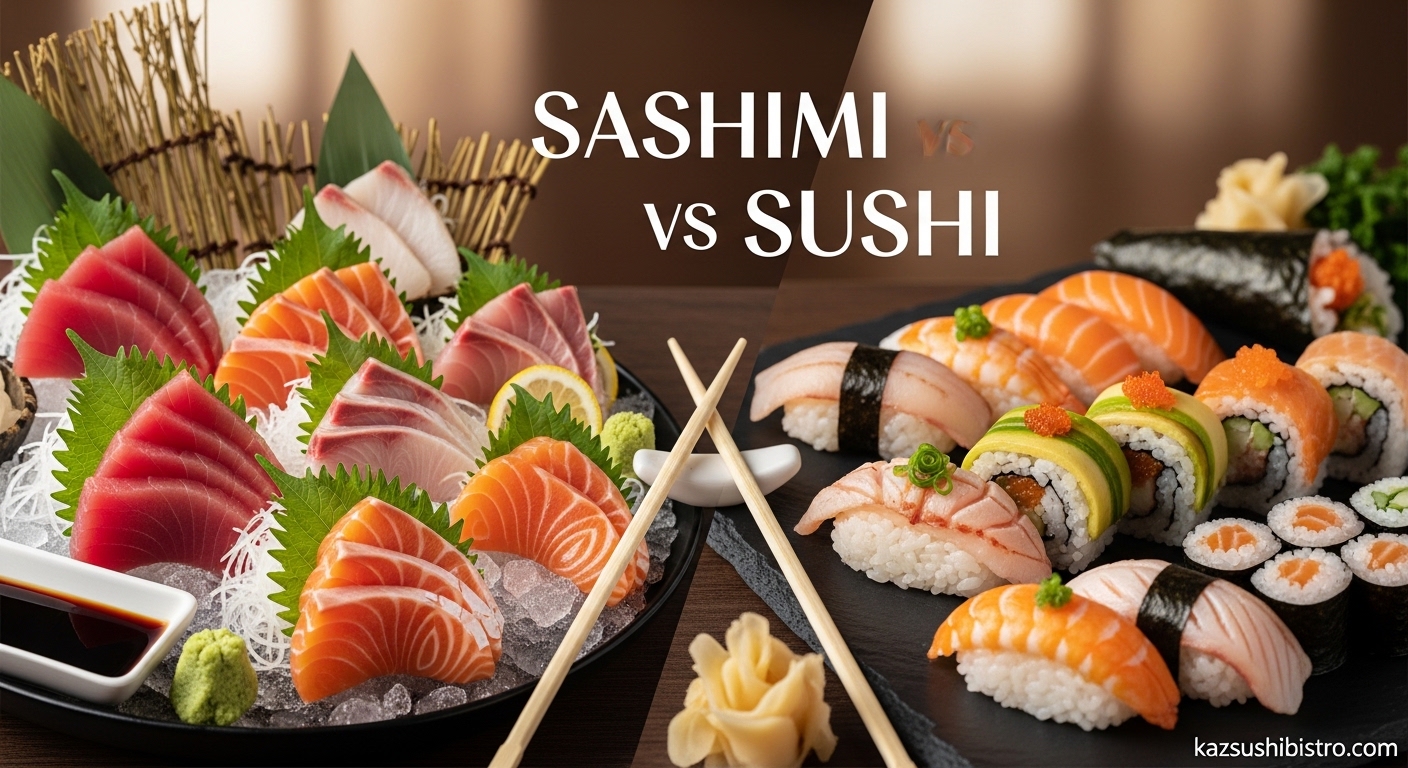
Sashimi is thinly sliced raw fish or seafood served without rice. Sushi always includes vinegared rice (called shari) as its foundation, topped or combined with fish, vegetables, or other ingredients. This single distinction, rice versus no rice, forms the core of the sashimi vs sushi debate.
In this guide, I will walk you through everything you need to know about these two Japanese staples. You will learn the precise definitions, discover the various types of sushi, understand proper dining etiquette, and gain the knowledge to make informed choices at any Japanese restaurant.
Table of Contents
Sashimi vs Sushi at a Glance 2026
Before diving deeper, here is a quick comparison of the key differences between these two dishes.
| Feature | Sashimi | Sushi |
|---|---|---|
| Rice | No rice | Always includes vinegared rice |
| Main Component | Raw fish or seafood only | Rice with toppings or fillings |
| Serving Style | Thin slices on a plate, often with garnish | Various forms (rolls, hand-pressed, bowls) |
| Preparation Focus | Knife skills and fish quality | Rice seasoning and combination balance |
| Typical Portion | 5-10 slices per order | Varies by type (2 pieces nigiri, 6-8 rolls) |
What Is Sashimi?
Sashimi represents the purest expression of raw fish in Japanese cuisine. The word itself combines two Japanese terms: sasu meaning “to pierce” and mi meaning “body,” referring to the pierced fish traditionally caught and served fresh.
At its essence, sashimi is fresh, raw fish or seafood sliced into thin pieces and served without rice. The slices typically measure about one-quarter inch thick, though this varies by fish type and chef preference. Traditional presentation places these slices on a plate with minimal garnish, often accompanied by shredded daikon radish, shiso leaves, or a small amount of wasabi.
Pronunciation Guide
Many diners feel uncertain about pronouncing Japanese food terms correctly. Sashimi is pronounced “sah-shee-mee” with equal emphasis on all three syllables. The middle syllable sounds like “she” rather than “shi,” which helps avoid the common mispronunciation “sash-ee-mee.”
Common Types of Sashimi Fish
Japanese restaurants typically offer a variety of fish for sashimi, each with distinct flavors and textures. Understanding these options helps you make informed choices based on your taste preferences.
Maguro (tuna) comes in several grades, with fatty belly cuts called otoro and medium-fatty chutoro commanding premium prices. Lean tuna, akami, offers a clean, meaty flavor that beginners often prefer.
Sake (salmon) provides a rich, buttery texture that melts in your mouth. Its natural oils make it an excellent starting point for those new to raw fish.
Hamachi (yellowtail) delivers a firm texture with a subtle sweetness. Young yellowtail called hamachi tends to be milder than mature buri.
Other popular choices include unagi (freshwater eel, always cooked), tako (octopus, slightly chewy and blanched), ika (squid, crisp and clean), and hotate (scallops, sweet and tender).
What Makes Fish “Sashimi-Grade”?
The term “sashimi-grade” appears frequently on menus, but it lacks official regulation in many countries. This designation generally indicates fish frozen to specific temperatures to kill parasites, making it safe for raw consumption. True sashimi-grade fish also demonstrates exceptional freshness, firm texture, and clean smell.
When selecting fish for sashimi, chefs look for bright eyes, firm flesh that springs back when pressed, and a fresh ocean scent rather than a fishy odor. The flesh should appear translucent and vibrant, never dull or discolored.
What Is Sushi?
Contrary to popular belief, sushi does not mean “raw fish.” The word sushi actually refers to the seasoned rice, specifically rice seasoned with vinegar, sugar, and salt. This vinegared rice, called shari or sumeshi, forms the essential foundation of every sushi dish.
Sushi encompasses any dish that combines this seasoned rice with other ingredients, which may include raw fish, cooked seafood, vegetables, or egg. The rice itself carries a subtle sweet-tart balance that complements the toppings while providing a neutral base that highlights their flavors.
The History and Cultural Significance
Sushi originated as a preservation method in Southeast Asia before evolving into the refined cuisine we know today. Originally, fish was packed with fermented rice to preserve it, and the rice was discarded before eating. Over centuries, Japanese chefs transformed this technique into an art form where rice became the star rather than just a preservative.
Today, sushi represents one of Japan’s most significant culinary exports, with regional variations spanning from traditional Edomae (Tokyo-style) sushi to modern fusion interpretations. The preparation requires years of training, with apprentice sushi chefs spending months learning to make rice properly before touching fish.
Key Differences Between Sashimi and Sushi
Understanding the nuanced distinctions between these dishes helps you appreciate the craft behind each preparation and make better ordering decisions.
The Rice Distinction
The most fundamental difference lies in the presence of rice. Sashimi never includes rice; it focuses entirely on the fish. Sushi always includes vinegared rice, making rice the defining characteristic rather than the presence of raw fish.
This distinction explains why sushi can contain cooked ingredients (like tamago omelet, cooked shrimp, or grilled eel) while still being called sushi. Conversely, a plate of raw tuna without rice is sashimi, not sushi.
Preparation and Knife Skills
Sashimi preparation demands exceptional knife skills. Chefs use long, specialized knives to cut fish against the grain in a single smooth motion, preserving the cellular structure and texture. Each slice must be uniform in thickness to ensure consistent flavor and mouthfeel.
Sushi preparation focuses more on rice handling and ingredient combination. The rice must be seasoned while warm, then cooled to body temperature before use. Chefs form rice portions quickly to maintain the proper texture, topping them with fish or fillings that complement the rice’s seasoning.
Presentation and Serving Style
Sashimi arrives simply arranged on a plate, often fanned out or stacked to showcase the fish’s color and quality. Traditional garnishes include shredded daikon radish (which aids digestion), shiso leaves (for palate cleansing), and wasabi.
Sushi presents in varied forms depending on the type. Nigiri appears as individual pieces arranged in pairs, while maki rolls arrive sliced into bite-sized rounds. The presentation emphasizes the relationship between rice and topping, with careful attention to portion balance.
Eating Experience
When you eat sashimi, you taste the pure, unadulterated flavor of the fish. Each slice offers immediate contact with the fish’s texture and oils, allowing full appreciation of its quality and freshness. The experience is contemplative and focused, often enjoyed with sake that complements the fish.
Sushi offers a more complex experience combining textures and temperatures. The warm rice contrasts with cool fish toppings, while the vinegar seasoning adds another flavor dimension. Each bite delivers multiple sensations working together rather than focusing on a single element.
Types of Sushi Explained
Sushi encompasses several distinct forms, each with unique preparation methods and eating experiences. Understanding these variations helps you navigate any sushi menu confidently.
Nigiri
Nigiri consists of hand-pressed rice topped with fish or other ingredients. The chef forms a small oval of rice, applies a thin layer of wasabi, and drapes the topping across the top. Traditional nigiri features fish cut specifically to cover the rice portion completely.
The fish-to-rice ratio varies by restaurant and region. Some chefs prefer a more generous fish portion that drapes over the sides, while others maintain a balanced approach. When eating nigiri, traditional etiquette suggests turning it fish-side down to dip in soy sauce, preventing the rice from falling apart.
Maki (Rolled Sushi)
Maki rolls wrap vinegared rice and fillings in sheets of nori (dried seaweed). Chefs spread rice on the nori, add fillings in the center, and roll using bamboo mats. The roll is then sliced into six to eight bite-sized pieces.
Common maki varieties include hosomaki (thin rolls with one filling), futomaki (thick rolls with multiple fillings), and uramaki (inside-out rolls with rice on the outside, like the famous California roll).
Temaki (Hand Rolls)
Temaki takes a cone shape rather than a cylindrical roll. The chef places rice and fillings on one half of a nori sheet, then rolls it into a cone that is eaten immediately while crisp. These are often made to order and should be consumed quickly before the nori loses its crunch.
Hand rolls offer a more casual eating experience than other sushi types. They are popular at home parties and casual sushi restaurants because they are easy to assemble and eat without chopsticks.
Chirashi (Scattered Sushi)
Chirashi presents as a bowl of seasoned rice topped with an assortment of sashimi and garnishes. Unlike nigiri, where each piece is hand-formed, chirashi allows the chef to artfully arrange various fish types over a bed of rice.
This style originated as a way to use leftover fish at the end of the day, but evolved into a beloved dish that showcases variety. A typical chirashi bowl might include ten or more different toppings, offering a comprehensive tasting experience in one dish.
Oshizushi (Pressed Sushi)
Oshizushi uses a wooden mold to press layers of rice and toppings into a rectangular block. After pressing, the block is sliced into individual portions. This style is particularly popular in the Osaka region and often features cured or cooked fish rather than raw.
The pressing process creates a dense, compact texture different from hand-formed sushi. Common toppings include mackerel, salmon, or vinegared toppings that complement the pressed rice’s firm texture.
Gunkan Maki (Battleship Rolls)
Gunkan maki consists of a hand-formed rice oval wrapped with a strip of nori, creating a vessel for loose or finely chopped toppings. The name translates to “battleship roll” because the shape resembles a ship.
This style accommodates ingredients that would not work on traditional nigiri, such as salmon roe (ikura), sea urchin (uni), and chopped fatty tuna (negitoro). The nori wall holds these delicate toppings in place while adding a crisp textural contrast.
Common Fish and Ingredients
Both sashimi and sushi draw from the same pool of quality seafood, though preparation methods may differ. Understanding these ingredients helps you recognize quality and order confidently.
| Fish/Japanese Name | English Name | Common Preparation | Flavor Profile |
|---|---|---|---|
| Maguro | Tuna | Both raw | Meaty, clean |
| Sake | Salmon | Both raw | Rich, buttery |
| Hamachi/Buri | Yellowtail | Both raw | Firm, sweet |
| Unagi | Freshwater Eel | Cooked with sauce | Sweet, smoky |
| Tako | Octopus | Blanched | Chewy, mild |
| Ika | Squid | Raw | Crisp, clean |
| Hotate | Scallop | Raw | Sweet, tender |
| Amaebi | Sweet Shrimp | Raw | Sweet, delicate |
| Tamago | Sweet Egg Omelet | Cooked | Sweet, custardy |
| Ikura | Salmon Roe | Cured | Briny, popping |
| Uni | Sea Urchin | Raw | Creamy, oceanic |
Freshness Indicators
Quality fish displays specific characteristics that indicate freshness. The flesh should appear translucent and vibrant, never cloudy or dull. Fresh fish smells like the ocean, not fishy or ammonia-like. When pressed gently, the flesh should spring back rather than leaving an indentation.
For shellfish like scallops and shrimp, look for firm texture and sweet aroma. Opaque or mushy textures indicate age. Octopus should show a slight sheen without being slimy, and the texture should be yielding but not tough.
Dining Etiquette and Experience
Japanese dining culture includes specific customs for enjoying sushi and sashimi. Following these practices shows respect for the cuisine and enhances your experience.
How to Eat Sashimi
Traditional sashimi service includes a small mound of wasabi and a dish for soy sauce. Use your chopsticks to place a small amount of wasabi directly on the fish slice, then dip the fish lightly in soy sauce before eating. Avoid mixing wasabi into your soy sauce dish, as this dilutes both flavors and is considered improper.
Some restaurants provide ponzu (citrus soy sauce) instead of regular soy sauce for certain fish. When available, use the sauce the chef provides, as it is chosen specifically to complement that particular fish.
How to Eat Sushi
Nigiri presents the most etiquette questions for diners. Traditionalists recommend picking up nigiri with your fingers rather than chopsticks, as this prevents the rice from compressing and falling apart. Turn the nigiri fish-side down when dipping in soy sauce to avoid soaking the rice.
Eat nigiri in one bite if possible. Biting it in half often causes the rice to separate from the fish, disrupting the intended balance of flavors and textures. If the piece is too large, discreetly request that the chef make smaller portions.
For maki rolls, chopsticks are perfectly acceptable. Dip the cut side of the roll in soy sauce to prevent the rice from absorbing too much. Eat rolls whole rather than biting pieces off.
Ginger and Wasabi
The pickled ginger (gari) served alongside sushi serves as a palate cleanser between different fish types, not as a topping. Do not place ginger on your sushi. Instead, eat a small slice between different pieces to reset your taste buds.
Wasabi provided at sushi bars is typically freshly grated from the root, offering superior flavor to the powdered paste common in grocery stores. Use it sparingly, as its heat should accentuate rather than overpower the fish.
Ordering Tips
When dining at a traditional sushi bar, consider ordering omakase, which means “I leave it to you.” The chef will serve a progression of items based on seasonal availability and freshness. This represents the pinnacle of sushi dining, allowing the chef to showcase their best offerings.
For beginners, start with milder fish like salmon or yellowtail before progressing to stronger flavors like mackerel or sea urchin. This gradual progression helps your palate adjust to raw fish textures and flavors.
Nutritional Considerations
Both sashimi and sushi offer health benefits, though their nutritional profiles differ significantly due to the rice component.
Sashimi provides high-quality protein and omega-3 fatty acids without carbohydrates. A typical serving contains roughly 30-40 grams of protein and minimal calories from fat, depending on the fish variety. Fatty fish like salmon and yellowtail provide more calories but offer heart-healthy fats.
Sushi adds carbohydrate content through the rice, with a typical nigiri piece containing about 10-15 grams of carbohydrates. The rice also adds calories, making sushi more filling but less protein-dense per calorie than sashimi.
The omega-3 fatty acids found in fatty fish like salmon, tuna, and mackerel support cardiovascular health and may help reduce inflammation. These benefits apply equally to both sashimi and sushi when they feature the same fish.
Frequently Asked Questions
Which is better, sushi or sashimi?
Neither is objectively better; they serve different purposes. Sashimi highlights pure fish quality and is ideal when you want to focus entirely on the seafood flavor. Sushi offers more variety in textures and flavors through combinations with rice and other ingredients. Personal preference and your current craving determine which suits you better.
Is sushi good for lowering triglycerides?
Sushi featuring fatty fish like salmon and mackerel may help lower triglycerides due to omega-3 fatty acids. However, the white rice in sushi can spike blood sugar, which may affect lipid profiles negatively. Sashimi provides the omega-3 benefits without the carbohydrate impact, making it potentially more effective for triglyceride management.
Is sushi good for A1C?
Traditional sushi with white rice is not ideal for A1C management because the refined carbohydrates can raise blood glucose levels. If you have diabetes or prediabetes concerns, sashimi is a better choice as it contains no carbohydrates. Some restaurants now offer cauliflower rice or brown rice options that may be more suitable.
Can you eat sushi on Mounjaro?
Yes, you can eat sushi while taking Mounjaro, but portion control becomes important. Mounjaro slows gastric emptying, making high-carbohydrate meals like sushi potentially uncomfortable. Sashimi is often a better choice as it is lighter and contains no rice. Start with small portions and see how your body responds.
Is nigiri considered sushi or sashimi?
Nigiri is a type of sushi, not sashimi. It consists of hand-pressed vinegared rice topped with fish. While the fish topping may be identical to what is served as sashimi, the presence of rice makes it sushi. Some diners confuse the two because high-end nigiri often features the same quality fish as sashimi presentations.
Why is sashimi more expensive than sushi?
Sashimi typically costs more because you receive more fish per order. A sushi order includes rice, which is inexpensive, while sashimi provides pure fish without filler. Additionally, sashimi requires the highest quality cuts since any imperfections are immediately visible without rice to mask them. The skill required for precise slicing also adds to the cost.
Can you make sashimi and sushi at home?
Maki rolls are the easiest to make at home with basic ingredients and a bamboo mat. Nigiri requires more skill to form properly but is achievable with practice. Sashimi is the most challenging because it requires exceptional knife skills and truly fresh, sashimi-grade fish, which can be difficult to source outside Japanese markets.
Do you eat sashimi with chopsticks?
Yes, chopsticks are the traditional utensil for eating sashimi. Pick up each slice, dip it lightly in soy sauce with wasabi, and eat it in one or two bites. Some diners prefer to use their fingers for sushi, particularly nigiri, but chopsticks remain appropriate for all sashimi and most sushi types.
Conclusion
Understanding the sashimi vs sushi difference comes down to one fundamental element: rice. Sashimi presents pure, sliced raw fish without any rice, allowing the seafood quality to take center stage. Sushi always includes vinegared rice as its foundation, combined with fish, vegetables, or other ingredients in various preparations from hand-pressed nigiri to rolled maki.
Both dishes offer unique dining experiences that showcase Japanese culinary artistry. Sashimi rewards those seeking to appreciate the nuances of different fish species in their purest form. Sushi provides endless variety through combinations of rice, toppings, and preparation styles.
Armed with this knowledge, you can now approach any Japanese restaurant menu with confidence. Whether you choose the focused purity of sashimi or the balanced complexity of sushi, you will understand exactly what arrives at your table and how to enjoy it properly.