
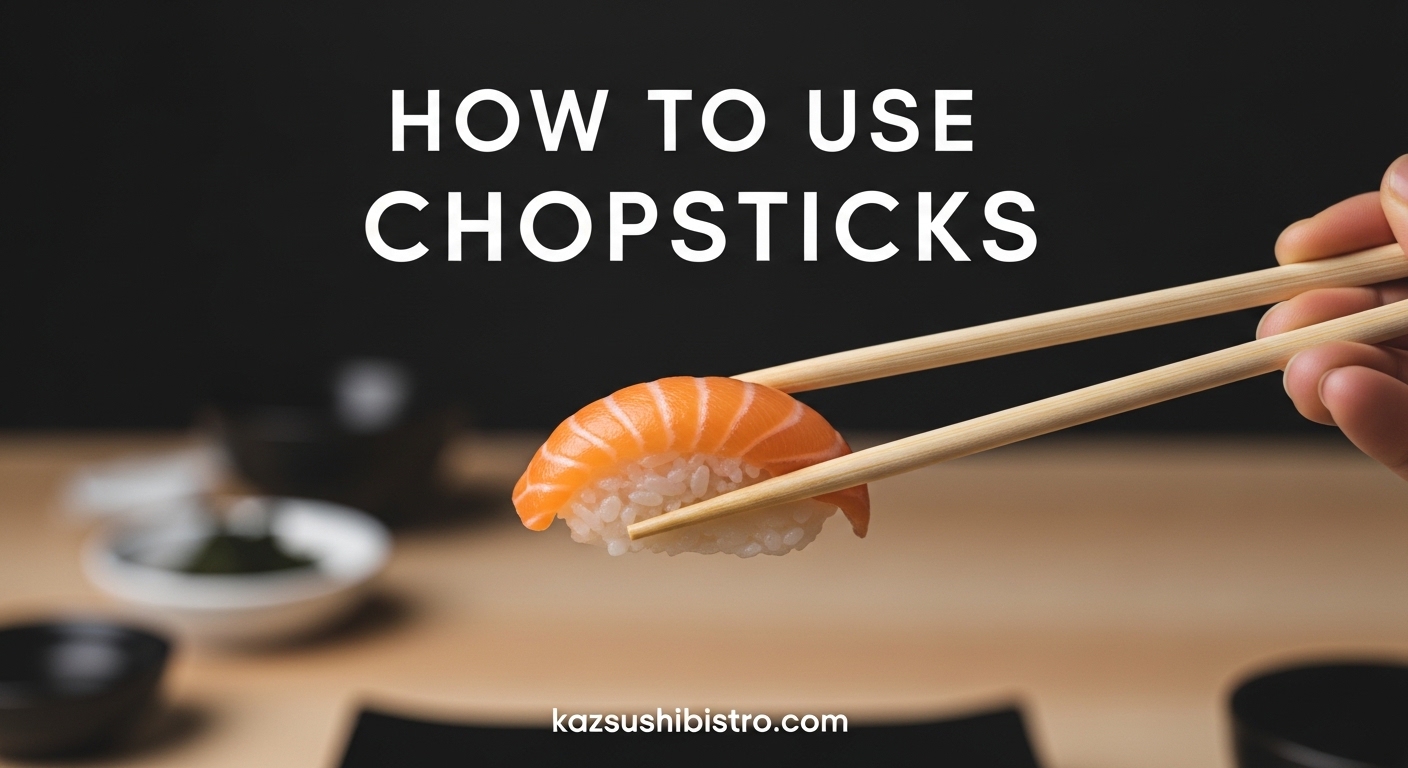
Walking into a sushi restaurant for the first time, or even the tenth time, and fumbling with chopsticks is something nearly everyone experiences. I have watched countless guests at KAZ Sushi Bistro gently struggle with their chopsticks, occasionally setting them down in frustration. If that sounds familiar, you are in exactly the right place.
Learning how to use chopsticks is not about mastering some impossible skill. It is about understanding a few simple principles and practicing them. Once the technique clicks, you will wonder why it ever felt difficult. This guide walks you through everything you need to know, from choosing the right chopsticks to the cultural traditions that make them special. We update this guide regularly to bring you the best tips for 2026.
We designed this guide specifically for beginners. Whether you are visiting us for your first sushi experience or you have been enjoying Japanese cuisine for years but never quite gotten comfortable with chopsticks, this article will help. By the time you finish reading, you will have the knowledge and confidence to eat your next meal with chopsticks comfortably.
Table of Contents
Choosing the Right Chopsticks 2026
Before learning technique, it helps to understand your tools. Chopsticks come in several materials, and the right choice makes a real difference when you are starting out.
Bamboo and wood chopsticks are the best choices for beginners. These materials provide natural grip, meaning food is less likely to slip away from you. At KAZ Sushi Bistro, we serve our guests with wooden chopsticks precisely because they are forgiving and easy to handle. You will find these in most sushi restaurants.
Plastic chopsticks are smooth and can feel slippery, especially when handling oily foods like salmon or tuna. They work fine once you have some experience, but they add an unnecessary challenge for beginners.
Metal chopsticks are common in Korean dining but present the greatest difficulty for new learners. The smooth surface offers almost no grip, making rice and noodles particularly challenging. If you are just starting out, avoid metal chopsticks until you have built up your technique.
Japanese chopsticks are typically shorter and pointed at the tips compared to Chinese-style chopsticks, which are longer with blunt ends. For eating sushi and smaller portions, Japanese-style chopsticks give you more precision. When dining at a sushi restaurant, you will almost always receive the Japanese style.
The Correct Grip: Holding the Bottom Chopstick
The bottom chopstick serves as your anchor. It stays stationary while you work, and getting its position right from the start makes everything else easier.
Place the bottom chopstick across your ring finger, resting just below the first knuckle. Your thumb should rest gently on top of it, holding it in place. The chopstick should extend from this grip point toward the tip of your fingers. You want it positioned along the side of your hand, not across your palm.
This chopstick does not move during eating. It simply stays in place, providing resistance when the top chopstick closes. Keep it parallel to the table surface for the most natural angle when picking up food. When you are not actively pinching food, the bottom chopstick remains still while your hand relaxes.
One common beginner mistake is gripping the bottom chopstick too tightly with the thumb and forefinger. This creates tension and makes your hand tire quickly. Let your ring finger support most of the weight while your thumb holds it gently in place.
The Correct Grip: Holding the Top Chopstick
The top chopstick is where all the movement happens. Think of how you hold a pencil when writing, because the grip is remarkably similar.
Rest this chopstick along the top of your index finger, with the tip of the chopstick extending past your finger. Your middle finger supports it from below. Your thumb wraps around to hold everything in place, creating a tripod effect with your index finger, middle finger, and thumb working together.
The key to this grip is maintaining a small gap between your thumb and the base of your index finger. This gap is where the magic happens. When you open your chopsticks, your index and middle fingers move away from your thumb, creating the opening motion. When you close them, these fingers come back toward your thumb, creating the pinching action.
Your index finger does most of the control work. It leads the opening and closing motion, with your middle finger providing support and your thumb acting as a pivot point. If you have ever held a calligraphy brush or a pool cue, you already understand this kind of fine motor control.
The Pinching Motion: How Chopsticks Actually Work
Here is the fundamental secret that makes chopsticks work: only the top chopstick moves. I cannot stress this enough, because it is the single most common mistake beginners make.
Your bottom chopstick stays fixed in place. Your top chopstick opens and closes against it, creating a pinching motion. This is similar to how a pincer works on a crab or how your thumb and forefinger work when you pick something up.
To practice this, hold your chopsticks in position and simply open and close them repeatedly. Do not try to pick up anything yet. Just focus on the opening and closing motion. The tips of your chopsticks should come together and separate smoothly. This motion should feel natural and comfortable, without requiring much effort.
When you do pick up food, the food rests on the stationary bottom chopstick while the top chopstick comes down to meet it, trapping the food between the two tips. Think of it as capturing food rather than squeezing it. The bottom chopstick provides the platform; the top chopstick provides the closing pressure.
Practice Techniques for Beginners
Practicing the chopstick motion before your first sushi meal makes a huge difference. Here at KAZ Sushi Bistro, we believe so strongly in practice that we want to share our best techniques with you.
Start with easy foods. When you are learning, choose foods that are large and easy to grab. Dumplings, large pieces of cucumber, or thick strips of cucumber or carrot make excellent first targets. Avoid rice and thin noodles until you have built up some coordination.
The marshmallow method. Some of our guests swear by this technique: practice picking up marshmallows with your chopsticks. Marshmallows are soft, large, and forgiving. If you can master picking up a marshmallow, regular food becomes easy. This might sound silly, but it genuinely works.
Daily practice builds muscle memory. Forum discussions from communities like r/IWantToLearn reveal that consistent daily practice matters more than marathon sessions. Try practicing for five minutes each day, perhaps while watching television or having a snack. Within a week or two, you will notice significant improvement.
Do not worry if progress feels slow at first. One forum user shared that it took them five years of occasional practice to feel truly comfortable, though they noted basic competence came much faster. For most people, a few weeks of regular practice produces satisfying results. The key is patience and consistency.
Common Mistakes and How to Fix Them
Understanding what goes wrong helps you avoid these pitfalls. Here are the most frequent mistakes we see, along with simple fixes.
Gripping too tightly. Many beginners squeeze their chopsticks as hard as they can, thinking this will give them more control. Instead, it creates tension, makes your hand tire quickly, and reduces your dexterity. The fix is simple: relax your grip. Your chopsticks should feel almost weightless in your hand.
Moving both chopsticks. If you find both chopsticks moving when you try to pick up food, your bottom chopstick grip is probably too loose. Check that your ring finger is properly supporting it and that your thumb is resting on top to anchor it in place.
Chopsticks positioned inside the hand. Your chopsticks should rest along the outside of your hand, near your pinky finger, not tucked inside toward your palm. This positioning gives you the most control and keeps the tips free to move.
Pinching instead of rolling. When picking up round foods like edamame or small items, resist the urge to pinch straight down. Instead, try a gentle rolling motion that captures the food against the bottom chopstick. This technique gives you more control with less effort.
Japanese Chopstick Etiquette
Understanding chopstick etiquette shows respect for Japanese culture and demonstrates that you appreciate the traditions behind the dining experience. At KAZ Sushi Bistro, we want our guests to feel comfortable, but we also believe understanding these customs enriches the meal.
Never stick chopsticks upright in rice. This is perhaps the most important rule. Placing chopsticks vertically in a bowl of rice resembles the ritual incense used at Japanese funerals. It is considered extremely bad luck and deeply offensive. When you need to set your chopsticks down, rest them on the chopstick rest provided, or lay them across the top of your bowl.
Never pass food from chopstick to chopstick. This gesture also relates to funeral rituals, where chopsticks are passed between family members during the ceremony. At the table, use the reverse end of your chopsticks for shared dishes, or place food onto your own plate first.
Do not rub chopsticks together. If you rub your chopsticks together, it signals that you think they are cheap or dirty. At a quality restaurant like ours, your chopsticks are already clean and ready to use. Rubbing them together can be seen as insulting to your host.
Rest chopsticks properly. Use the chopstick rest, called a hashioki, whenever you set your chopsticks down. This small accessory keeps your chopsticks from rolling and keeps the tips clean. If no hashioki is provided, simply lay your chopsticks across the rim of your bowl or plate.
Point chopsticks away from others. When not in use, keep your chopstick tips pointed toward the center of the table or away from other diners. Pointing at someone with your chopsticks is considered rude.
Tips for Eating Different Foods
Different foods require slightly different techniques. Here is how we recommend approaching the most common sushi restaurant items.
Sushi and rolls. You can eat nigiri sushi with your fingers or with chopsticks. Both methods are acceptable. If using chopsticks, gently pick up the piece and turn it fish-side down into your soy sauce. This prevents the rice from soaking up too much soy sauce and falling apart.
Noodles. Noodles can seem intimidating, but the technique is straightforward. Slide your chopsticks into the bowl and twirl them against the side while sucking the noodles up. Never pierce your noodles with chopsticks. The sliding motion along the bowl edge guides the noodles and makes them easy to grab. This is where daily practice really pays off.
Rice. Individual grains of sushi rice can be tricky. The secret is to use your chopsticks to gently roll small portions together before picking them up. Think of gathering the rice rather than trying to grab single grains. Some guests find chopsticks difficult for rice, and that is completely normal.
Soup. Use the ladle for the broth, but use your chopsticks to guide solid items like tofu, vegetables, or mushrooms to your spoon. Piercing soup ingredients with chopsticks is acceptable in most restaurants.
Dumplings and gyoza. You can either pierce dumplings with your chopsticks or pick them up whole. Both methods are perfectly acceptable. If the dumpling is large, picking it up whole and biting it in half is common practice.
Frequently Asked Questions
How to use Japanese chopsticks for beginners?
Hold the bottom chopstick stationary against your ring finger with your thumb. Position the top chopstick like a pencil, resting on your index finger with your middle finger underneath and thumb anchoring it. Only the top chopstick moves, opening and closing in a pinching motion. Practice this motion repeatedly before attempting to pick up food.
What are the 7 rules when using chopsticks?
The main chopstick etiquette rules are: 1) Never stick chopsticks upright in rice, 2) Never pass food chopstick to chopstick, 3) Do not rub chopsticks together, 4) Rest chopsticks on the hashioki when not in use, 5) Use the opposite end for shared dishes, 6) Point chopsticks away from others, 7) Do not gesture with chopsticks or point at food with them.
What is proper chopstick etiquette in Japan?
In Japan, chopstick etiquette carries deep cultural significance. Key rules include resting chopsticks on the hashioki, never sticking them upright in rice, using the opposite end to take food from shared plates, and keeping chopstick tips pointed away from others. These customs show respect for Japanese dining traditions and your hosts.
What if the pencil grip technique does not work for me?
The pencil grip is a helpful analogy but not the only way to hold chopsticks. If it does not feel comfortable, try adjusting hand positions while keeping the core principle: the bottom chopstick stays stationary while the top one opens and closes. Focus on the pinching motion itself rather than matching a specific hand position exactly. Practice daily and experiment until you find what works for your hand.
How long does it take to learn chopsticks?
Basic competence typically develops within 2-4 weeks of regular practice. Complete mastery takes much longer, but most people can eat comfortably with practice. Start with large, easy-to-grab foods and gradually work toward smaller, slipperier items. Daily short practice sessions are more effective than occasional long ones.
What foods should beginners practice with?
Begin with large, easy-to-grab foods like dumplings, thick vegetable strips, or large pieces of cucumber. Once comfortable, move to medium-difficulty items like sushi rolls and pieces of fish. Save rice and thin noodles for last, as these require the most precision. Some learners find marshmallows helpful for building the pinching motion.
Final Thoughts
You now have everything you need to start your chopstick journey. Remember, every person who uses chopsticks fluently started exactly where you are now. The fumbling, the dropped pieces of sushi, the rice that seems impossible to grab, all of it is part of the learning process.
The techniques we have covered here, from choosing wooden chopsticks to understanding the stationary versus movable chopstick roles, provide a solid foundation. Combine this knowledge with a bit of patience and daily practice, and you will be eating comfortably before you know it.
When you next visit KAZ Sushi Bistro, we invite you to put these techniques into practice. Our team is always happy to offer guidance or provide another pair of chopsticks if you need them. There is no judgment here, only hospitality. We want every guest to feel welcome and comfortable as they enjoy our food.
Learning to use chopsticks is more than just a practical skill. It is an entry point into a rich cultural tradition that spans thousands of years. Each time you pick up your chopsticks correctly, you are connecting with generations of people who have done the same thing before you. That is pretty remarkable when you think about it.
So give yourself permission to learn at your own pace. Celebrate small victories, like successfully picking up your first dumpling. And most importantly, enjoy the journey. The destination, which is eating delicious sushi with confidence, is absolutely worth the trip.