
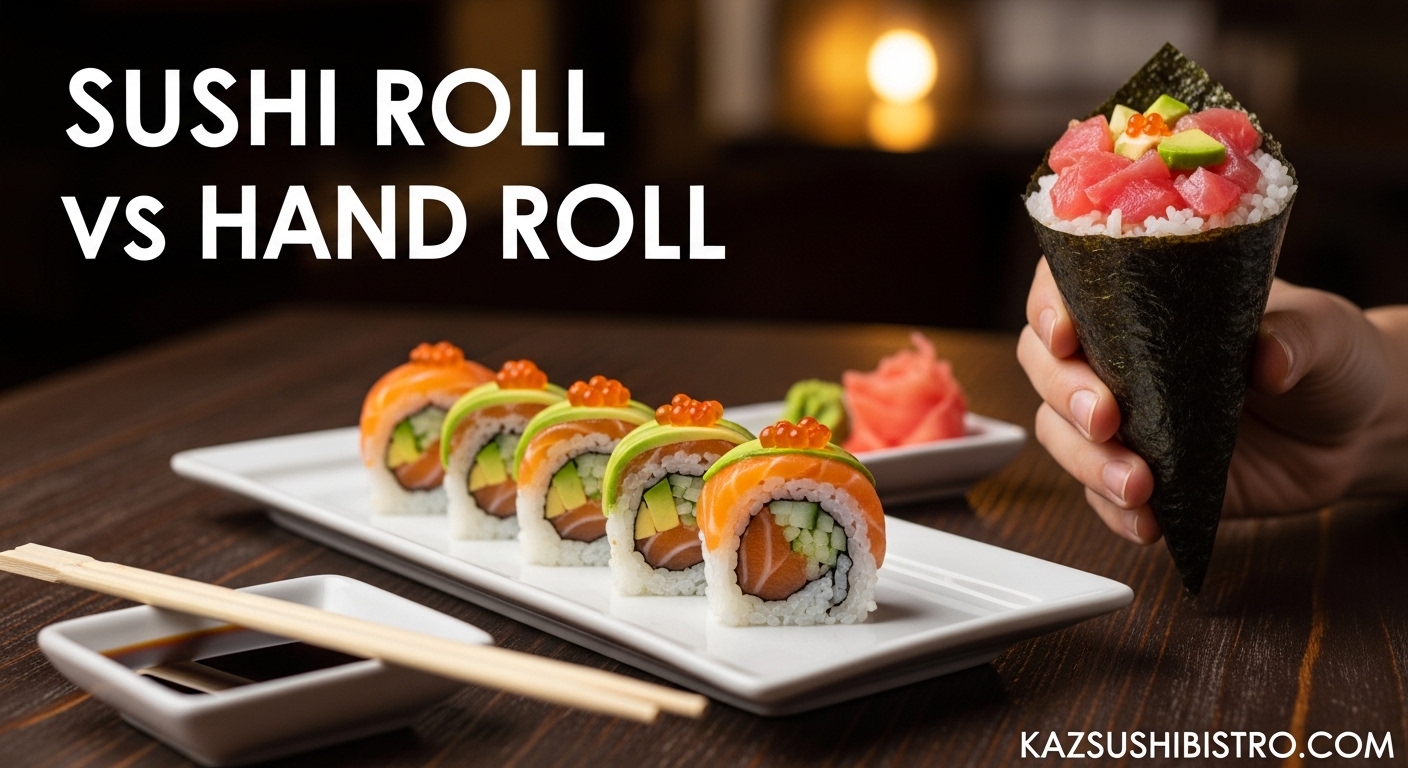
Walking into a sushi restaurant for the first time can feel overwhelming when you are staring at a menu filled with unfamiliar terms. I remember my own confusion when I encountered maki, temaki, nigiri, and sashimi listed side by side without clear explanations of what made each one different. Understanding the difference between sushi roll vs hand roll is essential for ordering confidently and enjoying your meal to the fullest.
Both maki rolls and hand rolls share the same fundamental ingredients: vinegared rice, fresh seafood or vegetables, and crisp nori seaweed. What sets them apart is their shape, preparation method, and how you eat them. Maki rolls are the familiar cylindrical cuts you see on sharing plates, while hand rolls are individual portions shaped like cones or small cylinders meant to be eaten immediately.
In this guide, I will walk you through everything you need to know about these two popular sushi styles. You will learn how each is prepared, when to choose one over the other, and the proper way to enjoy them. Whether you are planning a DIY sushi night at home or simply want to order with confidence at your local restaurant, this guide has you covered.
Table of Contents
What Is a Sushi Roll (Maki/Makizushi)?
A sushi roll, known as maki or makizushi in Japanese, is the most recognizable form of sushi in the United States. It consists of sushi rice and various fillings wrapped in a sheet of nori seaweed, then rolled into a tight cylinder using a bamboo mat called a makisu. The roll is then sliced into six to eight bite-sized pieces, creating the familiar round cross-section that reveals colorful layers of ingredients.
The origins of maki date back to the Edo period in Japan, when street vendors developed this convenient way to serve sushi. Unlike earlier forms of sushi that required lengthy fermentation, maki could be prepared quickly and eaten on the go. This innovation helped popularize sushi as a fast, affordable meal rather than a time-intensive delicacy.
The Three Main Types of Maki Rolls
Not all maki rolls are created equal. Japanese cuisine recognizes three distinct categories based on size and filling composition.
Hosomaki translates to “thin rolls” and contains just one filling ingredient wrapped in nori with rice. Common varieties include tekka maki (tuna), kappa maki (cucumber), and sake maki (salmon). These simple rolls showcase the quality of a single ingredient and are perfect for sushi purists.
Futomaki means “thick rolls” and features multiple ingredients layered together. These substantial rolls often include combinations like egg, spinach, pickled daikon, and fish. During the Setsubun festival, families traditionally eat uncut futomaki while facing the year’s lucky direction for good fortune.
Uramaki refers to “inside-out rolls” where the rice appears on the outside and nori hides within. The California roll, invented in Los Angeles during the 1960s, popularized this style. Other American favorites like the spicy tuna roll and Philadelphia roll also fall into this category.
Popular Sushi Roll Varieties
When browsing a menu, you will encounter these beloved roll combinations again and again.
The California roll contains imitation crab, avocado, and cucumber with rice on the outside, often topped with sesame seeds. This roll was specifically created for American diners hesitant about raw fish, making it a gateway sushi experience for many.
Spicy tuna rolls combine diced raw tuna with spicy mayonnaise, creating a creamy, fiery contrast to the cool rice and crisp nori. The heat level varies by restaurant, so ask your server if you have a preference.
The Philadelphia roll pairs smoked salmon with cream cheese and cucumber, creating a bagel-and-lox-inspired flavor profile that appeals to newcomers. Other popular options include the dragon roll (eel and avocado topping), rainbow roll (various fish layered over California roll), and spider roll (soft-shell crab with vegetables).
How Maki Rolls Are Made
The art of rolling maki requires practice and the right technique. Chefs begin by laying a sheet of nori on a bamboo mat, spreading seasoned sushi rice evenly across the surface while leaving a small margin at the top edge. Fillings are arranged in a line across the center, then the mat is used to roll everything into a tight cylinder with gentle pressure.
A sharp knife dipped in water prevents sticking as the chef slices through the roll. Each cut must be decisive and clean to avoid compressing the rice or squishing the fillings. The resulting pieces should hold together firmly while revealing attractive cross-sections of the colorful ingredients inside.
What Is a Hand Roll (Temaki)?
A hand roll, called temaki in Japanese, offers a completely different sushi experience from its cylindrical cousin. Instead of being sliced into pieces, temaki is served as a single, hand-held portion wrapped in crisp nori. The rice and fillings are positioned along one edge of the nori sheet, then rolled into a cone shape or small cylinder that is eaten whole.
The defining characteristic of temaki is its immediacy. These rolls are made to order and meant to be consumed within minutes of preparation. This timing matters because the nori remains crispy and crackles pleasantly when you bite into it. Wait too long, and the seaweed absorbs moisture from the rice, turning chewy and losing its signature texture.
Temaki has deep roots in Japanese home cooking and casual dining. Families often host temaki parties where guests assemble their own rolls from a spread of ingredients. This interactive format makes hand rolls perfect for social gatherings and informal meals.
The Two Shapes of Hand Rolls
Hand rolls come in two distinct presentations that vary by region and restaurant style.
The cone shape is the traditional Japanese style familiar to most Americans. One corner of the nori sheet is folded to create a point, then rice and fillings are added before rolling into an ice-cream-cone shape. This format is handheld, portable, and fun to eat.
The cylindrical shape emerged from specialty hand roll restaurants like KazuNori in Los Angeles. These establishments serve temaki as small, open-ended cylinders that allow for a fuller bite and neater presentation. The nori is wrapped around rice and fillings into a log shape, with ingredients visible at the top.
Hand Roll Fillings and Combinations
While temaki can contain any sushi filling, certain combinations work particularly well in the hand roll format.
The classic spicy tuna temaki remains a perennial favorite, combining ground or diced raw tuna with spicy mayonnaise and scallions. The cool, creamy filling contrasts beautifully with the warm, crispy nori when served fresh.
Salmon and avocado creates a rich, buttery combination that needs no additional sauce. The natural oils in both ingredients complement each other while the crisp nori provides textural contrast.
Other popular options include yellowtail with scallion, shrimp tempura with spicy sauce, and uni (sea urchin) for adventurous diners. Vegetarian temaki often feature cucumber, avocado, pickled vegetables, or grilled eggplant.
The Hand Roll Experience
Eating temaki engages all your senses in a way that sliced rolls cannot replicate. You feel the warm, slightly crisp nori in your hand. You smell the toasted seaweed aroma mixed with vinegared rice. You hear the satisfying crunch when you take your first bite.
The texture experience defines temaki above all else. Freshly made hand rolls deliver nori at its peak: brittle, fragrant, and shattering between your teeth. This is why dedicated hand roll bars emphasize rapid service, often handing each roll directly to you seconds after assembly.
Specialty hand roll restaurants have become a growing trend across the United States. These establishments focus exclusively on temaki, offering counter seating where chefs prepare rolls to order. The format combines the intimacy of omakase dining with the casual approachability of fast-casual service.
Sushi Roll vs Hand Roll: Key Differences 2026
Now that we have explored each style individually, let us examine how they compare directly. Understanding these distinctions will help you make informed choices whether you are ordering at a restaurant or planning a sushi night at home.
| Feature | Sushi Roll (Maki) | Hand Roll (Temaki) |
|---|---|---|
| Shape | Cylindrical, cut into 6-8 pieces | Cone or small cylinder, served whole |
| Eating Method | Chopsticks (traditionally) | By hand |
| Nori Texture | Softens as it sits | Crispy when fresh |
| Serving Style | Shared plate, multiple pieces | Individual portion |
| Preparation | Made in advance, sliced to order | Made to order, eaten immediately |
| Best For | Groups, variety, appetizers | Solo dining, focused experience |
Shape and Presentation
The most obvious difference between maki and temaki lies in their shape. Maki rolls are cylindrical logs cut into uniform, bite-sized rounds that display attractive cross-sections of layered ingredients. This presentation showcases the visual artistry of sushi preparation and makes maki ideal for sharing.
Hand rolls break from this mold entirely. Whether shaped as a cone or small cylinder, temaki remains intact as a single serving. The ingredients sit at the top or along one edge, creating a more vertical, architectural presentation. You see the fillings from above rather than in cross-section.
Eating Method: Chopsticks vs Hands
Traditional etiquette dictates that maki rolls are eaten with chopsticks. The bite-sized pieces are designed for easy pickup and dipping into soy sauce. While many Americans use their fingers for all sushi types, using chopsticks for maki remains the conventional approach in Japan.
Hand rolls, by contrast, are always eaten with your hands. The very name “temaki” emphasizes this direct, tactile connection between you and your food. The cone shape is designed to be held like an ice cream cone, with the open end facing upward to prevent fillings from falling out.
This hands-on approach makes temaki feel more casual and immediate. There is no barrier of utensils between you and the food, creating an intimate eating experience that many people find more satisfying.
Nori Texture: Soft vs Crispy
Texture represents one of the most significant differences between these two sushi styles, and it all comes down to timing.
In maki rolls, the nori is in contact with moist rice for minutes or hours before serving. During this time, the seaweed absorbs moisture and softens. While still flavorful, the nori in maki loses its crispness and becomes more like a thin, chewy wrapper.
Hand rolls preserve nori at its textural peak. Because temaki is assembled immediately before serving, the seaweed remains warm, brittle, and fragrant. That first bite yields a satisfying crunch that gives way to tender rice and delicate fish. This contrast between crisp nori and soft fillings defines the temaki experience.
This is why quality hand roll establishments emphasize speed. Some even employ special techniques like protective sheets between nori and rice to extend crispness. When Mitsuwa markets sells pre-made temaki, they include a moisture barrier that you remove just before eating.
Sharing vs Individual Dining
Maki rolls are inherently social food. A single roll yields six to eight pieces, making them perfect for sharing among friends. Restaurant menus typically offer maki as appetizers or main courses meant for splitting, with combinations allowing groups to sample multiple varieties.
Hand rolls are personal by design. Each temaki is a complete, self-contained meal for one person. You order exactly what you want, receive it fresh from the chef, and enjoy it immediately without coordinating with dining companions. This individual focus makes temaki ideal when you know exactly what you are craving.
When to Choose Maki vs Temaki
Both sushi styles have their ideal contexts. Here is how to decide which suits your situation.
Choose maki rolls when you are dining with a group and want to share multiple flavors. The sliced format lets everyone try different combinations without committing to a full portion. Maki also works well as an appetizer before a main course, or when you want a variety of tastes in one meal.
Opt for hand rolls when you want a focused, high-quality experience with maximum freshness. If you are dining solo or want to really savor one excellent combination, temaki delivers ingredients at their peak. The made-to-order nature ensures you taste everything exactly as the chef intended.
Casual gatherings and DIY sushi nights favor hand rolls for their interactive assembly. Guests can customize their own combinations, creating a fun social activity. Maki requires more skill and specialized tools, making it better suited to prepared platters or experienced home cooks.
Eating Etiquette: How to Enjoy Each Style Properly
Understanding proper etiquette enhances your sushi experience and shows respect for the craft.
When eating maki, use chopsticks to pick up individual pieces. Dip the fish side into soy sauce rather than the rice side to prevent the roll from falling apart. Apply wasabi sparingly, or place it directly on the fish before dipping if you want extra heat. Eat each piece in one bite if possible.
For temaki, pick up the roll with your dominant hand and bring it to your mouth immediately. Do not set it down, as the cone shape may unravel and the nori will lose crispness. Take bites from the top, working your way down. The first bite should happen within thirty seconds of receiving the roll.
Pickled ginger serves as a palate cleanser between different types of sushi, not as a topping. Eat a thin slice between varieties to reset your taste buds. Pour soy sauce sparingly; good sushi should be seasoned by the chef and need minimal additional salt.
Frequently Asked Questions
What is the difference between sushi roll and hand roll?
The main difference is that sushi rolls (maki) are cylindrical, cut into 6-8 bite-sized pieces, and traditionally eaten with chopsticks. Hand rolls (temaki) are cone or cylinder-shaped, served whole without cutting, and eaten by hand. Maki nori softens over time while temaki nori stays crispy when served fresh.
What does a hand roll look like?
A hand roll looks like a seaweed cone or small cylinder filled with rice and toppings. Traditional temaki resembles an ice cream cone with a pointed bottom and open top showing the fillings. Modern hand roll bars often serve cylindrical shapes that look like small open-ended logs.
What are the 4 rolls of sushi?
The four main categories of rolled sushi are: 1) Hosomaki – thin rolls with one filling, 2) Futomaki – thick rolls with multiple fillings, 3) Uramaki – inside-out rolls with rice on the outside, and 4) Temaki – hand rolls served as individual cones or cylinders without cutting.
What are the three types of sushi?
The three main types of sushi are: 1) Maki – rolled sushi wrapped in nori, including hosomaki, futomaki, and uramaki, 2) Nigiri – hand-pressed rice topped with fish or other ingredients, and 3) Temaki – hand rolls shaped as cones or cylinders and eaten immediately.
Is hand roll sushi authentic?
Yes, temaki is absolutely authentic Japanese sushi. While it is less formal than nigiri or sliced maki, hand rolls have been part of Japanese cuisine for centuries. They are especially popular for home cooking and casual gatherings in Japan.
Which has more rice, maki or temaki?
Hand rolls typically contain more rice per serving than individual pieces of maki. While a full maki roll has similar total rice to a temaki, that rice is distributed across 6-8 pieces. One hand roll equals roughly 2-3 pieces of maki in terms of rice volume.
Conclusion
Understanding the sushi roll vs hand roll distinction opens up a world of dining possibilities. Maki offers variety, shareability, and the classic sushi experience most Americans know and love. Temaki delivers immediacy, maximum freshness, and a tactile connection to your food that sliced rolls cannot replicate.
Both styles honor the same core principles of quality ingredients, perfectly seasoned rice, and respect for tradition. Whether you prefer the communal nature of maki or the individual focus of temaki, you are participating in a culinary tradition that spans centuries and continues to evolve in 2026.
The best way to truly understand these differences is to experience both styles firsthand. Visit a traditional sushi restaurant and order a variety of maki rolls to share with friends. Then seek out a dedicated hand roll bar and taste what freshly prepared temaki offers. Your perfect sushi experience awaits.