
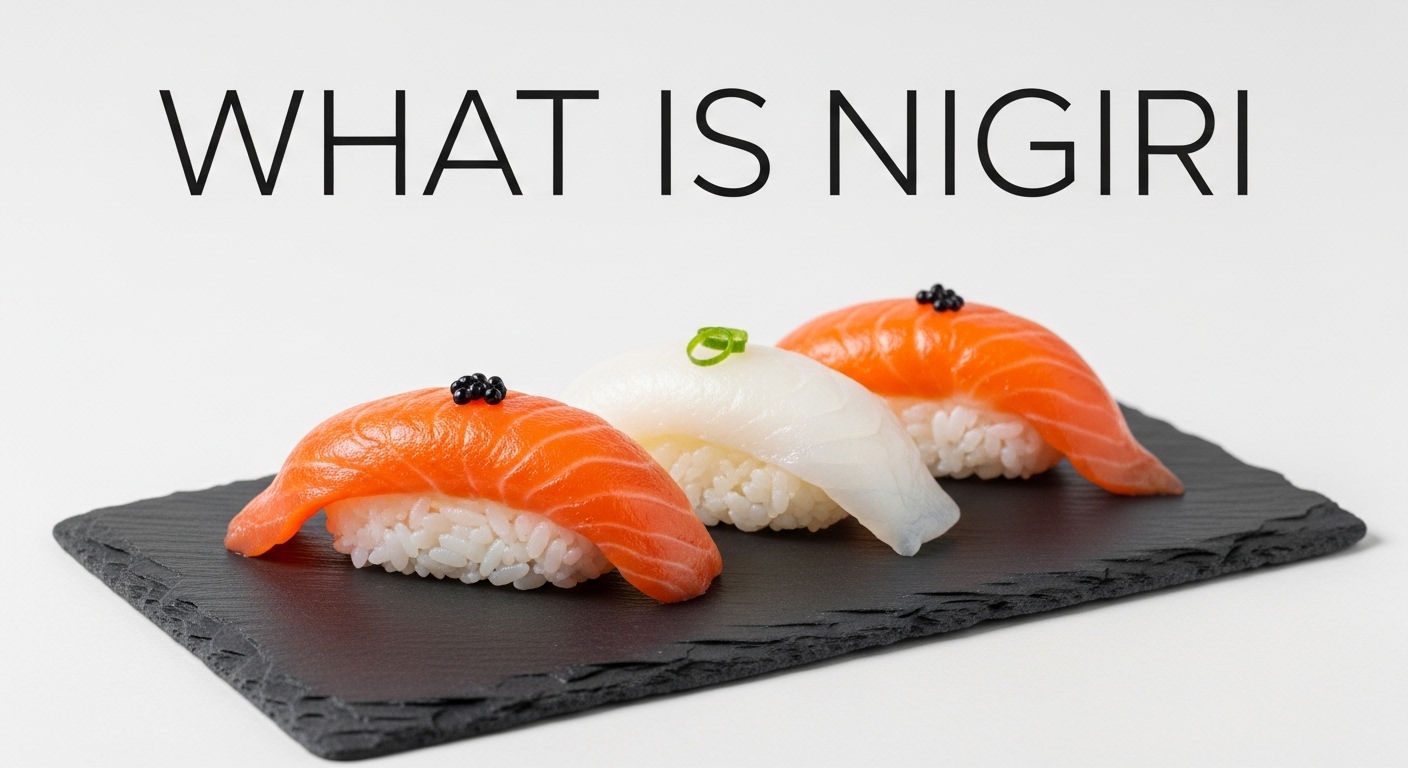
Nigiri is a type of Japanese sushi made from a hand-pressed mound of vinegared rice topped with a slice of fresh fish or seafood. This elegant, minimalist style of sushi showcases the pure flavors of quality ingredients in a single perfect bite.
In this guide, I will explain exactly what nigiri is, how it differs from sashimi and maki rolls, the most popular types you will encounter at sushi bars, and the proper etiquette for eating it. Whether you are new to sushi or looking to deepen your appreciation, understanding nigiri will transform your next dining experience.
Table of Contents
What Is Nigiri? A Simple Definition
Nigiri (握り寿司, nigirizushi) is one of the most traditional and beloved forms of sushi in Japan. The word comes from the Japanese verb nigiru, which means “to grasp” or “to squeeze,” describing exactly how this sushi is made.
Each piece consists of two essential components. The base is shari, a small oval-shaped mound of seasoned sushi rice mixed with rice vinegar, sugar, and salt. The topping is called neta, typically a thin slice of fresh raw fish, though cooked seafood and other ingredients are also common.
The rice is hand-formed into a compact pillow, usually about two fingers wide. The chef then places a small amount of wasabi between the rice and fish, pressing the neta gently on top. The result is a delicate, bite-sized piece designed to be eaten in one mouthful.
Unlike maki rolls, which wrap ingredients in nori seaweed, nigiri presents the fish prominently on top. This format lets the quality of the seafood shine through and requires skilled knife work to slice the fish at the perfect angle and thickness.
What Is Nigiri vs Sashimi?
The confusion between nigiri and sashimi is one of the most common questions I hear from sushi newcomers. While both feature fresh raw fish, they are distinctly different dishes.
Sashimi is simply thin slices of raw fish served without rice. It is often arranged beautifully on a plate and eaten with chopsticks, sometimes dipped in soy sauce with a bit of wasabi mixed in. Sashimi focuses entirely on the fish itself.
Nigiri combines that same fresh fish with vinegared rice. The rice is not just a filler, it is an essential part of the experience. The slight sweetness and acidity of the seasoned rice balances the rich flavor of the fish.
Think of sashimi as the solo performance and nigiri as the duet. Both highlight the fish, but nigiri adds the harmonious element of perfectly prepared rice that complements and completes each bite.
What Is Nigiri vs Maki?
Maki rolls are what many people picture when they think of sushi. These cylindrical rolls wrap vinegared rice and fillings in a sheet of nori (seaweed), then slice them into bite-sized rounds. Popular varieties include California rolls, spicy tuna rolls, and dragon rolls.
Nigiri takes a completely different approach. Instead of rolling ingredients together, nigiri presents them openly with the fish on top of the rice. There is no nori wrapping around the entire piece, though some variations use a thin strip of nori to secure toppings like salmon roe.
The eating experience differs too. Maki rolls are often served with sauces, toppings, and multiple ingredients inside. Nigiri is minimalist by design, typically featuring just one type of fish on rice. This simplicity means there is nowhere to hide, the quality of both the fish and the rice must be excellent.
In Japan, nigiri is considered the more traditional and prestigious form of sushi. While rolls are popular worldwide, Japanese sushi chefs spend years perfecting their nigiri technique.
Quick Comparison: Nigiri vs Sashimi vs Maki 2026
| Feature | Nigiri | Sashimi | Maki |
|---|---|---|---|
| Rice | Yes, hand-pressed mound | No rice | Yes, rolled inside |
| Nori (Seaweed) | Sometimes a thin strip | No nori | Yes, wrapped around |
| Presentation | Fish on top of rice | Fish slices alone | Rolled and sliced rounds |
| Toppings | Usually one ingredient | Fish only | Multiple ingredients |
| Eating Style | Hands or chopsticks | Chopsticks | Hands or chopsticks |
Popular Types of Nigiri You Should Know
Walking into a sushi bar can feel overwhelming when you see dozens of nigiri options. Here are the most popular types you will encounter, from beginner-friendly choices to adventurous options for experienced sushi lovers.
Maguro (Tuna)
Tuna nigiri is a staple at every sushi restaurant. You will often see two varieties: lean red tuna (akami) and fatty tuna belly (toro). The lean version has a clean, meaty flavor, while toro melts in your mouth with rich marbling. Many sushi lovers consider toro the ultimate nigiri experience.
Sake (Salmon)
Salmon nigiri is one of the most approachable types for beginners. The fish has a mild, buttery flavor and pleasing orange-pink color. High-quality salmon should taste fresh and clean without being overly fishy. Some chefs lightly torch the surface for a smoky, caramelized variation called aburi sake.
Hamachi (Yellowtail)
Yellowtail offers a delicate, slightly sweet flavor with a firm yet tender texture. This popular fish has a pale pink color and higher fat content that gives it a luxurious mouthfeel. It is often recommended as a step up from salmon for those ready to explore beyond the basics.
Unagi (Freshwater Eel)
Unlike most nigiri, unagi is always cooked. The eel is grilled and glazed with a sweet-savory sauce made from soy sauce and mirin. The result is rich, tender, and slightly smoky with a caramelized exterior. Unagi nigiri is often served with a sprinkle of sesame seeds.
Tamago (Sweet Egg)
Tamago is a cooked egg omelet layered and bound to the rice with a thin strip of nori. It has a slightly sweet, custardy texture and mild flavor. In traditional Japanese sushi meals, tamago is often eaten last as a palate cleanser and gentle finish to the meal.
Ebi (Shrimp)
Shrimp nigiri features cooked, butterflied shrimp that is chilled and placed on rice. The texture is firm and slightly sweet, making it another excellent choice for those hesitant about raw fish. Quality ebi should taste fresh and oceanic without any ammonia or off flavors.
Other Notable Varieties
Ika (Squid): Thinly scored squid with a crisp, slightly chewy texture.
Tako (Octopus): Cooked octopus that is tenderized and sliced, often with a subtle sweet glaze.
Ikura (Salmon Roe): Bright orange roe pearls served in a gunkan-maki style with a nori wrap to contain the loose eggs.
Uni (Sea Urchin): Creamy, briny, and luxurious, uni is prized by serious sushi enthusiasts for its complex ocean flavor.
How Is Nigiri Made? The Art Behind Each Piece
Creating perfect nigiri looks simple, but it requires years of practice to master. I have watched skilled sushi chefs work, and the precision in their movements reveals the depth of expertise involved.
Preparing the Rice (Shari)
The foundation of great nigiri starts with properly prepared rice. Short-grain Japanese rice is cooked and then seasoned with a mixture of rice vinegar, sugar, and salt while still warm. The chef uses a wooden paddle to fold the seasoning through gently, being careful not to mash the grains.
The rice must be cooled to body temperature before use. Too hot, and it will cook the fish. Too cold, and the texture suffers. The grains should stick together enough to hold their shape but remain distinct and slightly firm.
Selecting and Slicing the Fish (Neta)
Sushi-grade fish is essential for nigiri. This designation means the fish has been handled with extra care, often flash-frozen to kill parasites, and maintained at proper temperatures throughout processing. The fish must be impeccably fresh with no fishy odor.
Chefs slice fish for nigiri with precision. The angle, thickness, and direction of the cut all affect how the fish drapes over the rice and feels in the mouth. A proper slice should be thin enough to be tender but thick enough to showcase the fish’s texture.
Forming the Nigiri
With wet hands to prevent sticking, the chef takes a small portion of rice and forms it into an oval with three gentle presses. A dab of wasabi goes on top of the rice. The fish slice is then draped over the rice and pressed lightly to adhere.
The entire process takes seconds but requires perfect timing and pressure. Too loose, and the nigiri falls apart. Too tight, and the rice becomes dense and unpleasant. The best nigiri holds together just long enough to pick up and eat in one bite, then yields softly in the mouth.
How to Eat Nigiri: Etiquette and Best Practices
There is a traditional way to eat nigiri that respects the craft behind each piece. Following these guidelines will enhance your experience and show appreciation for the chef’s work.
Hands or Chopsticks?
You may use either your hands or chopsticks to eat nigiri. In fact, many sushi purists prefer hands because it allows you to feel the temperature and texture of the rice. If using chopsticks, hold the nigiri sideways and pick it up gently from the sides.
When eating with your hands, lift the nigiri with your thumb and middle finger supporting the sides, index finger on top. This prevents squeezing the rice too hard and maintains the delicate structure.
Dipping in Soy Sauce
Dip the fish side, not the rice side, into soy sauce. The rice absorbs liquid quickly and can fall apart or become too salty. Turn the nigiri on its side and touch just the fish to the sauce.
Some nigiri comes already seasoned or glazed, like unagi with its sauce or aburi toppings with mayonnaise. These pieces should be eaten as served without additional soy sauce.
The Proper Eating Order
Traditional Japanese sushi etiquette suggests eating nigiri in a specific order. Start with lighter, milder fish like flounder or squid, then progress to richer options like salmon and tuna. Save the strongest flavors, like mackerel or sea urchin, for later in the meal.
Finish with tamago (sweet egg) or a simple cucumber roll to cleanse your palate. This progression allows you to appreciate the subtle flavors of delicate fish before your taste buds become saturated with stronger tastes.
One Bite Rule
Nigiri is designed to be eaten in one bite. Taking multiple bites can cause the rice and fish to separate, disrupting the balance the chef carefully created. If a piece seems too large, trust that a good sushi chef has sized it appropriately for comfortable eating.
Between pieces, cleanse your palate with a slice of pickled ginger (gari). Do not place ginger on top of your nigiri, as that overpowers the fish’s flavor.
Frequently Asked Questions About Nigiri
What is nigiri vs sashimi?
Nigiri consists of a hand-pressed mound of vinegared rice topped with fish or seafood, while sashimi is simply thin slices of raw fish served without any rice. Nigiri combines rice and fish in one bite-sized piece, whereas sashimi focuses entirely on showcasing the fish alone.
Is nigiri cooked or raw?
Nigiri can be either cooked or raw depending on the topping. Traditional nigiri features raw fish like tuna, salmon, or yellowtail. However, many popular varieties use cooked ingredients such as shrimp (ebi), eel (unagi), and egg (tamago). Always ask your server if you are unsure about a specific type.
Can sushi lower cholesterol?
Nigiri made with fatty fish like salmon and tuna may support healthy cholesterol levels due to their omega-3 fatty acids. These beneficial fats can help raise HDL (good) cholesterol and potentially lower triglycerides. However, the overall impact depends on your entire diet and lifestyle, not just occasional sushi consumption.
How do sushi chefs prevent parasites?
Sushi chefs prevent parasites through several strict protocols: using sushi-grade fish that has been flash-frozen to -4°F (-20°C) for at least 7 days or -31°F (-35°C) for 15 hours to kill parasites, sourcing from reputable suppliers, maintaining proper cold chain temperatures, and inspecting fish carefully before preparation. These standards make properly prepared sushi safe to eat raw.
Does nigiri have rice?
Yes, rice is an essential component of nigiri. Each piece features a small hand-pressed mound of seasoned sushi rice called shari, topped with fish or seafood. The vinegared rice balances the flavor of the fish and provides the characteristic texture. Without rice, it would be sashimi, not nigiri.
How do you eat nigiri properly?
Pick up nigiri with your hands or chopsticks, dip the fish side (not the rice) lightly into soy sauce, and eat it in one bite. Turn the nigiri on its side when dipping to avoid the rice absorbing too much liquid. Eat lighter fish first and progress to richer varieties, cleansing your palate with pickled ginger between pieces.
Conclusion
Now you understand exactly what is nigiri and why it represents one of the purest expressions of Japanese cuisine. This hand-pressed sushi combines perfectly seasoned rice with fresh fish to create a balanced, elegant bite that showcases the skill of the chef and the quality of the ingredients.
Whether you start with familiar salmon, venture into rich fatty tuna, or explore unique options like uni, eating nigiri connects you to a centuries-old tradition of craftsmanship. The next time you sit at a sushi bar, order a few pieces of nigiri, use the proper etiquette you learned here, and savor the experience of this remarkable food.