
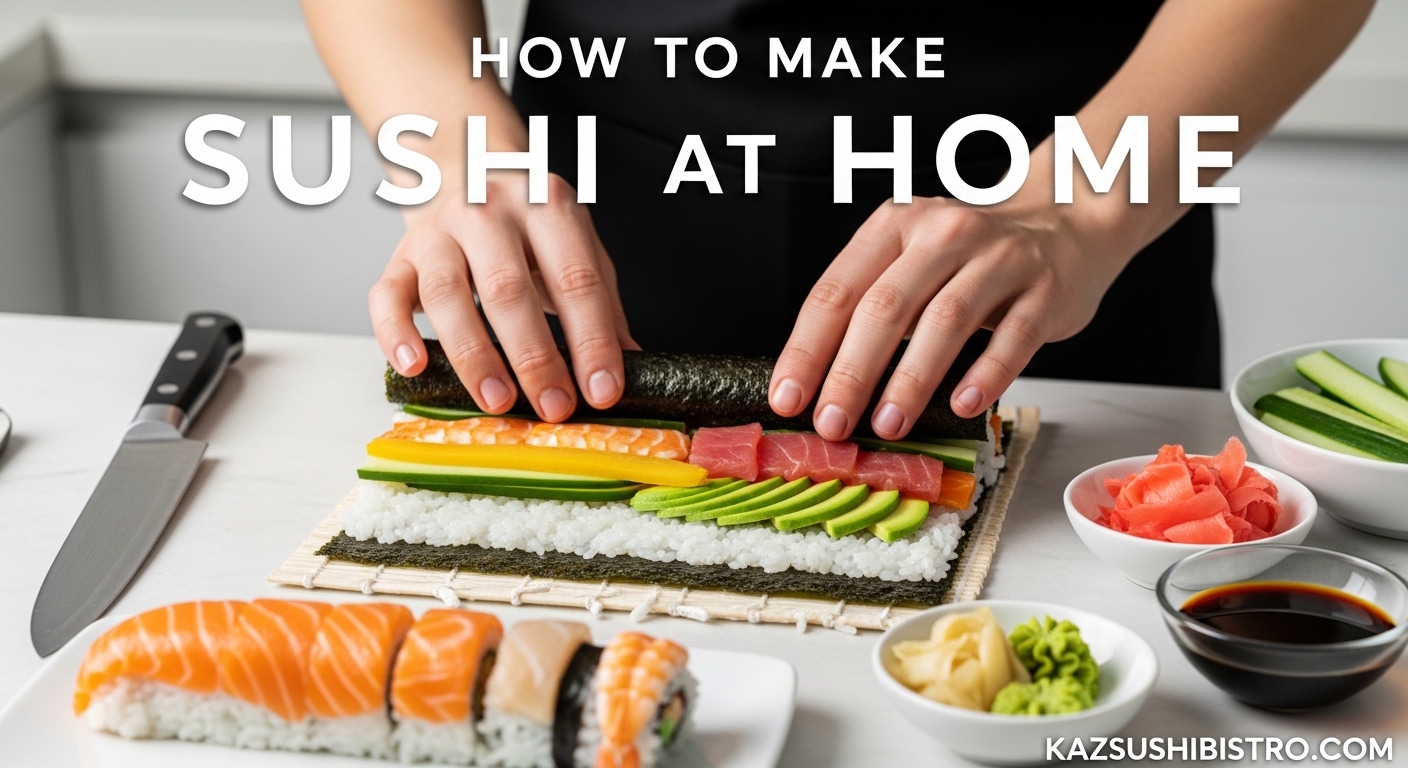
Making sushi at home is easier than you think. Our team has guided hundreds of beginners through their first rolls, and I can tell you that once you master a few basic techniques, you will be creating restaurant-quality maki rolls in your own kitchen. Learning how to make sushi at home saves you serious money, a feast for four costs around $20 versus $100 or more at a restaurant, and it turns dinner preparation into a fun activity you can share with family and friends.
I remember my first attempt at homemade sushi. The rolls were uneven, the rice was slightly too sticky, and I used way too much wasabi. But you know what? They tasted incredible, and my guests devoured every piece. That experience taught me that perfect technique comes with practice, but delicious results are achievable from day one. This guide will walk you through everything you need to know, from selecting the right ingredients to rolling techniques that prevent your sushi from falling apart.
Table of Contents
What You Will Need to Make Sushi at Home?
Before you start rolling, gather your ingredients and equipment. Having everything prepared ahead of time makes the process smooth and enjoyable. Here is what you will need to make sushi at home successfully.
Essential Ingredients
Quality ingredients make all the difference in sushi. Do not skimp on the rice, it is the foundation of every roll you create.
- Short-grain Japanese rice: Look for labels that say “sushi rice” or “Japanese short-grain.” You will need about 2 cups uncooked for 4-6 rolls. Do not substitute long-grain or basmati rice, they lack the sticky texture essential for sushi.
- Rice vinegar seasoning: A mixture of rice vinegar, sugar, and salt that transforms plain rice into sushi rice. You can buy pre-made seasoning or make your own.
- Nori sheets: Dried seaweed that wraps your rolls. Buy toasted nori for the best flavor and texture. You will need one sheet per roll.
- Sushi-grade fish (optional): Fresh salmon, tuna, or yellowtail if you want raw fish. We will cover safety guidelines later.
- Fillings: Cucumber, avocado, cream cheese, imitation crab, cooked shrimp, or any combination you enjoy.
- Soy sauce, wasabi, and pickled ginger: For serving alongside your finished rolls.
Required Equipment
You do not need a professional kitchen to make great sushi. Most beginners already own the essential tools.
- Bamboo sushi mat (makisu): This inexpensive mat, about $5-10, helps you roll tight, even cylinders. You can substitute a thick kitchen towel wrapped in plastic wrap in a pinch.
- Sharp knife: A very sharp chef’s knife or santoku is critical for clean cuts without crushing your rolls. A dull knife will ruin your presentation.
- Rice cooker or heavy pot: While a rice cooker makes perfect rice consistently, you can use a heavy-bottomed pot on the stove.
- Wooden or plastic rice paddle: For folding vinegar into cooked rice without mashing the grains.
- Small bowl of water: Keep this nearby to wet your hands, it prevents rice from sticking to your fingers.
Optional Tools for Advanced Rolls
Once you master the basics, these tools expand your options.
- Rice vinegar dispenser: Helps distribute seasoning evenly.
- Plastic wrap: Essential for inside-out rolls and keeping your mat clean.
- Sushi knife (yanagiba): A specialized single-bevel knife for cutting fish and rolls.
- Salad spinner: Perfect for drying washed rice quickly.
How to Make Sushi at Home: Step-by-Step Instructions 2026
Now that you have your ingredients and equipment ready, let us dive into the actual process. Follow these steps in order for the best results.
Step 1: How to Make Perfect Sushi Rice
Sushi rice is the heart of every roll. Get this right, and everything else falls into place. The rice should be sticky enough to hold together but not mushy.
Choosing the Right Rice
Only use short-grain Japanese rice labeled specifically for sushi. Look for brands like Koshihikari or Calrose. These varieties have the high starch content needed for the characteristic sticky texture. Avoid jasmine, basmati, or any long-grain varieties entirely.
Washing and Cooking
Measure 2 cups of uncooked rice into a large bowl. Cover with cold water and swirl gently with your hand. The water will turn milky from excess starch. Drain and repeat 3-4 times until the water runs mostly clear. This step is crucial, unwashed rice becomes gummy.
For cooking, use a 1:1.2 ratio of rice to water. That means 2 cups rice needs 2.4 cups water. If using a rice cooker, simply select the sushi rice setting. On the stovetop, bring to a boil, cover tightly, reduce heat to low, and simmer for 18 minutes. Remove from heat and let stand covered for 10 minutes. Do not lift the lid during cooking.
Seasoning the Rice
While the rice cooks, prepare your seasoning. Mix 1/3 cup rice vinegar, 2 tablespoons sugar, and 1 teaspoon salt in a small saucepan. Heat gently until sugar dissolves, then cool to room temperature.
Transfer the hot cooked rice to a wide, shallow wooden or plastic container. Never use metal, it can react with the vinegar. Pour the seasoning evenly over the rice. Use your paddle to cut and fold the rice, do not stir or mash. You want to separate grains while coating them with vinegar.
Fan the rice while folding to help it cool and develop the proper glossy sheen. Continue until the rice reaches body temperature, about 10 minutes. Cover with a damp cloth until ready to use. Your rice should be sticky enough to hold a shape but individual grains should still be distinct.
Step 2: Preparing Your Fillings
While the rice cools, prepare your fillings. Everything should be cut into strips about the width of a pencil and 4-5 inches long.
Preparing Raw Fish Safely
This is the step that worries most beginners. Follow these safety guidelines carefully. First, only buy fish labeled “sushi-grade” or “sashimi-grade” from a reputable fishmonger. These fish have been flash-frozen to kill parasites, making them safe to eat raw.
Popular choices include salmon, tuna, yellowtail, and scallops. Tell your fishmonger you plan to eat it raw, they will guide you to the safest options. Keep the fish refrigerated until just before preparation. Cut against the grain into 1/4-inch thick strips.
Not ready for raw fish? No problem. Use cooked shrimp, imitation crab sticks, smoked salmon, or fully cooked eel (unagi) instead. These options are delicious and eliminate any safety concerns.
Cutting Vegetables
Slice cucumbers lengthwise and remove the watery seed center. Cut into thin strips about 1/4-inch thick. For avocado, cut in half, remove the pit, and slice the flesh while still in the skin. Scoop out with a spoon. Cream cheese works wonderfully when cut into thin strips, it adds richness and helps hold the roll together.
Other Filling Options
Get creative with your fillings. Cooked asparagus, mango strips, shredded carrots, cooked crab meat, spicy tuna (mix tuna with mayo and sriracha), and tempura shrimp all work beautifully. The key is keeping everything uniform in size so your roll closes properly.
Step 3: How to Roll Sushi Like a Pro
Here is where the magic happens. Rolling sushi is a technique that improves with practice. Your first few rolls might be loose or uneven, but keep going. By roll number five, you will see dramatic improvement.
Setting Up Your Station
Lay your bamboo mat on a clean counter with the bamboo strips running horizontally. Place one sheet of nori shiny-side down on the mat. The rough side should face up to grip the rice. Keep your bowl of water nearby, you will need to dip your fingers constantly.
Wet your hands thoroughly. Scoop about 3/4 cup of sushi rice and spread it evenly over the nori, leaving a 1-inch strip bare at the top edge. This bare strip is essential, it seals the roll. Use your fingertips to spread the rice gently, do not press hard or you will mash the grains.
The Rolling Process
Arrange your fillings in a line across the center of the rice. Do not overfill, two to three ingredients maximum for your first rolls. Overstuffed rolls are the number one reason beginners struggle.
Lift the edge of the mat closest to you with your thumbs while holding the fillings in place with your fingers. Roll the mat forward, tucking the nori tightly around the fillings. Apply gentle but firm pressure as you roll away from you. Stop when the nori meets the rice on the other side.
Give the mat a gentle squeeze to shape the roll, then continue rolling forward to complete the cylinder. The bare strip of nori at the top should end up on the bottom, sealing the roll closed.
Sealing the Roll
Once rolled, place the seam side down on your cutting board. Gently squeeze the mat around the roll one more time to set the shape. Set the roll aside seam-down while you make the next one. The rice will help seal the nori as it sits.
Tip: If your roll feels loose, you can unroll slightly and try again. With practice, you will learn exactly how much pressure to apply. Tight rolls hold together better and look more professional.
Step 4: Cutting and Serving Your Sushi
A sharp knife makes all the difference here. Dull knives crush the roll and smear the rice. Take your time with this step.
How to Cut Sushi Rolls Cleanly
Wet your knife blade with a damp cloth between every cut. This prevents rice from sticking. Position your roll seam-side down. Cut directly in the center first, then cut each half in half again, giving you four pieces. Cut those pieces in half for eight even pieces total.
Use a gentle sawing motion with minimal downward pressure. Let the knife do the work. If you feel resistance, your knife needs sharpening. Clean your knife between rolls to maintain clean cuts.
Arrange the pieces on a platter with the cut sides facing up to show the colorful filling cross-section. This presentation makes even beginner rolls look impressive.
Traditional Serving Setup
Serve your sushi with small dishes of soy sauce for dipping. Add a small mound of wasabi on each plate, guests can mix it into their soy sauce to taste. Pickled ginger cleanses the palate between different types of rolls, so serve it on the side.
For an authentic touch, serve with warm sake or green tea. Arrange your platter with variety in mind, alternating different fillings for visual appeal.
Bonus: How to Make Inside-Out Rolls (Uramaki)
Once you master basic maki rolls with nori on the outside, try inside-out rolls where the rice is on the exterior. These are the style used for California rolls and many American-style sushi creations.
Wrap your bamboo mat completely in plastic wrap to prevent rice from sticking. Lay a sheet of nori on the mat. Cover the entire nori sheet with an even layer of rice, this time leaving no bare strip.
Sprinkle sesame seeds or tobiko (flying fish roe) over the rice if desired. Carefully flip the entire sheet over so the nori faces up and rice is against the plastic wrap. Add your fillings to the center of the nori.
Roll using the same technique as before, but now the rice will end up on the outside. The plastic wrap helps shape and seal the roll. Once rolled, let it sit seam-down for a few minutes before cutting.
Cut inside-out rolls with a very wet, very sharp knife. The rice exterior is trickier to cut cleanly, so take your time and wipe your blade frequently.
Pro Tips for Sushi Success
Our team has made thousands of rolls over the years. Here are the lessons we learned the hard way so you do not have to.
Preventing Rolls from Falling Apart
The most common complaint from beginners is rolls that unravel. Three things fix this problem. First, do not overfill your rolls. Stuffed rolls cannot close properly. Second, roll tightly with firm, even pressure. Third, place the finished roll seam-down and let it rest for a few minutes before cutting. The moisture in the rice helps seal the nori.
Rice Texture Solutions
If your rice is too sticky, you likely did not wash it enough before cooking. Next time, wash until the water runs clear. If your rice is too dry, increase the water ratio slightly or check that your pot lid seals tightly during cooking.
When seasoning, work quickly while the rice is warm. Cold rice does not absorb the vinegar properly. If your seasoned rice seems too wet, fan it more aggressively while folding.
Teamwork Tips for Faster Prep
Making sushi alone takes about an hour. With a partner, you can finish in 30 minutes. One person handles the rice and rolling while the other prepares fillings and cuts finished rolls. This assembly-line approach makes sushi night even more fun and efficient.
Food Safety Reminders
Always buy sushi-grade fish from reputable sources. Keep raw fish refrigerated until the moment you use it. Do not leave sushi with raw fish at room temperature for more than two hours. If you have leftovers, refrigerate immediately and consume within 24 hours. When in doubt, cook the fish or use cooked alternatives.
Delicious Sushi Variations to Try
Once you have mastered the basics, experiment with these popular roll styles.
- California Roll: Imitation crab, avocado, and cucumber with rice on the outside and sesame seeds. Perfect for beginners.
- Philadelphia Roll: Smoked salmon and cream cheese. The cream cheese adds richness and helps hold the roll together.
- Spicy Tuna Roll: Raw or cooked tuna mixed with mayonnaise and sriracha for a kick.
- Vegetarian Roll: Avocado, cucumber, carrots, and asparagus. A fresh, crunchy option everyone enjoys.
- Dragon Roll: Shrimp tempura inside with sliced avocado layered on top to resemble dragon scales.
- Spicy Salmon Roll: Similar to spicy tuna but with salmon. A crowd favorite at our house.
Mix and match fillings to create your own signature rolls. The combinations are endless, and half the fun is experimenting.
Frequently Asked Questions
What will I need to make sushi at home?
To make sushi at home, you need short-grain Japanese rice, rice vinegar seasoning, nori sheets, a bamboo mat, and your choice of fillings like fish, vegetables, or cream cheese. A sharp knife and rice cooker are helpful but not essential.
Is sushi good for A1C?
Sushi can be part of a blood sugar management plan when eaten in moderation. Choose brown rice or reduce rice portions, focus on protein-rich fillings like salmon, and avoid sugary sauces to minimize blood sugar spikes.
What are 5 ingredients in sushi?
The five essential ingredients in sushi are short-grain Japanese rice, rice vinegar, nori (seaweed sheets), soy sauce, and your choice of filling such as raw fish, cooked seafood, or vegetables.
Is sushi good for high triglycerides?
Sushi can be suitable for high triglycerides if you choose wisely. Opt for rolls with omega-3 rich fish like salmon, avoid tempura or fried options, skip creamy sauces, and limit rice portions to control carbohydrate intake.
Can I make sushi without a bamboo mat?
Yes, you can make sushi without a bamboo mat. Use a clean kitchen towel wrapped tightly in plastic wrap as a substitute. The technique remains the same, though the mat helps achieve the tightest rolls.
How do I keep my sushi rolls from falling apart?
To prevent sushi rolls from falling apart, avoid overfilling, roll with firm and even pressure, wet your hands before handling rice, and let finished rolls rest seam-down for a few minutes before cutting to allow the nori to seal.
Is homemade sushi safe to eat?
Homemade sushi is safe when you follow food safety guidelines. Only use fish labeled sushi-grade or sashimi-grade from reputable sources, keep ingredients refrigerated, and consume raw fish rolls within 24 hours of preparation.
What is the best rice for sushi?
The best rice for sushi is short-grain Japanese rice, specifically varieties like Koshihikari or Calrose labeled as sushi rice. These have high starch content that creates the sticky texture essential for holding rolls together.
Conclusion
Learning how to make sushi at home opens up a world of culinary creativity and significant cost savings. With just a few basic ingredients and some practice, you can create restaurant-quality maki rolls that impress your family and friends. The key is starting with properly prepared sushi rice, using fresh ingredients, and rolling with confident, even pressure.
Remember that every sushi chef started with imperfect first rolls. Your technique will improve with each batch you make. Start with simple fillings like cucumber and avocado, master the basic rolling technique, then gradually work your way up to more complex rolls and raw fish options.
Gather your ingredients this weekend and give it a try. In under an hour, you could be enjoying fresh, homemade sushi that costs a fraction of restaurant prices. Your sushi journey starts now, and we are confident you will love the results.