
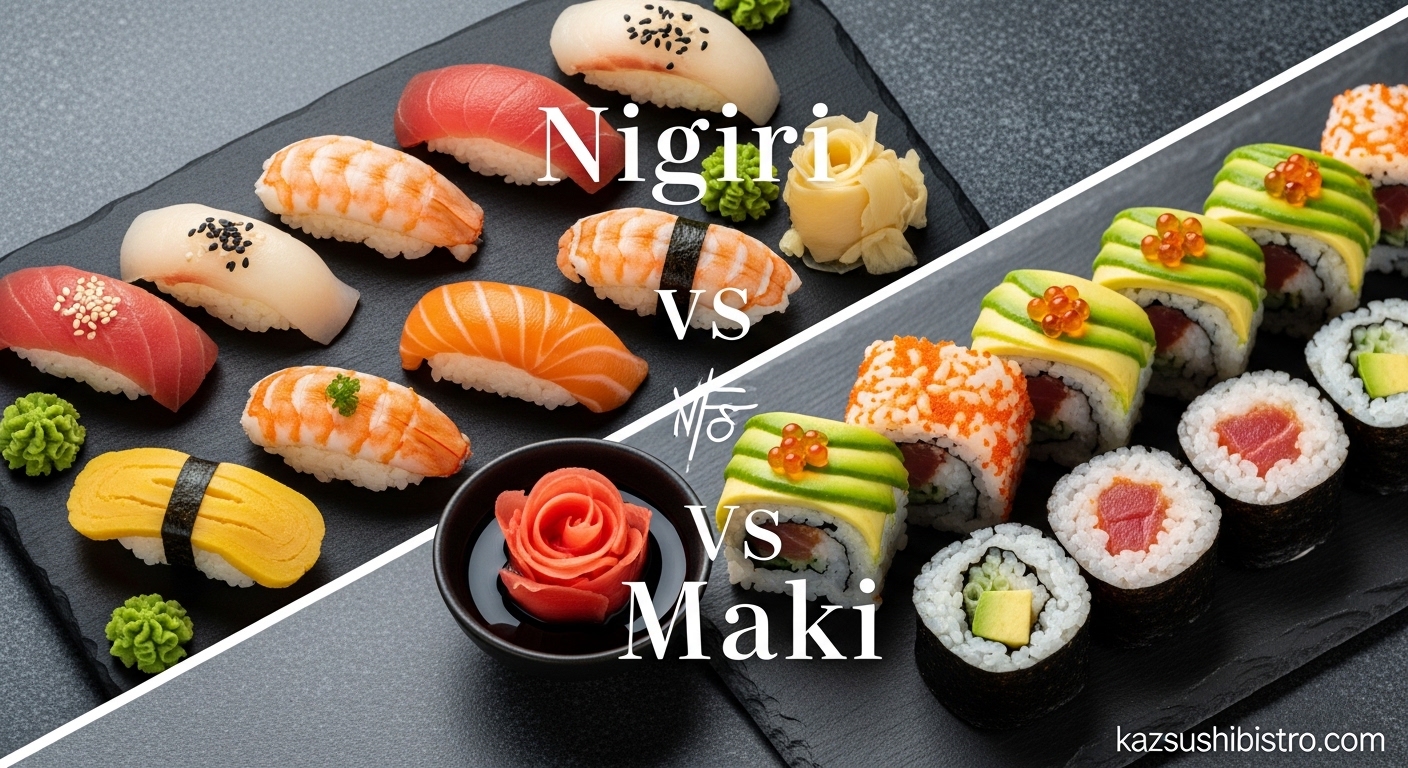
Walking into a sushi restaurant for the first time can feel overwhelming when you are staring at a menu filled with unfamiliar terms. The distinction between Nigiri vs Maki confuses many diners, even those who eat sushi regularly. Both represent authentic Japanese cuisine, but they differ dramatically in preparation, presentation, and eating experience.
Nigiri consists of hand-pressed vinegared rice topped with fresh fish. Maki involves rolling rice and fillings in seaweed and slicing them into bite-sized rounds. Understanding these differences helps you order with confidence and appreciate the craftsmanship behind each piece.
In this guide, I will explain exactly what sets these two sushi styles apart. You will learn how each is made, the different varieties available, and which option suits your preferences and experience level.
Table of Contents
What is Maki?
Maki, also called Makizushi, refers to any sushi made by rolling vinegared rice and fillings in a sheet of nori seaweed. The word “maki” literally means “roll” in Japanese, which perfectly describes this cylindrical sushi style.
A bamboo mat called a makisu helps chefs create tight, even rolls. They spread sushi rice over the nori, add fillings like raw fish, cooked seafood, or vegetables, then roll everything together before slicing into six to eight bite-sized pieces. The result is a colorful cross-section that displays all the ingredients inside.
Maki offers endless variety because chefs can combine different fillings. Popular options include cucumber, avocado, crab stick, tuna, salmon, and even tropical fruits like mango. Some rolls feature cooked ingredients for those hesitant about raw fish, making maki an accessible entry point into sushi dining.
Types of Maki Rolls
Maki comes in several distinct styles based on size and construction method. Each type offers a different ratio of rice to filling and suits different dining preferences.
Futomaki translates to “thick roll” and measures about two inches in diameter. These substantial rolls contain multiple fillings and provide a hearty bite with varied textures and flavors in each piece.
Hosomaki means “thin roll” and features only one filling inside. With less rice and a higher filling-to-rice ratio, hosomaki highlights the quality of the single ingredient, whether that is fresh tuna, cucumber, or pickled daikon.
Uramaki, known as “inside-out roll,” flips the traditional arrangement. The rice sits on the outside while the nori wraps the fillings inside. California rolls exemplify this style, often topped with sesame seeds or fish roe for extra texture.
Temaki, or hand rolls, form cone-shaped parcels rather than cylinders. Diners hold these in their hands rather than using chopsticks, eating them immediately while the nori remains crisp. The conical shape allows for creative ingredient combinations and generous portions of fillings.
What is Nigiri?
Nigiri, properly called Nigirizushi, represents perhaps the most iconic image of sushi worldwide. This style features a small mound of hand-pressed vinegared rice topped with a slice of fresh fish or other seafood. The word “nigiri” derives from the Japanese verb “nigiru,” meaning “to grasp” or “to squeeze” with two fingers, which describes exactly how chefs form the rice base.
Creating nigiri requires significant skill and practice. Chefs wet their hands in vinegared water to prevent sticking, then gently press a small amount of sushi rice into an oblong mound using just their thumb and two fingers. A thin smear of wasabi between the rice and fish adds subtle heat and antimicrobial properties. The topping, called “neta,” typically consists of sushi-grade raw fish sliced precisely across the grain for optimal texture.
Unlike maki, where rice and fillings blend together, nigiri separates the components distinctly. The rice serves as a neutral, slightly acidic base that complements the fresh fish without overpowering it. This simplicity demands exceptional ingredient quality because every element stands on its own.
Types of Nigiri by Fish
Nigiri showcases the diversity of seafood available in Japanese cuisine. Each fish offers distinct flavor profiles, textures, and fat content that appeal to different palates.
Maguro (tuna) nigiri provides a clean, meaty flavor with firm texture. Akami, the lean red portion, offers a straightforward taste, while toro, the fatty belly section, melts in your mouth with rich, buttery sweetness prized by connoisseurs.
Sake (salmon) delivers a softer, fattier experience than tuna. Its natural oils create a silky texture and mild flavor that appeals to beginners and experienced diners alike. Many sushi bars offer both raw and lightly seared versions.
Ebi (shrimp) arrives cooked and butterflied, offering a sweet, snappy bite. Unagi (freshwater eel) comes grilled with sweet soy glaze, providing a cooked option for those avoiding raw fish entirely. Tamago, a sweet egg omelet layered and folded, serves as a traditional finish to sushi meals and offers a completely vegetarian nigiri option.
Other popular choices include hamachi (yellowtail) with its clean, citrusy notes, ika (squid) offering chewy texture, and saba (mackerel) cured in vinegar for a tangy, assertive flavor.
Nigiri vs Maki: Key Differences 2026
While both nigiri and maki fall under the sushi umbrella, they differ fundamentally in construction, ingredients, and dining experience. Understanding these distinctions helps you appreciate the unique qualities of each style.
Preparation and Structure
Nigiri is formed entirely by hand without any wrapping. The chef shapes the rice and places fish directly on top, creating an open-faced presentation that showcases the topping. Maki requires a rolling process using a bamboo mat and nori seaweed to create a contained cylinder that holds ingredients together.
Rice-to-Fish Ratio
The balance between rice and fish differs significantly between the two styles. Nigiri typically maintains roughly a 50/50 ratio between rice and fish, giving equal prominence to both components. Maki often contains more rice relative to filling, with ratios closer to 60/40, though this varies by roll type and restaurant style.
Ingredient Quality and Craftsmanship
Based on feedback from sushi enthusiasts and professionals, nigiri often receives higher quality fish cuts because the preparation highlights the topping without hiding imperfections. The whole, clean slices of fish on nigiri display the chef’s knife skills and the fish’s freshness prominently. Maki can utilize smaller pieces and trimmings since fillings get rolled inside and mixed with other ingredients.
Creating proper nigiri demands more technical skill than basic maki rolling. The rice must hold together firmly without being compressed too tightly, and the fish must drape naturally over the mound. This explains why traditional sushi chefs train for years before mastering nigiri preparation.
Eating Experience
Nigiri is designed to be eaten in one bite, with the fish touching your tongue first to maximize flavor perception. Traditional etiquette suggests turning it sideways or fish-side down when dipping in soy sauce to prevent the rice from falling apart. Maki pieces are also bite-sized but offer varied textures in each piece depending on the fillings used.
Taste and Texture Comparison
The sensory experience of eating nigiri versus maki differs substantially due to their construction and ingredient focus.
Nigiri emphasizes the pure flavor and texture of the fish itself. The topping provides the dominant taste, whether that is the buttery richness of salmon, the firm meatiness of tuna, or the sweet snap of shrimp. The rice serves as a subtle, acidic counterpoint that cleanses the palate between pieces. Textures range from silky and melt-in-your-mouth to firm and chewy depending on the seafood selected.
Maki offers a composite flavor experience where multiple ingredients blend together. The nori wrapping adds a crisp, slightly briny dimension when fresh, while the rice provides a neutral base that carries the fillings. The variety of ingredients means textures change from bite to bite, crunchy cucumber giving way to creamy avocado or tender fish.
For fish purists seeking to appreciate seafood quality, nigiri provides a more direct experience. Those wanting variety and combination flavors often prefer maki’s layered approach.
Which One Should You Choose?
Your choice between nigiri and maki depends on your experience level, taste preferences, and what you hope to get from your sushi meal.
For Beginners
If you are new to sushi, start with maki rolls. The nori wrapping contains the ingredients neatly, making them easier to pick up with chopsticks. Cooked options like California rolls or shrimp tempura rolls provide familiar flavors without the commitment of raw fish. The variety of ingredients in each roll also means you will find combinations that suit your palate.
For Fish Purists
Experienced sushi lovers and those seeking to appreciate fish quality should explore nigiri. The simplicity lets you taste the difference between salmon and tuna, appreciate the fattiness of toro, or enjoy the clean flavor of yellowtail. Nigiri also tends to offer better value for the amount of fish you receive compared to rice-heavy rolls.
Value Considerations
Nigiri typically costs more per piece than maki rolls, reflecting both the higher quality fish cuts and the skill required for preparation. However, maki rolls often leave you feeling fuller due to their higher rice content. Consider ordering a combination to experience both styles while managing your budget.
Frequently Asked Questions
Is nigiri or maki better?
Neither is objectively better. Nigiri suits those wanting to appreciate fish quality and traditional sushi craftsmanship. Maki works better for beginners and those wanting variety in flavors and textures. Your personal preference and dining goals determine which is better for you.
What are the three main types of sushi?
The three main types are nigiri (hand-pressed rice with fish), maki (rolled sushi with nori), and sashimi (sliced raw fish without rice). Many people also include uramaki as a distinct fourth type because of its inside-out construction.
Why is nigiri more expensive than maki?
Nigiri typically costs more because it uses higher quality cuts of fish that are displayed prominently without hiding imperfections. The preparation also requires more skill and training from the chef. Additionally, nigiri contains more fish relative to rice compared to most maki rolls.
Is sushi good for A1C and blood sugar?
Sushi can fit into a blood sugar management plan when chosen carefully. Nigiri generally has less impact on blood sugar than maki because it contains less rice. Opt for sashimi to eliminate rice entirely, or choose brown rice options when available. The omega-3 fatty acids in fish also support metabolic health.
Can eating sushi help lower cholesterol?
The fish in both nigiri and maki provides omega-3 fatty acids that support healthy cholesterol levels. Salmon, mackerel, and tuna are particularly beneficial. However, fried rolls or those with mayonnaise-based sauces add unhealthy fats that counteract these benefits. Choose simple preparations for the best nutritional impact.
Conclusion
The Nigiri vs Maki debate ultimately comes down to what you seek from your sushi experience. Nigiri offers a pure, minimalist approach that highlights fish quality and traditional craftsmanship. Maki delivers variety, creativity, and an approachable entry point for sushi newcomers.
Both styles represent authentic Japanese culinary tradition and offer distinct pleasures. The best approach is trying both to discover your personal preferences. Start with maki to build comfort, then explore nigiri to deepen your appreciation for this remarkable cuisine.
Whether you choose hand-pressed simplicity or rolled variety, understanding these differences lets you order confidently and enjoy your sushi experience fully.