
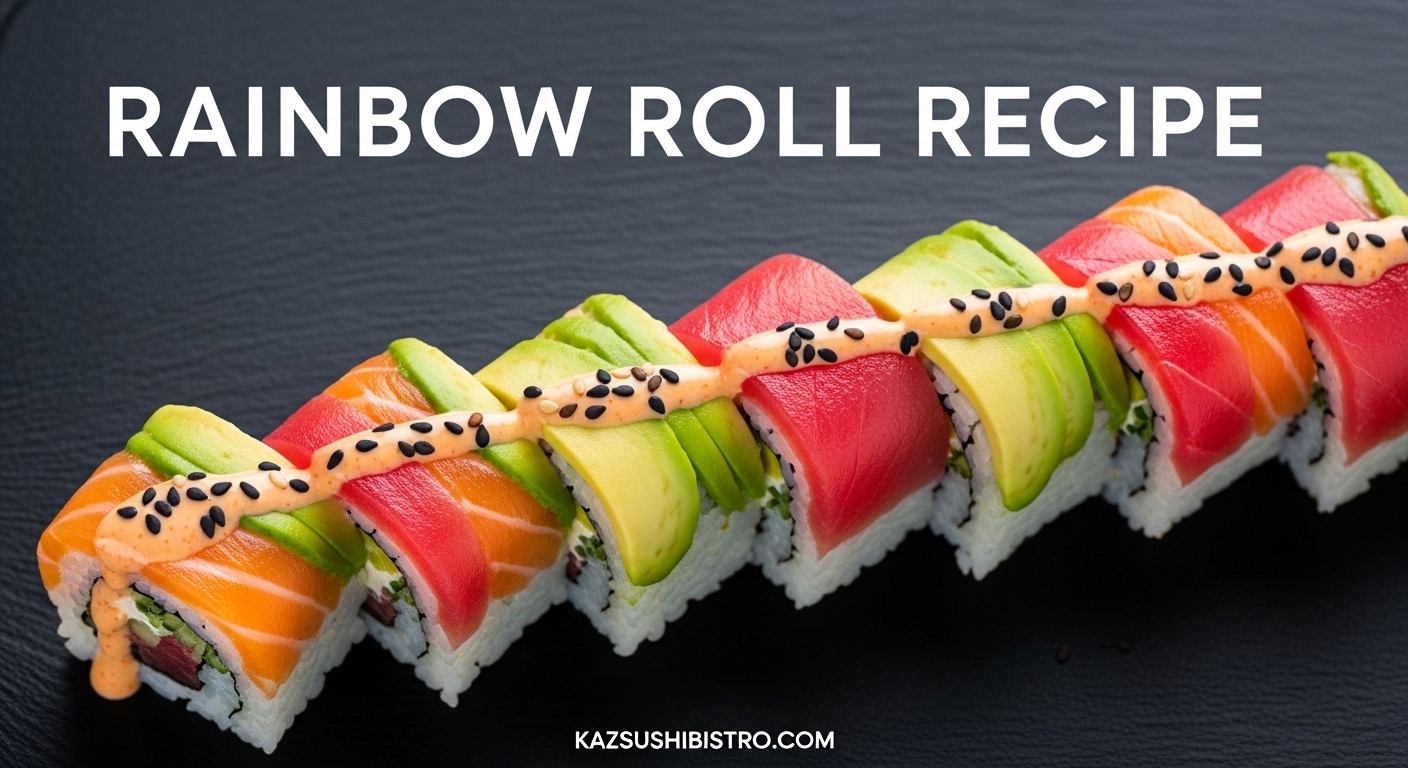
A Rainbow Roll is a type of uramaki sushi (inside-out roll) filled with crab, avocado, and cucumber, wrapped in seaweed and sushi rice, then topped with colorful slices of tuna, salmon, and other fresh fish to create a stunning rainbow effect. In this Rainbow Roll Recipe, I will walk you through every step to recreate this restaurant favorite in your own kitchen.
I have made this recipe dozens of times for dinner parties and family sushi nights. The beauty of the rainbow roll is that it looks impressive but follows the same basic technique as a California roll, just with an extra step for the fish topping.
Table of Contents
What is a Rainbow Roll?
The Rainbow Roll is an American-born sushi creation that has become a staple at Japanese restaurants across the United States. It takes the familiar California roll as its base, rice on the outside with nori seaweed hidden within, then layers thin slices of assorted fish across the top.
The classic version uses three to four types of fish arranged in alternating strips. Salmon provides orange, tuna brings red-pink, yellowtail or shrimp adds white, and avocado contributes green. This colorful presentation is what gives the roll its name and makes it so visually appealing.
Unlike traditional maki rolls where nori seaweed is on the outside, the Rainbow Roll is an inside-out style (uramaki) with rice on the exterior. This creates the perfect canvas for showcasing the vibrant fish slices.
Ingredients You’ll Need 2026
Gathering quality ingredients is the foundation of great sushi. For the Rainbow Roll Recipe, you will need components for the rice, the filling, and the colorful topping.
For the Sushi Rice
- 2 cups short-grain sushi rice
- 2 1/2 cups water
- 1/3 cup rice vinegar
- 2 tablespoons sugar
- 1 teaspoon salt
For the Filling
- 8 ounces imitation crab sticks or cooked crab meat
- 1 ripe avocado, sliced into strips
- 1/2 English cucumber, cut into matchsticks
- 2 sheets nori seaweed (cut in half)
For the Rainbow Topping
- 4 ounces sushi-grade salmon
- 4 ounces sushi-grade tuna
- 4 ounces sushi-grade yellowtail or cooked shrimp
- 1/2 avocado, thinly sliced
Equipment Needed
- Bamboo sushi mat (makisu)
- Plastic wrap ( essential for inside-out rolls)
- Sharp knife (preferably a sushi knife or very sharp chef’s knife)
- Small bowl of water mixed with rice vinegar (for wetting hands)
Rainbow Roll Recipe: Step-by-Step Instructions 2026
Making Rainbow Rolls at home requires patience and practice, but the results are worth the effort. Follow these steps carefully for your best results.
Step 1: Prepare the Sushi Rice
Rinse the sushi rice under cold water until the water runs clear, about 3 to 4 minutes. This removes excess starch and prevents gummy rice.
Combine the rinsed rice and water in a rice cooker or heavy pot. Cook according to your rice cooker’s instructions, or bring to a boil, then reduce heat to low, cover, and simmer for 18 minutes.
While the rice cooks, heat the rice vinegar, sugar, and salt in a small saucepan until dissolved. Do not boil. Once the rice finishes cooking, transfer it to a large wooden or non-reactive bowl. Gently fold in the vinegar mixture with a wooden paddle, using cutting motions to separate grains without mashing. Fan the rice while mixing to help it cool and develop shine. Cover with a damp cloth until ready to use.
Step 2: Prep Your Fillings and Fish
Slice the imitation crab sticks lengthwise into thin strips. Cut the avocado half into even slices about 1/4 inch thick. Prepare the cucumber by cutting into thin matchsticks.
For the fish topping, slice each type of sushi-grade fish against the grain into thin rectangular pieces, approximately 2 inches long and 1 inch wide. The slices need to be thin enough to bend slightly without breaking, about 1/8 inch thick. Keep the fish refrigerated until ready to use.
Step 3: Assemble the California Roll Base
Lay your bamboo sushi mat on the counter and cover it completely with plastic wrap. This prevents the rice from sticking to the mat and makes cleanup easier.
Place one half-sheet of nori on the plastic wrap, shiny side down. Wet your hands with the vinegar water and grab a handful of sushi rice. Spread the rice evenly over the nori, leaving a 1-inch strip bare at the top edge. Press gently to adhere without crushing the grains.
Carefully flip the nori and rice over so the rice is now facing down on the plastic wrap. The bare strip should now be at the bottom, closest to you. Arrange the crab, avocado, and cucumber in a line across the center of the nori.
Lift the edge of the mat closest to you and roll forward, tucking the nori around the filling tightly. Continue rolling, using the mat to shape and compress the roll into a firm cylinder. Seal the edge with a few grains of sticky rice or a light touch of water. Set aside with the seam down.
Step 4: Add the Rainbow Topping
Lay out a fresh sheet of plastic wrap on your work surface. Arrange your fish slices in alternating strips across the plastic, slightly overlapping each piece like shingles on a roof. The total width should match the length of your roll.
Place alternate avocado slices between or alongside the fish strips to add green to your rainbow. Some cooks also add thin mango slices for yellow color.
Place your California roll base seam-side down onto the arranged fish. Use the plastic wrap to lift and wrap the fish around the roll, pressing gently to adhere the topping to the rice. The plastic helps you shape and tighten without sticking.
Cover with another layer of plastic wrap and gently squeeze with the bamboo mat to press the fish firmly onto the rice. Let rest for 5 minutes before cutting.
Step 5: Slice and Serve
Remove the top layer of plastic wrap, leaving the bottom layer to prevent sticking during cutting. Wet your knife blade with vinegar water before each cut.
Cut the roll in half first, then cut each half into thirds, creating six even pieces. Wipe the blade clean between cuts for neat presentation. Arrange on a plate with the colorful toppings facing up.
Serve immediately with soy sauce, wasabi, and pickled ginger on the side.
Expert Tips for Perfect Rainbow Rolls
After years of making sushi at home, I have learned a few tricks that separate good rolls from great ones. These tips address the pain points many beginners face.
Sourcing Sushi-Grade Fish
Always purchase fish specifically labeled “sushi-grade” or “sashimi-grade” from a reputable fish market or Japanese grocery store. This designation means the fish has been flash-frozen to kill parasites and is safe to eat raw.
Ask your fishmonger when the fish arrived and how it was stored. Fresh fish should smell like the ocean, not fishy. If you cannot find sushi-grade fish, substitute with cooked shrimp or omit the raw fish entirely for a California roll.
Knife Skills for Clean Cuts
A sharp knife is essential for clean slices. If your knife drags or smashes the roll, it needs sharpening. Use a gentle sawing motion rather than pressing down hard.
For the fish topping slices, chill the fish in the freezer for 10 minutes before cutting. This firms up the texture and makes thin slicing much easier. Use a long, smooth stroke with minimal sawing for the cleanest cuts.
Rice Texture Secrets
The rice should be warm when you form the roll, but not hot. Hot rice will steam the nori and make it rubbery. Room temperature rice becomes too stiff to shape properly.
Do not overwork the rice when mixing in the vinegar. Gentle folding motions preserve the individual grains and create that characteristic sushi texture. The rice should glisten but not be wet or mushy.
Serving Suggestions and Sauces
A great Rainbow Roll deserves proper accompaniments. Traditional soy sauce with a dab of wasabi is classic, but there are other options to enhance the experience.
Eel sauce (unagi sauce) adds a sweet-savory glaze that complements the fish beautifully. Drizzle it lightly over the top just before serving. Spicy mayo, made by mixing mayonnaise with sriracha, provides creamy heat.
Ponzu sauce, a citrus-based soy sauce, brightens the fish flavors without overpowering them. Pickled ginger cleanses the palate between bites, and a light sprinkling of toasted sesame seeds adds nuttiness and visual appeal.
Common Mistakes to Avoid
Even experienced home cooks run into issues when making sushi. Here are the most common problems and how to prevent them.
- Using too much rice: Thick rice layers make rolls bulky and hard to eat. Spread rice thin and even.
- Overstuffing the filling: Too much crab or avocado causes the roll to burst. Keep fillings modest.
- Wet hands when handling rice: Damp fingers work, soaking wet hands make rice mushy. Use minimal water.
- Not chilling the fish: Room temperature fish is harder to slice thinly. Always chill before cutting.
- Rushing the roll: Tight, even pressure takes time. Roll slowly and squeeze firmly with the mat.
- Dull knives: A dull blade tears the roll instead of cutting cleanly. Sharpen before starting.
Variations and Substitutions
The Rainbow Roll Recipe is flexible. You can adapt it to dietary preferences or ingredient availability without losing the visual impact.
Vegetarian Rainbow Roll
Replace the fish topping with colorful vegetables for a stunning vegetarian version. Use thinly sliced mango or peach for orange-yellow, red bell pepper for red, avocado for green, and purple cabbage or pickled daikon for additional colors.
For the filling, substitute the crab with seasoned tofu, roasted sweet potato, or additional vegetables. The technique remains identical.
Alternative Fish Options
Mix up your fish selection based on freshness and preference. Red snapper provides bright white, mackerel adds silver-pink, and cooked eel (unagi) brings rich brown tones and sweet flavor.
Some sushi chefs add cooked shrimp or crab stick pieces to the topping for texture variety. Smoked salmon works well if raw fish concerns you, though the texture differs from fresh sashimi-grade salmon.
Rainbow Roll vs Similar Rolls
Understanding how the Rainbow Roll differs from other popular rolls helps you appreciate its unique place in sushi culture. Many people confuse it with the California roll or Dragon roll.
The California roll shares the same base ingredients: crab, avocado, and cucumber with rice on the outside. The Rainbow Roll simply adds the colorful fish topping, elevating it from basic to impressive.
The Dragon roll features eel and cucumber inside, with avocado slices arranged on top to resemble dragon scales. Unlike the Rainbow Roll’s multiple fish types, the Dragon roll relies primarily on eel and avocado with eel sauce.
Frequently Asked Questions
What is usually in a rainbow roll?
A rainbow roll typically contains crab meat (or imitation crab), avocado, and cucumber on the inside, wrapped in nori seaweed and sushi rice. The outside is topped with colorful slices of raw fish, usually salmon (orange), tuna (red-pink), and yellowtail or white fish (white), plus avocado slices (green) to create a rainbow effect.
How is Rainbow Roll made?
To make a Rainbow Roll, first create a California roll base by wrapping crab, avocado, and cucumber in nori and rice with the rice on the outside. Then lay thin slices of assorted raw fish and avocado on plastic wrap, place the roll on top, and use the plastic to wrap the fish around the rice. Slice into pieces and serve.
What sauce comes on a rainbow roll?
Rainbow rolls are typically served with soy sauce and wasabi on the side. Many restaurants also drizzle eel sauce (unagi sauce) or spicy mayo on top for added flavor. Ponzu sauce, pickled ginger, and sesame seeds are also common accompaniments.
What’s the difference between Rainbow Roll and dragon roll?
The Rainbow Roll is a California roll base topped with multiple types of colorful raw fish slices. The Dragon roll contains eel and cucumber inside, with sliced avocado on top arranged to look like dragon scales, and is finished with eel sauce. The Rainbow Roll features variety in fish types, while the Dragon roll focuses on eel.
Can you make rainbow roll without raw fish?
Yes, you can substitute the raw fish with cooked alternatives like shrimp, smoked salmon, or crab stick. For a vegetarian version, use colorful vegetables like mango, red bell pepper, and purple cabbage arranged in strips to mimic the rainbow appearance.
Is rainbow roll good for beginners?
The Rainbow Roll is moderate difficulty for beginners. The base California roll portion is beginner-friendly, but the fish topping technique requires practice. Beginners can start by mastering the inside-out roll first, then add the topping once comfortable with the basic technique.
Conclusion: Your Rainbow Roll Journey Starts Here
Now you have everything you need to create stunning Rainbow Rolls at home. This Rainbow Roll Recipe breaks down what seems like a complex restaurant technique into manageable steps that any home cook can master with practice.
Remember that your first few attempts might not look perfect, and that is completely normal. The r/sushi community often shares that even imperfect homemade sushi tastes delicious and brings people together. Focus on fresh ingredients, proper technique, and patience.
Once you master the Rainbow Roll, you will have the foundation skills to tackle any uramaki sushi creation. Grab your bamboo mat, source some quality fish, and start rolling. Your sushi night guests will be impressed by both the taste and the beautiful presentation of your homemade Rainbow Rolls.