
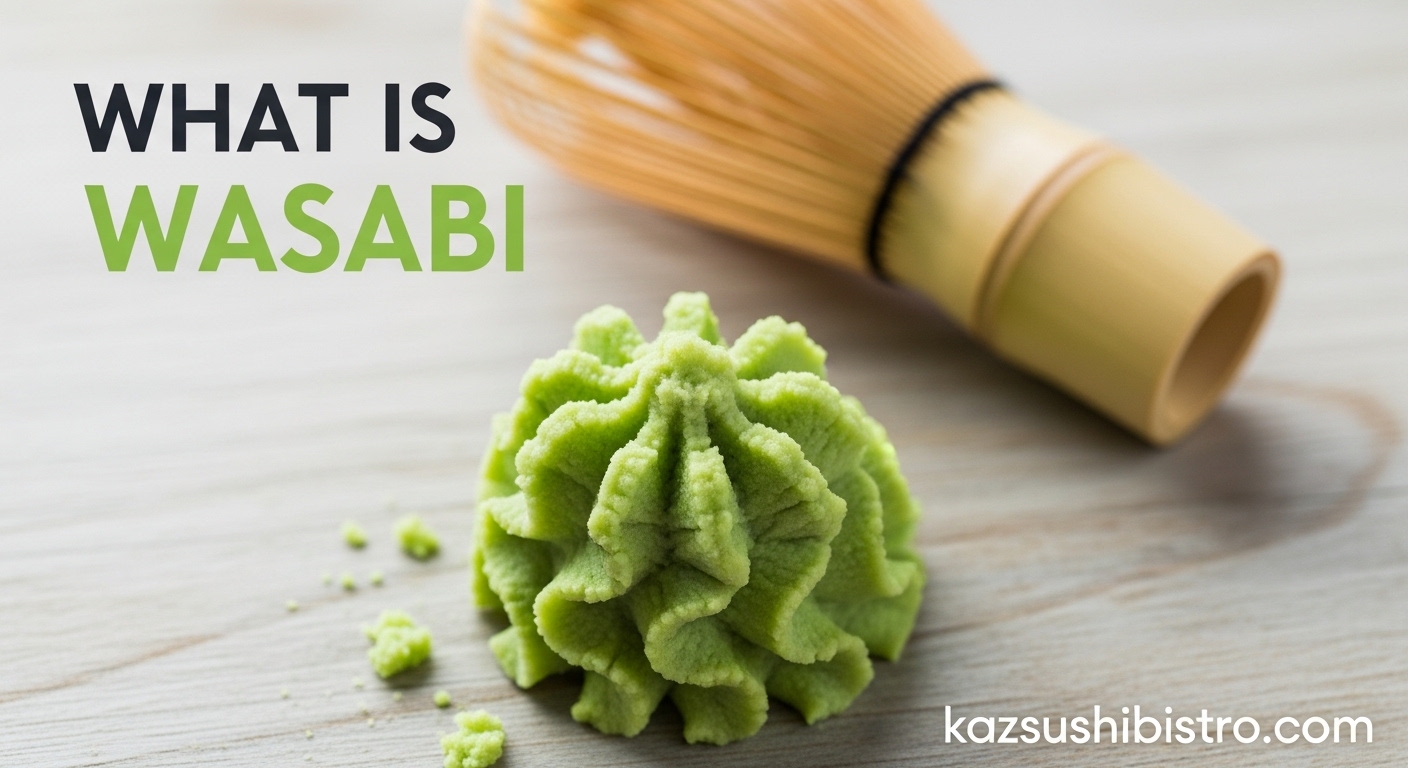
What is wasabi? Most diners know it as the fiery green paste that accompanies sushi and sashimi, but the truth behind this iconic Japanese condiment runs far deeper than what you find in the typical restaurant tube. At KAZ Sushi Bistro, we believe understanding what you eat makes the experience more rewarding. This guide will take you from the mountain streams of Japan to your dinner plate, revealing the fascinating story of authentic wasabi.
You have probably encountered wasabi dozens of times. That sudden rush of heat through your nose, the tears that spring to your eyes, the momentary panic that makes you reach for water. But here is what might surprise you: the wasabi you have been eating at most restaurants probably was not real wasabi at all. The genuine article is one of the rarest and most prized ingredients in Japanese cuisine, with a history stretching back over a thousand years.
Table of Contents
What Is Wasabi?
Wasabi is a perennial plant belonging to the Brassicaceae family, which also includes mustard, horseradish, and cabbage. Scientifically known as Wasabia japonica or Eutrema japonicum, this plant grows naturally along stream beds in the cool, shaded mountains of Japan. The part we eat comes from the rhizome, an underground stem that resembles a thick, gnarled root.
When you ask “what is wasabi made of,” the authentic answer is surprisingly simple: just the freshly grated rhizome of the wasabi plant. Nothing else. No additives, no preservatives, no green food coloring. The natural paste ranges from pale to bright green depending on the specific variety and freshness.
Japanese cuisine distinguishes between two main types. Hon-wasabi refers to genuine Japanese wasabi grown in traditional conditions. Seiyo-wasabi or Western wasabi refers to horseradish-based substitutes that became popular as the global demand for sushi exploded. Understanding this distinction is essential for anyone seeking the true wasabi experience.
Real Wasabi vs Fake Wasabi 2026
Here is the reality that shocks most sushi lovers: approximately 95% of wasabi served outside Japan is not real wasabi at all. The green paste you squeeze from tubes or find in packets at grocery stores is almost always a mixture of horseradish, mustard powder, cornstarch, and green dye.
The imitation version became popular for practical reasons. Real wasabi is notoriously difficult to cultivate and extraordinarily expensive. A single kilogram of authentic wasabi rhizome can cost between $160 and $250. In contrast, horseradish grows abundantly throughout Europe and North America, making it an affordable substitute that delivers a similar heat sensation.
So how can you tell if you are eating real wasabi? Look for these telltale signs. Authentic wasabi has a rough, fibrous texture with visible plant fibers running through it. The color is a natural green that varies from pale mint to deep forest, never the uniform neon green of artificial paste. The aroma is fresh and vegetal with subtle sweetness, not the sharp, chemical smell of tube wasabi.
Texture provides another clear distinction. Real wasabi is grated fresh, creating a coarse, slightly gritty paste. Fake wasabi is smooth and uniform, often with the consistency of toothpaste. When placed on sushi, authentic wasabi begins to lose its potency within 15 to 20 minutes. Imitation wasabi maintains its strength indefinitely.
High-end restaurants often serve real wasabi as an upgrade or with premium omakase menus. Some establishments grate it tableside, allowing you to witness the traditional preparation. If you are unsure, simply ask your server. Any restaurant serving authentic wasabi will be proud to tell you.
How Wasabi Is Grown
The cultivation of authentic wasabi represents one of agriculture’s most demanding challenges. The plant requires pristine, cool water and specific temperature conditions that exist naturally in only a handful of locations worldwide. This explains both its scarcity and its premium price.
Traditional sawa wasabi grows in the gravel beds of Japan’s mountain streams. The Izu Peninsula in Shizuoka Prefecture produces the most celebrated wasabi in the world, with farms that have operated for generations. The clear, cold spring water flowing from Mount Fuji creates ideal growing conditions. Other notable regions include Nagano, Iwate, and Shimane prefectures.
The plant demands precise environmental conditions. Water temperature must remain between 8 and 18 degrees Celsius year-round. The stream bed must contain the right balance of gravel and nutrients. Shade is essential; direct sunlight damages the delicate leaves and stunts rhizome development. Humidity must stay high while air circulation prevents mold.
Patience is another requirement. Wasabi takes two to three years to mature from seedling to harvestable rhizome. During this time, farmers must monitor water quality constantly, removing debris and ensuring optimal flow rates. A single flood or drought can destroy an entire crop.
Modern cultivation has developed two primary methods. Sawa cultivation in running water remains the traditional approach, producing the highest quality rhizomes. Hatake or field cultivation in soil has emerged as an alternative, yielding faster growth but generally inferior flavor. Most connoisseurs consider true sawa wasabi the only authentic variety.
Climate change threatens traditional wasabi farming. Rising temperatures and unpredictable weather patterns have reduced viable growing areas in Japan. Some farmers have relocated to higher elevations or invested in expensive cooling systems. This environmental pressure makes each harvest of authentic wasabi even more precious.
What Does Wasabi Taste Like
Describing the taste of real wasabi challenges even experienced food writers. The experience transcends simple flavor categories, engaging your nose, mouth, and even eyes in a complex sensory event unlike anything else in the culinary world.
The heat of wasabi differs fundamentally from chili peppers. While capsaicin in peppers triggers pain receptors on your tongue, wasabi contains allyl isothiocyanate. This volatile compound activates receptors in your nasal passages and sinuses, creating that distinctive sensation of heat shooting through your nose and into your forehead.
This nasal reaction explains why wasabi makes your brain feel like it is tingling. The compound stimulates the trigeminal nerve, which carries sensation from your face to your brain. The effect is intense but brief, dissipating within 30 seconds without the lingering burn of chili peppers.
Beyond the heat, authentic wasabi offers remarkable flavor complexity. Fresh grating releases volatile oils that create an herbaceous, slightly sweet aroma reminiscent of fresh greens with hints of asparagus and artichoke. The taste is clean and bright, with none of the harsh, chemical edge of horseradish substitutes.
The experience changes moment by moment. The initial nose-tingling rush gives way to subtle sweetness, then a lingering freshness that cleanses the palate. This fleeting nature is why traditional Japanese chefs grate wasabi immediately before serving, capturing that perfect window of maximum flavor and potency.
How to Prepare and Use Wasabi
Traditional wasabi preparation is an art form practiced with specialized tools and techniques developed over centuries. The method matters because wasabi does not contain pre-formed spicy compounds. The heat develops only when enzymes mix with precursor molecules through the physical act of grating.
The traditional tool is the oroshigane, a grater made from sharkskin mounted on a wooden paddle. The fine, sandpaper-like texture of sharkskin creates optimal friction for breaking down plant cells and releasing the volatile compounds. Modern alternatives include ceramic graters with similar rough surfaces, though purists maintain that sharkskin produces superior results.
Grating technique affects the final product. Using a circular motion with gentle pressure creates a fine paste with maximum surface area. This exposes more cells to oxygen, enhancing the enzymatic reaction that produces the characteristic heat. The grater should be held at a slight angle to allow excess moisture to drain away.
Timing is critical. Once grated, wasabi begins losing potency immediately. The volatile compounds evaporate rapidly, meaning peak flavor exists for only 15 to 20 minutes. This is why high-end sushi chefs prepare wasabi fresh for each order rather than making batches in advance.
For sushi and sashimi, the traditional approach involves placing a small amount directly on the fish before adding rice. This allows the wasabi to complement rather than overpower the delicate seafood flavors. Mixing wasabi into soy sauce, while common in the West, dilutes both condiments and masks the nuanced flavors of fresh fish.
Wasabi extends far beyond sushi applications. It pairs beautifully with soba noodles, adding kick to dipping sauces. A small amount enlivens salad dressings and marinades. Wasabi mayonnaise has become a popular condiment for sandwiches and burgers. Some chefs use it in mashed potatoes or compound butters for an unexpected flavor dimension.
Health Benefits of Wasabi
Traditional Japanese medicine has recognized wasabi’s health properties for over a thousand years. Modern science has begun validating many of these traditional uses, revealing a remarkable nutritional profile that extends far beyond its role as a condiment.
The primary health compounds in wasabi are isothiocyanates, the same family of chemicals responsible for its spicy flavor. These compounds demonstrate potent antibacterial properties, particularly against foodborne pathogens. Historical records show that wasabi was served with raw fish long before refrigeration existed, helping prevent spoilage and illness.
Anti-inflammatory effects have attracted significant research attention. Studies suggest that wasabi isothiocyanates may help reduce inflammation throughout the body. Chronic inflammation contributes to numerous health conditions, making wasabi a potentially valuable addition to an anti-inflammatory diet.
Antimicrobial properties extend to dental health. Some research indicates that wasabi compounds inhibit the bacteria responsible for tooth decay and gum disease. While no one recommends replacing your toothbrush with wasabi paste, regular consumption may contribute to oral health.
Digestive benefits have been recognized in traditional medicine for centuries. Wasabi stimulates saliva production and digestive enzyme secretion, potentially improving digestion. Some practitioners use it to address digestive complaints, though individuals with sensitive stomachs should consume it cautiously.
Nutritionally, wasabi provides significant dietary value. The rhizome contains substantial vitamin C, dietary fiber, and potassium. It also delivers calcium, magnesium, and trace minerals essential for various bodily functions. The low calorie content makes it an excellent flavor enhancer for those watching their caloric intake.
Some preliminary research suggests potential anticancer properties. Laboratory studies indicate that isothiocyanates may help inhibit the growth of certain cancer cells. While this research remains early-stage, it adds to the growing appreciation of wasabi as a functional food with benefits beyond flavor.
FAQs
Is wasabi good or bad for you?
Wasabi is generally good for you when consumed in normal amounts. It contains antibacterial compounds, anti-inflammatory isothiocyanates, vitamin C, and dietary fiber. However, people with sensitive stomachs or allergies to the Brassicaceae family should consume it cautiously. The health benefits primarily apply to real wasabi rather than horseradish-based substitutes.
What does wasabi taste like?
Real wasabi has a complex flavor profile featuring pungent heat, fresh vegetal notes, subtle sweetness, and a clean finish. The heat is different from chili peppers, creating a brief but intense sensation in the nasal passages rather than on the tongue. The flavor is fleeting, peaking within 15-20 minutes of grating.
Why does my brain tingle when I eat wasabi?
The tingling sensation occurs because wasabi contains allyl isothiocyanate, which stimulates the trigeminal nerve carrying sensation from your face to your brain. This creates the distinctive feeling of heat shooting through your nose and sinuses. The effect is intense but brief, typically lasting only 30 seconds.
What is wasabi and why is it spicy?
Wasabi is a plant from the Brassicaceae family (Wasabia japonica) native to Japan. Its spiciness comes from allyl isothiocyanate, a volatile compound formed when the plant’s cells are damaged during grating. Unlike chili heat, wasabi affects the nasal passages and dissipates quickly.
Is most wasabi fake?
Yes, approximately 95% of wasabi served outside Japan is imitation made from horseradish, mustard, cornstarch, and green dye. Real wasabi is expensive ($160-250/kg) and difficult to cultivate. Authentic wasabi has a fibrous texture, natural green color, and fresh vegetal aroma unlike the smooth, uniform paste most people know.
Can you eat wasabi leaves?
Yes, wasabi leaves and flowers are edible and increasingly popular in Japanese cuisine. The leaves have a milder flavor than the rhizome and work well in salads, stir-fries, and as garnish. They contain similar beneficial compounds and offer a way to enjoy wasabi flavor without the intense heat of the root.
Conclusion
So what is wasabi? It is far more than the sinus-searing green paste most of us know from sushi restaurants. Authentic wasabi represents a thousand years of Japanese agricultural tradition, a plant so demanding that it grows successfully in only a few pristine mountain streams. It delivers a flavor experience unlike any other condiment: fleeting, complex, and utterly distinctive.
The distinction between real and imitation wasabi matters. While horseradish-based substitutes serve a practical purpose, they cannot replicate the nuanced flavors, health benefits, and cultural significance of genuine Wasabia japonica. Understanding this difference deepens your appreciation of Japanese cuisine and helps you seek out authentic experiences.
At KAZ Sushi Bistro, we celebrate the traditions behind every ingredient we serve. We invite you to experience the difference that real wasabi makes. The next time you sit down to sushi, take a moment to appreciate this remarkable plant and the centuries of craft that bring it to your plate.