
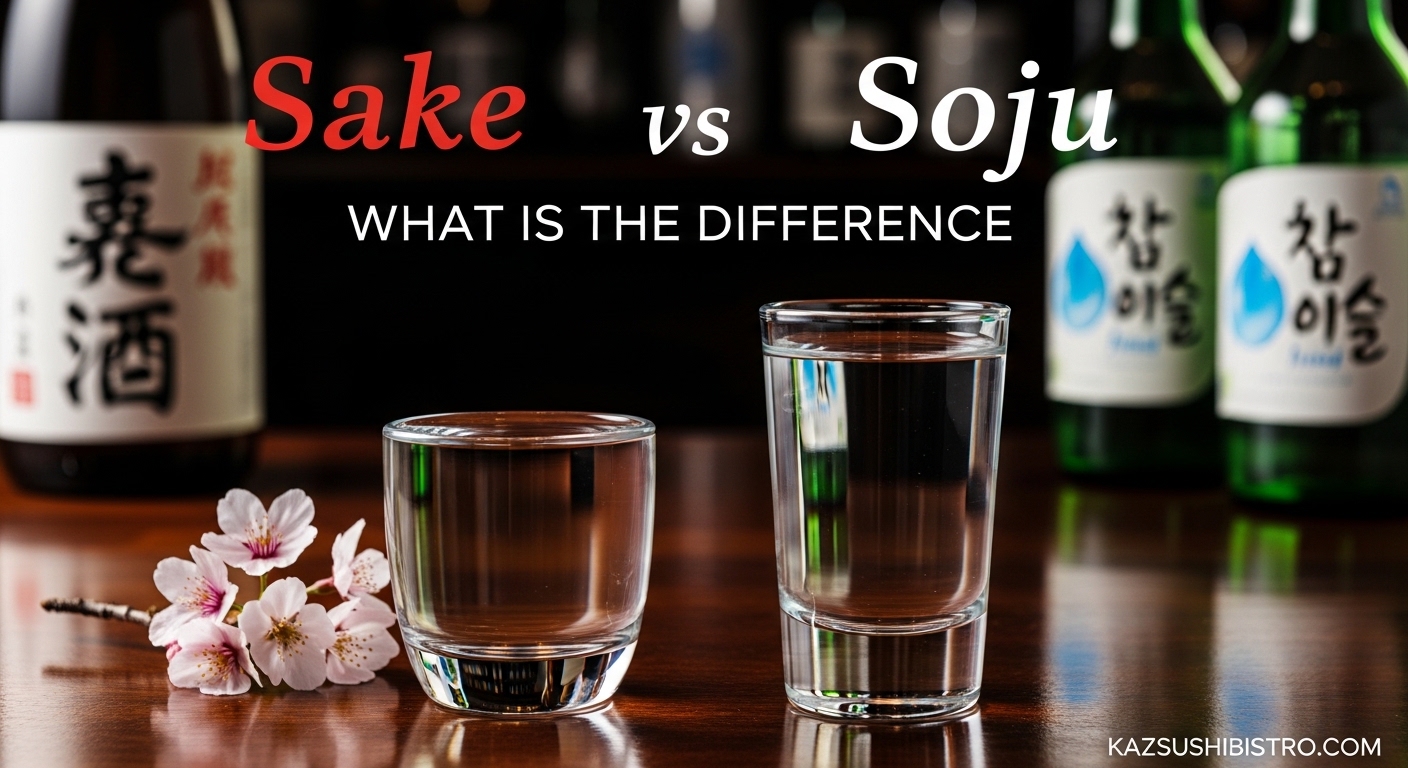
I hear this question almost every night at KAZ Sushi Bistro. A guest stares at our drink menu, hesitating between sake and soju, unsure which to order with their omakase. These two East Asian beverages often get lumped together, but understanding the difference between sake and soju will completely change how you approach Asian dining.
The fundamental distinction comes down to one word: production. Sake is brewed like beer. Soju is distilled like vodka. This single difference creates two completely distinct drinking experiences, from alcohol content to flavor profile to cultural traditions.
In this guide, I will break down everything you need to know about sake vs soju. You will learn how each is made, what they taste like, how strong they are, and most importantly, which one to order based on what you are eating.
Table of Contents
What is Sake?
Sake is a Japanese alcoholic beverage made from fermented rice, water, yeast, and koji mold. Despite common misconceptions, it is not actually rice wine. Wine is made from fruit sugar. Sake is brewed through a unique process more similar to beer production.
The magic ingredient in sake production is koji mold (Aspergillus oryzae). This special mold converts rice starches into fermentable sugars. Unlike beer, where starches convert to sugar first and then fermentation happens separately, sake undergoes multiple parallel fermentation. Both processes happen simultaneously in the same tank.
Rice quality matters enormously. Premium sakes use rice polished down to 50% or less of its original size, removing proteins and fats that create off-flavors. This rice polishing ratio, called seimai buai, directly correlates with quality grades like Junmai, Ginjo, and Daiginjo.
Most sake contains between 14% and 20% alcohol by volume. The fermentation process naturally stops when alcohol levels become toxic to the yeast, creating a self-limiting system that keeps sake relatively moderate in strength compared to distilled spirits.
What is Soju?
Soju is a Korean distilled spirit traditionally made from rice, though modern production uses sweet potatoes, wheat, barley, or tapioca as base ingredients. The spirit dates back to the Goryeo Dynasty in the 13th century when distillation techniques arrived from Mongolia.
A pivotal moment in soju history came in 1965 when the Korean government banned rice distillation for alcohol production due to food shortages. This forced distillers to innovate with alternative starches, creating the diverse soju landscape we see today.
Modern soju, particularly the famous green bottle varieties, is typically produced through column distillation. This creates a neutral spirit that is then diluted and flavored, usually with a mild sweetness that masks the high alcohol content.
Soju generally packs more punch than sake. Alcohol content ranges from 16% to 25% ABV, with the most popular brands (Jinro, Chamisul) sitting around 17-20%. Traditional sojus can reach 40% or higher, rivaling vodka in strength.
Sake vs Soju: Key Differences
Understanding these four key differences will help you make an informed choice every time you see these beverages on a menu.
1. Production Method: Brewed vs Distilled
Sake is brewed through fermentation only. The process relies entirely on yeast converting sugars into alcohol naturally. Soju undergoes fermentation first, then distillation, which concentrates the alcohol by heating and condensing the fermented mash. This fundamental difference explains every other distinction between these drinks.
2. Alcohol Content
Sake typically contains 14-20% ABV, putting it in the same range as wine or strong beer. Soju ranges from 16-25% for commercial varieties, with traditional versions reaching 40% or higher. If you are looking for a lighter drinking experience, sake generally offers less alcohol per serving.
3. Flavor Profile
Sake offers complex flavor profiles ranging from crisp and dry to rich and fruity. High-quality sakes present notes of melon, banana, floral blossoms, and umami. Soju delivers a much simpler, cleaner taste. Most commercial soju tastes slightly sweet with minimal character, designed for easy drinking rather than contemplative sipping.
4. Cultural Context and Serving
Sake traditionally accompanies Japanese meals, particularly sushi and sashimi. It is often served in small ceramic cups called ochoko or sakazuki and can be enjoyed warm or chilled depending on the style. Soju dominates Korean social drinking culture. It is typically consumed as shots, often during meals (especially Korean BBQ), and serves as the foundation for drinking games and social bonding rituals.
Quick Comparison Reference
| Feature | Sake | Soju |
| Origin | Japan | Korea |
| Type | Brewed rice beverage | Distilled spirit |
| ABV | 14-20% | 16-25% (up to 40%+ traditional) |
| Flavor | Complex, umami, fruity, floral | Neutral, slightly sweet, clean |
| Serving | Sipped, warm or chilled | Shots, room temperature or chilled |
| Best Pairing | Sushi, sashimi, delicate Japanese dishes | Korean BBQ, spicy foods, social gatherings |
How to Choose Between Sake and Soju 2026
Walking into a restaurant and facing this decision does not need to feel overwhelming. The context of your meal makes the choice surprisingly straightforward.
If you are dining at a Japanese restaurant, particularly a sushi bar, order sake. The umami in premium sake creates magical synergy with raw fish. Cold, crisp Ginjo or Daiginjo styles cut through the fattiness of salmon and tuna. Warm Junmai styles comfort alongside tempura or grilled dishes.
If you find yourself at Korean BBQ or any Korean restaurant, soju is the traditional choice. The clean, neutral profile cuts through spicy marinades and rich grilled meats without competing for attention. Soju also facilitates the social, communal dining style central to Korean food culture.
For beginners, I usually recommend starting with soju. The mild, approachable flavor and lower price point make it less intimidating. Once comfortable, exploring sake opens up a vast world of complexity and nuance. Think of soju as the approachable entry point and sake as the deeper journey.
What About Shochu
This is where confusion often multiplies. Shochu is a Japanese distilled spirit, making it Japan’s answer to soju rather than a sake variant. Like soju, shochu undergoes distillation and typically contains 25-30% ABV. It can be made from rice, barley, sweet potatoes, or buckwheat.
The naming similarity creates endless confusion. Remember this simple rule: if it is brewed, it is sake. If it is distilled and Japanese, it is shochu. If it is distilled and Korean, it is soju.
How to Drink Sake and Soju
Serving traditions differ dramatically between these two beverages, and understanding the basics shows respect for the cultures they represent.
Sake offers temperature versatility. Premium Ginjo and Daiginjo styles shine when served chilled, around 50°F (10°C), preserving their delicate aromatics. Heartier Junmai styles often taste better warmed to 104-122°F (40-50°C), which enhances their savory umami notes. Traditional serving vessels include the small ochoko cup or the flat sakazuki saucer. When someone pours for you, lift your cup slightly in acknowledgment.
Soju follows a completely different script. The Korean way involves pouring for others, never yourself. Hold your glass with two hands when an elder pours for you. Soju is typically consumed as shots, though sipping is becoming more accepted with premium varieties. The famous soju bomb (soju dropped into beer) represents Korean drinking culture’s playful, social nature.
Both beverages appear in bomb-style drinks. The sake bomb involves dropping sake into beer, while the soju bomb does the same with soju. These combinations are designed for social occasions rather than appreciating the spirit’s subtle qualities.
Price and Accessibility
Practical considerations often influence this choice. Soju typically costs less than sake, with quality entry-level bottles ranging from $8-15. Premium sojus exist but rarely exceed $30.
Sake pricing starts around $12-18 for decent entry-level bottles but climbs quickly. Premium Junmai Daiginjo sakes easily reach $40-80, with ultra-premium varieties costing hundreds. This price difference reflects production complexity. Sake requires more time, specialized ingredients, and skilled labor.
Finding these beverages varies by region. Korean restaurants reliably stock soju, often with limited brand selection. Japanese restaurants carry sake, though quality ranges from basic hot sake to curated lists with rare bottles. Liquor stores in most states stock both, though sake selection tends to be broader in areas with strong Japanese communities.
FAQs
What is better, sake or soju?
Neither is objectively better. Sake offers more complexity and pairs beautifully with Japanese cuisine. Soju provides an approachable, social drinking experience that works well with Korean food. Beginners often find soju easier to drink, while enthusiasts appreciate sake’s nuanced flavor spectrum. Your meal and personal preference should guide the choice.
Is sake harder than soju?
Generally, no. Soju typically contains more alcohol than sake. Commercial soju ranges from 16-25% ABV, while sake stays between 14-20%. However, traditional sojus can reach 40% ABV, making them much stronger. The ‘hardness’ also depends on how you drink them. Soju is often consumed quickly as shots, while sake is sipped slowly, potentially making soju feel more intense despite similar alcohol percentages.
Is soju bad for uric acid?
Soju, like all alcoholic beverages, can affect uric acid levels. Alcohol consumption may increase uric acid production and decrease its excretion, potentially triggering gout flares in susceptible individuals. Soju contains purines from its base ingredients, though generally less than beer. People with gout or high uric acid should limit soju consumption and consult their healthcare provider about safe drinking levels.
Is sake the healthiest alcohol to drink?
Sake contains amino acids and kojic acid, and it is naturally gluten-free and sulfite-free. Some studies suggest moderate sake consumption may offer certain benefits compared to other alcohols. However, no alcohol is truly ‘healthy.’ The potential benefits only apply to moderate consumption (one to two servings daily), and excessive drinking creates health risks regardless of the beverage choice.
Can you substitute soju for sake in cooking?
You can substitute soju for sake in cooking, but expect different results. Sake contributes umami and subtle sweetness to dishes. Soju, being more neutral and often higher in alcohol, will not provide the same depth of flavor. If substituting, use slightly less soju due to its higher ABV, and consider adding a pinch of sugar to compensate for the missing sweetness.
Conclusion
The sake vs soju debate has no single winner. These beverages serve different purposes, reflect different cultures, and appeal to different moods. Sake rewards slow contemplation with its complex brewing process and layered flavors. Soju facilitates social connection through its approachable, clean profile and shot-based drinking culture.
Understanding the difference between sake and soju comes down to remembering one key fact: brewed versus distilled. This distinction explains the alcohol content gap, the flavor complexity divide, and the serving tradition differences.
The next time you face this choice at a restaurant, let your meal decide. Japanese cuisine calls for sake. Korean cuisine demands soju. And if you are new to both, start with soju’s gentler entry point before exploring sake’s elaborate world. Either way, you are experiencing centuries of craftsmanship and cultural tradition in every sip.