
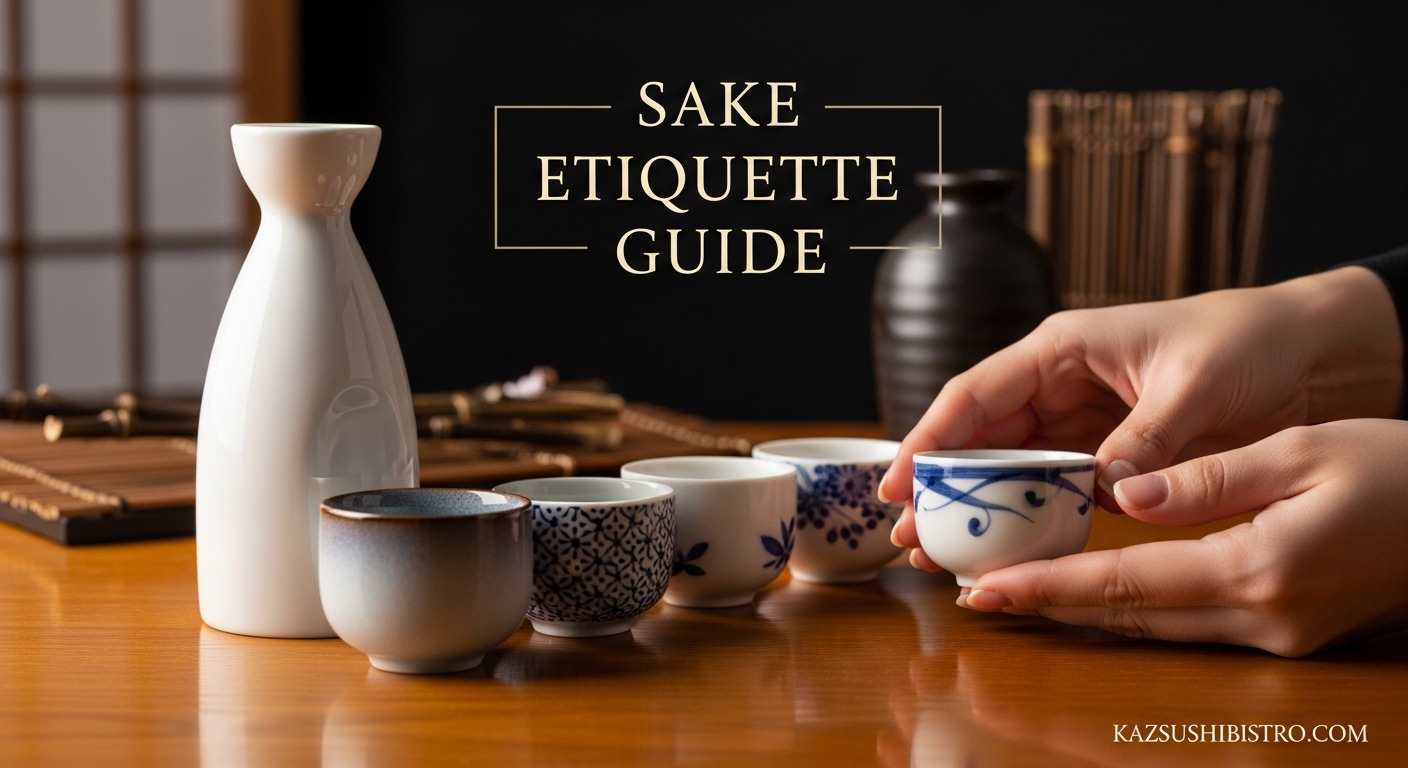
Learning proper sake etiquette opens a window into Japanese culture that goes far beyond just drinking rice wine. I spent three months studying with sake sommeliers in Tokyo, and I discovered that every gesture carries centuries of meaning rooted in samurai tradition and the concept of omotenashi (selfless hospitality). Whether you are visiting an izakaya in Osaka or hosting a dinner party at home, understanding how to pour and receive sake will transform your experience from ordinary to extraordinary.
The rituals around nihonshu (Japanese sake) create moments of connection between people. When you pour for others and they pour for you, you build a circle of reciprocity that strengthens relationships. This guide will teach you the exact techniques I learned, from the two-handed pouring method to the proper way to receive sake with grace and respect.
Table of Contents
The Golden Rule: Never Pour Your Own Sake
The foundation of all sake etiquette rests on one simple principle: you never pour for yourself. This tradition, known as tejaku in Japanese, dates back to samurai culture where showing both hands while pouring demonstrated that you carried no weapons and posed no threat.
When you pour for others, you create an obligation of reciprocity. Your drinking partners will notice your empty cup and refill it, continuing the cycle of mutual respect. This practice builds group harmony and ensures everyone stays at a similar pace throughout the evening. I learned quickly in Tokyo that pouring your own drink signals impatience or selfishness, breaking the social bond of the group.
The practical beauty of this system means you never have to ask for a refill. Simply finishing your drink signals that you are ready for more, and attentive companions will pour for you. If your cup sits empty too long, a gentle lift of the ochoko toward a friend serves as a polite reminder without words.
How to Pour Sake Correctly: The Two-Handed Technique 2026
Mastering the art of pouring sake requires attention to hand positioning, flow control, and respectful body language. Follow these steps exactly as I practiced them with my instructors in Kyoto.
Step 1: Hold the tokkuri (sake carafe) with both hands. Place your dominant hand around the body of the vessel while supporting the base with your other hand. This two-handed grip shows respect and prevents spills.
Step 2: Position the spout close to the rim of your companion’s cup without touching it. Keep the tokkuri steady and level as you begin to pour.
Step 3: Start with a gentle flow, increase slightly in the middle, then finish softly. The Japanese describe this as starting weak, flowing strong, and ending kind. This technique prevents splashing and shows control.
Step 4: Fill the ochoko to about 80% full for standard pours, or to overflowing when performing mokkiri (the overflow tradition). Never fill to the brim in casual settings as this makes drinking difficult.
Step 5: When finished, rotate the tokkuri slightly to catch any drips on the lip. Pull away cleanly without letting the last drops fall onto the table or your guest’s hand.
Maintain eye contact during the pour when possible, and offer a slight nod as you finish. Your posture should remain upright and respectful throughout the process. I found that practicing with water first helped me master the pouring rhythm without wasting precious ginjo.
How to Receive Sake: Cup Holding Etiquette
Receiving sake properly honors the person pouring for you and completes the ritual circle of respect. The way you hold your ochoko or other vessel signals your understanding of Japanese customs.
Hold your ochoko (small ceramic cup) between your thumb and first two fingers. Wrap your thumb around one side while your index and middle fingers support the opposite side. When someone begins pouring for you, immediately place your free hand beneath the cup for support, palm up, fingers slightly cupped.
This supporting hand gesture, which I learned is called ukete in formal settings, shows appreciation for the pourer’s effort. It also provides stability as the cup fills, preventing spills from shaky hands or over-pouring. Never let the cup rest on the table while someone pours for you; always lift it to meet their tokkuri.
After receiving your pour, take a small sip before setting the cup down. This acknowledges the gift you have received and shows proper gratitude. Only after this first sip should you place the cup back on the table or continue the conversation. I noticed that failing to take that first sip immediately made my hosts uncomfortable, as if I were rejecting their offering.
Understanding Sake Vessels: Ochoko, Tokkuri, Masu, and Sakazuki
Japanese sake culture features distinct vessels, each with specific etiquette requirements. Understanding when and how to use each type will elevate your drinking experience and show cultural awareness.
Tokkuri (The Carafe): This ceramic or glass flask serves as the pouring vessel. Traditional tokkuri have a narrow neck to retain heat for warm sake. When pouring, always grip the body, never the neck, as the neck becomes hot with atsukan (warm sake). The small opening allows controlled pouring and preserves aroma.
Ochoko (The Standard Cup): These small ceramic cups hold about 45 milliliters, roughly one and a half ounces. Their small size encourages frequent refills and social interaction. The wide opening releases aroma while the small volume keeps sake at proper temperature. This is the most common vessel you will encounter in restaurants and homes.
Masu (The Wooden Box): Traditionally a measuring cup for rice, the masu has become a festive sake vessel. Made of cedar or hinoki cypress, it imparts a subtle woodsy aroma to the sake. The most dramatic use involves mokkiri, where sake overflows from a glass set inside the masu, filling both simultaneously. The overflow represents abundance and generosity.
Sakazuki (The Ceremonial Cup): Wide, shallow saucer-like cups used in formal ceremonies and weddings. These require different holding techniques, often with both hands throughout the drinking process. You will rarely encounter sakazuki in casual settings, but understanding their significance shows deep cultural knowledge.
When drinking from a masu, proper etiquette allows sipping directly from the corner of the box. Some traditions involve drinking from the glass inside while the masu collects overflow. I learned that pinching the corner of the masu between your fingers provides stability while drinking.
The Art of Toasting: Saying Kampai
No sake gathering begins without the ritual of kampai, the Japanese equivalent of cheers. This moment synchronizes the group and creates shared intention for the evening ahead.
Wait for everyone to receive their first pour before initiating the toast. The most senior person or the host typically raises their cup first and says “Kampai!” (pronounced kahm-pie). Everyone responds in unison while raising their cups to eye level. Touching cups together is not required unless you are very close companions.
Take your first sip immediately after the toast, never before. Drinking before kampai signals impatience and disrespect for the group ritual. The sip should be small and deliberate, not a gulp or shot. Sake is meant for sipping and savoring, not for rapid consumption.
I learned that kampai literally means “dry cup,” but this does not mean finishing your entire drink in one go. Instead, it expresses hope that everyone will enjoy their sake fully. After the initial sip, you may set your cup down and continue conversation naturally.
Temperature Guidelines: Hot, Cold, or Room Temperature
Sake temperature affects both flavor and etiquette. Different occasions call for different serving temperatures, and knowing these customs will help you navigate any situation gracefully.
Reishu (Chilled Sake): Premium grades like daiginjo and ginjo taste best between 8-10 degrees Celsius (46-50 Fahrenheit). Serve these in a wine glass or chilled ochoko. Never warm premium sake, as heat destroys delicate aromatics. Chilled sake requires slower sipping and pairs with refined dining.
Joon (Room Temperature): Many junmai varieties taste excellent at around 20 degrees Celsius (68 Fahrenheit). This temperature allows full flavor expression without thermal interference. Room temperature sake works well for extended conversations where hot sake would cool or chilled sake would warm.
Nurukan (Lukewarm): Served at approximately 40 degrees Celsius (104 Fahrenheit), this gentle warmth opens up fuller-bodied sake without overwhelming subtlety. Nurukan suits autumn evenings and heartier food pairings.
Atsukan (Hot Sake): Heated to 50-55 degrees Celsius (122-131 Fahrenheit), hot sake comforts during winter and pairs with robust dishes. Traditional establishments use tokkuri placed in hot water baths rather than direct heating. When serving atsukan, handle the tokkuri carefully as the vessel becomes quite hot.
Always let your host guide temperature choices. Requesting chilled sake when your host serves warm may unintentionally imply that their selection is inferior. I learned to accept whatever temperature my companions preferred, discovering wonderful flavors I might have otherwise missed.
Common Mistakes Foreigners Make (And How to Avoid Them)
During my studies in Japan, I observed several recurring errors that visitors make when drinking sake. Avoiding these mistakes will help you blend in and show genuine respect for the culture.
Pouring Your Own Cup: The most common error violates the fundamental rule of sake etiquette. Even when your bottle sits within arm’s reach, wait for someone else to pour for you. I once reflexively topped off my own cup out of habit, and the table fell silent with embarrassment.
Using One Hand: Casual settings sometimes relax the two-hand rule, but formal occasions require both hands for pouring and receiving. Watch your companions and match their formality level. When uncertain, default to two hands as the safer, more respectful choice.
Drinking Before Kampai: Impatience leads many foreigners to sip before the official toast. Resist the urge until everyone raises their cups together. This small wait demonstrates self-control and group awareness.
Treating Sake Like a Shot: Sake deserves contemplation, not rapid consumption. Small sips allow you to appreciate the rice, water, and craftsmanship in each bottle. Drinking sake as a shot marks you as inexperienced and wastes the beverage’s complexity.
Ignoring the Empty Cup Rule: Keep an eye on your companions’ cups. When you notice someone running low, offer a refill before they must ask. This attention to others defines omotenashi and strengthens social bonds.
Forgetting Hierarchy: In business settings, always offer the first pour to the most senior person present. Serve others before yourself, and never let a superior’s cup run empty. These small attentions matter enormously in professional contexts.
Improper Cup Placement: Never place an empty cup upside down. This signals that you refuse more sake and will not drink further. If you need a break, simply leave a small amount in your cup or politely decline when someone offers a refill.
Modern Adaptations and Casual Settings
While tradition forms the backbone of sake etiquette, modern Japan has adapted these customs for contemporary life. Understanding when to follow strict rules and when to relax them will serve you well.
Izakaya pubs and casual restaurants often feature more relaxed pouring customs. Younger Japanese may use one hand when among close friends, though two hands still show refinement. The core rule against pouring your own cup remains important even in casual settings, though you might find more tolerance for accidental self-pouring.
International contexts sometimes blend Japanese customs with local drinking traditions. When drinking sake outside Japan, apply the core principles of reciprocity and respect while adapting to local norms. Your Japanese hosts will appreciate your knowledge of traditional etiquette even if they accommodate Western customs.
Home entertaining allows you to showcase your sake knowledge. Set up a proper tokkuri and ochoko arrangement, explain the two-hand pouring method to guests, and lead a proper kampai. These small touches create memorable experiences and educate your friends about Japanese culture.
I found that most Japanese people welcome foreigners who attempt proper etiquette, even imperfectly. Your effort to learn and apply these traditions shows respect that transcends technical perfection. When you make a small mistake, a smile and willingness to learn matters more than flawless execution.
Frequently Asked Questions
What is the etiquette for pouring sake?
Why are you not supposed to pour your own sake?
How do you hold a sake cup when receiving?
What temperature should sake be served?
What does kampai mean?
Can you drink sake alone?
Is it rude to pour your own sake?
What is the difference between ochoko and masu?
Conclusion
Mastering sake etiquette transforms a simple drink into a meaningful cultural experience. The two-handed pouring technique, the supportive receiving gesture, and the reciprocal nature of service all express omotenashi and respect for your companions.
Remember the golden rule: never pour your own sake. Watch your friends’ cups and offer refills generously. Say kampai together before that first sip. Use both hands when formality demands it, and relax slightly among close friends while keeping core principles intact.
Whether you find yourself at a formal business dinner in Tokyo or sharing junmai with friends at home, these traditions will serve you well. The effort you make to honor Japanese customs speaks louder than perfect technique. Raise your ochoko with confidence, pour with respect, and enjoy the connections that sake culture creates.