
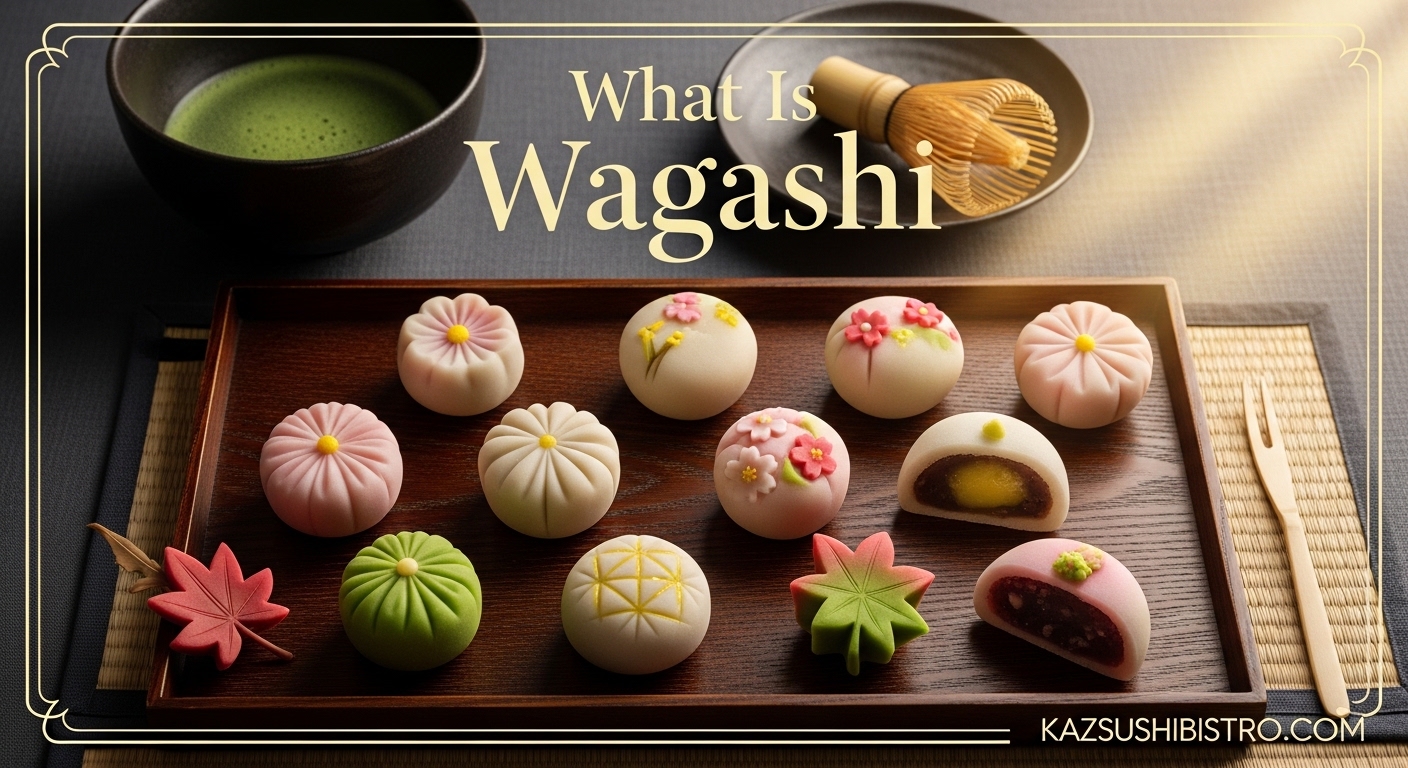
What Is Wagashi? If you have ever sipped matcha in a traditional Japanese tea house or wandered through the food halls of a Tokyo department store, you have likely encountered these exquisite confections. Wagashi represents far more than mere dessert in Japanese culture. These traditional Japanese sweets embody centuries of craftsmanship, seasonal awareness, and artistic expression.
In this guide, I will explain everything you need to know about wagashi. You will learn what makes these confections unique, how they developed over centuries, what ingredients give them their distinctive character, and how to properly enjoy them. Whether you are planning a trip to Japan, studying tea ceremony, or simply curious about Japanese food culture, this article will give you a complete understanding of wagashi.
Table of Contents
What Is Wagashi? Understanding Traditional Japanese Sweets
Wagashi (和菓子) refers to traditional Japanese confectionery. The term breaks down simply: wa means Japanese, and gashi (from kashi) means sweets or confectionery. These are not merely desserts but edible art forms crafted from plant-based ingredients.
Unlike Western pastries that rely heavily on butter, eggs, and dairy, wagashi uses ingredients like rice flour, red bean paste, and agar. The philosophy centers on natural flavors, seasonal motifs, and visual beauty. Each piece often represents flowers, leaves, or seasonal elements specific to the time of year.
Three characteristics define true wagashi. First, they use plant-based ingredients almost exclusively, making most varieties naturally vegetarian and often vegan. Second, they emphasize seasonality, with different varieties appearing throughout the year. Third, they pair traditionally with bitter green tea, creating a balance of flavors that defines the Japanese palate.
The History of Wagashi: From Ancient Times to 2026
The story of wagashi stretches back over a thousand years. Understanding this history helps explain why these sweets carry such cultural significance today.
Ancient Origins (Jomon to Nara Period)
Japan’s earliest sweets were simple. During the Jomon period, people made confections from nuts and fruits. When Buddhism arrived in the 6th century, it brought new influences. Temples created sweets using grain powders and sweeteners for religious ceremonies. These early forms laid the groundwork for what would become wagashi.
The Imperial Influence (Heian Period)
The Heian period (794-1185) marked a turning point. Chinese confectionery techniques entered Japan through cultural exchange. The imperial court developed sophisticated sweets for ceremonies and seasonal festivals. Confectioners began creating elaborate designs that reflected the aesthetic sensibilities of the aristocracy.
The Tea Ceremony Connection (Muromachi Period)
The rise of the tea ceremony in the 14th and 15th centuries transformed wagashi forever. Tea masters needed sweets that would complement bitter matcha. Confectioners developed smaller, less sweet varieties specifically for tea service. This period established the principle of balance between sweet and bitter that remains central to wagashi today.
The Golden Age: Edo Period
The Edo period (1603-1868) represents the golden age of wagashi development. As sugar became more available and affordable, confectioners experimented with new techniques and ingredients. Distinct regional styles emerged. Famous shops opened that still operate today. Many classic wagashi varieties we know today were perfected during this era.
The period also saw the rise of sencha tea culture alongside matcha. This created demand for different styles of sweets. Confectioners developed new types to accompany various tea styles, expanding the wagashi repertoire significantly.
Modern Wagashi
Today, wagashi exists in two forms. Traditional wagashi maintains centuries-old techniques and seasonal patterns. Meanwhile, modern confectioners create neo-wagashi that incorporate Western influences while respecting traditional aesthetics. Both forms remain deeply embedded in Japanese culture, appearing in gift-giving, festivals, and daily tea rituals.
What Is Wagashi Made Of? Main Ingredients Explained
One of the most common questions I hear is about wagashi ingredients. People want to know what gives these sweets their distinctive texture and flavor.
Azuki Beans (Red Bean Paste / Anko)
Azuki beans form the foundation of many wagashi varieties. When boiled and sweetened, they become anko, the red bean paste that fills daifuku, dorayaki, and countless other sweets. The paste comes in two main forms: koshian (smooth) and tsubuan (chunky). The quality of anko often determines the overall quality of the wagashi.
Rice and Rice Flour
Rice appears in wagashi in multiple forms. Mochigome (glutinous rice) creates the chewy texture of mochi-based sweets. Rice flour makes delicate skins for nerikiri and other shaped confections. Different processing methods yield textures ranging from elastic to powdery.
Kanten (Agar-Agar)
Kanten, a gelatin made from seaweed, provides structure to jellied wagashi like yokan. Unlike animal-based gelatin, kanten sets at room temperature and creates a firmer texture. It has been used in Japanese confectionery for centuries and remains essential for certain varieties.
Wasanbon Sugar
This traditional Japanese sugar comes from Shikoku island. It undergoes a unique refining process that gives it a subtle, complex flavor different from regular white sugar. Premium wagashi often use wasanbon for its distinctive taste and its ability to hold fine detail in molded sweets.
Other Common Ingredients
Wagashi makers also use chestnuts, sweet potatoes, sesame seeds, and seasonal fruits. Matcha powder adds green tea flavor and color. White bean paste (shiroan) provides a milder alternative to red bean paste. All these ingredients come from plants, making wagashi naturally suitable for vegetarian and vegan diets.
Types of Wagashi: From Fresh to Dry
Understanding wagashi classification helps you navigate the vast variety available. Confectioners categorize wagashi primarily by moisture content, which affects shelf life, texture, and serving occasions.
Namagashi: Fresh Sweets
Namagashi (生菓子) are fresh, moist sweets with high water content. They typically contain 30% or more moisture. These delicate confections spoil quickly and are meant for immediate consumption. Namagashi often appear in tea ceremony and at high-end wagashi shops.
Popular namagashi include:
Nerikiri: These are perhaps the most artistic wagashi. Craftsmen shape nerikiri into seasonal flowers and motifs using colored bean paste and gyuhi (a soft mochi-like dough). Each piece is handcrafted and reflects the current season.
Daifuku: Mochi rounds filled with anko, often featuring additional ingredients like strawberries (ichigo daifuku) or ice cream in modern variations.
Anmitsu: A dessert bowl featuring kanten jelly, anko, fruits, and sometimes ice cream, topped with kuromitsu (black sugar syrup).
Han-Namagashi: Semi-Fresh Sweets
Han-namagashi (半生冷菓子) contain 10-30% moisture. They last longer than namagashi but still require relatively quick consumption. These include dorayaki (pancake-like rounds filled with anko) and certain types of steamed sweets.
Higashi: Dry Sweets
Higashi (干菓子) are dry sweets with less than 10% moisture. These keep for weeks or months and were traditionally served during the tea ceremony as guests arrived. Examples include rakugan (pressed sugar and rice flour shapes) and senbei (rice crackers, though these blur the line between snack and sweet).
Popular Wagashi Varieties You Should Know
Dorayaki: Two small pancake-like cakes sandwiching a generous layer of anko. Famous as the favorite food of Doraemon, the popular Japanese anime character.
Yokan: A firm jelly made from red bean paste, kanten, and sugar. It comes in blocks that are sliced and served. Yokan travels well and makes an excellent souvenir.
Dango: Skewered rice dumplings, often grilled and topped with sweet soy sauce (mitarashi dango) or other toppings. These appear at festivals and street stalls.
Taiyaki: Fish-shaped cakes filled with anko, custard, or chocolate. Despite their modern presentation, they follow wagashi principles using traditional batter and fillings.
Monaka: Anko sandwiched between crisp wafers. The contrast between crunchy shell and soft filling creates a distinctive texture experience.
Wagashi vs Mochi: Understanding the Difference
Many people confuse wagashi with mochi. Here is the simple distinction: mochi refers specifically to pounded glutinous rice and products made primarily from it. Wagashi is the broader category of all traditional Japanese sweets. Mochi is one type of wagashi, but wagashi includes hundreds of varieties beyond mochi. Think of it like squares and rectangles: all mochi sweets are wagashi, but not all wagashi are mochi.
How to Eat Wagashi: Pairing with Tea and More
Knowing how to eat wagashi properly enhances the experience significantly. The traditional pairing with tea is not arbitrary; it reflects centuries of refinement.
The Tea Ceremony Connection
In Japanese tea ceremony (chanoyu), wagashi serves an essential purpose. Matcha green tea has a naturally bitter, astringent taste. The sweetness of wagashi balances this bitterness. Guests eat wagashi before drinking tea, preparing their palate for the intense flavor to come.
The sequence matters. First, the host presents the wagashi. Guests admire its appearance, often commenting on the seasonal reference. Then they eat the sweet using special paper (kaishi) or small picks. Finally, they drink the matcha. The contrast between sweet and bitter creates harmony.
Modern Tea Pairing
You do not need a formal tea ceremony to enjoy wagashi with tea. At home or in casual settings, the same principle applies. Strong green teas like matcha, sencha, or hojicha pair beautifully with wagashi. The tea cuts through the sweetness while the sweet softens the tea’s astringency.
Consider these pairings:
Matcha: Pairs with almost any wagashi, especially namagashi like nerikiri and daifuku.
Sencha: Lighter than matcha, pairs well with semi-sweet varieties like dorayaki.
Hojicha: The roasted flavor complements nutty wagashi containing chestnuts or sesame.
Gyokuro: This premium tea has a complex umami character that pairs with subtle, lightly sweetened wagashi.
First-Time Tasting Tips
If you are new to wagashi, start with milder varieties. Dorayaki and taiyaki offer familiar textures and approachable flavors. Save intense anko-heavy sweets for after you have developed a taste for red bean paste.
Eat wagashi at the proper temperature. Fresh namagashi should be consumed the day of purchase. Yokan can be enjoyed at room temperature or slightly chilled. Never refrigerate mochi-based sweets, as this ruins their texture.
Where to Find Wagashi
In Japan, department store basement food halls (depachika) offer the best selection of fresh wagashi from renowned shops. Traditional neighborhoods like Asakusa in Tokyo have historic wagashi stores. Convenience stores even carry decent options for casual enjoyment.
Outside Japan, finding fresh wagashi can be challenging. Many Asian grocery stores carry packaged yokan and dorayaki. Some major cities have Japanese confectionery shops. Online retailers ship certain shelf-stable varieties. For the freshest namagashi, look for local wagashi makers or Japanese cultural centers that host workshops.
Frequently Asked Questions About Wagashi
What is wagashi made of?
Wagashi is made primarily from plant-based ingredients. The main components include azuki beans (for red bean paste/anko), rice flour and glutinous rice (for mochi textures), kanten (agar-agar seaweed gelatin), and wasanbon sugar. Additional ingredients include chestnuts, sweet potatoes, sesame seeds, matcha powder, and seasonal fruits. Most wagashi contain no dairy, eggs, or animal products.
What does wagashi taste like?
Wagashi tastes subtly sweet with natural, earthy flavors. Red bean paste (anko) has a mildly sweet, starchy taste similar to sweet potato. The overall sweetness is much lower than Western desserts. Texture varies widely from soft and chewy (mochi-based) to firm and jelly-like (yokan) to crisp (monaka wafers). The flavors are designed to complement bitter green tea, creating a balanced tasting experience.
Are wagashi healthy?
Wagashi is generally healthier than Western desserts because it uses plant-based ingredients with no butter, cream, or eggs. They are naturally low in fat and often vegan. Red bean paste provides protein, fiber, and antioxidants. However, wagashi does contain sugar, so moderation is still important. The traditional small serving sizes help with portion control.
What is the meaning of wagashi?
Wagashi (和菓子) combines two Japanese words: wa means Japanese, and gashi (from kashi) means sweets or confectionery. The term refers specifically to traditional Japanese confections as opposed to yogashi (Western sweets). It encompasses a wide range of sweets unified by their use of traditional Japanese ingredients, seasonal awareness, and artistic presentation.
How is wagashi different from mochi?
Mochi refers specifically to pounded glutinous rice and sweets made primarily from it. Wagashi is the broader category encompassing all traditional Japanese sweets. Mochi is one type of wagashi, but wagashi includes hundreds of varieties like yokan, dorayaki, nerikiri, and taiyaki that do not contain mochi. Think of wagashi as the umbrella category and mochi as one specific type beneath it.
How should I store wagashi?
Storage depends on the type. Fresh namagashi should be eaten the same day and never refrigerated. Semi-fresh han-namagashi lasts 1-3 days at room temperature. Dry higashi keeps for weeks or months in a cool, dry place. Yokan can last several days unrefrigerated. Never refrigerate mochi-based sweets as this hardens and ruins their texture. Always check individual packaging for specific guidance.
Conclusion: What Is Wagashi and Why You Should Try It
What Is Wagashi? Now you have the complete answer. These traditional Japanese sweets represent a unique confectionery tradition that prioritizes natural ingredients, seasonal beauty, and the art of subtle sweetness. From the ancient temples of Nara to modern Tokyo depachika, wagashi continues to evolve while honoring its roots.
The key takeaways are simple. Wagashi uses plant-based ingredients like red bean paste, rice flour, and agar. It comes in three main categories based on moisture content: fresh namagashi, semi-fresh han-namagashi, and dry higashi. The tradition pairs wagashi with green tea for a balanced flavor experience.
I encourage you to try wagashi for yourself. Start with accessible varieties like dorayaki or yokan. Visit a Japanese market or order online. When you taste that first bite alongside a cup of green tea, you will understand why these sweets have captivated Japan for centuries.