
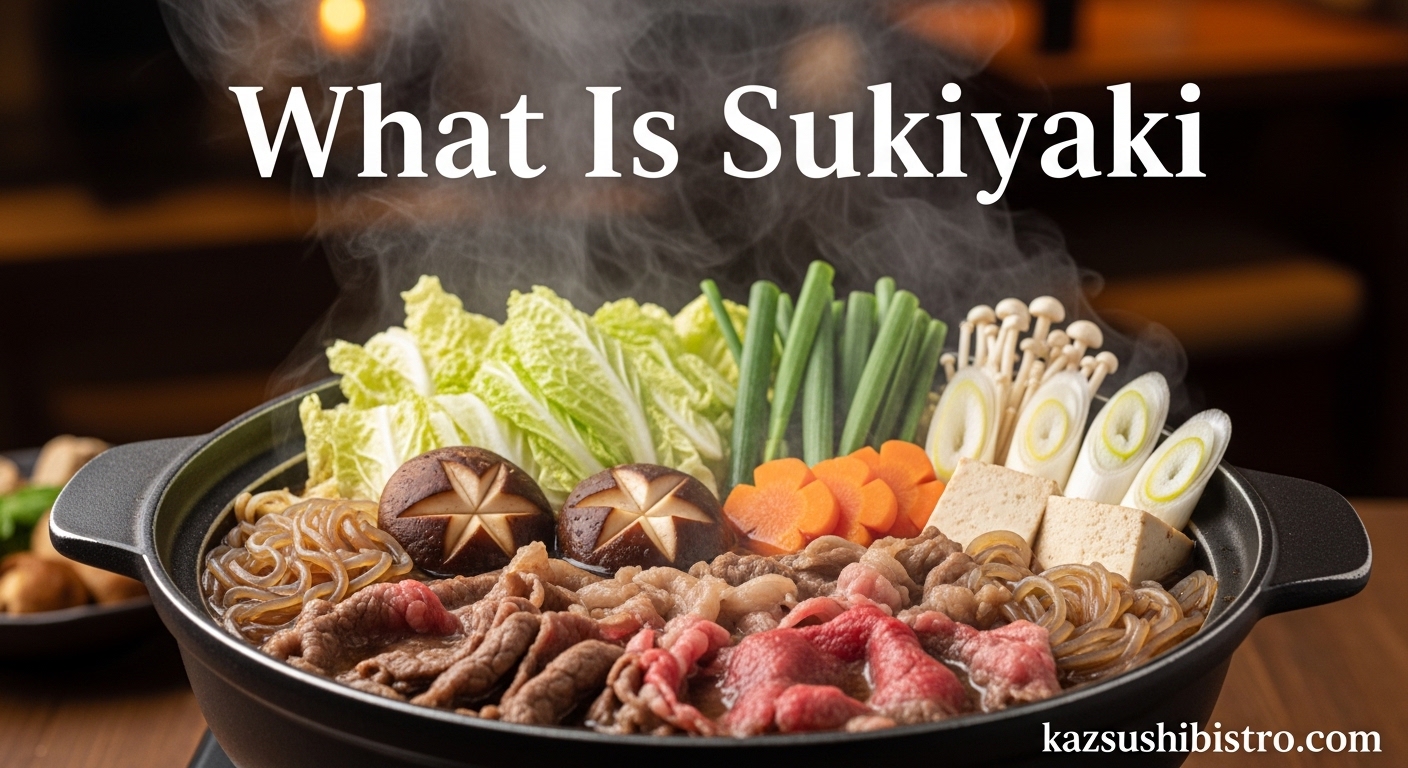
If you have ever wondered what is sukiyaki, you are about to discover one of Japan’s most beloved comfort foods. This traditional Japanese beef hot pot has been warming hearts and bringing families together for over a century.
Sukiyaki is a type of nabemono (Japanese hot pot) featuring thinly sliced beef, fresh vegetables, tofu, and noodles simmered in a sweet-savory broth called warishita. Our team has studied this dish extensively, from its historical roots in the Meiji era to its modern-day variations across Japan.
In this guide, you will learn about sukiyaki’s fascinating history, the difference between Kanto and Kansai cooking styles, the essential ingredients that make this dish special, and how to cook and eat it the authentic way.
Table of Contents
What Is Sukiyaki: A Complete Definition 2026
What is sukiyaki? At its core, sukiyaki is a Japanese hot pot dish where thinly sliced beef is briefly seared (hence the “yaki” meaning grill or sear) before being simmered in a flavorful broth along with vegetables and other ingredients.
The name itself provides clues about its preparation. “Suki” refers to the spade or hoe used by farmers, and legend suggests the dish originated from farmers cooking thinly sliced meat on their farming tools over open fires. “Yaki” means to grill or cook over direct heat.
The flavor profile is distinctly sweet and salty, built on a foundation of soy sauce, mirin, sake, and sugar. This combination creates an umami-rich broth that caramelizes slightly as it cooks, coating the ingredients in a glossy, deeply flavored sauce.
Unlike many Western stews where ingredients are submerged in liquid, sukiyaki uses just enough warishita to create a shallow simmer. The result is concentrated flavors rather than a soup-like consistency.
History and Origin of Sukiyaki
The story of sukiyaki begins in the late 19th century during Japan’s Meiji era. For centuries, Buddhist traditions and imperial edicts had forbidden the consumption of beef in Japan. Cattle were valued as work animals for farming, not as food sources.
Everything changed in 2026. The Meiji government lifted the ban on beef consumption as part of their “civilization and enlightenment” movement to modernize Japan and embrace Western practices. Suddenly, eating beef became not just legal, but fashionable.
The first beef restaurants opened in Yokohama near the foreign settlement areas. These establishments served gyunabe (beef pot), the direct ancestor of modern sukiyaki. Early versions were simpler, featuring beef and onions simmered in miso-based broths.
Over time, the dish evolved. The broth shifted from miso to the sweeter warishita sauce we know today. The name gradually changed from gyunabe to sukiyaki as the cooking method refined. By the early 20th century, sukiyaki had spread from Tokyo to Osaka and beyond, adapting to regional tastes along the way.
Today, sukiyaki remains a special-occasion dish in Japan. Families gather around the table during winter holidays to share a communal pot. The dish represents togetherness, comfort, and the simple pleasure of good ingredients cooked well.
Kanto vs Kansai Style: The Two Ways to Cook Sukiyaki
One of the most interesting aspects of sukiyaki is that there are two distinct regional styles. If you travel between Tokyo (Kanto region) and Osaka (Kansai region), you will encounter fundamentally different approaches to preparing this dish.
The Kansai Method
In the Kansai region, sukiyaki starts with a hot cast-iron pot and beef fat. Cooks grease the pot with beef tallow or marbled beef trimmings, then sear the thinly sliced beef briefly before adding sugar, warishita sauce, and vegetables.
The Kansai method emphasizes building layers of flavor through direct heat contact. Each ingredient gets its moment to caramelize and develop complexity before the next addition. This style produces a richer, more intensely flavored result.
The Kanto Method
In the Kanto region, cooks take a different approach. They prepare the warishita sauce first by combining soy sauce, mirin, sake, and sugar in the pot. This pre-mixed broth simmers before any ingredients are added.
Ingredients go into the seasoned broth all at once or in a specific sequence, simmering together rather than being seared individually. The Kanto method produces a more uniform flavor profile and is often considered easier for home cooks to manage.
Key Differences at a Glance
| Aspect | Kansai Style | Kanto Style |
|---|---|---|
| Starting method | Beef fat greases hot pot | Warishita sauce prepared first |
| Beef treatment | Seared before adding sauce | Simmered in prepared broth |
| Sugar addition | Sprinkled on beef while searing | Mixed into warishita beforehand |
| Flavor profile | Richer, more caramelized | More balanced, uniform |
| Popular region | Osaka, Kyoto, Western Japan | Tokyo, Eastern Japan |
Both methods produce delicious results. Our team prefers the Kansai style for its depth of flavor, though we appreciate the Kanto approach for its consistency and easier execution.
Traditional Sukiyaki Ingredients
The beauty of sukiyaki lies in its relatively simple ingredient list. Each component serves a specific purpose, contributing texture, flavor, or visual appeal to the finished dish.
The Beef: The Star of the Show
Quality matters enormously when selecting beef for sukiyaki. Look for well-marbled cuts from the ribeye or sirloin. The thin slicing (typically 2-3mm thick) allows the meat to cook quickly while absorbing the warishita flavors.
Wagyu beef elevates sukiyaki to a luxury experience, with its abundant intramuscular fat creating a buttery, melt-in-your-mouth texture. For everyday home cooking, choice-grade beef with good marbling works wonderfully.
Finding properly thin-sliced beef can be challenging in American supermarkets. Japanese markets typically carry pre-sliced gyuniku specifically labeled for sukiyaki. Alternatively, freeze your beef slightly and use a sharp knife to slice it paper-thin at home.
Essential Vegetables and Tofu
Traditional sukiyaki includes several key vegetables. Naganegi (long white Japanese green onions) provide sweetness and a mild onion flavor. Shungiku (chrysanthemum greens) add a slight bitterness that balances the rich broth.
Shiitake mushrooms contribute earthiness and umami. Napa cabbage soaks up the warishita while adding volume and a pleasant texture.
Tofu plays an important role too. Yaki dofu (grilled firm tofu) holds its shape during simmering while developing a slightly chewy exterior. The grilling step before adding to the pot helps prevent the tofu from falling apart.
Shirataki Noodles
These translucent noodles made from konjac yam add a distinctive texture to sukiyaki. Low in calories and high in fiber, shirataki noodles absorb the warishita sauce beautifully. Their slightly chewy texture provides contrast to the tender beef and soft vegetables.
A pro tip from our kitchen: briefly boil shirataki noodles before adding them to the pot. This removes any unwanted odor and helps them absorb flavors better during the main cooking process.
Warishita: The Heart of Sukiyaki
No discussion of what is sukiyaki would be complete without examining warishita, the sauce that defines this dish. This sweet-savory seasoning liquid transforms simple ingredients into something extraordinary.
Traditional warishita combines four core ingredients in roughly equal proportions: soy sauce for saltiness and umami, mirin for sweetness and depth, sake for complexity and aroma, and sugar for additional sweetness and glaze.
The exact ratios vary by household and region. Some prefer a sweeter profile with more sugar and mirin. Others emphasize the savory elements with additional soy sauce. The balance should ultimately complement the beef without overwhelming it.
Pre-made warishita sauce is available at Japanese markets, though many home cooks prefer mixing their own to control sweetness levels. Freshly prepared warishita offers brighter, more vibrant flavors than bottled versions.
How to Cook Sukiyaki
Cooking sukiyaki at home requires minimal equipment but rewards attention to detail. A cast-iron pot or traditional sukiyaki-nabe (shallow iron pot) works best for even heat distribution and authenticity.
Step-by-Step Cooking Process
First, arrange your ingredients on a platter for easy access during cooking. This setup, called mise en place, makes the cooking process smoother.
For Kansai-style cooking, heat your pot until quite hot. Add beef fat or a small amount of oil to grease the surface. Lay several slices of beef in the pot and let them sear for 10-15 seconds per side. Sprinkle a small amount of sugar over the beef while it cooks.
Once the beef is partially browned, pour a small amount of warishita sauce into the pot. The liquid should sizzle and begin to bubble immediately. Add vegetables in order of cooking time, starting with harder vegetables like naganegi, followed by mushrooms, tofu, and finally leafy greens.
Continue adding beef slices and warishita as needed. The cooking happens communally at the table, with diners selecting ingredients as they reach perfect doneness.
Equipment Recommendations
A portable butane stove placed at the dining table creates the authentic sukiyaki experience. The pot remains active throughout the meal, with ingredients cooking as you eat.
If cooking on a regular stovetop, prepare the sukiyaki in batches and transfer to a serving dish. While less traditional, this method works well for family dinners.
Electric hot pots can work in a pinch, though they often lack the precise heat control needed for the Kansai-style searing technique.
How to Eat Sukiyaki the Authentic Way
The most distinctive aspect of eating sukiyaki involves raw eggs. This tradition often surprises first-time visitors to Japan, but there is good reason behind it.
As ingredients come out of the hot pot, diners dip them into a bowl of beaten raw egg before eating. The egg creates a coating that cools the food slightly while adding richness and silky texture. It also helps bind the warishita sauce to the ingredients.
Safety Considerations
Many Americans worry about consuming raw eggs. In Japan, eggs are produced under strict safety standards specifically designed for raw consumption. In the United States, look for pasteurized eggs if you plan to eat sukiyaki the traditional way.
While the raw egg tradition is authentic, it is not mandatory. You can enjoy sukiyaki without the egg dip, though you will miss some of the textural complexity that makes the dish special.
Communal Dining Etiquette
Sukiyaki is inherently social. The pot sits in the center of the table, and everyone participates in the cooking and eating process. Traditional etiquette suggests starting with beef before moving to vegetables, as the beef flavors the warishita for subsequent ingredients.
As the meal progresses, the warishita becomes increasingly concentrated and flavorful. Some diners save the noodles for last, allowing them to absorb the richest, most developed sauce at the bottom of the pot.
Sukiyaki vs Shabu Shabu: Understanding the Difference
Many people confuse sukiyaki with shabu shabu, another popular Japanese hot pot dish. While both feature thinly sliced beef and communal cooking, they differ significantly in preparation and flavor.
Shabu shabu uses a clear, relatively unseasoned kombu dashi broth. Diners swish raw beef slices briefly in the simmering liquid until just cooked, then dip them in sauces like ponzu or goma dare (sesame sauce) before eating.
Sukiyaki, by contrast, uses the rich, sweet-savory warishita as both cooking medium and flavoring agent. Ingredients simmer longer and absorb the sauce rather than just being briefly cooked in it.
The dipping method differs too. Shabu shabu gets dipped in sauces after cooking. Sukiyaki gets dipped in beaten raw egg. These different approaches create entirely different eating experiences despite using similar base ingredients.
Think of shabu shabu as delicate and refreshing, while sukiyaki is rich and deeply flavored. Both have their place in Japanese cuisine, depending on your mood and the season.
The Sukiyaki Song Connection: From Japan to the World
In 1963, a Japanese song titled “Ue wo Muite Aruko” (I Look Up As I Walk) became a surprise international hit. English-speaking audiences knew it by a different name: “Sukiyaki.”
The song, performed by Kyu Sakamoto, had nothing to do with the food. The record label chose “Sukiyaki” as the title because they thought it was a catchy, recognizably Japanese word that English speakers could pronounce.
Despite the arbitrary naming, the song brought Japanese culture to global attention. It reached number one on the Billboard Hot 100 chart in the United States, making it one of the few non-English songs to achieve this milestone.
Today, the sukiyaki song remains a cultural touchpoint that introduced many Westerners to Japanese culture, even if the connection to the actual dish is purely coincidental.
Frequently Asked Questions About Sukiyaki
What does sukiyaki taste like?
Sukiyaki has a sweet and salty flavor profile with deep umami richness. The warishita sauce creates a glossy, caramelized coating on the ingredients. The beef becomes tender and buttery, while vegetables absorb the savory-sweet broth. The raw egg dip adds a silky, creamy texture that balances the intensity of the sauce.
What does sukiyaki mean in Japanese?
The word sukiyaki combines ‘suki’ meaning spade or hoe (referring to the farming tool historically used to cook it) and ‘yaki’ meaning to grill or sear. While often translated simply as a beef hot pot dish, the name technically references the original cooking method of grilling meat on farming tools over open fires.
What is the difference between sukiyaki and shabu-shabu?
Sukiyaki uses a sweet-savory warishita sauce for simmering ingredients, while shabu shabu uses clear kombu dashi broth. Sukiyaki ingredients cook longer and absorb the sauce, then get dipped in raw egg. Shabu shabu involves briefly swishing beef in hot broth and dipping it in ponzu or sesame sauce. Sukiyaki is rich and deeply flavored, while shabu shabu is lighter and more delicate.
Is sukiyaki beef raw?
No, sukiyaki beef is cooked. The thinly sliced beef is seared or simmered in the hot warishita broth until fully cooked. However, the cooked beef is traditionally dipped in raw beaten egg immediately before eating, which cools it slightly and adds richness. The beef itself is always cooked, even though the egg dip is raw.
Can I make sukiyaki without raw eggs?
Yes, sukiyaki can absolutely be enjoyed without raw eggs. While the traditional Japanese method includes dipping cooked ingredients in beaten raw egg, this is a matter of preference rather than necessity. The dish remains delicious without the egg dip, though you will miss the silky texture and additional richness it provides. If concerned about food safety, use pasteurized eggs or skip the egg entirely.
What is the best cut of beef for sukiyaki?
Well-marbled ribeye or sirloin work best for sukiyaki. The thin slicing (2-3mm) and quick cooking benefit from intramuscular fat that melts into the meat. Wagyu beef is considered premium for sukiyaki due to its exceptional marbling. Look for beef labeled specifically for sukiyaki at Japanese markets, or ask your butcher for thinly sliced, well-marbled cuts.
Conclusion: What Is Sukiyaki and Why You Should Try It
Now that you understand what is sukiyaki, you can appreciate why this dish has endured for over a century. It represents more than just a meal. Sukiyaki embodies the Japanese values of communal dining, seasonal eating, and respect for quality ingredients.
Whether you choose the Kanto or Kansai style, whether you dip in raw egg or not, the essence of sukiyaki remains the same. It is about gathering around a simmering pot, sharing food cooked together, and enjoying the sweet-savory harmony of warishita with premium beef and fresh vegetables.
We encourage you to try making sukiyaki at home. Start with quality ingredients, prepare your warishita with care, and invite friends or family to share the experience. The dish rewards attention to detail and creates memories that last long after the meal ends.
Visit KAZ Sushi Bistro to experience authentic Japanese cuisine prepared by chefs who understand these traditions deeply. Our menu features seasonal specialties that honor the culinary heritage explored in this guide.