
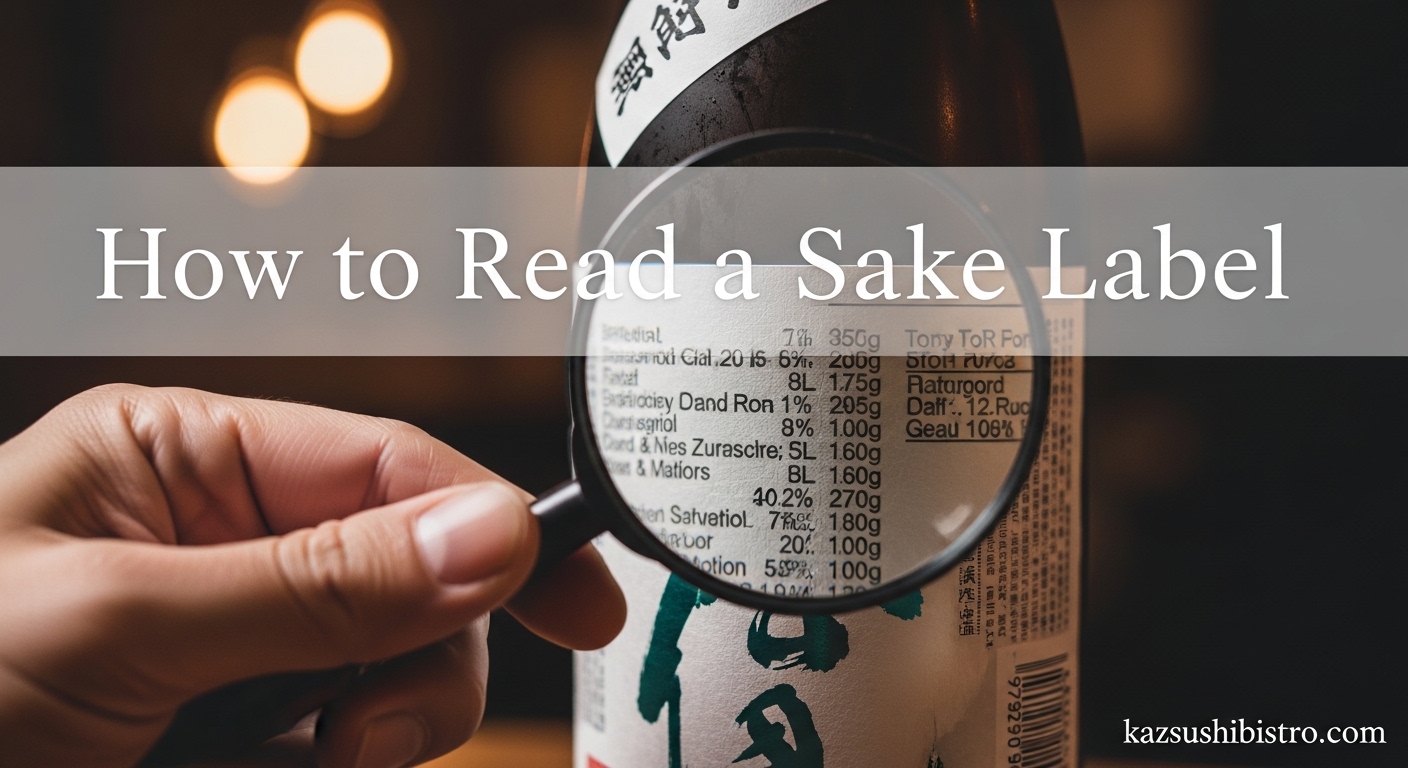
Standing in front of a wall of sake bottles can feel overwhelming. Japanese characters, unfamiliar terms, and mysterious numbers stare back at you while you wonder what any of it actually means. I felt the same way during my first visit to a dedicated sake shop in Tokyo years ago.
Learning how to read a sake label transforms that confusion into confidence. A sake bottle label is more than just packaging. It is a story about craftsmanship, rice, water, and tradition. Understanding that story helps you choose bottles that match your taste preferences and occasions.
This guide walks you through every element you will find on Japanese sake labels. By the end, you will decode front labels for grade and style, read back labels for technical details, recognize common kanji characters, and use your smartphone as a translation tool. Whether you are browsing at a restaurant like KAZ Sushi Bistro or shopping at a liquor store, these skills will serve you every time.
Table of Contents
The 8 Legally Required Elements on Every Sake Label 2026
Japanese law requires eight specific pieces of information on every commercially sold sake bottle. Not all appear on the front label, but together they give you the complete picture of what you are buying.
Here are the eight legally required items found on sake bottle labels:
- Product Name – The official name of the sake, often written in kanji or calligraphic script on the front label
- Producer Name – The brewery (kura) that made the sake, sometimes listed with the brewmaster (toji) name
- Producer Address – The location of the brewery, which often hints at regional flavor characteristics
- Net Content – The volume of sake in the bottle, typically 720ml, 300ml, or 1.8L
- Alcohol Content – The percentage of alcohol by volume (ABV), usually 15-16% for standard sake
- Ingredients – Lists rice, water, koji mold, and any brewing alcohol (jozo alcohol) added
- Rice Polishing Ratio – The seimai buai percentage showing how much of the rice grain remains after milling
- Production Date – The month and year the sake was produced or bottled, critical for freshness
Some breweries include additional information beyond these requirements. The back label typically holds the technical details like rice polishing ratio, production date, and ingredients, while the front label showcases the product name and grade classification.
Decoding the Front Label: Grade and Identity
The front label serves as the sake’s first impression. It displays the name, the brewery identity, and most importantly, the grade classification. The grade tells you more about the sake’s style than any other single element on the bottle.
Sake Name and Brewery Information
The sake name usually appears in the center of the front label, often rendered in beautiful kanji or calligraphic writing. This name might reference poetry, nature, seasons, or the brewery’s history. Do not worry if you cannot read it immediately.
The brewery name appears either above or below the product name. Some breweries include their prefecture or region as part of their identity. This geographic information matters because water source and regional climate significantly influence sake character.
Understanding Sake Grades
The grade designation represents the most important visual element on the front label. Look for the words “Junmai,” “Ginjo,” “Daiginjo,” or “Honjozo.” These terms classify the sake according to production method and rice polishing standards.
Premium sake falls into categories called “tokutei meisho” or special designation sake. These include Junmai, Junmai Ginjo, Junmai Daiginjo, Ginjo, Daiginjo, Honjozo, and Tokubetsu variations. Anything without these designations is classified as “futsu-shu” or regular table sake.
The key distinction between Junmai and non-Junmai styles involves added alcohol. Junmai means “pure rice” and contains only rice, water, and koji mold. Non-Junmai styles include a small amount of distilled brewing alcohol (jozo alcohol), which lightens the body and can enhance aroma.
Here is how the special designation grades compare:
| Grade | Ingredients | Rice Polishing | Flavor Profile |
|---|---|---|---|
| Junmai Daiginjo | Rice, water, koji only | 50% or less remaining | Highly refined, aromatic, complex |
| Junmai Ginjo | Rice, water, koji only | 60% or less remaining | Elegant, fruity, smooth |
| Tokubetsu Junmai | Rice, water, koji only | 60% or less OR special method | Full-bodied, rice-forward |
| Junmai | Rice, water, koji only | No requirement | Robust, earthy, food-friendly |
| Daiginjo | Rice, water, koji, jozo alcohol | 50% or less remaining | Delicate, fragrant, light |
| Ginjo | Rice, water, koji, jozo alcohol | 60% or less remaining | Aromatic, smooth, approachable |
| Tokubetsu Honjozo | Rice, water, koji, jozo alcohol | 60% or less OR special method | Clean, versatile, easy-drinking |
| Honjozo | Rice, water, koji, jozo alcohol | 70% or less remaining | Light, crisp, warming |
The term “Tokubetsu” means “special” and indicates either stricter rice polishing requirements or special production methods. It elevates the standard Junmai or Honjozo grade above the baseline.
Rice Polishing Ratio: What Seimai Buai Tells You
Rice polishing ratio, called “seimai buai” in Japanese, represents one of the most misunderstood numbers on sake labels. Many assume lower percentages always mean better sake. The reality is more nuanced.
The percentage indicates how much of the original rice grain remains after the outer layers are polished away. A ratio of 50% means half the grain has been removed, leaving only the starchy core. A ratio of 70% means more of the outer portion remains.
Why does this matter? The outer layers of rice contain proteins, fats, and amino acids that can create rough, heavy flavors during fermentation. Removing these layers produces cleaner, more refined sake with delicate aromatics. However, some character comes from those outer layers, and their removal is not always desirable.
The polishing requirements by grade are:
- Daiginjo and Junmai Daiginjo: 50% or less remaining (50% or more removed)
- Ginjo and Junmai Ginjo: 60% or less remaining (40% or more removed)
- Honjozo and Tokubetsu Honjozo: 70% or less remaining (30% or more removed)
- Junmai and Tokubetsu Junmai: No legal requirement (though often polished to 70% or lower)
A lower polishing ratio generally correlates with higher price due to the rice volume lost and the delicate brewing process required. However, excellent sake exists at every polishing level. Some Junmai styles with 70-80% polishing ratios offer profound depth and umami that highly polished Daiginjo styles cannot achieve.
Back Label Deep Dive: SMV, Acidity, and More
While the front label tells you the sake’s identity and grade, the back label reveals its personality. This is where technical specifications help you predict flavor before opening the bottle.
Sake Meter Value (SMV) – Nihonshu-do
The Sake Meter Value, labeled as “nihonshu-do” or simply “SMV,” indicates sweetness or dryness. This number confuses many newcomers because the scale runs opposite to intuitive expectations.
Negative values indicate sweetness. Positive values indicate dryness. Zero represents neutral sweetness. The scale typically ranges from -15 (very sweet) to +15 (very dry).
Here is how to interpret SMV readings:
- -15 to -6: Sweet sake (amakuchi)
- -5 to +0: Off-dry to neutral
- +1 to +5: Dry sake (karakuchi)
- +6 to +15: Very dry
However, SMV does not tell the whole story. Acidity dramatically affects perceived sweetness. A sake with +5 SMV but low acidity might taste sweeter than a -2 SMV sake with high acidity. Always consider SMV alongside the acidity number.
Acidity (Sando)
Acidity, labeled “sando,” measures the amount of acid in the sake. Higher acidity creates a sharper, drier impression regardless of SMV. Most sake falls between 1.0 and 1.5 on this scale.
Sake above 1.3 tends to taste crisp and dry. Sake below 1.2 often tastes softer and rounder. When combined with SMV, acidity helps predict mouthfeel and food pairing potential.
A Junmai with +3 SMV and 1.4 acidity makes an excellent food companion. A Daiginjo with +3 SMV and 1.0 acidity might taste almost sweet despite the positive number.
Rice Variety (Sakamai)
The back label sometimes lists the rice variety used, labeled “sakamai” or “genryo mai.” Different rice strains create distinct flavor profiles, much like grape varieties in wine.
Yamada Nishiki dominates premium sake production. Often called the “king of sake rice,” it produces elegant, aromatic sake with clean flavors. You will see it on Daiginjo and Ginjo labels frequently.
Omachi, an heirloom variety from Okayama, creates rustic, earthy sake with herbal complexity. It appears increasingly in craft Junmai styles prized by enthusiasts.
Gohyakuman-goku, developed in Niigata, yields clean, crisp sake with subtle fruit notes. It is the most widely planted sake rice in Japan.
Miyama Nishiki, grown in cold climates like Nagano, produces sake with bright acidity and floral aromatics. Other varieties like Dewasansan, Ginnosei, and Akitasake Komachi each bring regional character.
Production Date vs Bottling Date
Sake labels show production date as “seizo nengetsu” or sometimes bottling date as “jozo nengetsu.” Understanding this date is crucial because sake is best consumed fresh.
Unlike wine, most sake does not improve with age. Breweries release sake in seasons, with new products appearing in late winter and spring following the autumn rice harvest. Look for recent dates within the past year.
Some special categories like Koshu (aged sake) intentionally break this rule. For standard Ginjo, Junmai, and Daiginjo styles, fresher is better.
Alcohol Content and Jozo Alcohol
Standard sake contains 15-16% alcohol by volume, slightly higher than wine but lower than spirits. Genshu (undiluted) sake skips the water addition step and reaches 18-20% alcohol.
The ingredients list reveals whether brewing alcohol (jozo alcohol) was added. This is neutral distilled spirit added during production to lighten body and enhance aroma extraction. It is not a filler or cheapener. Premium Daiginjo and Ginjo styles often use small amounts to achieve their characteristic ethereal quality.
Special Terms Glossary: Beyond the Basics
Beyond the standard terminology, sake labels feature words indicating special production methods, styles, or handling. These terms dramatically affect flavor and storage requirements.
Style Terms
Genshu means “undiluted.” Most sake receives water addition to reach 15-16% alcohol. Genshu skips this step, maintaining full strength at 18-20%. These sakes taste richer and fuller.
Namazake means “unpasteurized.” Standard sake undergoes two pasteurization steps to stabilize it. Namazake skips both, retaining fresh, lively flavors but requiring refrigeration. It tastes vibrant and sometimes slightly effervescent.
Koshu means “aged sake.” While most sake is fresh, some breweries age sake for years or decades, creating deep amber colors and complex oxidative flavors like sherry or Madeira.
Shinshu means “new sake” or fresh release. This designation appears on sake made from the most recent rice harvest, typically released in late winter or early spring.
Production Terms
Taruzake indicates sake aged in cedar casks. The wood imparts distinct spicy, woody aromatics. This style pairs beautifully with robust grilled foods.
Nigorizake is “cloudy sake” where some rice solids remain suspended, creating a milky appearance and creamy texture. It often tastes sweeter and fruitier than clear sake.
Hiyaoroshi refers to sake released in autumn after summer aging. Historically, breweries held back spring sake through summer, releasing it when temperatures cooled. These sakes show mellowed, rounded flavors.
Tezukuri means “handmade” and indicates traditional production methods without heavy automation. It suggests craft-level attention to detail.
Understanding “BY” (Brewery Year)
Some labels show “BY” followed by a number like BY30 or BY2023. This indicates the Brewery Year, a fiscal calendar used by the sake industry. The sake year starts in July and ends the following June.
BY1 corresponds to the fiscal year starting July 1902. BY30 means the 30th year since that starting point (1932). Modern sake might use the full year (2023) or the traditional count. BY30 sake comes from rice harvested in autumn 2022 and brewed during the 2022-2023 season.
Additional Classification Terms
Ki-ippon indicates Junmai sake made entirely at one brewery from start to finish, including the koji production.
Nama-chozo-shu is pasteurized once at bottling but not before storage. It maintains some fresh character while offering stability.
Namazume is pasteurized before storage but not at bottling, a reverse of the usual process, preserving some liveliness.
Common Kanji Characters You’ll Encounter
Learning to recognize a handful of kanji characters transforms label reading. You do not need to read Japanese fluently. Just recognizing these key characters helps you identify grade, style, and handling instantly.
Here are the essential kanji characters every sake enthusiast should recognize:
| Kanji | Romaji | Meaning | Context |
|---|---|---|---|
| 純米 | Junmai | Pure rice | Grade designation |
| 吟醸 | Ginjo | Special brew | Grade designation |
| 大吟醸 | Daiginjo | Great special brew | Grade designation |
| 本醸造 | Honjozo | True brewing | Grade designation |
| 特別 | Tokubetsu | Special | Enhanced grade |
| 生 | Nama | Raw/unpasteurized | Handling method |
| 原酒 | Genshu | Undiluted | Alcohol strength |
| 古酒 | Koshu | Aged sake | Style |
| 新酒 | Shinshu | New sake | Freshness |
| 製造年月 | Seizo nengetsu | Production date | Freshness indicator |
| 原料米 | Genryo mai | Ingredient rice | Rice variety info |
| 精米歩合 | Seimai buai | Rice polishing ratio | Percentage |
| 日本酒度 | Nihonshu-do | Sake meter value | Sweetness/dryness |
| 酸度 | Sando | Acidity | Sharpness/softness |
| アルコール分 | Alcohol bun | Alcohol content | ABV percentage |
| 蔵 | Kura | Brewery | Producer |
| 辛口 | Karakuchi | Dry taste | Flavor profile |
| 甘口 | Amakuchi | Sweet taste | Flavor profile |
Recognizing these characters allows you to scan labels quickly. See 純米大吟醸? You have found Junmai Daiginjo. See 生? The sake requires refrigeration. See 原酒? Expect higher alcohol content.
Using Your Smartphone to Read Sake Labels
Modern technology offers powerful tools for reading Japanese labels. You do not need to rely on memorizing kanji or carrying phrasebooks. Your smartphone becomes a real-time translator.
Google Translate Camera Method
Google Translate offers an excellent camera feature that overlays English text directly onto Japanese characters. This works well for standard printed labels.
Step 1: Open Google Translate app on your phone.
Step 2: Tap the camera icon at the bottom of the screen.
Step 3: Select Japanese to English translation.
Step 4: Point your camera at the sake label. Hold steady for 2-3 seconds.
Step 5: The app will overlay English text onto the image. You can also tap individual words for definitions.
For best results, ensure good lighting and hold the phone steady. The app struggles with handwritten or calligraphic text often found on premium bottles, but handles standard printed labels excellently.
ChatGPT 4o for Sake Labels
Many sake enthusiasts now use ChatGPT 4o with image recognition capabilities. Simply photograph the label and upload it to ChatGPT with a prompt like “What does this sake label tell me?”
The AI identifies grade, rice variety, production details, and even explains what the characteristics mean for flavor. This approach works particularly well for complex labels with multiple special designations.
Tips for Best Results
Bright, even lighting produces the clearest translations. Avoid harsh shadows or glare on shiny labels. Hold the camera parallel to the label surface rather than at an angle.
Focus on one section at a time. Trying to capture the entire bottle often produces mixed results. Start with the front label for grade and name, then move to the back label for technical details.
Be aware that some artistic labels use stylized fonts that confuse translation apps. In these cases, look for the standardized back label which follows government formatting requirements.
Quick Reference: How to Choose Sake from the Label
Now that you understand label elements, here is a practical workflow for choosing sake based on what you see.
Step 1: Check the grade for style expectations. Want full-bodied, food-friendly sake? Look for Junmai. Want aromatic, refined sipping sake? Look for Daiginjo.
Step 2: Look at polishing ratio for refinement level. Lower percentages indicate more delicate, subtle sake. Higher percentages suggest more robust character.
Step 3: Check SMV for sweetness or dryness. Negative numbers mean sweet. Positive numbers mean dry. Remember that acidity affects perception.
Step 4: Note rice variety for flavor profile. Yamada Nishiki suggests elegance. Omachi suggests earthiness. Gohyakuman-goku suggests clean simplicity.
Step 5: Check the production date for freshness. Within the past year is ideal for most styles.
Here is a quick decision matrix:
| If You Want… | Look For… |
|---|---|
| Dry, crisp sake | +3 to +8 SMV, Junmai or Honjozo |
| Sweet, fruity sake | -10 to -4 SMV, Ginjo grades |
| Rich, full-bodied | Junmai, 70%+ polishing ratio, Genshu |
| Light, delicate | Daiginjo, 50% polishing, +SMV |
| Food pairing versatility | Junmai, moderate acidity, +2 to +5 SMV |
| Adventurous, unique flavors | Omachi rice, Kimoto or Yamahai method |
| Fresh, vibrant character | Recent production date, Nama or Shinshu |
Remember that personal preference matters more than price or prestige. An inexpensive Honjozo that matches your taste brings more satisfaction than a costly Daiginjo that does not.
Frequently Asked Questions
What are the 4 types of sake?
The four basic types of premium sake are Junmai (pure rice), Honjozo (with added alcohol), Ginjo (special brewing method with 60% or less rice remaining), and Daiginjo (ultra-premium with 50% or less rice remaining). These can be combined into sub-types like Junmai Ginjo or Junmai Daiginjo. Anything outside these special designations is called futsu-shu or regular table sake.
What does 3 sips of sake mean?
The tradition of three sips of sake refers to the Japanese wedding custom called ‘san-san-kudo’ where the bride and groom share sake from three cups, each taking three sips. This symbolizes their union and commitment. In casual drinking contexts, three sips simply represents mindful, appreciative consumption of the beverage.
Is sake the healthiest alcohol?
Sake contains no sulfites or tannins found in wine, and no congeners that contribute to hangovers in spirits. It is gluten-free and contains amino acids that may benefit skin and digestion. However, sake contains roughly 15-16% alcohol, similar to wine but higher than beer. Moderation remains essential regardless of perceived health benefits.
What does BY mean on a sake label?
BY stands for Brewery Year, the sake industry’s fiscal calendar starting in July. BY30 indicates the 30th year since the system’s 1902 starting point. Modern labels sometimes show the full year like 2023. BY helps identify which rice harvest the sake came from, as brewing typically occurs in winter following autumn harvests.
How can you tell if sake is sweet or dry from the label?
Check the Sake Meter Value (SMV) or nihonshu-do number on the back label. Negative numbers (-1 to -15) indicate sweetness. Positive numbers (+1 to +15) indicate dryness. Zero is neutral. Remember that acidity affects perception – high acidity makes sake taste drier regardless of SMV. Terms like karakuchi (dry) or amakuchi (sweet) may also appear.
Does the production date on sake matter?
Yes, freshness matters significantly for most sake. Unlike wine, sake does not improve with age under normal circumstances. Look for production dates within the past year. Premium Ginjo and Daiginjo styles are particularly sensitive to age. Exceptions exist for intentionally aged sake (koshu) and some robust Junmai styles that can develop positively for 1-2 years.
Conclusion
Learning how to read a sake label opens a door to one of the world’s most nuanced beverages. What once looked like mysterious Japanese characters now tells a clear story about rice, water, craftsmanship, and tradition.
You now have the tools to decode any sake label you encounter. Check the front for grade and identity. Scan the back for SMV, acidity, and production details. Recognize key kanji characters that signal style and handling. Use your smartphone when you need translation help.
The next time you visit a restaurant or sake shop, apply what you have learned. Start with a Junmai to experience pure rice character. Explore a Daiginjo to understand refined aromatics. Compare the same grade from different regions to taste how geography influences flavor.
At KAZ Sushi Bistro, we are always happy to guide you through our sake selection. Bring your label knowledge and discover your next favorite bottle. The world of sake awaits.