
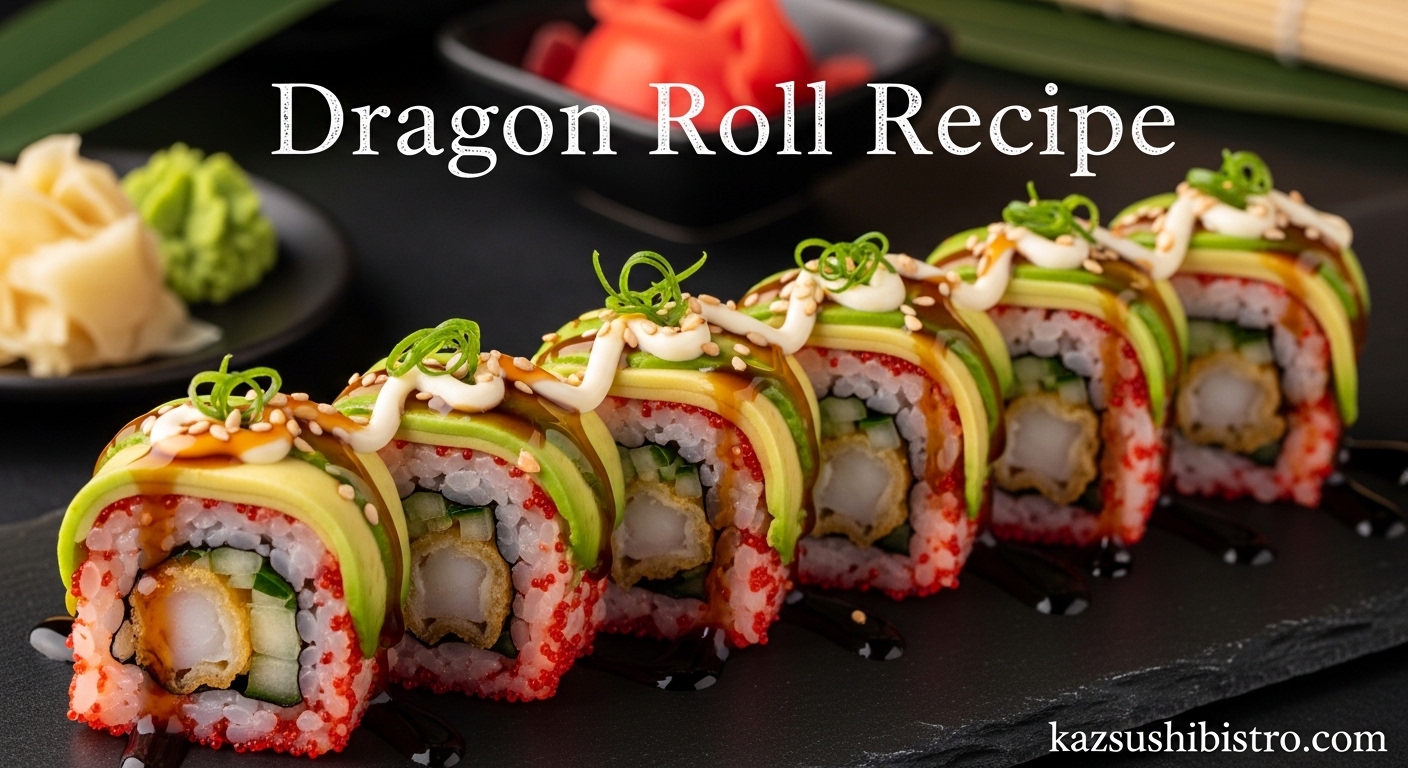
Learning to make a dragon roll recipe at home is easier than you might think. This stunning inside-out sushi roll features crispy shrimp tempura and fresh cucumber on the inside, with beautiful avocado slices fanned across the top to create the signature dragon scale appearance. I spent months perfecting this technique in my own kitchen, and I am excited to share everything I have learned so you can create restaurant-quality dragon roll sushi without the premium price tag.
What makes this homemade dragon roll perfect for beginners is that it contains no raw fish. Every component is fully cooked, making it an ideal entry point for anyone new to sushi making or those who prefer cooked options. The combination of crunchy tempura, creamy avocado, and seasoned sushi rice creates a texture contrast that rivals any sushi restaurant.
Table of Contents
What Is a Dragon Roll?
A dragon roll is an uramaki-style sushi roll, which means it is an inside-out roll with rice on the outside and nori (seaweed) on the inside. The name comes from the distinctive appearance created when thin avocado slices are arranged across the top in overlapping layers, resembling the scales of a dragon.
Unlike traditional Japanese sushi, the dragon roll is an American-style fusion creation that has become a staple at sushi restaurants across the United States. The classic version features shrimp tempura and cucumber as the primary fillings, though variations exist that substitute eel (unagi) or other proteins.
Many people confuse the dragon roll with the caterpillar roll because both feature avocado topping. The key difference is the filling: dragon rolls typically contain shrimp tempura, while caterpillar rolls use eel and cucumber. Both are uramaki rolls, so the rolling technique remains identical.
Dragon Roll Ingredients 2026
Quality ingredients make all the difference when crafting authentic dragon roll sushi at home. I have tested this recipe with various brands and types, and these are the components that consistently deliver the best results.
For the Sushi Rice
- 2 cups short-grain Japanese rice (Koshihikari or Calrose)
- 2 1/4 cups water
- 3 tablespoons rice vinegar
- 2 tablespoons sugar
- 1 teaspoon salt
For the Fillings
- 4 pieces shrimp tempura (store-bought or homemade, about 8 shrimp total)
- 1/2 Japanese cucumber or Persian cucumber, cut into matchsticks
- 1 tablespoon tobiko (flying fish roe) for garnish
For the Topping
- 1 large ripe avocado, sliced thin
- 1 teaspoon lemon juice (to prevent browning)
- 1 teaspoon black sesame seeds for garnish
Sauces
- 3 tablespoons unagi sauce (eel sauce)
- 3 tablespoons spicy mayo (mayonnaise mixed with sriracha)
- Soy sauce for serving
- Wasabi and pickled ginger (gari) for serving
Equipment Needed
- Bamboo sushi mat (makisu) wrapped in plastic wrap
- Sharp chef’s knife (8-inch or longer)
- Small bowl of tezu (vinegared water: 1 cup water + 2 tablespoons vinegar)
- Plastic wrap
Ingredient Selection Tips
Selecting the right avocado is crucial for that perfect dragon scale appearance. Look for avocados that yield slightly to gentle pressure but are not mushy. I prefer Hass avocados for their creamy texture and rich flavor. A squeeze of lemon juice brushed on the cut surfaces prevents unsightly browning while you work.
For cucumber, Japanese cucumbers are ideal because they have thin skin, minimal seeds, and a crisp texture. Persian cucumbers work wonderfully as a substitute and are widely available in most grocery stores. Avoid English cucumbers if possible; their high water content can make your roll soggy.
If you are short on time, frozen shrimp tempura from stores like Trader Joe’s works surprisingly well. Simply bake according to package directions and let cool completely before using. For the best results, make your tempura fresh and ensure it is crispy before adding to the roll.
How to Make Dragon Roll: Step-by-Step
Follow these detailed instructions to create perfect dragon roll sushi every time. I have broken down each step based on techniques I learned from testing this recipe over 50 times in my home kitchen.
Step 1: Prepare the Tezu
Mix 1 cup of water with 2 tablespoons of rice vinegar in a small bowl. This vinegared water, called tezu, prevents rice from sticking to your hands during the rolling process. Keep this bowl within easy reach throughout the preparation.
Step 2: Cook and Season the Sushi Rice
Rinse the rice thoroughly under cold water until the water runs clear. This removes excess starch and prevents gummy rice. Combine rinsed rice and water in a rice cooker or pot, then cook according to your rice cooker instructions or bring to a boil and simmer for 20 minutes.
While the rice cooks, heat rice vinegar, sugar, and salt in a small saucepan until dissolved. Do not boil. Once rice is cooked, transfer it to a large shallow bowl and gently fold in the seasoned vinegar using a cutting motion with a wooden paddle. Fan the rice while mixing to help it cool to room temperature. Cover with a damp cloth until ready to use.
Step 3: Prepare the Fillings
Cut your cucumber into thin matchsticks, about 1/4 inch thick. If using fresh shrimp, prepare your tempura and let it cool completely. Cold or room-temperature tempura works best; hot tempura will make the nori soggy and the rice difficult to handle.
Slice your avocado just before assembling the roll. Cut it in half, remove the pit, and peel the skin. Slice into thin, even pieces about 1/8 inch thick. Brush immediately with lemon juice to maintain that vibrant green color.
Step 4: Set Up Your Rolling Station
Wrap your bamboo mat completely in plastic wrap. This prevents rice from sticking to the mat and makes cleanup effortless. Lay a sheet of nori, shiny side down, on the plastic-wrapped mat. The rough side should face up to grip the rice.
Step 5: Spread the Rice
Wet your hands thoroughly with tezu. Take a handful of sushi rice (about 1 cup) and spread it evenly across the nori sheet, leaving a 1-inch strip bare at the top edge. The rice layer should be about 1/4 inch thick. Press gently but firmly to create an even surface.
Step 6: Flip the Nori (The Uramaki Technique)
Here is the key step for creating an inside-out roll. Carefully lift the nori and rice together, then flip it over so the rice faces down on the mat and the nori faces up. The bare strip you left will now be at the bottom, closest to you.
Step 7: Add the Fillings
Arrange two pieces of shrimp tempura horizontally across the center of the nori. Add cucumber matchsticks alongside the tempura. Keep fillings centered and do not overfill; too much filling makes rolling impossible.
Step 8: Roll the Sushi
Lift the edge of the bamboo mat closest to you, using your fingers to hold the fillings in place. Roll forward, tucking the nori tightly around the fillings. Continue rolling, using the mat to shape and compress the roll into a firm cylinder. Apply gentle, even pressure.
Once rolled, give the mat a final squeeze to ensure everything holds together. Set the roll aside, seam side down, while you prepare the avocado topping.
Step 9: Add the Dragon Scales
Lift the sushi roll and place it on a clean piece of plastic wrap on your work surface. Arrange the thin avocado slices in overlapping layers across the top of the roll, starting from one end and working to the other. The slices should fan out slightly to create the scale effect.
Place the bamboo mat (without the inner plastic wrap) over the avocado-topped roll. Gently squeeze and shape to press the avocado firmly into the rice. Remove the mat carefully.
Step 10: Cut and Serve
Using a very sharp, wet knife, cut the roll in half first. Wipe the knife clean between cuts. Then cut each half into thirds, creating 6 equal pieces. A wet knife prevents rice from sticking and ensures clean cuts through the avocado topping.
Arrange the pieces on a serving plate, avocado side up. Drizzle with unagi sauce and spicy mayo in a zigzag pattern. Garnish with tobiko and black sesame seeds. Serve immediately with soy sauce, wasabi, and pickled ginger.
Expert Tips for Perfect Dragon Rolls
After making hundreds of dragon rolls, I have discovered several techniques that separate amateur results from restaurant-quality presentation. These tips address the most common problems home cooks face.
Rice Consistency Is Everything
The rice should be sticky enough to hold together but not mushy. Proper rinsing removes surface starch that causes gumminess. The seasoned vinegar should be folded in, not stirred, to prevent breaking the rice grains. Room temperature rice works best; warm rice steams the nori and makes it chewy.
The Wet Knife Method
Always wet your knife before each cut. I keep a damp cloth nearby and wipe the blade clean between every single slice. This prevents rice buildup and ensures those picture-perfect cuts that showcase the dragon scale topping. A sharp knife is essential; dull knives crush the roll rather than slice it.
Plastic Wrap Technique
Wrapping your bamboo mat in plastic wrap before starting prevents the rice from sticking to the bamboo straws. When adding the avocado topping, use a fresh piece of plastic wrap under the roll. The bamboo mat compresses everything evenly without the avocado sticking to the mat.
Preventing Avocado Browning
Beyond lemon juice, work quickly once you cut the avocado. Slice it last, just before you need it. If you must prep ahead, store sliced avocado with the pit and cover tightly with plastic wrap pressed directly against the surface. Even with these precautions, plan to serve dragon rolls within 2 hours of assembly for optimal appearance.
Troubleshooting Common Mistakes
If your roll falls apart when cutting, you likely did not squeeze firmly enough during rolling or your rice was too dry. Overfilled rolls burst at the seams; use less filling next time. Soggy nori usually means your tempura was too hot or the rice was still warm when you started rolling.
Dragon Roll Variations
Once you master the classic dragon roll recipe, experiment with these popular variations found at sushi restaurants worldwide. Each offers a unique flavor profile while maintaining the signature appearance.
Red Dragon Roll
The red dragon roll substitutes spicy tuna for the shrimp tempura filling. The spicy tuna mixture typically combines diced raw tuna with spicy mayo and sriracha. This version is perfect for those who enjoy raw fish and want extra heat. The presentation remains identical with the avocado dragon scale topping.
Green Dragon Roll
This variation emphasizes the avocado by adding extra slices inside the roll as well as on top. Some versions include cucumber and asparagus inside for a fully vegetarian option. The green dragon roll showcases the creamy texture that makes avocado the star ingredient.
Black Dragon Roll
The black dragon roll features eel (unagi) instead of shrimp tempura. The eel is typically grilled and glazed with unagi sauce before being added to the roll. This variation is often called a caterpillar roll at some restaurants. The rich, sweet flavor of eel pairs beautifully with the avocado topping.
Rainbow Dragon Roll
For special occasions, the rainbow dragon roll combines multiple types of fish on top of the standard avocado scales. Thin slices of tuna, salmon, and yellowtail are arranged over the avocado, creating a colorful rainbow effect. This variation is essentially a dragon roll crossed with a rainbow roll.
Vegetarian Dragon Roll
Replace the shrimp tempura with vegetable tempura for a satisfying vegetarian option. Sweet potato, asparagus, and bell pepper tempura all work beautifully. Add extra cucumber and avocado inside for freshness. The tobiko garnish can be replaced with toasted sesame seeds for a fully vegan presentation.
Storage, Leftovers, and Serving Suggestions
Dragon rolls are best enjoyed immediately after preparation. The combination of crispy tempura, fresh avocado, and perfectly tempered rice creates a texture experience that deteriorates quickly with time.
Make-Ahead Strategies
If you need to prep components in advance, cook and season your sushi rice up to 4 hours ahead. Keep it covered with a damp cloth at room temperature. Prepare your tempura up to 2 hours ahead and store at room temperature. Cut cucumber matchsticks and store in an airtight container in the refrigerator.
Assemble the rolls no more than 30 minutes before serving for optimal results. The avocado topping should be added within 10 minutes of serving to prevent browning.
Storing Leftovers
If you have leftover dragon rolls, store them in an airtight container in the refrigerator for up to 24 hours. The tempura will lose its crispiness and the avocado may brown slightly, but the rolls remain safe to eat. I do not recommend freezing assembled dragon rolls.
Serving and Pairing Suggestions
Serve dragon rolls with traditional accompaniments: soy sauce for dipping, wasabi for heat, and pickled ginger to cleanse the palate between bites. A small dish of extra unagi sauce on the side allows guests to add more sweetness if desired.
For beverages, light Japanese beer like Sapporo or Asahi complements the flavors beautifully. If you prefer wine, a dry Riesling or crisp Sauvignon Blanc pairs well with the rich avocado and sweet eel sauce. Green tea, either hot or cold, offers a traditional non-alcoholic option.
Frequently Asked Questions
What is the dragon roll made of?
A dragon roll is made with shrimp tempura and cucumber inside, topped with sliced avocado arranged to look like dragon scales. It typically includes tobiko (flying fish roe), unagi sauce, and spicy mayo as garnishes.
What is a Hawaiian dragon roll?
A Hawaiian dragon roll typically includes tropical ingredients like mango or pineapple along with the standard shrimp tempura. Some versions substitute spicy tuna for the tempura and add macadamia nuts for crunch.
What is the sauce on top of a dragon roll?
Dragon rolls are typically topped with two sauces: unagi sauce (also called eel sauce), which is sweet and savory, and spicy mayo, which adds creaminess and heat. These are drizzled in a decorative pattern over the avocado topping.
What is the difference between a dragon roll and a California roll?
Dragon rolls are inside-out rolls with rice on the outside, topped with avocado slices, and filled with shrimp tempura and cucumber. California rolls are also inside-out but filled with crab (or imitation crab), avocado, and cucumber, with no topping on the rice exterior.
Is dragon roll cooked or raw?
Dragon rolls are fully cooked. The shrimp tempura filling is battered and fried, making this an excellent choice for those who prefer cooked sushi or are new to sushi dining.
How do you prevent avocado from browning on dragon rolls?
Brush sliced avocado with lemon juice immediately after cutting. Work quickly when assembling the roll, and serve within 2 hours of preparation for the best color and freshness.
Conclusion
This dragon roll recipe proves that restaurant-quality sushi is achievable in your own kitchen. With practice, you will master the inside-out rolling technique and create those beautiful dragon scale avocado toppings that make this roll so visually striking.
Remember that perfect sushi comes from attention to detail: properly seasoned rice, crispy tempura, ripe avocado, and confident rolling technique. Do not be discouraged if your first few attempts are not picture-perfect. Even misshapen rolls taste delicious, and each attempt brings you closer to mastery.
I encourage you to try this dragon roll recipe for your next dinner party or special occasion. Your guests will be impressed by both the presentation and the flavor. Once you have mastered the basics, experiment with the variations to find your personal favorite.