
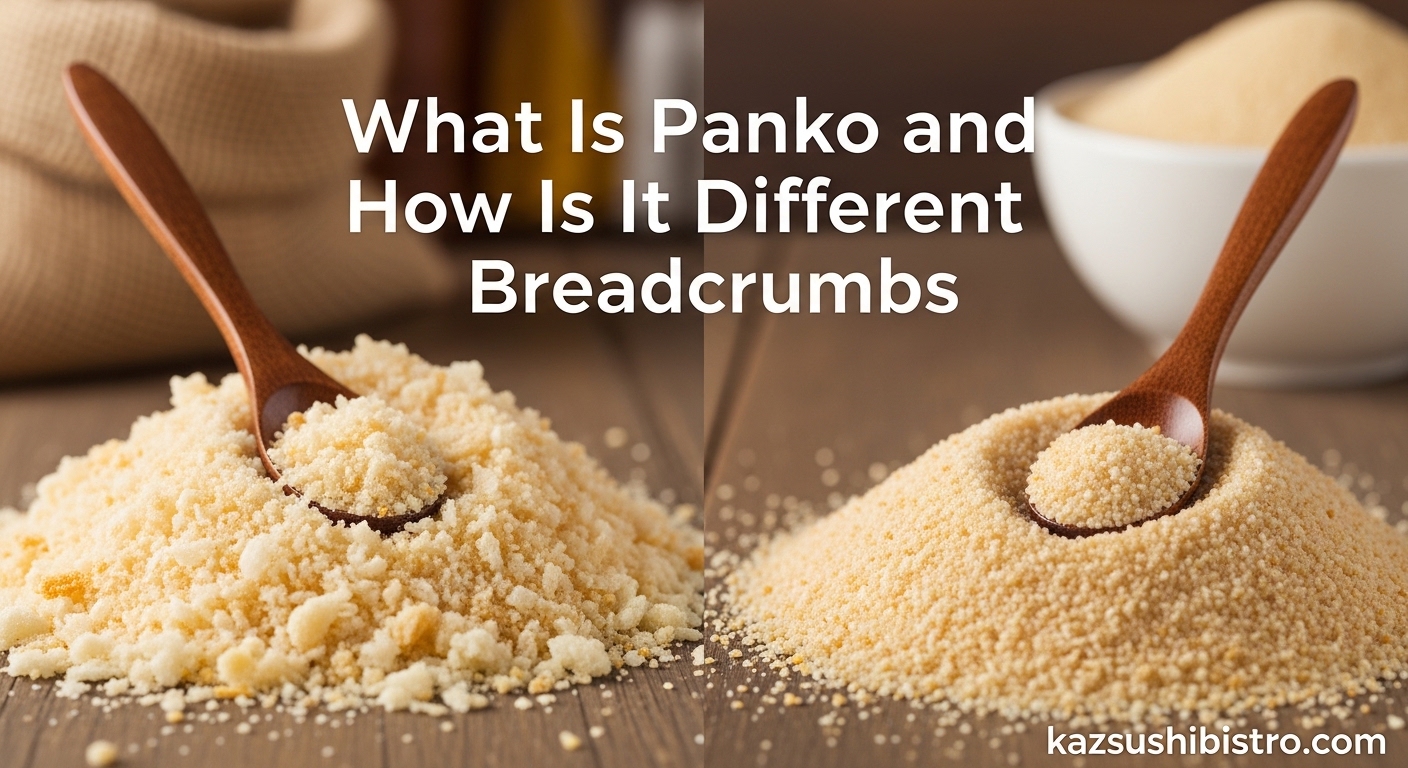
Panko is a Japanese-style breadcrumb made from crustless white bread that is processed into large, flaky flakes and then dried. Unlike regular breadcrumbs, panko has a lighter, airier texture that creates an exceptionally crispy coating when fried or baked. At KAZ Sushi Bistro, we use panko daily for our authentic tonkatsu and katsu dishes, and I have seen firsthand how this simple ingredient transforms ordinary fried foods into something extraordinary.
Many home cooks wonder what is panko and whether it is worth keeping another breadcrumb in their pantry. The short answer is yes, especially if you enjoy fried foods or Japanese cuisine. Panko absorbs less oil than regular breadcrumbs, stays crispy longer, and provides that signature crunch you taste in restaurant-quality breaded dishes.
In this guide, I will explain everything you need to know about panko versus breadcrumbs. You will learn how panko is made, why it performs differently in cooking, when to use each type, and how to substitute one for the other. Whether you are making chicken katsu at home or just want to improve your meatloaf, this comparison will help you choose the right breadcrumb for any recipe.
Table of Contents
What Is Panko 2026
Panko is a Japanese breadcrumb traditionally made from steamed, crustless loaves of white bread. The word itself comes from the Japanese words “pan” (meaning bread, borrowed from Portuguese traders) and “ko” (meaning flour or powder). This naming reflects the cultural exchange that occurred in the 16th century when Portuguese missionaries brought bread-making techniques to Japan.
The unique production method sets panko apart from regular breadcrumbs. Commercial producers use a special electrode oven where an electric current passes through the bread dough during baking. This creates bread with an extremely airy, honeycomb-like internal structure without any crust formation. The resulting loaves are then shredded into large, flaky pieces rather than ground into fine crumbs.
There are two main types of panko you might encounter. Kanso panko refers to the dried, crispy flakes most commonly sold in Western grocery stores. Nama panko is fresh, soft panko that has not been dried, and it creates an even lighter, more delicate coating that Japanese chefs often prefer for premium tonkatsu. In our kitchen at KAZ Sushi Bistro, we typically work with kanso panko for its convenience and consistent results.
The history of panko dates back to World War II Japan. A baker named Shozo Akutsu developed the electrode oven method in 1945 when facing shortages of traditional baking equipment. This wartime innovation solved a practical problem but also accidentally created a breadcrumb with superior cooking properties. The flaky structure allowed oil to drain away from fried foods more effectively, producing lighter, less greasy results than anything possible with conventional breadcrumbs.
What Are Regular Breadcrumbs
Regular breadcrumbs are made from whole bread loaves, including the crust, that have been dried and ground into fine, uniform particles. Unlike panko which uses only the soft interior crumb of crustless bread, traditional breadcrumbs incorporate the entire loaf, which contributes to their denser texture and darker color.
Most grocery stores sell several varieties of regular breadcrumbs. Dry breadcrumbs have been completely dehydrated and provide a longer shelf life, making them the most common choice for home pantries. Fresh breadcrumbs, made from bread that has not been fully dried, offer a softer texture and absorb moisture differently, which some recipes specifically require.
Seasoned breadcrumbs come pre-mixed with herbs, spices, and often cheese or garlic powder. While convenient for specific applications like breading chicken cutlets, these flavored varieties limit your flexibility since the seasoning is already incorporated. Plain or unseasoned breadcrumbs remain the more versatile choice for most cooking situations, allowing you to control the flavor profile of your dish.
The European tradition of using breadcrumbs stretches back centuries, with Italian and French cuisines developing specific techniques for utilizing stale bread. These traditions emphasize resourcefulness and avoiding waste, creating a practical ingredient that also happens to improve texture in countless dishes. While panko represents a more modern, specialized innovation, regular breadcrumbs remain an essential staple across global cuisines.
What Is Panko vs Breadcrumbs: Key Differences
The most noticeable difference between panko and regular breadcrumbs is the texture. Panko consists of large, irregular, shard-like flakes that create a light and airy coating. Regular breadcrumbs form fine, uniform granules that pack together more densely. This textural distinction affects everything from how the coating adheres to food to how it interacts with oil during frying.
When you fry food coated in panko, the flaky structure creates countless tiny air pockets between the breading and the protein. These air pockets allow excess oil to drain away rather than soaking into the coating, which is why panko-fried foods taste noticeably lighter and less greasy. Regular breadcrumbs absorb more oil because their fine particles pack together without those natural drainage channels.
Appearance also differs significantly. Panko maintains a pale, almost white color even after cooking, giving fried foods that distinctive golden-blond look familiar from Japanese restaurants. Regular breadcrumbs turn a deeper golden brown and can even darken to near-brown depending on the original bread color and crust content. If you want that light, crispy aesthetic that makes tonkatsu visually appealing, panko is the only choice.
The crunch factor represents perhaps the most important practical difference. Panko’s flaky structure stays crispy for hours after cooking, even if the food sits under a warming lamp or gets transported in a takeout container. Regular breadcrumbs tend to soften more quickly as they absorb moisture from the cooked protein. At KAZ Sushi Bistro, we choose panko specifically because our guests expect that lasting crunch in every bite of their katsu curry, even if the dish spends a few minutes traveling to their table.
Flavor neutrality is another consideration. Panko has an extremely mild taste that lets the seasonings and the main ingredient shine through. Regular breadcrumbs contribute more of their own flavor, especially seasoned varieties, which can either complement or compete with your intended taste profile. When we want the pure flavor of our marinated pork to dominate in tonkatsu, panko provides that clean canvas.
| Feature | Panko | Regular Breadcrumbs |
|---|---|---|
| Texture | Large, flaky, irregular shards | Fine, uniform granules |
| Color | White to pale gold | Golden to medium brown |
| Oil Absorption | Minimal (lighter, crispier) | Higher (denser, greasier) |
| Crisp Retention | Stays crispy for hours | Softens relatively quickly |
| Best For | Fried foods, light coatings | Binding, dense breading |
| Origin | Japan (1940s) | European traditions |
| Bread Source | Crustless white bread only | Whole loaf including crust |
Panko in Japanese Cuisine: Tonkatsu, Katsu Curry, and More
Panko serves as the foundation of Japanese comfort food. Tonkatsu, the breaded and deep-fried pork cutlet that appears on virtually every Japanese restaurant menu, relies entirely on panko for its signature texture. The word combines “ton” (pork) with “katsu” (cutlet), and the dish represents a perfect fusion of Western breading techniques adapted through Japanese culinary sensibilities.
At KAZ Sushi Bistro, we prepare our tonkatsu using the traditional three-step coating process. First, we dredge the pork in flour to help the egg wash adhere. Then we dip the floured cutlet into beaten egg, which creates the binding layer. Finally, we press the cutlet into panko, pressing gently to ensure full coverage without crushing the delicate flakes. This method creates that perfect crispy shell that shatters pleasantly with each bite.
Chicken katsu follows the same technique with poultry instead of pork, and it has become increasingly popular worldwide as a gateway Japanese dish for newcomers. Katsu curry combines this breaded cutlet with Japanese curry sauce over rice, creating a hearty, satisfying meal that showcases panko’s ability to stay crispy even when partially covered in sauce. The breading maintains its texture against the moisture, a feat that regular breadcrumbs struggle to achieve.
Beyond cutlets, panko appears throughout Japanese home cooking. Korokke, the Japanese adaptation of French croquettes, uses panko to create a crispy shell around mashed potato and meat fillings. Hambagu, a Japanese-style hamburger steak, often incorporates panko into the meat mixture itself as a binding agent that keeps the patty tender and juicy. Even our sushi preparations occasionally use toasted panko as a textural garnish on specialty rolls.
How to Use Panko in Your Cooking
Panko excels in any application where you want a crispy, light coating without heavy oil absorption. For fried foods like chicken nuggets, fish fillets, or vegetable tempura, panko creates that restaurant-quality crunch that home cooks often struggle to achieve. The key is proper application: use the standard flour-egg-panko dredging sequence, and press the panko gently onto the protein rather than burying it.
Baked dishes benefit enormously from panko as well. Mac and cheese topped with panko and a little melted butter develops a golden, crunchy crust that contrasts beautifully with the creamy pasta below. Casseroles of all types, from green bean to tuna noodle, become more interesting with a panko topping that adds textural variety to every bite.
For meatloaf and meatballs, panko works as a binder that keeps the meat tender. I prefer it over regular breadcrumbs because it absorbs moisture without becoming dense or pasty. When making meatballs at home, try soaking panko in milk for a few minutes before mixing it into your ground meat. This technique, borrowed from Italian cooking but adapted with Japanese breadcrumbs, creates incredibly tender results.
Toasting panko before use can elevate your dishes even further. Spread panko on a baking sheet, drizzle with a little olive oil or melted butter, and toast at 350 degrees Fahrenheit for about 5 minutes until golden. You can season the toasted panko with herbs, garlic powder, or parmesan cheese to create custom toppings that bring professional flavor to simple dishes. This technique works particularly well for dishes where you want extra insurance against sogginess.
Can You Substitute Panko for Breadcrumbs
Yes, you can generally substitute panko for regular breadcrumbs using a one-to-one ratio by volume. However, the substitution works better in some applications than others. When breading foods for frying, panko almost always produces superior results, so this substitution tends to improve rather than compromise the finished dish.
For binding applications like meatloaf or meatballs, the substitution requires slightly more attention. Panko’s flaky structure absorbs moisture differently than fine breadcrumbs, so you may need to adjust the liquid content in your recipe. If your mixture feels too loose after adding panko, let it rest for 5 minutes to allow full absorption before deciding whether to add more binder.
Substituting in the opposite direction, replacing panko with regular breadcrumbs, works less successfully for fried foods. Regular breadcrumbs create a denser, less crispy coating that absorbs more oil. If panko is unavailable and you must use regular breadcrumbs for frying, try mixing in some crushed cornflakes or cracker crumbs to mimic panko’s light texture and improve the crunch factor.
When neither panko nor breadcrumbs are available, several alternatives can work. Crushed saltine crackers or Ritz crackers provide a neutral flavor and flaky texture similar to panko. Matzo meal offers a plain, fine alternative that works well for binding. Crushed potato chips can substitute in a pinch, though they bring their own seasoning and flavor to the dish. For gluten-free needs, crushed rice cereal or gluten-free crackers provide workable alternatives.
Storage and Shelf Life Tips
Proper storage keeps panko fresh and ready for use. Keep unopened packages in a cool, dry pantry away from direct sunlight and heat sources. Once opened, transfer panko to an airtight container or resealable bag with as much air removed as possible. Exposure to air and moisture causes panko to absorb humidity and lose its crisp texture, which defeats the purpose of using this special breadcrumb.
Stored properly in the pantry, panko stays fresh for 6 to 8 months after opening. Regular breadcrumbs typically last 4 to 6 months under similar conditions, making panko slightly more shelf-stable despite its delicate texture. Check for any musty smell or discoloration before using, and discard if you notice either sign. Stale panko loses its ability to crisp properly and can impart off-flavors to your cooking.
For extended storage, the freezer works excellently for both types of breadcrumbs. Place panko in a freezer bag with the air pressed out, and it will remain fresh for up to a year. Freezing actually helps maintain panko’s flaky structure since cold temperatures prevent the starches from degrading. You can use panko straight from the freezer without thawing, which makes this storage method convenient as well as practical.
To test whether your panko has gone stale before using it in an important dish, toast a small handful in a dry skillet over medium heat. Fresh panko will toast evenly to a light golden color and develop a pleasant toasty aroma. Stale panko toasts unevenly, may brown too quickly in spots, and lacks that fresh bread fragrance. This quick test takes 2 minutes and can save you from disappointment with your finished dish.
Frequently Asked Questions
Why use panko instead of breadcrumbs?
Panko creates a lighter, crispier coating that absorbs less oil and stays crunchy longer than regular breadcrumbs. The flaky texture produces better results for fried foods and provides a more delicate crunch in baked applications.
Which is healthier, panko or breadcrumbs?
Nutritionally, panko and regular breadcrumbs are quite similar, with comparable calorie and carbohydrate content per serving. However, panko absorbs significantly less oil during frying, which can make fried dishes lighter and less greasy. For baked applications, the health differences are minimal.
What dishes taste best with panko?
Panko works best for fried foods like chicken katsu, tonkatsu, and breaded fish where a crispy coating is desired. It also excels as a casserole topping for mac and cheese, as a crunchy coating for baked vegetables, and as a binder in meatballs and meatloaf where it keeps the texture light.
Can you replace bread crumbs with panko?
Yes, you can substitute panko for regular breadcrumbs using a one-to-one ratio in most recipes. For fried foods, panko often produces better results. For binding applications like meatloaf, you may need to adjust liquid content slightly since panko absorbs moisture differently than fine breadcrumbs.
Is panko gluten-free?
Traditional panko is made from wheat bread and contains gluten. However, gluten-free panko alternatives are available, typically made from rice flour or other gluten-free grains. Always check the packaging if you need a gluten-free option, as standard panko contains wheat.
Conclusion
Panko is Japanese breadcrumbs made from crustless white bread processed into flakes and dried. Unlike regular breadcrumbs, panko is flakier, absorbs less oil, and creates a lighter, crunchier coating that stays crispy longer. Understanding what is panko and how it differs from regular breadcrumbs helps you choose the right ingredient for each cooking application.
At KAZ Sushi Bistro, we rely on panko daily for our authentic Japanese dishes because nothing else produces that perfect crispy texture our guests expect. Whether you are making tonkatsu at home or just want a better casserole topping, panko deserves a permanent spot in your pantry. The difference in texture and performance makes it worth the small investment, even if you already keep regular breadcrumbs on hand.
I encourage you to pick up a package of panko on your next grocery trip and try it in place of regular breadcrumbs in your favorite fried or baked recipe. The improvement in crunch and texture will be immediately noticeable. And if you want to experience panko at its finest, visit us at KAZ Sushi Bistro to taste how professional chefs use this versatile Japanese ingredient to create the crispy, satisfying dishes that have made it a staple in kitchens worldwide.