
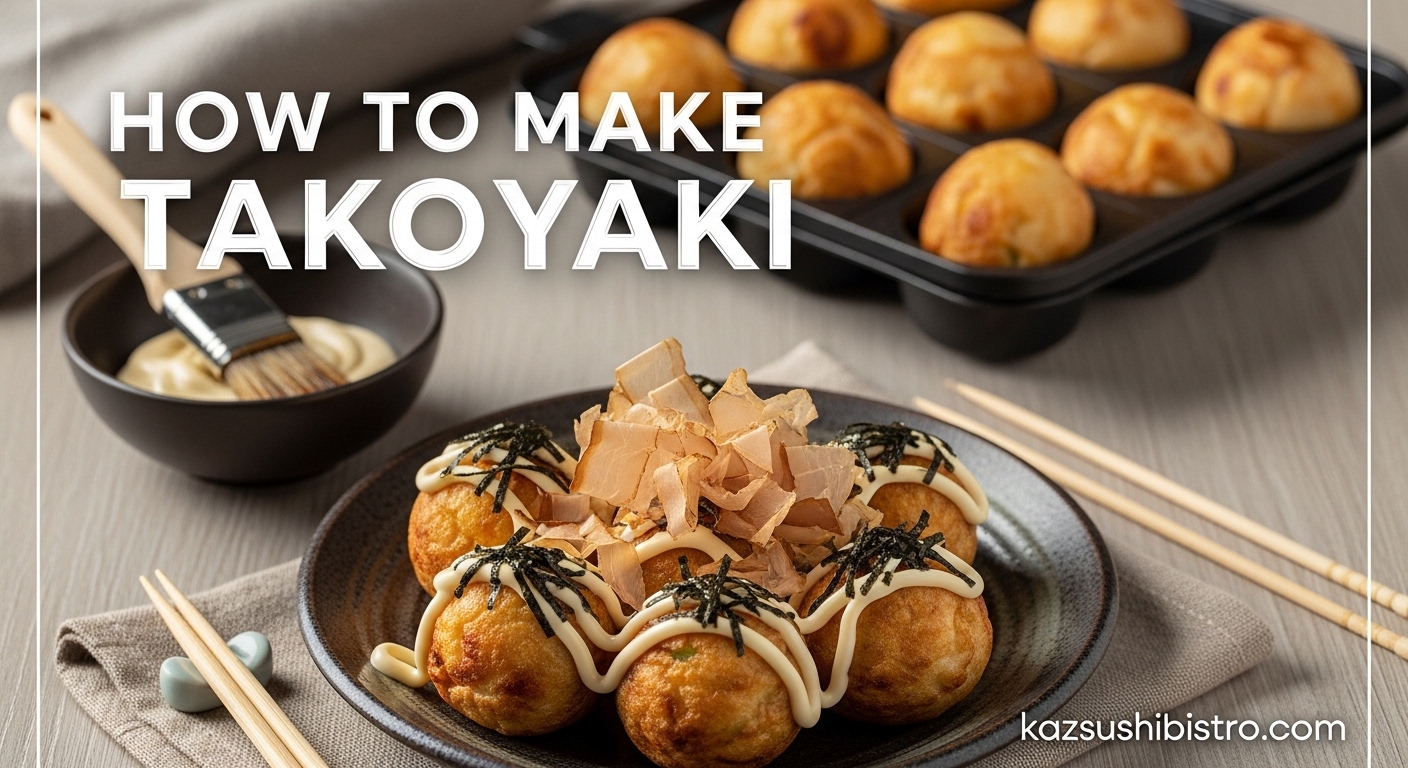
My first attempt at making takoyaki was a complete disaster. I burned the outside while the inside stayed raw, and the balls stuck to the pan so badly I had to scrape them out with a spoon. That was three years ago, and after hundreds of batches and feedback from dozens of home cooks I’ve helped, I can promise you this: making perfect takoyaki at home is absolutely possible, even without specialized equipment.
In this guide, I’ll walk you through exactly how to make takoyaki that comes out crispy on the outside, gooey and tender inside, every single time. You’ll learn the batter secrets, two different flipping techniques, and solutions to every common problem that trips people up. Whether you have a proper takoyaki pan or you’re working with a cake pop maker, by the end you’ll know how to make takoyaki like a street vendor in Osaka.
Table of Contents
What Is Takoyaki?
Takoyaki literally translates to “octopus grilled” – tako meaning octopus and yaki meaning grilled or fried. These are wheat flour-based batter balls filled with diced octopus and cooked in a special molded pan until golden brown and crispy.
The dish originated in Osaka in the 1940s, created by a street vendor named Tomekichi Endo who was inspired by a similar dish from Akashi. Today takoyaki stands are everywhere in Japan, from festivals to convenience stores to high-end izakaya bars. They’re the ultimate Japanese comfort food.
The magic of takoyaki lies in its texture contrast. The exterior should be crispy and slightly chewy, while the interior stays almost molten – soft batter surrounding tender octopus pieces. When you bite in, the combination of savory dashi-infused batter, umami-rich sauce, and smoky bonito flakes creates something truly addictive.
Takoyaki Ingredients
Great takoyaki starts with quality ingredients. Here’s exactly what you need, with both US and metric measurements.
For the Batter
The batter is surprisingly simple but relies on one key ingredient: dashi. This Japanese soup stock provides the savory, umami foundation that makes takoyaki taste authentic.
- 1 cup (120g) all-purpose flour
- 2 cups (480ml) dashi stock, cooled
- 2 large eggs
- 1 teaspoon baking powder
- 1/2 teaspoon soy sauce
- 1/4 teaspoon salt
For the dashi, you can make it from scratch with kombu and bonito flakes, use instant dashi powder (hon dashi), or even substitute with a mild vegetable broth in a pinch. The key is that it should be savory but not overpowering.
For the Fillings
The traditional filling starts with cooked octopus, but there’s more to it than just the seafood.
- 7 oz (200g) cooked octopus, cut into 1/2-inch cubes
- 1/4 cup tenkasu (tempura scraps)
- 2 tablespoons beni shoga (pickled ginger), finely chopped
- 2 green onions, finely sliced
Tenkasu might be the most important filling ingredient after the octopus. These crispy tempura batter bits absorb the takoyaki’s juices and create texture inside. You can buy them at Asian grocery stores or make your own by dropping small bits of tempura batter into hot oil.
For the Toppings
Takoyaki sauce and toppings transform the balls from good to incredible.
- Takoyaki sauce (or substitute with Worcestershire sauce mixed with ketchup and soy sauce)
- Kewpie mayonnaise (Japanese mayo – creamier and slightly sweeter than American)
- Katsuobushi (bonito flakes)
- Aonori (green seaweed flakes)
- Additional beni shoga for garnish
Katsuobushi deserves special mention. These paper-thin shaved flakes of dried, fermented, smoked skipjack tuna dance and flutter when placed on hot takoyaki due to the heat convection. It’s mesmerizing and adds smoky, savory depth.
Equipment You Need
You don’t need much to make takoyaki, but the right equipment makes a huge difference in your success rate.
The Takoyaki Pan
A proper takoyaki pan has half-sphere molds, typically 1.5 to 2 inches in diameter. You have two main options.
Cast iron pans are the traditional choice. They heat evenly, hold temperature well, and create the best crispy exterior. The downside is they require seasoning and careful temperature control. Look for one that fits over a single burner.
Electric takoyaki makers are more beginner-friendly. They maintain consistent heat automatically and often have non-stick surfaces. The trade-off is less control over browning and potentially less crispy results.
Alternative Equipment
No takoyaki pan? You have options that work surprisingly well.
A cake pop maker or cake ball maker is the best substitute. The spherical molds are nearly identical in size and shape. The non-stick coating helps with the flipping technique, though the automatic temperature control means less browning.
An ableskiver pan (Danish pancake pan) works too. The molds are deeper, which actually makes flipping easier, though you get more pancake-like takoyaki.
The stovetop alternative involves making small round pancakes in a regular pan. They won’t be spherical, but the taste is identical. Use a small cookie scoop to drop batter onto a well-oiled pan, add fillings, and flip like mini pancakes.
Flipping Tools
You need something to flip the balls as they cook. Two chopsticks are traditional, but metal or bamboo skewers work too. Some people prefer special takoyaki picks with angled tips. Use what feels comfortable in your hand.
How to Make Takoyaki?
Now for the main event. Follow these steps and you’ll have restaurant-quality takoyaki at home.
Step 1: Prepare the Batter
In a large bowl, whisk together the flour, baking powder, and salt. This ensures the leavening is evenly distributed.
In a separate bowl, beat the eggs lightly, then whisk in the cooled dashi stock and soy sauce. Make sure your dashi isn’t hot, or it will start cooking the eggs prematurely.
Pour the wet ingredients into the dry ingredients. Whisk until just combined – small lumps are fine. Over-mixing develops gluten and makes chewy takoyaki instead of tender ones.
Let the batter rest for 30 minutes at room temperature. This allows the flour to fully hydrate and the baking powder to start activating. Your batter should be thinner than pancake batter but thicker than crepe batter – pourable but not watery.
Step 2: Prep Your Fillings
While the batter rests, prepare everything else. Cut your cooked octopus into 1/2-inch cubes. If your octopus is tough, simmer it in water with a splash of vinegar for 20 minutes first.
Chop the beni shoga and slice the green onions. Portion out your tenkasu. Having everything ready is crucial because once you start cooking, things move fast.
Set up your topping station too. Pour sauce and mayo into squeeze bottles if you have them – it makes serving much easier.
Step 3: Heat the Pan
Place your takoyaki pan over medium heat. You want the surface around 375-400°F (190-200°C). On an electric stove, this is usually medium-high. On gas, medium works well.
Give it 5-10 minutes to heat fully. A drop of water should sizzle and evaporate quickly when the pan is ready.
Brush every mold generously with oil. Use a high smoke-point oil like vegetable or canola. Don’t skimp here – insufficient oil causes sticking.
Step 4: Fill and Cook
Pour batter into each mold, filling them completely. They should overflow slightly – this is correct and necessary for forming round balls.
Immediately add one or two octopus pieces to each mold. Follow with a sprinkle of tenkasu, beni shoga, and green onions. Work quickly before the batter sets.
Let cook undisturbed for 3-4 minutes. The edges should start looking set while the center remains liquid.
Step 5: The Flip – Chopstick Method
This is the traditional technique and my preferred method for control.
Hold two chopsticks in one hand, parallel to each other. Insert them into the edge of one takoyaki, angling them down into the batter.
Lift and rotate the ball 90 degrees, tucking the cooked edge under and bringing raw batter to the hot surface. The overflowed edges will fold inward as you rotate.
Don’t worry about achieving a perfect sphere on the first flip. You’ll rotate each ball 2-3 more times to build up the round shape gradually. Think of it as rotating, not flipping.
The key is to maintain steady, gentle pressure. If you push too hard, you’ll mash the ball. Too soft, and it won’t rotate fully.
Step 6: The Flip – Skewer Method
Some people find skewers easier than chopsticks, especially beginners.
Insert a single bamboo or metal skewer deep into the edge of a takoyaki, at about a 45-degree angle toward the center. Think of it as spearing the ball off-center.
Use the skewer as a lever to lift and rotate the ball. The technique is more scoop-and-turn than the chopstick rotate method.
Skewers give you more leverage, which helps with heavy cast iron pans. But they can tear the takoyaki if you’re not gentle. I recommend bamboo over metal for less sticking.
Try both methods and use what feels natural. I’ve seen expert home cooks use either with equal success.
Step 7: Finish and Serve
Continue rotating the balls every 2-3 minutes until they’re deeply golden brown all over. Total cooking time is typically 10-12 minutes.
When done, the outside should be crispy and the inside molten. Transfer to a serving plate immediately.
Top generously with takoyaki sauce in a zigzag pattern, followed by Kewpie mayo. Sprinkle aonori, then add a big handful of bonito flakes – they should dance from the heat. Finish with extra beni shoga if desired.
Serve immediately. Takoyaki waits for no one.
Troubleshooting Guide 2026
After helping dozens of home cooks troubleshoot their takoyaki, here are the most common problems and exactly how to fix them.
Problem: Takoyaki Sticking to Pan
If your takoyaki won’t release from the pan, you’re almost certainly dealing with insufficient oil or incorrect temperature.
Solution: Use more oil than you think you need. Brush between every batch. Also check your heat – too low and the batter adheres before cooking; too high and you create a crust that bonds to the pan.
For cast iron, make sure your pan is properly seasoned. A well-seasoned pan is practically non-stick.
Problem: Chewy Instead of Crispy
Chewy, rubbery takoyaki usually comes from over-mixed batter or wrong flour choice.
Solution: Mix your batter until just combined – lumps are okay. Also check your flour. All-purpose works best. Bread flour has too much protein and creates toughness. Cake flour can work but results are more delicate.
Another cause is overcooking. Once the exterior is crispy and golden, get them out. Extended cooking dries out the interior.
Problem: Not Round or Misshapen
Oddly shaped takoyaki means your flipping technique needs refinement.
Solution: Be more aggressive with your first few rotations. The initial tucking of edges is what creates the round shape. If you’re too gentle, you end up with half-moons instead of spheres.
Also ensure you’re rotating frequently enough. Waiting too long between flips lets one side overcook while others stay soft.
Problem: Outside Burns Before Inside Cooks
This is a temperature issue. Your pan is too hot.
Solution: Lower your heat. Takoyaki needs gentle, consistent heat to cook through without burning. On most stoves, medium is correct. If you’re using high heat to speed things up, you’ll burn the outside while the center stays raw.
Electric pans often run hot. Try using a heat diffuser or removing the pan from heat periodically.
Problem: Batter Too Thick or Thin
Batter consistency dramatically affects results.
Solution: If too thick, thin with a splash of dashi. The batter should pour easily but coat the back of a spoon. If too thin, whisk in a tablespoon of flour at a time until you reach the right consistency.
Resting the batter helps too. Give it the full 30 minutes for flour to hydrate properly.
Problem: Takoyaki Falling Apart When Flipping
This happens when the first side hasn’t set enough before you attempt rotation.
Solution: Be patient. Wait the full 3-4 minutes before the first flip. The bottom needs to be well-cooked to provide structure. If you’re rotating too early, you’re essentially trying to flip liquid batter.
Filling Variations and Substitutions
Once you master the basic recipe, experiment with different fillings. Here’s a comprehensive comparison of options.
| Filling | Preparation | Flavor Profile | Best For |
|---|---|---|---|
| Cooked Octopus | Cut raw, poach 2 min, or use pre-cooked | Classic, briny, slightly chewy | Traditionalists |
| King Oyster Mushroom | Cube and pan-sear until golden | Earthy, meaty texture | Vegetarians |
| Shrimp | Raw, cut into chunks | Sweet, delicate | Seafood lovers |
| Mochi | Small cubes | Chewy, neutral | Texture variation |
| Cheese (mozzarella) | Small cubes or shredded | Creamy, melty | Kids, comfort food |
| Kimchi | Chopped fine, squeeze excess liquid | Spicy, tangy, funky | Adventurous eaters |
| Chorizo | Cooked, crumbled | Spicy, smoky | Fusion style |
Vegetarian Options
King oyster mushrooms are my top recommendation for vegetarian takoyaki. Their meaty texture and umami flavor closely mimic octopus. Cut them into similar-sized cubes and pan-sear before using to develop flavor and reduce moisture.
Other great options include cheese (mozzarella for meltiness, aged cheddar for sharpness), seasoned tofu cubes, or a mix of mushrooms including shiitake for depth.
Keep the tenkasu and aromatics the same – they provide essential texture and brightness regardless of your main filling.
Vegan Takoyaki
Making vegan takoyaki requires three substitutions.
For the batter, replace the egg with 1/4 cup aquafaba (chickpea liquid) whisked until foamy. This provides structure and helps create the characteristic fluffy interior.
For dashi, use kombu dashi made from dried kelp only, or a vegetable broth seasoned with a splash of soy sauce and mirin.
For toppings, use vegan Worcestershire-based sauce (check labels – many contain anchovies), vegan mayo, and skip the bonito flakes. Increase the aonori and add toasted sesame seeds for umami depth.
Sauce Pairings
While traditional takoyaki sauce is perfect, don’t be afraid to branch out.
Ponzu sauce adds bright citrus notes that cut through the richness. Mix ponzu with a touch of sesame oil for something different.
Spicy mayo (mayo mixed with sriracha or gochujang) brings heat that contrasts beautifully with the sweet sauce base.
For a more izakaya-style experience, try serving with Japanese seven-spice (shichimi togarashi) on the side. Diners can add heat to taste.
Yuzu kosho – a fermented paste of yuzu peel and chilies – adds sophisticated citrus heat for adventurous palates. Use sparingly.
Frequently Asked Questions
What is takoyaki batter made of?
Takoyaki batter is made from all-purpose flour, dashi stock (Japanese soup base), eggs, baking powder, soy sauce, and salt. The dashi provides the essential umami flavor. The batter is thinner than pancake batter and rests for 30 minutes before cooking to allow the flour to hydrate fully.
Are takoyaki hard to make?
Takoyaki is not difficult but requires practice to master the flipping technique. The ingredients are simple and the cooking process is straightforward. Most home cooks can make acceptable takoyaki on their first try and achieve great results within 2-3 attempts. The key challenges are temperature control and learning the proper ball-rotation technique.
Do you cook octopus before making takoyaki?
Yes, you should use cooked octopus for takoyaki. You can buy pre-cooked octopus at Asian grocery stores, or poach raw octopus yourself by simmering it in water for 1-2 minutes until it turns opaque. The octopus pieces go into the batter raw during the cooking process, but they must be pre-cooked to ensure they’re tender in the final dish.
How to make takoyaki without a takoyaki maker?
You can make takoyaki without a specialized pan using several alternatives: 1) A cake pop maker or cake ball maker works best as the molds are nearly identical. 2) An ableskiver pan (Danish pancake pan) can substitute though the molds are deeper. 3) Use a regular frying pan to make mini pancake rounds with fillings, which won’t be spherical but taste the same. 4) Some people successfully use the round indentations in an appam pan or even a greased muffin tin in the oven.
Is takoyaki supposed to be gooey inside?
Yes, authentic takoyaki has a slightly gooey, molten interior. The very center should be soft and creamy rather than fully set like a cake. This texture contrast between the crispy exterior and tender interior is what makes takoyaki special. If the inside is completely firm and dry, the takoyaki is overcooked.
What is a good substitute for takoyaki fillings?
King oyster mushrooms make the best octopus substitute, offering similar texture and umami. Other excellent options include shrimp, cheese (especially mozzarella), seasoned tofu, or mochi for a chewy variation. For vegetarian takoyaki, pan-seared mushrooms with soy sauce seasoning work beautifully. You can also try kimchi, cooked sausage, or even leftover roasted vegetables chopped small.
Why are my takoyaki not round?
Misshapen takoyaki usually results from improper flipping technique or waiting too long between rotations. To fix this, be more aggressive with your first few flips, really tucking those edges under. Rotate the balls every 2-3 minutes rather than letting one side cook too long. The round shape develops gradually through multiple rotations, not a single flip.
How to prevent takoyaki from sticking?
Prevent sticking by using plenty of oil and ensuring proper pan temperature. Brush oil generously in each mold before adding batter. The pan should be hot enough that water sizzles immediately, but not smoking. For cast iron pans, proper seasoning is essential. If sticking persists, try lowering the heat slightly – too hot and the exterior crust bonds to the pan.
Conclusion
Learning how to make takoyaki is one of the most rewarding cooking skills you can add to your repertoire. The combination of crispy, golden exterior and molten, savory interior creates something truly special that you simply cannot buy pre-made.
Remember that your first batch might not be perfect, and that’s completely normal. Focus on getting your batter consistency right, managing your heat, and practicing the flip. Within a few tries, you’ll be making takoyaki that rivals what you’d find at a Japanese street festival.
Gather your ingredients this weekend and give it a try. Once you taste that first piping-hot ball with sauce, mayo, and dancing bonito flakes, you’ll understand why this Osaka invention has become a beloved dish worldwide. Happy cooking!