
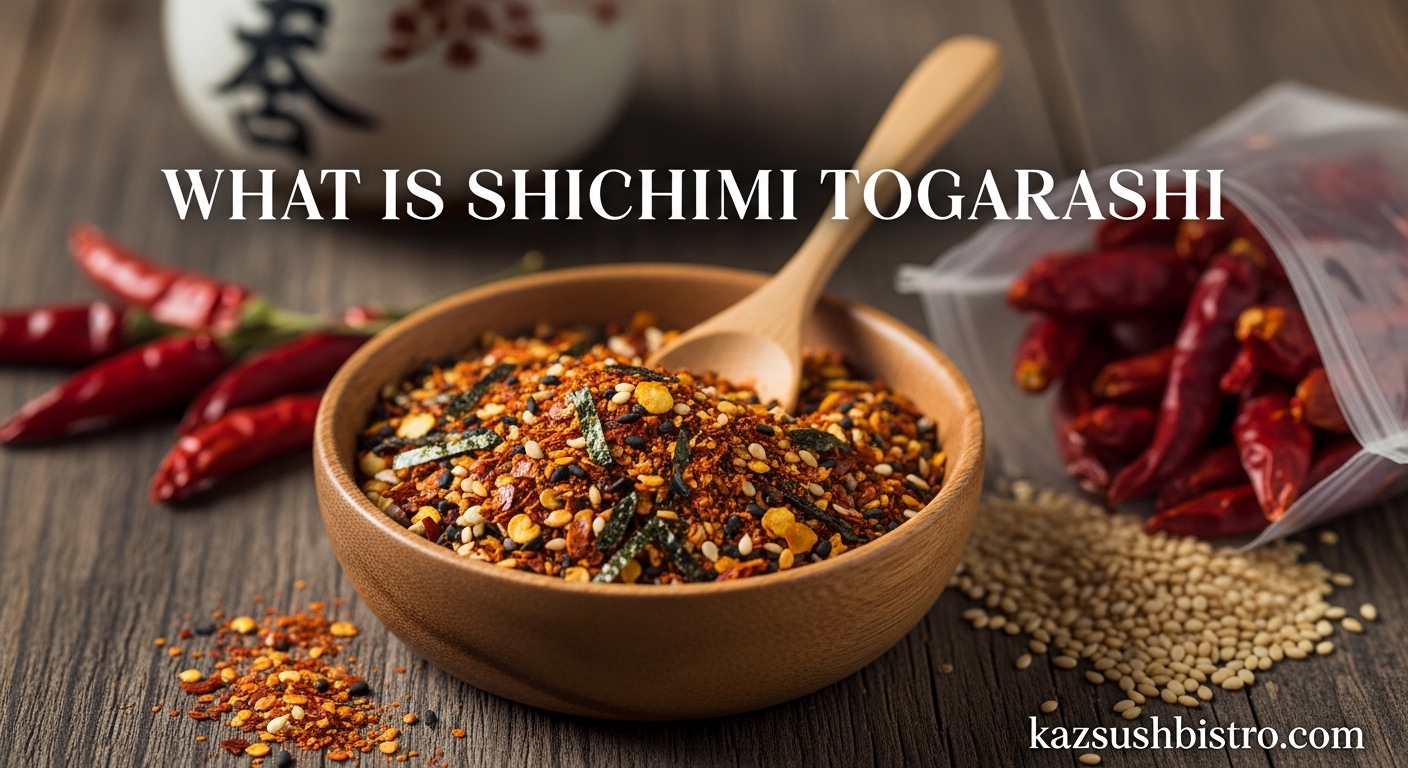
Shichimi togarashi is a traditional Japanese seven-flavor spice blend that has been elevating dishes since the 17th century. If you have ever wondered what is shichimi togarashi and why chefs at restaurants like ours at KAZ Sushi Bistro reach for it constantly, you are about to discover one of Japan’s most versatile condiments. This aromatic seasoning combines red chili pepper with six other ingredients to create a complex flavor profile that goes far beyond simple heat.
In this guide, I will walk you through everything you need to know about this Japanese spice blend. You will learn about its seven ingredients, its fascinating history from the streets of old Edo, how it differs from regular chili flakes, and the many ways you can use it in your own kitchen. By the end, you will understand why this humble spice mixture deserves a permanent spot on your table.
Table of Contents
What Is Shichimi Togarashi 2026
Shichimi togarashi literally translates to “seven-flavor chili pepper” in Japanese. The name breaks down elegantly: shichi means seven, mi means flavor, and togarashi is the Japanese word for chili pepper. You may also see it called nanami togarashi or nana-iro togarashi, which are simply alternative ways of saying “seven flavors” in Japanese.
Unlike single-note spices such as cayenne or paprika, shichimi togarashi is a carefully balanced blend designed to hit multiple taste receptors simultaneously. It is classified as a condiment or table seasoning in Japan, meant to be sprinkled on finished dishes rather than cooked into them. This distinction matters because the delicate flavors of citrus peel and nori would diminish with prolonged heat exposure.
The beauty of this Japanese spice blend lies in its layering effect. Each ingredient contributes a specific dimension, creating a symphony of taste that enhances without overwhelming. When you sprinkle it over a bowl of steaming ramen or grilled yakitori, you are not just adding heat. You are adding history, culture, and centuries of Japanese culinary wisdom.
What Is Shichimi Togarashi Made Of
The traditional recipe includes seven specific ingredients, though regional and brand variations exist. Here are the seven components that make up authentic shichimi togarashi:
Red Chili Pepper (Togarashi) forms the base and provides the heat. The chili used is typically a Japanese variety of Capsicum annuum, milder than cayenne but still delivering a pleasant warmth.
Sansho Pepper is perhaps the most distinctive ingredient. This Japanese peppercorn (Zanthoxylum piperitum) creates a unique numbing, tingling sensation on the tongue similar to Sichuan peppercorn but more citrus-forward. It is what separates shichimi from ordinary chili blends.
Citrus Peel adds brightness and acidity. Traditional recipes use chenpi, dried mandarin or tangerine peel, though yuzu peel appears in premium versions. This citrus note cuts through rich, fatty dishes beautifully.
Sesame Seeds provide nuttiness and texture. Both black and white sesame seeds appear in the blend, contributing visual contrast and a subtle crunch.
Nori (Seaweed) introduces umami depth. The dried laver seaweed flakes dissolve slightly when they hit hot food, releasing that savory ocean flavor that defines Japanese cuisine.
Hemp Seed adds an earthy, slightly grassy note along with additional texture. Some modern variations substitute or supplement with poppy seeds.
Ginger rounds out the blend with gentle warmth and aromatic complexity. The dried ginger contributes a subtle spice that complements the chili heat without competing.
Regional producers like Yagenbori in Tokyo and Yawataya Isogoro in Kyoto guard their specific ratios closely. Some blends emphasize the citrus, others lean into the heat, and premium versions might include rare ingredients like yuzu peel or specialized sansho varieties.
The History and Origin of Shichimi Togarashi
The story of shichimi togarashi begins in the early 17th century during Japan’s Edo period. According to tradition, the blend was first created by herb dealers (yakushi) who sold medicinal plants near the famous Sensō-ji temple in Asakusa, Tokyo.
These original producers recognized that combining seven specific ingredients created something greater than the sum of its parts. The number seven held special significance in Japanese culture, associated with good fortune and protection. Customers would visit the temple, then stop at nearby shops to purchase this fragrant spice mixture.
Yagenbori, founded in 1625, claims to be the original creator and remains one of the most respected producers today. Their shop still operates near Sensō-ji temple, and they have maintained their traditional recipe for nearly 400 years. The Yawataya Isogoro company in Kyoto, established later in the 18th century, is another historic name that serious enthusiasts seek out.
Originally, shichimi togarashi was valued for its supposed medicinal properties as much as its flavor. The blend was believed to aid digestion, improve circulation, and warm the body during cold winters. While we now appreciate it primarily for culinary reasons, many of those traditional beliefs about its health benefits have found support in modern research about the compounds in chili peppers, ginger, and sansho.
Over centuries, the condiment spread from temple visitors to the general population, becoming a standard fixture in Japanese households and restaurants. Today, it sits on tables across Japan alongside soy sauce and vinegar, ready to personalize any bowl of noodles or rice.
What Does Shichimi Togarashi Taste Like?
Describing the taste of shichimi togarashi requires more than one word. Unlike cayenne pepper, which delivers straightforward heat, this Japanese seven spice blend offers a multi-dimensional experience that evolves as you eat.
The first note you will notice is citrusy brightness from the dried peel. This tanginess wakes up your palate and prepares it for what follows. Next comes the warmth from the chili, gentler than cayenne but definitely present. Then the nutty sesame emerges, adding richness and a pleasant crunch. Finally, the umami from nori and the tingling sansho create a lingering, mouthwatering finish.
Is shichimi togarashi the same as cayenne pepper? Absolutely not. While both contain ground red chili, cayenne is a single-ingredient spice that delivers pure heat. Shichimi togarashi contains seven ingredients and offers complexity, texture, and layered flavor. Think of it as the difference between a solo violin and a full orchestra.
The sansho pepper deserves special mention here. That subtle numbing sensation it creates is called ma in Japanese culinary terminology. It is not painful like extreme chili heat. Instead, it creates a pleasant tingling that makes your mouth water and enhances your perception of other flavors. If you have never experienced it, the first taste can be surprising and addictive.
How to Use Shichimi Togarashi?
Shichimi togarashi is a finishing spice, which means you should add it at the end of cooking or at the table. The delicate citrus oils and nori would degrade with prolonged heat exposure, so sprinkle it just before serving.
In Japanese cuisine, it appears everywhere. It is the classic topping for ramen, adding depth to the rich broth. Udon and soba noodles benefit from a generous dusting, especially in hot preparations. Yakitori (grilled chicken skewers) get their final flourish from this spice blend. Donburi rice bowls and plain steamed rice transform with just a pinch.
At KAZ Sushi Bistro, we use it to finish certain specialty rolls and as a table condiment for guests who want to customize their experience. The spice adds a delightful kick to fatty fish like salmon or yellowtail without overwhelming the delicate flavor of the seafood.
The fusion possibilities excite me most. Try it on popcorn for a sophisticated movie snack. Mix it into mayonnaise for an addictive dipping sauce. Sprinkle it over fried eggs or avocado toast. I have even seen creative bakers add it to chocolate desserts for a sweet-spicy contrast that surprises and delights.
When using shichimi togarashi for the first time, start conservatively. The heat level varies by brand, and you can always add more. A light dusting is usually sufficient to experience the full flavor profile without overwhelming your dish.
Shichimi vs Nanami Togarashi
This question confuses many people new to Japanese spices. Shichimi togarashi and nanami togarashi are the same thing. The difference is purely linguistic, not culinary.
In Japanese, the number seven can be pronounced two ways. Shichi is the traditional Chinese-derived reading (on’yomi), while nana is the native Japanese reading (kun’yomi). Both are correct and commonly used. You might see either term on packaging depending on the manufacturer or region.
Nana-iro togarashi (seven-color chili pepper) refers to the same blend, emphasizing the visual variety of colors from the different ingredients. Some producers prefer this name because it sounds more poetic and descriptive.
If you are shopping and see both terms, do not worry about which to choose. Look instead at the ingredient list and the reputation of the producer. A quality blend from a respected maker like S&B, House, or an artisan producer like Yagenbori will serve you well regardless of which name appears on the label.
Where to Buy Shichimi Togarashi?
Finding quality shichimi togarashi is easier than ever in 2026. Most well-stocked supermarkets carry it in the international aisle, though the selection may be limited to major brands.
Asian grocery stores offer the best selection. Look for Japanese markets like Mitsuwa, Marukai, or smaller local shops. They typically stock multiple brands and varieties, including premium artisan blends you will not find in mainstream stores.
Online retailers open up the full range of options. Amazon carries S&B and House brands widely. For authentic Japanese imports, sites like Bokksu, Japan Centre, or direct from producers like Yawataya Isogoro offer the best quality.
Recommended brands to look for:
S&B is the most widely available and tends to be spicier than other brands. Their red-cap container is a familiar sight in Japanese restaurants worldwide.
House offers a milder, more balanced blend that appeals to those who want the full flavor experience without aggressive heat.
Yagenbori and Yawataya Isogoro are premium artisan producers. If you can find their products, they offer the most authentic and complex flavors.
For storage, keep your shichimi togarashi in an airtight container away from heat and light. The volatile oils in the citrus peel and sesame degrade with exposure to air and warmth. Properly stored, it will maintain its potency for about six months to a year. If the aroma fades or the color dulls significantly, it is time to replace it.
Shichimi Togarashi Substitute Options
If you cannot find shichimi togarashi, you have several options depending on what you need.
For a homemade approximation, combine: 2 parts red chili flakes, 1 part toasted sesame seeds, 1/2 part dried orange or tangerine peel (ground), a pinch of ground ginger, a pinch of nori flakes (crumbled sushi nori works), and a small amount of ground Sichuan peppercorn (for the sansho effect). The result will not be identical but captures the essence.
Ichimi togarashi (one-flavor chili pepper) is simply ground red chili without the additional ingredients. It provides the heat but lacks the complexity. Use it if that is all you have, but consider adding a pinch of sesame seeds and citrus zest to approximate the full experience.
Cayenne pepper works in a pinch for heat, but the flavor profile will be completely different. If using cayenne as a substitute, use less (about half the amount) since it is typically hotter, and consider adding sesame seeds and a squeeze of fresh citrus to your dish separately.
For the sansho component specifically, ground Sichuan peppercorn is the closest substitute, though it is more aggressive and less citrusy than true Japanese sansho. Use sparingly if substituting.
Frequently Asked Questions
What is a substitute for shichimi togarashi?
The best substitute is a homemade blend of red chili flakes, toasted sesame seeds, dried citrus peel, ground ginger, crumbled nori, and a pinch of Sichuan peppercorn. Ichimi togarashi (single chili pepper) can work for heat alone, though it lacks complexity. Cayenne pepper is the last resort, using about half the amount and adding sesame seeds separately.
What is shichimi togarashi made of?
Shichimi togarashi is made from seven ingredients: red chili pepper, sansho pepper (Japanese peppercorn), dried citrus peel (mandarin or yuzu), sesame seeds (black and white), nori seaweed, hemp seed, and dried ginger. Each ingredient contributes a specific flavor dimension: heat, numbing sensation, citrus brightness, nuttiness, umami, earthiness, and aromatic warmth.
Is shichimi togarashi healthy?
Shichimi togarashi offers several potential health benefits. The capsaicin in chili peppers may boost metabolism and reduce inflammation. Ginger aids digestion and has anti-nausea properties. Sansho pepper contains antioxidants. The blend is low in calories and sodium-free. However, it is meant as a condiment used in small amounts, so health impacts are modest. Those sensitive to spicy foods should use it cautiously.
Is shichimi togarashi the same as cayenne pepper?
No, shichimi togarashi is not the same as cayenne pepper. Cayenne is a single-ingredient ground chili pepper providing pure heat. Shichimi togarashi contains seven ingredients including chili, sansho pepper, citrus peel, sesame seeds, nori, hemp seed, and ginger. It offers complex layered flavors with heat, citrus brightness, nuttiness, and umami that cayenne cannot replicate.
Conclusion
Now you have a complete answer to the question: what is shichimi togarashi. This remarkable Japanese seven spice blend represents centuries of culinary tradition distilled into a convenient, flavorful condiment that can transform ordinary dishes into extraordinary ones.
Whether you are sprinkling it over a steaming bowl of ramen at home, adding a pinch to your morning eggs, or discovering it for the first time at a sushi restaurant, shichimi togarashi offers a unique taste experience that no other spice can replicate. The combination of heat, citrus, nuttiness, and that distinctive sansho tingle creates something truly special.
I encourage you to pick up a bottle on your next grocery run or order from one of the recommended producers. Start with classic applications like noodles and rice, then experiment with fusion ideas. Once you taste the difference it makes, you will understand why this 400-year-old blend remains an essential part of Japanese cuisine in 2026 and beyond.